


Key Highlights
- When will Australia Open its Borders for International Students in 2026?
- Is Australia Currently Open for International Students in 2025–26?
- What Happened to Australia's Borders During COVID? A Quick Timeline
- What Are the New Rules for International Students in Australia in 2025?
- What Is Ministerial Direction 115 and How Does It Affect Indian Students?
- What Is Australia's International Student Enrollment Cap for 2025 and 2026?
- How Do These Changes Specifically Affect Indian Students Applying to Australia?
- What Are the Step-by-Step Requirements to Study in Australia in 2025–26?
- When Should Indian Students Apply to Study in Australia? Best Intakes in 2025–26?
- Is Australia Still Worth Studying In Despite the New Rules?
- How Can TerraTern Help Indian Students Get to Australia?
- Navigating the New Era: Key Trends in Australian International Education for 2026
- Conclusion
When Will Australia Open Its Borders for International Students? In December 2021, the international student borders were opened up by Australia to fully vaccinated travelers with valid visas, and this marked the end of restrictions imposed by COVID-era. They are not currently closed, but as of March 2026 new reforms include, among other things, the Genuine Student test instead of GTE, increased requirements (6.0 overall) on IELTS, a course transfer prohibition on onshore students, an increase in the visa fee charge to AUD 2,000 and priority processing through a traffic-light system of institutions are designed to improve integrity and curb malpractice with an increased cap of 295,000 student places.
These changes, such as onshore visa switching restrictions and more restrictive work rights (48 hours per fortnight), are focused on ensuring that it serves the truly deserving applicants and, at the same time, remains accessible to those who are genuinely deserving of the visa (students in India and other countries). This Guide will cover when Australia open its borders for International Students.
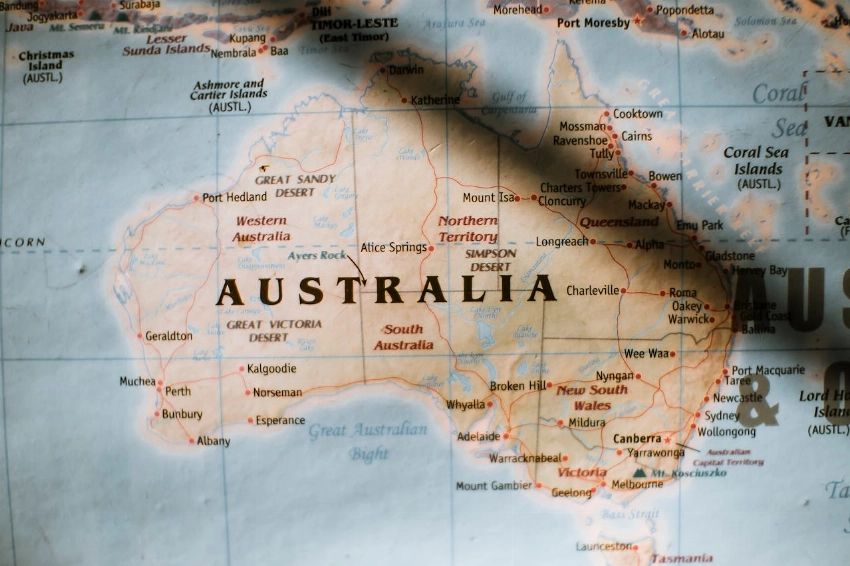
When will Australia Open its Borders for International Students in 2026?
-
On December 15, 2021, Australia reopened its borders to international students with valid student visas (subclass 500) who have had full vaccination, and the border has been open to all COVID-19 entry restrictions.
-
As of March 1, 2026, borders will not be closed, and there will be no travel bans on students who are approved.
-
The changes in the visa, which become effective as of March 31, 2026, include stricter regulations such as the Genuine Student (GS) test (which has changed GTE), a minimum of 6.0 in IELTS, an increase in visa fees to AUD 2,000, transfer of courses to onshore would be prohibited, and no onshore changeover to visitor or graduate visas.
-
Processing follows a traffic-light system: a green (fast-paced) is assigned to low-cap institutions, amber (standard) to high-cap ones, red (slow) to institutions with high cap; the 2026 cap is also increased to 295,000 places.
-
During terms, work limits remain at 48 hours per fortnight (unlimited during breaks); the Indian applicant is under higher scrutiny since he is in the top risk category.
Also Read: Spouse Open Work Permit Canada: Latest Experts Guide
Is Australia Currently Open for International Students in 2025–26?
Yes, the Australian immigration for international students is open now, as of March 2026, and there are no border restrictions and COVID-related travel bans since the full reopening on December 15, 2021.
-
Valid Student visa (Subclass 500) holders are free to enter the country subject to standard entry requirements such as Confirmation of Enrolment (CoE), Overseas Student Health Cover (OSHC), and Genuine Student (GS).
-
Offshore applications are given priority in processing by a traffic-light system in the institutions during the 202526 academic year, and new restrictions, such as USD 2,000 fees, IELTS 6.0 minimum, and financial evidence of USD 29,710, come into full effect by March 31, 2026.
-
Work rights are unlimited in terms of breaks, 48 hours per fortnight; no switching between visitor/graduate visa and onshore visa.
-
One nationality that is considered high-risk is Indian applicants, but they can apply as normal, provided they are compliant; the time-to-process by institution risk level (green: fast, red: slow).
Expert Takeaway: Australia is open, but the question for 2025–26 is not whether you can travel; it's whether your visa application will be approved under the new, stricter rules. Start with eligibility, not flight bookings.
What Happened to Australia's Borders During COVID? A Quick Timeline
When Will Australia Open Its Borders for International Students? Australia progressively reopened amid COVID restrictions via this timeline:
-
January 25, 2020: Australia confirms the first COVID-19 border restrictions, such as non-citizens and non-residents of China; international students already onshore are allowed to proceed with visa extensions, but no new arrivals have been halted.
-
March 16, 2020: 14-day isolation of all foreigners coming in; travel restrictions are also extended to Iran, South Korea, and Italy; exemptions are uncharacteristic of students.
-
March 20, 2020: International borders shut down for the majority of foreigners; close interstate borders are gradually shut; offshore students cannot arrive.
-
2020-2021: There are a few compassionate exemptions for high school students (i.e., Years 11-12 of China); students learning onshore can have their work limit relaxations (40 to unlimited hours temporarily) and flexibility in online learning.
-
November 2021: Borders will reopen temporarily and will be allowed to open in December, but will be cancelled to December 15 because of Omicron; will require full vaccination and a negative test.
-
December 15, 2021: international students (Subclass 500) are allowed to fully reopen, but they do not need any special permissions, and may self-isolate within 72 hours in some states.
-
After 2022: COVID entry barriers are eliminated; regular visa processing is prioritised, and regular work privileges are normalised by July 2023.
Expert Takeaway: Australia's physical borders have been open for over 3 years. If you're still wondering about travel restrictions from the pandemic era, they no longer apply. Your focus should be entirely on meeting the 2025 student visa requirements.
What Are the New Rules for International Students in Australia in 2025?
-
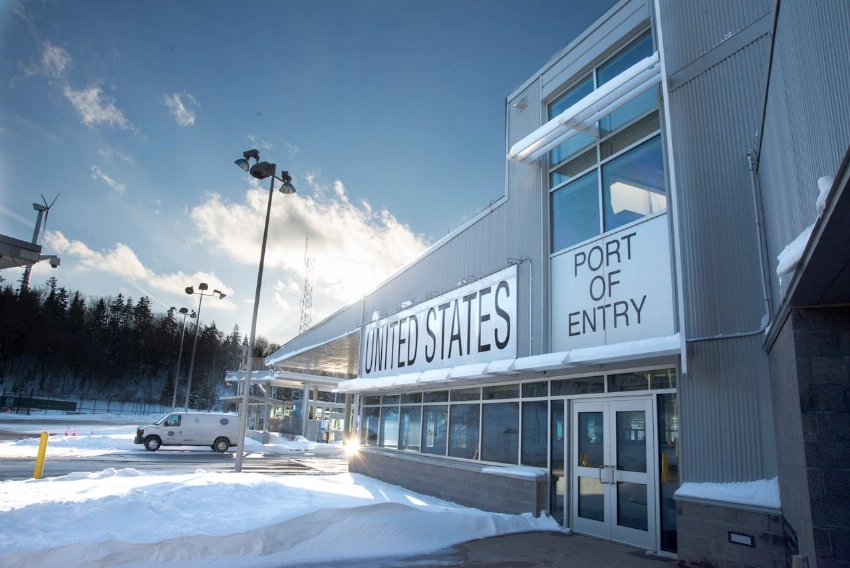
Confirmation of Enrolment (CoE) Requirement: From January 1, 2025, all applicants who apply for student visas must provide a CoE, not a mere letter of offer, for onshore applications, which will ensure a place of study for the student.
-
Visa Fee Increase: As of July 1st, 2025, the application fee for the visa (Subclass 500) rose to AUD 2,000 both in higher education and in vocational training.
-
Ministerial Direction 115 (MD 115): The implementation of a traffic-light priority processing system at offshore applications is based on the compliance of the institutions, which is presented as follows: green (not very difficult to use when the capacity is low), amber (not very difficult), red (very difficult to use when the capacity is high).
-
Onshore Visa Transitions Limited: Visa holders of visitor, temporary graduate, and maritime crew visas are not permitted to transfer to a student visa in Australia; they have to make an application outside Australia.
-
English Proficiency: Minimum IELTS 6.0 (equivalent) required to apply for student visas, and 6.5 required to apply for graduate visas as of March 2024, with the scores only being accepted within 12 months.
-
Intake Cap: 270000 ceiling in 2025, and should centre on the majority enrolment in the country, and solve the problem of visa hopping to maintain system integrity.
What Is the Genuine Student (GS) Requirement?
When Will Australia Open Its Borders for International Students: Australia fully reopened on December 15, 2021 (see timeline below), and since March 23, 2024, The Genuine Student (GS) requirement that replaces the Genuine Temporary Entrant (GTE) as of March 23, 2024, states that student visa applicants (Subclass 500) are genuinely intending to study in Australia and will obey the terms of the visa, authorizing the pathways to permanent residence.
-
Identified based on closed-ended questions on course choice, background fit, career goals, and circumstances (e.g., home country instability).
-
This is financial capability (AUD 29,710 living costs), prior compliance and authentic documentation, and no statement of 300 words was necessary.
-
Gives preference to actual students who learn what Australia needs, and not the future PR purpose is punished.
Why Is the Confirmation of Enrolment (CoE) Now Mandatory?
Confirmation of enrolment (CoE) Mandate.
Australian student visa holders (Subclass 500) are now expected to present a CoE on applications starting January 1, 2025, replacing Letters of Offer to ensure that people who have paid their tuition are actually enrolling.
-
Eliminates Visa abuse: letters of Officer were not binding, and the entry could be made without studying; CoE eliminates the charges and guarantees placements of true students.
-
Increases System Integrity: Filters, fraud cases of visa being purchased without enrolment into the course, and reversal of non-conformity cases, blocking bridging visas.
-
Apply Onshore/Offshore: and foreign Affairs/Defence/exchange Students accepted; applications not before 2025.
How Much Money Do You Need to Show for an Australian Student Visa?
When Will Australia Open Its Borders for International Students? Australia reopened to international students on December 15, 2021. Applicants must prove that they have sufficient funds to support their twelve-month living expenses (AUD 29,710 single student as of 2025), one year tuition fee regardless of CoE, and travelling expenses (which is around AUD 2,500).
-
Living Costs: AUD 29,710/ per annum covers rent, food, transport; add AUD 8,570/ per spouse, AUD 3,670/ per child.
-
Tuition: Full first-year fee in the form of CoE and bank statements/loans.
-
Travel: AUD 2-3000 round-trip airfare.
-
Sources: Personal savings, parental savings, education loans, and scholarships: should be true, realistic, and available.
What Is the New Student Visa Application Fee?
When Will Australia Open Its Borders for International Students? Australia reopened to international students on December 15, 2021. Application fee for a new student visa (Subclass 500) is raised to AUD 2,000, from AUD 1,600, for all applicants except those exempt (e.g., some Pacific/Timor-Leste nationals).
-
Mission: Revenue maximisation and elimination of bad applications during migration.
-
Non-Refundable: Paid when the ImmiAccount is paid; paid for extra dependents by the main applicant.
-
Exemptions Limited: No charge when there exist a few cases of humanitarian; it charges for extensions to the current holders of the visa.
Expert Takeaway: The January 2025 CoE mandate is the rule that catches most students off guard. You need to confirm your university place AND pay tuition fees before you can even apply for the visa. Plan your finances and application timeline at least 6 months ahead.
What Is Ministerial Direction 115 and How Does It Affect Indian Students?
When Will Australia Open Its Borders for International Students? Australia reopened to international students on December 15, 2021. As of November 14, 2025, the new offshore student visa (Subclass 500) decision-making (MD 115 (replacing Direction 111)) comes into effect, and places the offshore student visa as a traffic-light priority; it is dependent on the enrolment capacity of the education providers (NOSC).
-
Green (Priority 1/fast: less than 80% capacity, TAFEs/postgrad); Amber (Priority 2/standard: 80-115%); Red (Priority 3/slow: more than 115%).
-
Indian Impact: 1-4 week grants are taken by the best (~120,000/year) applicants, thus hurting high-enrollment urban unis; the preference of low-risk providers to 1-4 week grants should be changed to 12+ week grants.
-
Other Regulations: fee of AUD 2,000, no onshore visa-hopping, tougher GS inspection; offshore only.
Expert Takeaway: Before applying, check whether your chosen Australian university has reached its 2025 enrollment allocation. Applying to an oversubscribed university means your visa could take months longer, even if your paperwork is perfect.
What Is Australia's International Student Enrollment Cap for 2025 and 2026?

Australia has a limit on the number of international students, which limits entry into Australia to mitigate migration and housing pressures.
-
2025 Cap: 270,000 slots in the public universities, VET, and others; in the post-COVID recovery, preferences will also be given to real students.
-
2026 Cap: Increased to 295,000 (25,000 +9 per cent)/sector (two-thirds universities); equal to 2023 but reduced by 8 per cent.
-
Provider Limits: The institutions are assigned Nominal OS Capacity (NOSC) based on engagement (e.g., Southeast Asia) and housing; school/TAFE transition exemptions and Pacific scholar exemptions.
-
Impact: The relationship with MD 115 traffic-light processing- over-cap providers (red) will be that they will cause delays.
Expert Takeaway: Rising caps are good news, but they don't automatically mean more spots for Indian students. Priority is shifting toward Southeast Asian countries and universities offering student accommodation. Indian applicants must differentiate through stronger applications and earlier submissions.
How Do These Changes Specifically Affect Indian Students Applying to Australia?
With the emergence of integrity concerns, the new visa regulations of Australia subject Indian applicants, who comprise the largest group (approximately 120,000/year), to increased attention.
-
And most at risk, India had gone to Evidence Level 3 (Jan 2026), with Nepal/Bangladesh/Bhutan, 3-month bank statements, source-of-funds documentation, authenticated transcripts, and further spot checks/biometric.
-
MD 115 Delays: delay of offshore applications to so-called red (over-cap) urban unis: (12 or more weeks); process offshore using so-called green providers (1-4 weeks).
-
Heightened Requirements: AUD 2,000 fee, AUD 29,710 living proof, IELTS 6.0, no onshore switching, CoE obligatory, GS, and more so career fit questions.
-
Cap Constraints: 270k (2025)/295k (2026) caps spots; priority TAFEs/postgrad to make faster grants with reduced approvals.
Why Are Indian Students Facing Higher Visa Refusal Rates?
Will Australia Open Its Borders to International Students? Australia opened to students on December 15, 2021. The increasing refusal rates to Indian applicants (average 31.5% on 120,000 applications per year) include tougher integrity tests such as Evidence Level 3 (Jan 2026), 115-day delays on red providers (12+ weeks), and quotas (295k spots).
-
Highest Risk Tier (Level 3): reclassified January 2026 and Nepal/Bangladesh; needs 3-month bank statements, fund sources, transcripts -non-compliance spikes refusals>30%.
-
Authentic Student (GS) Failures: The rejection is determined by poor course-career associations, poor academic performance, or expected migration motives.
-
Financial Deficits: Inefficient AUD 29,710 evidence, sporadic deposits, or unverified loans.
-
Policy Changes: MD 115 delays the red providers, limits (270k/295k), and AUD 2,000 penalties increase the questioning of high-volume Indian applications (~120k/year).
Which Indian States Are Facing University-Level Restrictions?
As of 2026, fewer than 2026 of the Australian universities have state-wide Indian student bans; the 2023- 2025 bans were temporarily agent bans by universities, including Federation and Western Sydney Universities, cancelled by diplomatic pressure.
-
Affected States (Past Claims): Punjab, Haryana, Uttar Pradesh, Gujarat, Rajasthan, Jammu & Kashmir- targeted (high refusal rates, /25 fraud flag).
-
Status: No national or blanket prohibitions; colleges control using risk management, and not prohibitions.
-
Real Hurdles: Risk Tier 3 screening, compared to geography block.
What Is the Temporary Graduate Visa Age Limit Change?
Australia reduced the age limit of the Temporary Graduate visa (Subclass 485) to 35 Years or less with a date of application, and this comes into effect on July 1, 2024 (previously 50).
-
Affected Streams: Post-Higher Education Work and Post-Vocational Education Work; it should be used before the age of 36.
-
Exception: Up to 50 years of Master's by research/ PHD graduates or owners of a Hong Kong/BNO passport.
-
Rationale: Curbs had a longer length of stay migration pressure; couples below 6.5 years and 6.5 years of IELTS.
Expert Takeaway: If you're from Punjab, Haryana, or other flagged states, don't assume you can't go to Australia; it means you need to choose your institution more carefully and prepare your application more rigorously. Expert guidance matters more here than anywhere else.
What Are the Step-by-Step Requirements to Study in Australia in 2025–26?

-
Choose CRICOS Provider: Choose a registered course/university; make and receive a Letter of Offer.
-
Secure CoE: Pay initial 1-year tuition (or semester); issue Confirmation of Enrolment (since Jan 2025, must).
-
Meet English/GS: IELTS 6.0+ (PTE/TOEFL equiv.); respond to Genuine Student questions concerning career/study purpose.
-
Prove Finances: Have bank statements/loans of AUD 29,710, living costs + tuition + AUD 2,500 travel.
-
Get OSHC: Purchase a Visa-period Overseas Student Health Cover.
-
Application: ImmiAccount: Subclass 500 Subclass online; AUD 2000 fee.
-
Send Docs: passport, transcripts, CoE, GS responses, police clearance; biometrics/medical (in case).
-
Track and Wait: Transfer 1-12 weeks (MD 115 tiers); be given a grant notice to fly.
Expert Takeaway: The single biggest mistake applicants make is applying before their CoE is ready. Since January 2025, applications without a CoE are automatically rejected. Don't submit until your university has confirmed your enrolment and issued the document.
When Should Indian Students Apply to Study in Australia? Best Intakes in 2025–26?
The three periods of 2025 26 have three major intakes, where February is the best month to select the course with regard to the presence of Indian students in Australia.
-
February 2026 (Primary Intake): Starts towards the end of January 2026 and early March. Begins: use July-Nov 2025 (6-8 months ahead), maximum choices but competition stiff; good on UG/PG.
-
July 2026 (Secondary Intake): Begins late JuneAug; apply FebMay 2026 (4-6 months ago); less congestion, fewer courses, better in the middle of the year.
-
November 2026 (Limited Intake): Jul-Sep 2026 (3-4 months before); implement; programs only, valid to visa delays or trimesters.
-
Visa Buffer: Visa will go through 1-3 months (green-tier providers are faster); aiming 4-6 months ahead of intake in caps/MD 115.
Expert Takeaway: Given the new priority queue system under MD 115, applying through institutions that are below their 2025 allocation improves your chances of faster processing. Ask your study abroad consultant which universities are currently in the "fast lane."
Is Australia Still Worth Studying In Despite the New Rules?
Yes, Australia remains one of the most preferred study destinations despite the tight 2026 restrictions due to the fact that the Australian education and post-study prospects are excellent, and any extra challenges cannot outweigh the advantages of being attained by genuine candidates.
-
Quality Universities: 7 of 100 in the world (QS 2026), applications, research-based, engineering, IT, business, and high ROI due to international recognition.
-
Pay Rights: 48 hours in two weeks at the workplace (no restrictions); PhD/Master's unrestricted- earn around AUD 25-35 per hour to pay the AUD 29,710 cost of living.
-
Post-Study Visas: Subclass 485 permits 2-3 years of employment (under 36, IELTS 6.5); to PR under skilled migration, specifically regional study.
-
Caps Support Quality: Caps Favourite 295k 1 are supported by Southeast Asia/low-risk providers; the Indian students (~120k) are also viable using the green-tier unis/TAFEs with higher processing speeds.
-
Lifestyle benefit: safe, multicultural cities (Melbourne positions Melbourne as the best student city in terms of QS), part-time jobs, OSHC health insurance- high employability (80% graduate jobs in 4 months).
What Are the Benefits of Studying in Australia for Indian Students?
Yes, the education in Australia can provide Indian students with good education and good career opportunities despite the more strict visa rules in 2026.
-
The high level (7 out of QS top 100) of the world universities focusing on the practical and research-oriented degree boosts the international employability.
-
The expenses are subsidised by part-time (48 hrs/fortnight) employment of AUD 2535/hour. A Subclass 485 post-study visa (2-3 years) assists in repaying the loan.
-
PR route by established migration is fitting to IT/ engineering undergraduates; multicultural cities like Melbourne make it easier.
-
The solution to the Indian needs is by English-based courses, scholarships, and a secure environment, which is highly ROI (about 80% are employed in 4 months).
How Does Australia Compare to Canada and the UK for Indian Students?

Australia has good pay and climate, tougher caps of 2026 (295k), Canada is cheap and easy on PR, whereas the UK has good short degrees among dependent bans.
|
Factor |
Australia |
Canada |
UK |
|
Indian Students (2025) |
180,000 |
427,000 |
150,000+ |
|
Avg. Tuition (MS/Year) |
AUD 25K–50K (INR 14–28L) |
CAD 15K–40K (INR 9–24L) |
£12K–£30K (INR 13–32L) |
|
Visa Success Rate |
68–70% (Tier 3 scrutiny) |
~60% (caps) |
95%+ (fast) |
|
Processing Time |
4–12 weeks (MD 115) |
8–12 weeks |
3–4 weeks |
|
Post-Study Work |
2–3 years (<36 years old) |
Up to 3 years PGWP |
2 years (all levels) |
|
Financial Proof |
AUD 29,710 + tuition |
CAD 22,895 GIC + tuition |
Tuition + 9 months living |
|
PR Pathway |
Points-based (regional boost) |
Express Entry (easiest) |
Competitive |
|
Part-Time Work |
48 hrs/fortnight |
20 hrs/week |
20 hrs/week |
|
Key Challenge |
Caps/refusals |
Intake limits/cold |
No dependents |
Expert Takeaway: Stricter rules mean less competition from non-genuine applicants, which is actually good news for serious students. If your profile is strong and your documentation is right, Australia in 2026 is very much accessible.
How Can TerraTern Help Indian Students Get to Australia?
TerraTern is an Indian immigration agency that offers its clients Australian student visa-related services by means of accessing expert advice because of the 2026 regulations.
-
Personalized eligibility testing according to the Australian Qualification Framework and Genuine Student (GS) requirements.
-
Application to the university, CoE application, document preparation (finance, IELTS 6.0+), and ImmiAccount application.
-
Preparation of IELTS/PTE, visa-interview rehearsals, and MD 115 traffic-light compliance to process approvals quicker.
-
Post landing services: flights, SIM, accommodation, job search, and OSHC to support the Srinagar to Australia transition.
Also Read: Schengen Visa Requirements for Indians: Latest Guide
Navigating the New Era: Key Trends in Australian International Education for 2026
Current Facts (All Sources Dated 2024–2025):
-
Australia Reopened Borders: December 15, 2021, for the first time since March 20, 2020 (Australian Department of Home Affairs)
-
Student Enrollment Cap 2025: 270,000 new student commencements (Australian Government, August 2024)
-
2026 Cap Increase: Rising to 295,000, with 196,750 places for higher education providers (The Conversation, October 2025)
-
Indian Student Numbers: ~136,000 Indian students enrolled in Australia as of 2025; India is a top-3 source country (Gulf News, November 2025)
-
Visa Fee Hike: Student visa application fee rose to AUD 2,000 from July 2025 (Department of Home Affairs)
-
Ministerial Direction 115: Effective November 14, 2025, introduced a priority queue system for visa processing based on institution compliance (Australian DoHA)
-
Visa Refusal Rate: Indian students face a ~20% refusal rate in 2025, driven by financial documentation gaps and unclear Statements of Purpose (Acadfly, 2025)
Conclusion
On December 15, 2021, the Australian borders to international students were finally opened to vaccinated people with a valid Subclass 500 visa, and restrictions on COVID lifting, and remain open as of March 2026, and no further closures are expected. Despite the newer reforms of 2026 designed to address integrity, but not prevent access of true students by honest providers, enrollment caps (295,000 places), MD 115 degrees of processing, AUD 2,000 fees, and higher focus on Indian students (Tier 3 risk) further complicate the situation, true students still have access to world-class education, jobs, and PR placements.
Contact TerraTern for more information on When Will Australia Open Its Borders for International Students.



 AI Summary