
Key Highlights
- What Is Canada PR Eligibility?
- What Are the Core Canada PR Eligibility Requirements in 2026?
- What Are the Main Canada PR Eligibility Pathways in 2026?
- What Is the CRS Score and How Does It Determine Canada PR Eligibility in 2026?
- How Can Latest Indian Applicants Specifically Meet Canada PR Eligibility?
- What Current Documents Are Needed to Prove Canada PR Eligibility?
- How Can You Check Your Canada PR Eligibility Online in 2026?
- What Are the Latest Common Reasons for Canada PR Eligibility Rejection?
- CONCLUSION
Canada PR eligibility is the answer to your question on whether you can be granted permanent residency in Canada in 2026. It is grounded on very important considerations like age, work experience, proficiency in language, education, evidence of funds, and medical and security checks. The majority of applicants have to be eligible according to programs such as Express Entry, Provincial Nominee Programs (PNPs), and Family Sponsorship.
The immigration team at TerraTern has been providing systematic knowledge to thousands of Indian applicants on the PR eligibility requirements in Canada and how to satisfy the criteria in a structured manner and with fresh approaches.
Simply put, Canada PR eligibility refers to the fact that your profile should have the minimum requirements and achieve a sufficient score in the Comprehensive Ranking System (CRS) to get an Invitation to Apply (ITA).
What Is Canada PR Eligibility?

The eligibility criteria of Canada PR in 2026 include proficient working experience in a skilled occupation, language proficiency, authentic education, and adequate evidence of funds. Depending on your profile, these are evaluated using the immigration schemes, including Express Entry and Provincial Nominee Program (PNP).
Any candidate should satisfy these minimum criteria in order to be eligible.
Canada PR eligibility is not one of the fixed checklists.
This depends on the program that you take and your personal background.
The main pathways include:
-
Express Entry
-
Provincial Nominee Program (PNP)
-
Family Sponsorship
-
TR-to-PR pathway
All pathways possess various criteria and advantages. This is the most crucial initial step in your Canada PR because it will help you understand what suits your profile and which one.
What Are the Core Canada PR Eligibility Requirements in 2026?
The requirements of Canada PR eligibility are premised on six pillars, which all applicants must fulfil to be granted permanent residency in 2026. Immigration authorities consider these factors carefully to determine your profile, rank your application, and give you a chance to be invited to apply.
All the requirements should be met with care and precision. A single mistake or gap in any of the areas can be detrimental, or lower your chances of being eligible to participate in Canada PR or lower your CRS score. By spending some time to comprehend these basic requirements in finer detail, you will be able to create a more qualified and competitive profile and stand a better chance of success when going through the immigration process.
Also Read: Know The Working Hours for Students in Canada
How Does Age Affect Latest Canada PR Eligibility?
Maximum points are earned at the age range of 20-29 years.
Beginning at 30, there is a decrease in points.
After 45, age points become zero.
CRS Age Points Insight:
The points are the highest for applicants who are between the ages of 18 and 29.
Is 35 too old for Canada PR?
No. A high number of those who are in their 30s can also be qualified as applicants.
Ways to compensate:
-
Higher IELTS score
-
More work experience
-
PNP nomination
What Current Work Experience Is Required for Canada PR Eligibility?
The work experience has to be competent and pertinent.
One year is a minimum.
It should be classified under the categories of NOC TEER:
-
TEER 0 – Management jobs
-
TEER 1 – Professional jobs (e.g., IT)
-
TEER 2 -Technical roles (e.g., nurses)
-
TEER 3 – Skilled trades
Example:
An Indian software engineer qualifies as TEER 1.
Important rules:
-
Must be continuous work
-
Full-time or equivalent
-
Within the last 10 years
-
Mostly, self-employment is not counted.
What Language Proficiency Score Is Needed for Canada PR in 2026?
One of the crucial factors is the language.
The minimum requirement is CLB 7. This is equivalent to IELTS 6.0 across the board.
Accepted tests include:
-
IELTS
-
CELPIP
-
TEF Canada
-
TCF Canada
The greater the scores, the greater the CRS points.
CLB 9 Advantage:
-
IELTS 7.0+
-
Adds up to 30+ CRS points
What Latest Education Qualifications Are Required for Canada PR?
You score more CRS when you are educated. The minimum is secondary education.
However, higher education awards more points. You have to pass the ECA (Educational Credential Assessment).
These are the approved organisations:
-
WES
-
ICAS
-
IQAS
Important points:
-
The good news about a bachelor's degree.
-
Higher points are awarded for the master's degree.
-
The score is further increased by two degrees.
How Much Proof of Funds Is Required for Canada PR in 2026?
Evidence of finances demonstrates your financial capability and stability to carry on with yourself once you move to Canada. Most immigration programs in the country have it as a compulsory requirement, particularly when you do not already have a legitimate job offer in Canada.
These funds will have to be kept in liquid form, like in a savings account, so that they are readily available when required. The immigration authorities also insist that the money must be kept over a certain period of time, say at least six months, to establish whether it is actually theirs and not temporarily accessed.
Also Read: Spouse Open Work Permit Canada: Latest Experts Guide
Are Current Medical Exam and Police Clearance Required for Canada PR?
Yes. They are both mandatory and are required to be filled in to qualify as Canada PR eligibility, and therefore, they must be done prior to your application being granted. The checks aid in enforcing the health and security standards of the applicants in Canada.
The panel physician should be an IRCC-approved physician; only then can the medical examination be performed. This cannot be done through visiting any ordinary doctor. The findings are immediately provided to the immigration officials.
The police clearance is required by:
-
India
-
Any country where you have resided for 6 months or more since the age of 18.
Medical examinations qualify or fail on a pass/fail basis, and they do not influence your CRS score. Nevertheless, one may be rejected when his/her medical or security check fails.
What Are the Main Canada PR Eligibility Pathways in 2026?
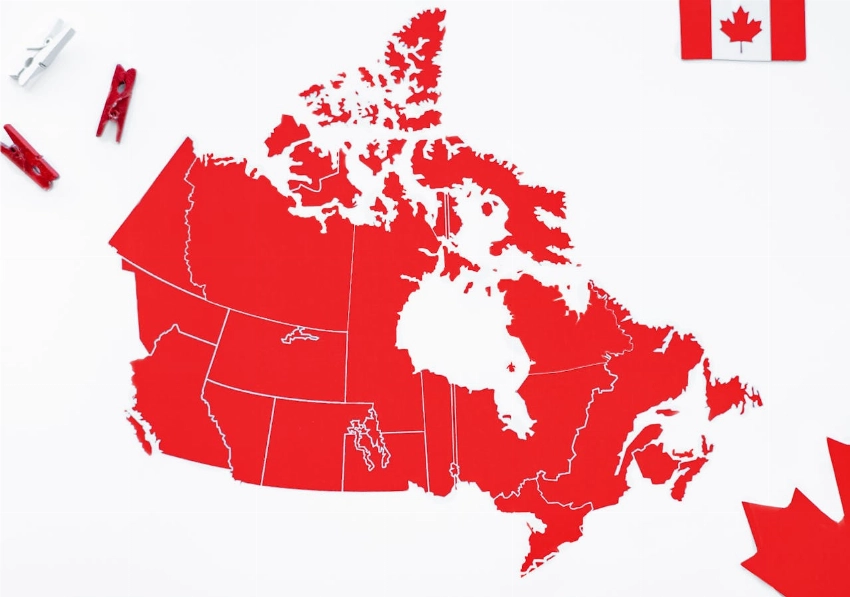
The Canada PR eligibility varies according to the pathway that you take because each of the immigration programs requires different specific criteria, requirements, and selection processes. Having the correct pathway chosen for your profile, work experience, and long-term goals is one of the key elements in enhancing your probability of success.
The core PR channels in Canada in 2026 will be:
-
Express Entry
-
Provincial Nominee Program (PNP)
-
Family Sponsorship
-
TR-to-PR pathway
All these avenues are aimed at various classes of applicants, like skilled workers seeking admission as foreigners, overseas graduates with Canadian experience, and relatives and family members of Canadian citizens and permanent residents. Knowing the functionality of each of the pathways, the eligibility requirements, and the advantages will assist you in deciding the best and most effective path to take on your Canada PR journey.
Who Is Eligible for Latest Canada PR Through Express Entry?
The most popular available pathway is Express Entry.
It includes:
-
Federal Skilled Worker (FSW)
-
Canadian Experience Class (CEC).
-
Federal Skilled Trades (FST)
-
Indian applicants are better with FSW.
Basic requirements:
-
1 year of work experience
-
CLB 7
-
ECA
How Does the Current Provincial Nominee Program Affect Canada PR Eligibility?
PNP allows provinces to choose candidates.
A nomination adds 600 CRS points.
Popular provinces:
-
Ontario
-
British Columbia
-
Saskatchewan
-
Alberta
PNP types:
-
Enhanced (connected with Express Entry)
-
Base (direct application)
Who Qualifies for the Latest Canada PR Through Family Sponsorship?
Family sponsorship is uncomplicated.
Eligible sponsors include:
-
Spouse
-
Children
-
Parents
No spouse CRS / IELTS required.
What Is the Current New TR-to-PR Pathway and Who Is Eligible?
This is a new pathway in 2026. It is aimed at casual employees.
Eligibility includes:
-
Work experience in Canada
-
Language proficiency
-
Education
What Is the CRS Score and How Does It Determine Canada PR Eligibility in 2026?
CRS score prioritises the applicants of the Express Entry system according to their profile strength. It is a points-based program that is applied to assess the candidates and choose the most qualified individuals to have permanent residence.
The CRS score is between 0 and 1200; the higher the score, the higher your probability of being invited to apply (ITA).
CRS Components include:
-
Age
-
Education
-
Language proficiency
-
Work experience
-
Other criteria (PNP nomination, fluency in French,h or the presence of family in Canada)
All these factors add to your overall score, re meaning that it is essential to maximise each of them in order to enhance your PR eligibility to Canada.
Also Read: Canada IELTS Band Requirements for Indians: Updated
How Can Latest Indian Applicants Specifically Meet Canada PR Eligibility?
Indian candidates have certain problems.
Nevertheless, there are obvious solutions.
Key steps include:
-
Choose the FSW pathway
-
Get ECA from WES
-
Score CLB 9 in IELTS
-
Maintain funds in savings.
-
Apply for PNP if needed.
Common Indian occupations:
-
IT professionals
-
Engineers
-
Nurses
-
Accountants
What Current Documents Are Needed to Prove Canada PR Eligibility?
You require good and full documents to effectively establish your eligibility for Canadian PR. It is also important to submit correct documents because failure in this regard may result in delays or even rejection of your application.
The following is a basic checklist to assist you in being organised:
Identity Documents:
-
Valid passport
Education Documents:
-
Degree certificates
-
Educational transcripts
-
Educational Credential Assessment report
Work Documents:
-
Employer letters of experience
-
Offer letters (if applicable)
-
Wage pay slips or employment evidence
Language Documents:
-
IELTS or CELPIP test results
Financial Documents:
-
Bank statements (last 6 months)
-
Proof of available funds
Medical & Security Documents:
-
Medical examination report
-
Police Clearance Certificate (PCC)
Preparation of all the documents is going to make your application process easier and quicker.
How Can You Check Your Canada PR Eligibility Online in 2026?
How to check your eligibility for the Canada PR Online with the help of simple tools and a few steps. It is fast, dependable,e and provides you with a realistic notion of your chances prior to the application. It also aids in finding out where you need to make improvements on your profile.
Follow these steps:
-
To find out whether you are eligible or not, use the IRCC Come to Canada tool.
-
Use an online calculator to determine your score and to estimate how you rank on the scale.
-
Find out PNP opportunities in your job, skills, and demand in provinces.
-
Speak to immigration experts to have a comprehensive and tailored analysis.
The whole process will be less than 10 minutes and will present you with a solid beginning point to your planning regarding your Canada PR journey.
Also Read: Canada Provincial Nomination Program
What Are the Latest Common Reasons for Canada PR Eligibility Rejection?

Most of the applications fail because of certain mistakes that can be prevented and corrected easily with proper planning and attention to the details. The slightest mistake can affect your eligibility for PR in Canada or your application.
Common reasons include:
-
Low CRS score
-
Wrong or unsuitable NOC code.
-
Outdated IELTS or language examination scores.
-
Inadequate or insufficient evidence of funds.
-
Medical inadmissibility problems.
-
Security or criminal background issue.
-
Misrepresentation (wrong or false information)
-
Knowing these pitfalls in advance will enable you to create a better and mistake-free application.
CONCLUSION
The determining factor of whether you can get permanent residency in Canada or not is Canada PR eligibility, and being able to know it better can help your application run much more smoothly. Concentrating on the main conditions, i.e., on choosing the correct NOC category, finishing your ECA in time, scoring highly on IELTS (preferably CLB 9), having enough liquid proof of funds, and considering the option of PNP in case of low CRS scores, you can be much more likely to succeed. By proper planning, proper documentation, and proper strategy, which should be specific to your profile, it is not only feasible but quite achievable that the Indian applicant will reach Canada PR eligibility by the year 2026.
Contact TerraTern for more information on Canada PR eligibility.


 AI Summary