


Key Highlights
- Canada Citizenship Certificate Processing Time Reaches 33 Months
- Citizenship Certificate Backlog Reaches 136,000 Applications
- Why are Canada Citizenship Certificate Applications Increasing?
- What Changed Under Canada's Citizenship-by-Descent Rules?
- What is a Canadian Citizenship Certificate?
- How the 33-Month Wait Could Affect Applicants?
- Can Applicants Request Urgent Processing?
- What Should Applicants do Amid the Long Processing Time?
- Could Canada's Citizenship Certificate Processing Time fall?
- Canada Citizenship Certificate Processing: Key Numbers
- Conclusion
The Canadian Department of Immigration, Refugees and Citizenship (IRCC) is seeing a dramatic increase in the processing time for citizenship certificate applications, with new applications taking 33 months to process. The new numbers could mean that those who apply now may be waiting to find out about their applications around mid-2029. Meanwhile, the backlog has grown to about 136,000 applications, and about 14,200 applications have been added in fewer than a month. The increase comes after significant recent changes to the citizenship-by-descent rules in Canada, which came into effect in December 2025, allowing more people born overseas to qualify for citizenship.
Canada Citizenship Certificate Processing Time Reaches 33 Months
IRCC's new processing estimate reflects a significant decrease from the start of 2026.
The processing time has increased sharply throughout the year:
-
January 2026: 10 months
-
May 2026: 12 months
-
June 2026: 15 months
-
July 2026: 19 months
-
August 2026: 25 months
-
September 2026: 33 months
The additional eight months that were added in one month emphasize the difficulties of the citizenship certificate system.
If a person is applying for a new application now, the 33-month timeframe could take the application to the middle of 2029. IRCC also advises that processing times may differ depending on the circumstances of the application, and applications made from outside Canada and the United States may take longer.
Also Read: Canada Unveils New Rules for Canada Immigration to Welcome Diverse Talent
Citizenship Certificate Backlog Reaches 136,000 Applications
The additional time is due to the growing number of applications being processed.
IRCC currently has approximately 136,000 citizenship certificate applications awaiting decisions. The inventory grew rapidly; in less than a month, there were approximately 14,200 applications.
The backlog is especially important because a citizenship certificate is not just another piece of immigration paperwork. It is the official evidence of Canadian citizenship for those who are already citizens of Canada.
Applicants might need to present some evidence of citizenship for reasons like applying for a Canadian passport, verifying citizenship, or accessing some rights and services.
The situation, then, poses a dichotomy between eligibility and easy acquisition of the documentary evidence of Canadian citizenship.
Why are Canada Citizenship Certificate Applications Increasing?
The major factor behind the recent surge is Canada's change to its citizenship-by-descent rules.
On December 15, 2025, the Canadian government brought Bill C-3 into effect. The law altered the citizenship-by-descent rule for the first time and made it easier for some to gain Canadian citizenship by birth or adoption abroad.
The revised process allows for eligibility based on a Canadian parent or ancestor under certain conditions and in accordance with the new connection requirements.
Canada's government has said the changes are addressing restrictions that had prevented some from having genuine links to Canada from getting citizenship.
The changes stem from a 2023 Ontario Superior Court decision that determined in some cases the previous first-generation limit was unconstitutional. Canada then enacted an interim measure in 2025, to be superseded by Bill C-3, a permanent change to the law.
What Changed Under Canada's Citizenship-by-Descent Rules?
The previous system, generally, allowed citizenship only if the first generation born outside Canada was a citizen.
The changes in December 2025 expanded eligibility. Individuals who were born outside of Canada but would have become citizens had the previous first-generation restriction or other antiquated provisions not existed can now apply for proof of citizenship and potentially become citizens, says Canada.
This is particularly important for Canadian families that span several generations.
As another example, a person born outside Canada might now have a route to Canadian citizenship via a Canadian parent, or in certain qualifying conditions, via a Canadian connection beyond the first generation.
The change made the citizenship certificate system more widely available to those who might want to apply, helping to drive up the demand.
Also Read: How to Increase CRS Score for Canada PR: 9 Proven Ways
What is a Canadian Citizenship Certificate?
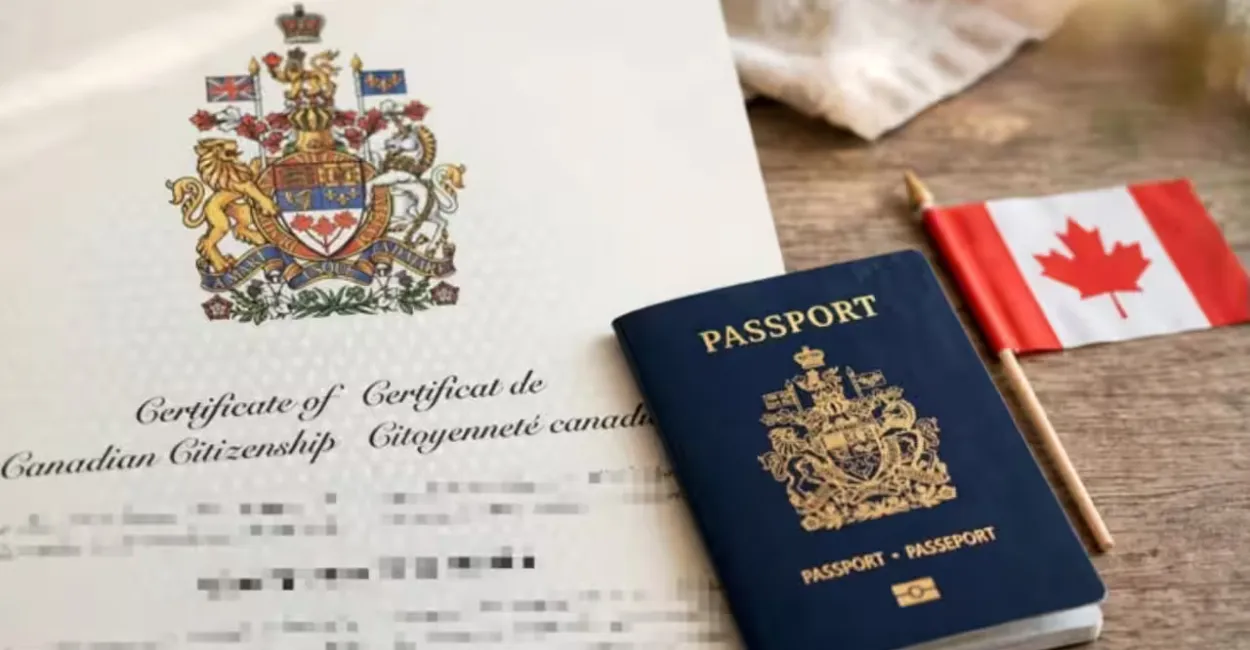
Canadian citizenship certificate is an official document that is issued to confirm that a person is a citizen of Canada.
It is especially for individuals who acquired citizenship by descent or are unable to complete the traditional citizenship naturalisation process and require documentation of citizenship instead.
The current fee for a proof-of-citizenship certificate is C$75 (as listed on IRCC's website).
The certificate is not a permanent residence document. Generally, someone seeking proof of citizenship is not looking for a temporary visa or permanent residency, but for confirmation of his or her citizenship.
Citizenship cards are no longer issued in Canada. If someone requests to replace or update an old citizenship card, IRCC provides a citizenship certificate.
How the 33-Month Wait Could Affect Applicants?
The longer processing time may cause issues for people who require citizenship documentation for life events.
They may require a citizenship certificate to receive other Canadian documents or to prove their citizenship for official purposes.
This could have an even greater effect on those outside of Canada. Applications from outside Canada and the United States may take longer and may require extra time to be sent, and some applications for minors may take longer.
This long wait may then make planning more difficult for those applicants who intend to travel, study, or work abroad or move overseas.
It also illustrates the need to differentiate between the approximate processing time and a guaranteed completion date. IRCC's processing-time figures are estimates based on its processing system and can change as application volumes and case complexity change.
Can Applicants Request Urgent Processing?
Yes. If there are exceptional circumstances, applicants may apply for urgent processing, but "urgent" processing is not available because it takes longer to process the application.
Eligible situations may encompass those where proof of citizenship is needed for:
-
Education
-
Employment
-
In some critical travel emergencies
-
Moving a minor child to Canada
-
Accessing social benefits
-
Cases involving statelessness
-
Other qualifying urgent circumstances
Applicants will need to satisfy the requirements of IRCC for urgent processing and submit supporting evidence to explain why the case should be considered quicker.
That does not mean that those who are in a genuine emergency are not entitled to wait for the usual 33-month period. Rather, they need to take a look at the urgent-processing needs of IRCC and submit suitable evidence.
What Should Applicants do Amid the Long Processing Time?
Candidates who meet the eligibility criteria for Canadian citizenship by descent should ensure that they are familiar with the requirements and paperwork before applying.
A full and accurate application will help prevent unnecessary delays from missing information or further documents being requested.
It is also important for applicants to have a copy of the forms and supporting documents they submit and follow up with IRCC after submitting their applications.
Those with an immediate need to establish citizenship should consider if their situation is an urgent case for IRCC processing and offer proof when they apply.
Importantly, applicants must not presume that the 33-month estimate is the same length of time that their individual application will be. The processing time may vary, and individual applications may be processed in a shorter or longer time depending on the situation.
What Does the Backlog Mean for Indians and Other Overseas Applicants?
The development is especially significant to those outside Canada who are considering citizenship based on a Canadian parent or family relationship.
The new rules could make it more accessible for more people around the world to apply for proof of Canadian citizenship. Therefore, it is important for applicants residing outside Canada to consider IRCC processing time as well as the time it will take for their documents and mailed items to arrive.
The lengthy processing period may be a significant factor for applicants when arranging their future travel, education or relocation to Canada.
The delay in citizenship certificates is not the same as the delays in temporary visas or permanent residence programmes/citizenship applications by individuals seeking to become naturalised. There is a citizenship certificate to establish or document Canadian citizenship.
Also Read: Canada PR Visa Process: Requirements & More
Could Canada's Citizenship Certificate Processing Time fall?
IRCC's processing-time estimates are updated regularly, and the actual processing time will vary with the volume of applications, staffing, inventories, and the complexity of the applications.
The current challenge, however, is that the applications have been surging since the citizenship law changes in December 2025.
The immigration department has admitted that the volume of applications can impact processing times and that its processing-time tool does not guarantee any specific processing time.
The backlog may even decrease if the department can process the applications more quickly than new applications are added. On the other hand, if demand is high, processing times may remain high.
In the meantime, applicants should expect the backlog to continue and should not rely on the published estimate for the number of applications that will be resolved in the near future.
Canada Citizenship Certificate Processing: Key Numbers
|
Indicator |
Latest figure |
|
Current estimated processing time |
33 months |
|
Applications awaiting decisions |
136,000 |
|
Applications added in less than one month |
14,200 |
|
Processing time in January 2026 |
10 months |
|
Processing time in August 2026 |
25 months |
|
Current estimated decision period for new applicants |
Around mid-2029 |
|
Citizenship certificate fee |
C$75 |
The figures illustrate how quickly the situation has changed during 2026. The processing estimate has more than tripled from January's 10 months to 33 months in September.
Conclusion
The Canadian citizenship certificate system is in a lot of trouble, with processing times now at 33 months and the backlog in the system at about 136,000 applications. The dramatic spike comes after citizenship eligibility was opened up in December 2025 to allow more individuals with Canadian family connections to apply for official citizenship documents. The latest statistics are a reminder to applicants to plan, provide full documentation, and be aware of the short-term processing option. The 33-month number is an average waiting time and not a definite timeframe, but the surge during 2026 indicates that the waiting process could be quite long now.
Contact TerraTern for more information.