Key Highlights
- What Is a Dependent Visa Australia?
- What are the Types of Dependent Visa Australia for Indians in 2026?
- Who Qualifies as a Dependent?
- Who Is Eligible for a Dependent Visa Australia in 2026?
- What is the Australia Dependent Visa Processing Time in 2026?
- What Documents are Needed by Indians for a Dependent VISA Australia in 2026?
- How to Apply for a Dependent Visa Australia in 2026?
- Can a Dependent Work in Australia in 2026?
- What is the Cost of a Dependent Visa Australia for Indians in 2026?
- Work and Study Rights for Dependents
- What are the 2026 Updates that affect the Dependent Visa Australia?
- What are the PR Pathways for Dependents in Australia in 2026?
- What are the Common Rejection Reasons for Dependent Visa Australia?
- How Can TerraTern Help With Dependent Visa Australia?
- Conclusion
A dependent visa Australia allows your spouse, partner, and children to legally reside with you during your studies, while working or creating a pathway to PR in Australia, and keep your family intact rather than cope with your relocation on your own. It provides entry to education, medical facilities, and, in most instances, employment privileges to your partner.
The conditions vary depending on whether you are on a student visa, skilled visa, regional visa, or partner visa. The processing times, costs, and eligibility might prove to be rigid and elaborate in 2026, so you need to know how student dependent visa Australia, Australia dependent visa processing time, and dependent visa Australia spouse will all fall into your long-term plans before you submit any application.
What Is a Dependent Visa Australia?
A dependent visa Australia is the key that keeps your relatives in contact with you as long as you study, work, or create your permanent life in Australia. It allows your partner or spouse and dependent kids to reside legally with you, obtain healthcare, and, in most instances, to study or work. To most migrants, this visa is what separates those who move alone and those who establish a coherent and stable life in a foreign country, and as such, knowing how it operates is very crucial when planning in the long term.
-
A dependent visa in Australia applies to a spouse, de facto partner, and dependent children of a principal visa holder.
-
It promotes family unification of students, skilled workers, regional visa, and PR applicants.
-
The Department of Home Affairs prescribes the regulations and evaluates every dependent visa application in Australia, depending on stringent requirements.
Expert Takeaway: As our expert guide of TerraTern says, you should always establish your eligibility for the dependent visa prior to your primary visa application because the inclusion of the dependents is cheaper and more efficient compared to coming in as an entrant later.
Also Read: What is COE Australia? A Complete Expert's Guide
What are the Types of Dependent Visa Australia for Indians in 2026?

The first major decision most families have to make is the one who has to choose between various forms of dependent visa in Australia. Each type is associated with its work rights, stay term, and PR tracks, and thus choosing the inappropriate one can slow down your plans or raise expenses. Being an international student, a sponsored employee, or a partner pathway, the type of visa you choose will influence not only the daily life of your family in Australia, but also both your professional and schooling choices.
-
A student dependent visa Australia (Subclass 500) allows your family to accompany you in the course of your study.
-
Talented dependents are appended to a visa, such as 482, 189, 190, 491, sponsored or points-tested workers.
-
The dependent visa Australia for spouse or partner (309/100 or 820/801) would be the perfect option when your objective is to have a permanent residence along with your partner.
|
Visa Type |
Subclass |
Best For |
Typical Duration |
|
Student dependent visa Australia |
500 |
Spouses/children of international students |
Course length |
|
Skilled work-dependent |
482 / 189 / 190 |
Families of sponsored or skilled workers |
Same as primary visa |
|
Dependent visa Australia for spouse (Partner) |
309/100, 820/801 |
Married/de facto partners seeking PR |
Temp 15–24 months, then PR |
|
Regional skilled dependent |
491 |
Families in regional skilled migration pathways |
Up to 5 years |
Expert Tip: Your expert guide in TerraTern tells us that you should carefully select a type of dependent visa: student dependents have an easier time moving to a skilled visa, whereas partner visas represent the easiest route to becoming a permanent resident.
Who Qualifies as a Dependent?
Australian rules treat a dependent as a spouse (including de facto/same-sex), a dependent child under 18, or an older child who is a full-time student or has a disability and relies on the sponsor. For applicants over 18 who claim dependency, evidence must show financial support and a lack of independent income. The sponsor must have declared family members when applying or add them as subsequent entrants before the decision on the sponsor’s main application, where applicable.
-
Spouse or Partner: includes married spouses, de facto partners, and same-sex partners; relationship evidence (marriage certificate, joint lease, photos) is required.
-
Dependent Child Under 18: biological, adopted, or step-children who are financially dependent and live with the sponsor.
-
Adult child as Dependent: full-time students (usually under 25) or adults with a permanent disability who rely on the sponsor for financial support.
-
Financial Dependency Proof: for applicants over 18, provide bank transfers, payslips, tax records, affidavits, or other documents showing ongoing support and lack of independent income.
-
Subsequent Entrant Rules: the sponsor should declare family members on the main visa application or add them later as subsequent entrants while the primary application is pending.
Who Is Eligible for a Dependent Visa Australia in 2026?
A dependent visa Australia does not simply depend on one being related to someone; it is rather based on showing that relationship and demonstrating that you can be of help to your family. The Australia immigration officers will scrutinise the nature of your actual and continued relationship, the level of dependence of your children, and your health, character, and financial situation. When these basics are sorted out early, the rest of the process will be easier, and there is less chance of delays or refusals.
-
A dependent visa Australia for a spouse must have a legal marriage or de facto relationship, and that too, with a minimum of 12 months of evidence.
-
There must be a general age of 18 or higher for full-time students who are actually dependent.
-
All dependent visa applications in Australia should meet the health, character, and financial capacity requirements of all family members.
Expert Advice: Our expert guide at TerraTern suggests that one should begin to collect authentic relationship evidence at least 12 months before application. As of 2026, the ability to prove relationship authenticity is becoming more stringent with immigration officers, specifically in the context of partner and spouse visas.
What is the Australia Dependent Visa Processing Time in 2026?
Knowing the Australia dependent visa processing time will enable you to avoid a last-minute rush on travel dates, course start day, or date to join a job. Processing would be based on the type of visa, the completeness of your application, and seasonal demand, particularly during major student intakes. Having realistic expectations about your schedule will allow you to make the reservations with greater confidence in terms of flights, accommodation, and education.
|
Visa Category |
Subclass |
Typical Australia-dependent visa processing time |
|
Student dependent visa Australia |
500 |
2–4 months |
|
Skilled work-dependent |
482 / 189 / 190 |
2–6 months |
|
Partner temporary (dependent visa Australia for spouse) |
309 /820 |
8–24 months |
|
Partner permanent |
100 / 801 |
12–26 months |
|
Regional skilled dependent |
491 |
3–7 months |
Expert Takeaway: Our expert guide at TerraTern points out that the saving of time through the application of dependents with your primary visa application can help in the reduction of total processing time by 40-60 per cent as compared to successive entrant applications, and the reduction of total costs by a large margin.
Also Read: Navigating PR Courses In Australia For International Students
What Documents are Needed by Indians for a Dependent VISA Australia in 2026?
An effective dependent visa Australia case is founded on an effective document set that eliminates any form of uncertainty. The identity, relationship, finance, health, and character evidence must all be in agreement and paint a definite story. Weak, inconsistent, and missing documents are likely to delay your application by months or result in a rejection; hence, preparation in advance and in detail is worthwhile.
-
A valuable passport (ie, 6 months left) for every applicant.
-
Passport-size photos (new, proper size, and background according to the Department of Home Affairs specifications).
-
Birth certificates of all the dependent kids with the names of both parents.
-
Marriage certificate for a dependent visa Australia for spouse or evidence of de facto co-residency (joint lease, bills, bank statements) of a minimum of 12 months living together.
-
True relationship evidence: bank and utility joint accounts, tenancy agreements, photos together, travel tickets, and social evidence.
-
All dependents must have identity documents and national ID cards (where necessary).
-
Police clearance certificate of each country in which the applicant was residing for 12+ months in the past 10 years (applicants aged 16/18+ according to country regulations).
-
Health examination records by panel physicians, such as chest X-ray and any ordered tests.
-
Health insurance evidence: OSHC student dependent visa Australia or OVHC other temporary visas, and extending to the entire length of stay.
-
Documented proof of finances (particularly among students): bank statements, income documents, loan authorisations, or sponsorship papers of the new 2026 standards.
-
A visa grant letter or acknowledgement of the visa holder who is the primary visa holder associated with the dependent visa application in Australia.
-
Form 80 and Form 1221 (applicable to character and background information) filled in.
Expert Takeaway: According to our expert guide from TerraTern, create a dedicated digital folder with all certified documents before starting your application—missing even one document can delay processing by 4-8 weeks, and incomplete applications are the leading cause of visa delays in 2026.
How to Apply for a Dependent Visa Australia in 2026?

The application procedure for a dependent visa Australia is largely conducted through the internet and proceeds through a logical series of steps, though minor errors can lead to large-scale disappointments. Since the development of an ImmiAccount to deposit documents, pay fees, reserve health checks, and provide biometrics, there are rules at each of the steps. Another important strategic choice that determines the time and cost is whether the family should be added as a main visa or as subsequent entrants.
Step 1: Determine Visa Type and Eligibility (Week 1)
Start by matching your situation to the right visa subclass and confirming that both you and your family meet the rules:
-
Decide if your case is a student dependent visa Australia, a skilled dependent, or a dependent visa Australia for a spouse under the partner categories.
-
Check that the primary visa holder meets all conditions and that each dependent fits the official definition (spouse, de facto partner, dependent child).
-
Review the latest Australia dependent visa processing time to plan travel and course or job start dates.
-
Go through a document checklist so you know exactly what you must collect before you apply.
Step 2: Gather and Prepare Documents (Weeks 2–6)
Next, build a complete document bundle that covers identity, relationships, finances, health, and character:
-
Collect passports, birth certificates, and marriage certificates (or 12+ months de facto evidence) for a dependent visa Australia for a spouse.
-
Compile relationship proof such as joint bank statements, shared leases, bills, photos, and travel history.
-
Arrange financial evidence for a student dependent visa in Australia or other streams using bank statements, income proof, and loan or sponsorship letters.
-
Apply early for police clearance certificates from every country lived in (often 4–8 weeks to issue).
-
Translate any non-English documents using certified translators and scan everything clearly (PDF, good resolution).
Step 3: Create ImmiAccount (Day 1 of Application)
All standard dependent visa Australia applications are lodged online through ImmiAccount:
-
Go to the official Department of Home Affairs website and open an ImmiAccount using a valid email address.
-
Confirm your email via the verification link and set a strong password and security questions.
-
Store your login details securely, as you will use this account for updates, uploads, and decisions.
Step 4: Complete the Online Application Form (Days 1–3)
The form is where you connect dependents to the primary visa and give core background details:
-
Select the correct subclass (for example, 500 for a student dependent visa Australia or the partner subclass for a dependent visa Australia for a spouse).
-
Enter all personal data accurately: names, dates of birth, passport details, and contact information.
-
Fill in the relationship details, including dates and living arrangements, to match your evidence.
-
Answer all health and character questions honestly, disclosing any past issues or visa refusals.
-
Complete additional background forms (such as Form 80 or Form 1221) if required and have them ready to upload.
-
Recheck every section for spelling, dates, and consistency before moving on.
Step 5: Upload Supporting Documents (Days 3–5)
This step is where you prove everything you stated in the form using clear evidence:
-
Group documents by category (identity, relationship, financial, health, character) to match the online sections.
-
Upload files in the requested format and size, using clear names so each item is easy to identify.
-
Make sure all scans are readable; dark or cut-off images can lead to extra requests and delays.
-
For a student dependent visa Australia, attach strong financial evidence and your Confirmation of Enrolment details.
-
Upload relationship evidence for a spouse visa Australia in a logical timeline (for example, by year).
Step 6: Pay the Visa Application Fee (Day 5)
The government fee must be paid before your dependent visa for Australia application is officially submitted:
-
Check the current fee for your visa type and any extra charges for dependents or subsequent entrants.
-
Pay with an accepted card or online method, then wait for on-screen confirmation.
-
Save the payment receipt and reference number, as this can help if any payment query arises later.
Step 7: Submit Your Application (Day 5)
Once everything is complete and paid, you can lodge the file:
-
Confirm that all sections in ImmiAccount show as finished and that all required documents are attached.
-
Click submit to lodge your dependent visa application in Australia formally.
-
Note down your Transaction Reference Number (TRN) and keep the confirmation email safe.
-
Record the submission date; you will use it when estimating the Australia dependent visa processing time.
Step 8: Book and Complete the Health Examination (Within 7 Days)
Health checks are standard for most family applicants:
-
Use the health or HAP ID you receive to book an appointment with an approved panel clinic.
-
Bring your passport, photos, and any medical records the doctor might need.
-
Complete the required tests (general exam, chest X-ray for older applicants, and any extra tests requested).
-
The clinic sends the results typically directly to the immigration system, but keeps your receipt as proof of completion.
Step 9: Attend Your Biometrics Appointment (If Requested Common from 2026)
Biometrics help confirm identity and are increasingly required for dependent visa cases in Australia:
-
Watch your email and ImmiAccount for a biometrics instruction letter.
-
Book a slot at the nearest visa application centre using the details provided.
-
Take your passport, appointment letter, and TRN to provide fingerprints and a facial photo.
-
Keep the biometrics confirmation slip or email for your records.
Step 10: Respond to Any Additional Information Requests
Case officers may request clarifications or additional documents during assessment:
-
Check ImmiAccount and your email regularly, especially during the expected processing time for Australia-dependent visas.
-
Upload any requested documents quickly and clearly, following the same standards as your main file.
-
Attend an interview if invited (more common for dependent visa Australia for spouse cases).
-
Make sure your answers stay consistent with your original application.
Step 11: Track Application Status
After lodging and providing all evidence, your file moves through assessment:
-
Log in to ImmiAccount to see real-time progress in the “My applications” section.
-
Expect around 2–4 months for many student-dependent visa Australia files and 8–26 months for partner routes, depending on the stream.
-
Avoid sending repeated follow-ups unless your case is well outside normal timeframes, as this rarely speeds things up.
Step 12: Receive the Visa Decision
The final step decides whether your family can travel or stay together on a dependent visa Australia.
-
If granted, download the visa grant notice and check visa number, start and end dates, and all conditions (especially work and study rules for spouses and children).
-
Confirm that every family member included in your student dependent visa Australia or dependent visa Australia for spouse application appears correctly on the grant letter.
-
If refused, read the reasons carefully, note any review or appeal options, and decide whether to challenge the decision or reapply with a stronger case.
Expert Tip: Have your dependents listed on your first visa filing and not under the status of being second entrants, this technique will save you at least 30-40% in total costs and cut waiting times by up to 8 weeks, in addition to having the added advantage of having the same visa expiry date allowing you to renew your dependents more easily in the future.
Also Read: Best City In Australia For Jobs, Students & Visitors
Can a Dependent Work in Australia in 2026?
One of the most significant components of any dependent visa Australia is the right of work, and in this case, the couple attempts to control expenses in Australia. The course level and the type of visa given are directly influenced by the number of hours, or the absence of hours, of the dependent who can legally be employed.
Being aware of these limits makes the families budget wisely and prevents future visa violations that may make the applications damaging to a future application.
|
Primary Visa Type |
Dependent Category |
Work Rights |
Hourly Limit |
Additional Notes |
|
Student (Bachelor/Undergraduate) |
Spouse/Partner |
Restricted |
48 hours/fortnight |
Unlimited during scheduled breaks |
|
Student (Postgraduate/Masters/PhD) |
Spouse/Partner |
Unlimited |
Full-time |
No hour restrictions |
|
Student Visa |
Dependent Children |
Not permitted |
0 hours |
Until age 18 |
|
Skilled Work (482/189/190) |
Spouse/Partner |
Unlimited |
Full-time |
Same as the primary holder |
|
Skilled Work |
Dependent Children 18+ |
Varies |
Check specific conditions |
May have restricted rights |
|
Partner Visa (309/820 Temporary) |
Spouse/Partner |
Unlimited |
Full-time |
Work rights granted immediately |
|
Partner Visa (100/801 Permanent) |
Spouse/Partner |
Unlimited |
Full-time |
Same rights as PR holders |
|
Regional Visa (491) |
Spouse/Partner |
Unlimited |
Full-time |
Regional work encouraged |
|
Family Members |
Not permitted |
0 hours |
Strictly no work allowed |
Expert Advice: Working in Australia as a postgraduate student will provide your spouse with unlimited work rights as opposed to undergraduate dependents, which is a huge financial benefit of AUD 50,000-70,000 a year, according to our TerraTern expert guide.
What is the Cost of a Dependent Visa Australia for Indians in 2026?
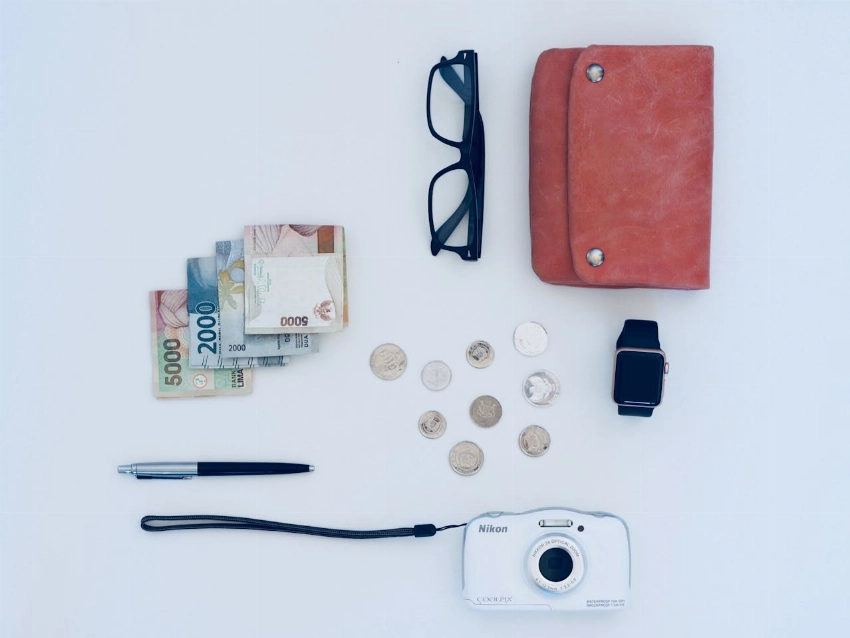
The actual price of a dependent visa Australia will shock most applicants since the visa fee is not the only bill. Health checks, police certificates, biometrics, translations, insurance, and optional agent fees can all fall into cash very easily. A realistic budget at the very beginning allows you not to experience financial stress in the middle of the process or even miss the opportunity to apply due to a lack of funds.
|
Cost Component |
Approx. Amount (AUD) |
Approx. Amount (INR) |
|
Visa application fee |
700 – 9,000+ AUD |
Rs. 40,000 – Rs. 5,20,000+ |
|
Health examinations (adult) |
300 – 450 AUD |
Rs. 17,000 – Rs. 26,000 |
|
Health examinations (child) |
200 – 350 AUD |
Rs. 11,000 – Rs. 20,000 |
|
Police clearance certificates |
50 – 200 AUD |
Rs. 3,000 – Rs. 12,000 |
|
Biometrics |
~160 AUD |
~Rs. 9,000 |
|
Document translation & certification |
100 – 500+ AUD |
Rs. 6,000 – Rs. 30,000+ |
|
Health insurance (OSHC/OVHC) |
500 – 2,500 AUD |
Rs. 30,000 – Rs. 1,50,000 |
|
Migration agent/professional fees |
2,500 – 8,000+ AUD |
Rs. 1,50,000 – Rs. 4,70,000+ |
Expert Takeaway: Our expert guide at TerraTern mentions that on top of the base visa application fee, one should budget another 40-50% to cover his or her mandatory health examinations, police certificates, biometrics, and health insurance- total costs of AUD 4,500-5,000 per person, rather than the AUD 710 application fee.
Also Read: What is the Average Salary in Australia per Month?
Work and Study Rights for Dependents
Most partner and dependent visas allow work and study, but conditions differ by subclass. Student partners may need to meet Genuine Temporary Entrant (GTE) criteria; partners on 820/801 typically have full work rights while waiting for the permanent decision. Dependent children can study; guardians may require a Student Guardian visa. Check subclass conditions before travel to confirm restrictions, including workplace sector exclusions for some temporary visas.
-
General Work and Study Rights: most partner and dependent visas permit paid work and full-time study, but exact rights depend on the visa subclass and any specific conditions attached.
-
Partner Visas (820/801 onshore): partners usually receive full work rights while their onshore temporary visa is processing, including for most industries.
-
Student Partner Limitations: partners of student visa holders should confirm work-hour limits tied to the student’s course level and scholarship conditions; some student courses restrict dependent work hours.
-
Student Guardian Rule: if a dependent child needs a parent or guardian in Australia, that adult may need a Student Guardian visa with specific conditions and limited work rights.
What are the 2026 Updates that affect the Dependent Visa Australia?
The changes in the current rules imply that an application for a dependent visa Australia in 2026 is not the same as it used to be, only a few years ago. The increased security, finance, and relationship requirements have increased the bar, especially in the case of partners and students. It is important to keep up with such changes in order not to work with outdated checklists or assumptions that are not compatible with the current policy settings.
-
Most dependent visa applications now require biometrics, with the added appointment fee and cost.
-
The tougher relationship checks also apply to all dependent visa Australia of a spouse, especially the de facto couples, where 12 months of shared life must be demonstrated.
-
The increase in financial requirements has a direct impact on approvals of student dependent visa Australia, wherein now the income and savings are more closely tested.
Expert Advice: Our expert guide at TerraTern is quoted as saying that the biometrics requirement and the extra relationship scrutiny will mean 3-4 weeks of additional application preparation time, so you must begin preparing your dependent visa application at least 6 months before you plan to travel, so that additions like the biometrics requirement and increased scrutiny of relationships do not cause last-minute headaches.
What are the PR Pathways for Dependents in Australia in 2026?
A dependent visa Australia is not the end but the beginning of permanent residence for many families. With time, spouses and children might shift toward dependent status to joint or independent PR holders, particularly when they are studying or working in Australia. Having the knowledge of these paths at an early stage will assist you in choosing the correct visa order instead of being trapped with temporary visas.
-
Spouse or partner subclasses are eligible to change a dependent visa in Australia into a permanent resident as soon as the relationship and residence requirements are satisfied.
-
Qualified and area dependents may subsequently make an application as principal applicants on obtaining local qualifications and employment.
-
Australian study or work profiles can assist the future independent skilled visa by supporting those who are on a student-dependent visa in Australia.
Expert Stake: Our expert guide of TerraTern has suggested that the spouses of postgraduate students have the strategic benefit of PR, as they can get 1-3 years of skilled Australian working experience on a dependent visa, and then independently apply to skilled PR (Subclass 189/190) with much higher points than offshore applicants.
What are the Common Rejection Reasons for Dependent Visa Australia?

Cancellations on a dependent visa in Australia are usually a result of foreseeable problems that the applicants might have rectified before submission. Locke or red flags are weak relationship evidence, missing records, poor accounting, or incoherent evidence to the decision-maker. It is better to learn these pitfalls beforehand to have a checklist of what to avoid and create a stronger application.
-
Most of the dependent visa Australia-related refusal of spouse applications occurs due to thin, contradictory, and even short relationship evidence.
-
The cases of student dependent visa Australia may fail due to poor financial evidence or unstable and unfixed financial evidence that does not correspond to the income claimed.
-
Incomplete files, health or character issues, as well as previous visa violations, are significant causes of rejection in all types of dependent visa Australia.
Expert Tip: In our expert guide with TerraTern, more than 60% of dependent visa refusals are as a result of poor relationship evidence, which is why you need to start compiling joint financial records, shared living evidence, and social recognition evidence at least 12-18 months before you apply, not then.
Read More: Top 10 Best Regional Areas In Australia For PR
How Can TerraTern Help With Dependent Visa Australia?
TerraTern helps simplify your dependent visa Australia journey by turning a complex, rule-heavy process into a clear, step-by-step plan for your whole family. From choosing the right visa type to preparing strong documentation and timing the application around your course or job start date, the team focuses on keeping your family together with fewer delays and surprises.
-
TerraTern analyses your profile to pick the best route across student dependent visa Australia, skilled dependents, or dependent visa Australia for spouse, based on your long-term PR and career goals.
-
Experts help you build a complete, high-quality document set (relationship, financial, health, and character) that matches current policy expectations for dependent visa Australia cases.
-
They guide you on realistic Australia-dependent visa processing time, application strategy (with primary vs subsequent entrant), and risk areas, so your student-dependent visa Australia or spouse case has a stronger chance of first-time approval.
Conclusion
Choosing and applying for the right dependent visa Australia is one of the most important decisions you will make when moving as a family. When you understand realistic Australia dependent visa processing time, prepare documents early for a strong student dependent visa Australia or skilled application, and build a detailed evidence file for any dependent visa Australia for spouse, you give your family the best chance to live, study, work, and eventually settle together in Australia with fewer surprises along the way.
For official rules, fees, and forms, always cross-check your dependent visa Australia options on the Australian Department of Home Affairs website.
To know more about dependent visa Australia visit TerraTern now!


 AI Summary