

Key Highlights
- What are the Civil Engineering Ausbildung in Germany Requirements For Indians in 2026?
- What is Civil Engineering Ausbildung in Germany For Indians in 2026?
- Why Choose Civil Engineering Ausbildung in Germany From India in 2026?
- What Are the Eligibility Requirements for Civil Engineering Ausbildung in Germany From India in 2026?
- What is the Civil Engineering Ausbildung Program Structure in Germany For Indians in 2026?
- How Much Salary Can You Earn During Civil Engineering Ausbildung?
- What is the Application Process for Civil Engineering Ausbildung in Germany for Indians in 2026?
- What Documents Are Needed for the Ausbildung Visa Application in Germany for Indians in 2026?
- What Career Opportunities Exist After Civil Engineering Ausbildung in Germany in 2026?
- How Does Civil Engineering Ausbildung Compare to a Bachelor's Degree?
- What Are the Challenges Indian Students Face in Civil Engineering Ausbildung in Germany in 2026?
- How Can TerraTern Help With Civil Engineering Ausbildung in Germany in 2026?
- Conclusion
In Germany, Civil Engineering Ausbildung is a dual vocational training program that is a combination of practical field training in construction firms plus theoretical training at vocational schools, usually taking three years of study, which results in certification as a skilled civil engineering technician. In case of 2026 intakes, the main conditions are the completion of secondary education on the level of Hauptschulabschluss or Realschulabschluss in Germany (or 12th grade and +2 in the case of an international applicant such as an Indian), knowledge of German at least at the B1 level (B2 at least in some cases), and age: 17-30, since it is a field of hard work.
Prior to visiting Germany, international students need to obtain an Ausbildung training contract with a German employer as well as a National Type D visa with evidence of funds, educational diplomas, and health insurance. Through this channel, trainees receive a monthly allowance (approximately 1,000-1,300) and receive training on practical skills in construction materials, technical drawing, and infrastructure projects, and have high employment opportunities in the thriving construction industry in Germany.
What are the Civil Engineering Ausbildung in Germany Requirements For Indians in 2026?

Civil engineering Ausbildung in Germany requirements are special qualifications amongst foreigners seeking 2026 admissions.
Educational Qualifications
-
12th grade completion or completion of another board with an equivalent of 50-60% marks in the science or technical stream.
-
The same as German Hauptschulabschluss or Realschulabschluss; holders of a diploma or ITI are also permitted.
Language Proficiency
-
German certificate B1 level (B2 highly preferred or obligatory in some places of employment and courses).
-
Confirmed by Goethe-Institut, TestDaF, or other test.
Age and Fitness
-
Age 17-30, often 18+, depending on the program.
-
Physical fitness certificate occasioned by the fieldwork requirements in construction.
Visa and Contract
-
First of all, find a training contract (Ausbildungsvertrag) with a German employer.
-
Visa National Type D Vocational training visa with evidence of funds, health insurance, passport and a clean criminal record.
Additional Documents
-
School leaving/transfer certificates, medical fit report and bank statements depicting financial support.
Also Read: Pursue Civil Engineering Jobs in Germany: Everything You Need To Know
What is Civil Engineering Ausbildung in Germany For Indians in 2026?
Civil Engineering Ausbildung is a vocational training program in Germany that provides the attendants with both practical and theoretical knowledge in the construction industry.
Program Overview
-
Dual system On-the-job training (70-80% of time) in a construction company and classroom training (Berufsschule) in a vocational school.
-
Concentrates on practical work such as a construction technician (Bautechniker), which deals with building projects, materials and infrastructure projects.
Duration and Structure
-
Usually, 3 years, divided into alternating periods of practice and theoretical courses.
-
Has progressive exams: mid-term examinations and state certification (Gesellenpruferung) to be a skilled worker.
Training Content
-
Theory: mathematics, physics, technical drawing, construction materials, and safety regulations.
-
Practising: site work, pouring concrete, steel work, surveying, computer-aided design software and project management supervision.
Benefits and Outcomes
-
Receives a monthly allowance (€1,000-1400 depending on year), no tuition fees.
-
In Germany, the construction industry has high employability (over 90 per cent placement rate) with an alternative of specialisation or Meister qualification.
Expert Advice: Unlike traditional engineering degrees, Ausbildung focuses on practical skills development while providing financial independence through monthly salaries, making it ideal for students seeking immediate industry exposure without student debt.
Why Choose Civil Engineering Ausbildung in Germany From India in 2026?
Civil Engineering Ausbildung in Germany is a better choice compared to India in 2026 since the industry is in high demand, and training experience is beneficial to career starters.
Earn While Learning
-
Get an attractive allowance ranging between 1,000-1,400 dollars in a single month (with annual increment) to cover the cost of living without tuition fee or loan.
-
No night school means no financial dependence, just like regular degrees.
Practical Dual Training
-
70-80% practical company training and theory in school, developing practical skills in construction and infrastructure.
-
Entry into highly sophisticated equipment, laboratories and projects in the leading engineering companies of Germany.
Existence of High Job Demand and Prospects.
-
The high-demand construction industry, where skilled labour is in short supply, guarantees employment of above 90 per cent after training.
-
Career opportunities to permanent jobs, foreman jobs or additional Meister training, salaries up to 50,000 plus a year.
Professional and Life Benefits.
-
3-year track to skilled certification instead of four years in a university, and work-life balance and social benefits, such as health insurance.
-
PR opportunities 2-3 years later, sustainability orientation, and international focus of German qualifications.
Pro Tip: With Germany investing €50+ billion in infrastructure modernisation through 2030, civil engineering Ausbildung graduates face unprecedented job security and career growth potential, particularly in sustainable construction and renewable energy projects.
What Are the Eligibility Requirements for Civil Engineering Ausbildung in Germany From India in 2026?
Germany Civil engineering Ausbildung in Germany requirements criteria that are specifically designed to accommodate international students, especially those who intend to pursue 2026 programs in India.
Educational Qualifications
-
Completion of 12 th grade or equivalent examination by a recognised board, preferably in the science/technical stream with 50-60 per cent marks.
-
It is also an equivalent of German Hauptschulabschluss or Realschulabschluss, as the holders of diplomas or ITI certificates qualify.
Language Proficiency
-
B1 level minimum (B2 or more demanded by most employers), certified by Goethe-Institut, TestDaF, or telc.
Age and Health
-
Between 17-30 years old and 18-25 years old is favoured in most construction-related programs.
-
Evidence of body fitness since fieldwork is a demanding activity.
Pre-Application Requirements
-
Before a visa application, one has to get an Ausbildung training contract with a German employer.
-
Legal passport, no criminal background and simple financial documentation to secure a visa (National Type D).
What Level of German Language Proficiency is Required?
In Germany, Civil engineering Ausbildung in Germany requirements B1 German as a minimum in 2026, and B2 as a recommendation to achieve training and licensing success.
Key Levels
-
B1 (Minimum): Daily work and school communication; most employers are okay with it.
-
B2 (Preferred): Technical discussions, examinations, and site interactions (constructions).
Certification
-
Goethe-Institut, TestDaF, or telc certificates required; IELTS not necessary.
Key Note: While B1 certification meets minimum requirements, achieving B2 level significantly improves your chances of selection and workplace success, as construction site supervisors and safety instructions are delivered entirely in German.
What is the Civil Engineering Ausbildung Program Structure in Germany For Indians in 2026?
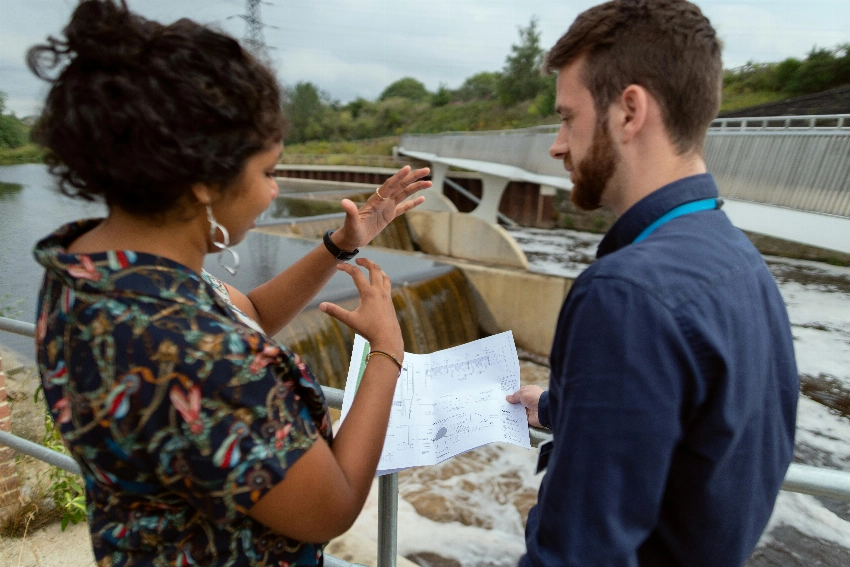
In Germany, CEA uses a systematic two-vocational training system that incorporates on-the-job and theory-based learning.
Core Structure
-
Dual system: 70-80 on-the-job training in construction companies, 20-30 classroom training in Berufsschule.
-
Education Level: full-time 3 years, usually beginning in September (2026 cohort).
Training Phases
-
Year1: Fundamentals of construction materials, tools, safety and site support.
-
Year 2-3: Higher skills of surveying, CAD, concrete work, and performance of projects with growing responsibility.
Evaluation and Accreditation.
-
Intermediary exams on a yearly basis; the last state exam (Gesellenpruefung) qualifies a skilled worker.
-
Block model: 4-12 week alternating principle of practice and school.
What Subjects Are Covered in Classroom Training?
In Germany, Civil Engineering Ausbildung training in the classroom teaches the necessary theoretical material to supplement practical work.
Core Subjects
-
Mathematics: Measuring, load-bearing and structural calculations.
-
Physics: The principles of mechanics, the forces, the strength of materials, and statics.
-
Construction materials: Concrete, steel, timber and reinforcement properties.
Technological and Speciality Topics.
-
Site plan and blueprint basics of technical drawing and CADs.
-
German construction regulations, safety rules and standards of quality.
-
The basics of structural engineering and the environment.
What Practical Skills Will You Develop?
The Austbildung training on civil engineering is the practical training of the skills in construction through the on-site work in Germany.
Key Practical Skills
-
Location surveying, measurements and blueprint implementation.
-
Pouring of concrete, reinforcement and form work assembly.
-
Material handling, masonry and operation of heavy equipment.
Advanced Competencies
-
CAD design, construction tests, and security measures.
-
Supervision of project coordination and quality control.
Advice by our Expert: The dual system ensures you're not just learning theory but actively contributing to real infrastructure projects—bridges, roads, buildings—from your first year, making you job-ready immediately upon completion.
How Much Salary Can You Earn During Civil Engineering Ausbildung?
Germany Civil Engineering Ausbildung (typically in positions such as Maurer (mason)) or Tiefbaufacharbeiter (civil engineering specialist) is a monthly stipend that increments every year in the course of the standard 3-year program. These are gross sums that are established on collective agreements such as IG Bau and differ slightly by region and employer, with West Germany paying more. The benefits, such as health insurance, are added to the salaries received by the trainees.
|
Training Year |
Monthly Gross Stipend (€) |
Notes |
|
1st Year |
1,000–1,100 |
Entry-level fundamentals; tax-free to a lot of foreigners. |
|
2nd Year |
1,200–1,400 |
Skill-building phase. |
|
3rd Year |
1,400–1,600 |
Higher duties; effective April 2026. |
Post-Training Earnings
Civil engineering technicians who are qualified receive a starting salary of between €2,700 and 3,500 each month and increase to between 3,400 and 3,900 with experience. Demand in the building industry guarantees employment of more than 90 per cent after certification.
Expert Advice: Unlike Indian diploma programs, where students pay fees, German Ausbildung pays you €900-€1,350 monthly (₹80,000-₹1,20,000), covering living expenses entirely while building professional experience—a truly unique earn-while-you-learn model.
What is the Application Process for Civil Engineering Ausbildung in Germany for Indians in 2026?

German Civil engineering ausbildung in Germany requirements applications have a systematic procedure, beginning with preparation and outreach to employers, which is the most suitable when planning an intake in the year 2026 as an applicant to a non-EU country such as India.
Preparation Steps
-
German proficiency at level B1/B2 through certified exams (Goethe-Institut or telc) and a translate/attest diploma (12 th grade or higher).
-
Make a German-style resume (Lebenslauf), application letter (Anschreiben), and bring a passport, school transcripts, and evidence of physical fitness.
-
Employers of research (through websites such as Azubi.de, Ausbildung.de or company websites, e.g. Hochtief, Bilfinger) in popular locations such as Bavaria or NRW.
Application Submission
-
Directly apply to firms 6-12 months (September starts January) before the submission of documents (via online or mail).
-
Interview (usually over the internet first); shortlisted candidates are offered an Ausbildungsvertrag (training contract) with stipend and responsibilities.
-
School placement confirmation needed, must be secured by Berufsschule in case of dual training.
Visa and Arrival
-
Apply for a signed contract to the Type D vocational training visa at the German embassy with a blocked account (euro 11 208/per year), health insurance documents, and a letter of motivation.
-
On the approval, register residence in Germany, open a bank account and start training, including company orientation.
Where Can You Find Civil Engineering Ausbildung Positions?
In Germany, the positions of Civil Engineer Ausbildung are generally found on special platforms and on the websites of companies, particularly in 2026 admissions into the high-demand construction industry. Concentrate on the sites that accept international students who have a B1 German.
Key Job Portals
-
Ausbildung.de and Azubi.de: search with query Bautechniker, Maurer, or Tiefbau jobs; there are hundreds of openings with the option of direct applications.
-
Make-it-in-Germany.com: Official government job exchange list, Official verified Ausbildung vacancies for non-EU applicants.
-
IHK/Ausbildungsstellenbörse: Regional chambers of commerce offer local construction company opportunities.
Company Sources
-
Big Companies: Hochtief, Bilfinger, Zueblin--see career pages at Bavaria/NRW of "Ausbildung Baubereich".
-
Special Projects: GoAusbildung.com (engineering), StudyFeeds.com (construction).
What Documents Are Needed for the Ausbildung Visa Application in Germany for Indians in 2026?
Civil engineering Ausbildung in Germany requires visas for non-EU citizens, especially Indians aiming at 2026 placements, and are sent in the form of duplicates to the German embassies.
Core Documents
-
Valid passport (not older than 10 years, validity 12 months or more) + copy of data page (A4).
-
3 biometric passport photos of the required specifications.
-
German employer signed an Ausbildungsvertrag (training contract) and an Ausbildungsplan (training plan).
Supporting Papers
-
Motivation letter and comprehensive CV (Lebenslauf) for education/employment.
-
School certificates (12 th /+2 equivalent, translated/attested) + B1 German certificate (Goethe/telc).
-
Evidence of financial means: Blocked account (€11,208 / year) or Verpflichtungserklarung von einem Sponsor.
Additional Items
-
Health/travel insurance confirmation (employer/personal, cover of 30,000 Euros).
-
Elective: Federal Employment Agency pre-approval, physical fitness evidence.
Pro Tip: Securing the Ausbildung training contract from a German company is the most critical step—once you have this signed agreement, the visa approval process becomes significantly more straightforward, with over 90% success rate for complete applications.
What Career Opportunities Exist After Civil Engineering Ausbildung in Germany in 2026?
In Germany, the graduates of Civil Engineering Ausbildung become qualified skilled technicians (e.g. Bautechniker, Maurer) with high employability (more than 90 per cent) in construction.
Immediate Job Roles
-
Supervisor or foreman on building/infrastructure projects at the construction site.
-
Professional engineer in road/bridge engineering, concrete engineering or surveying.
-
Quality control inspector to make sure that they comply with the German building rules.
Advancement Paths
-
Business ownership certification or top management certification (Pursue Meister (master craftsman))
-
Move into other related areas such as environmental engineering or renewable infrastructure.
-
Pathway (e.g. bachelor of Degree in Building Engineering (Bauingenieurwesen) to engineer positions with a salary of over 50,000/year.
Long-Term Prospects
-
After 2-3 years of permanent residence, experience qualifies an individual to have an EU Blue Card.
-
Earnings start at 2,700 at the entry level, to 4,000 and above at a middle-level position.
Key Note: Civil engineering Ausbildung graduates have 95%+ employment rates within 6 months of completion, and after 2 years of qualified work, become eligible for permanent residence permits (Niederlassungserlaubnis) under German immigration law.
How Does Civil Engineering Ausbildung Compare to a Bachelor's Degree?
Civil Engineering Ausbildung provides an employer-paid training, which is practical in contrast to theoretical Europe, where one undergoes a bachelor's degree. Ausbildung results in faster labour force entry, whereas a bachelor's degree is appropriate for engineering academics or an advanced career.
Duration and Cost
-
Ausbildung: 3 years with 10001600 monthly allowance; 0 tuition, no debt.
-
Bachelor (Bauingenieurwesen): 3 to 3.5 years low/no tuition, but living expenses are around 800-1200/month with no compensation.
Training Focus
-
Ausbildung: 7080% on the job (surveying, concrete, CAD), 2030% in school.
-
Bachelor's: This is classroom-based and mostly includes lectures, projects, and minimal internships, with a focus on theory and research.
Career Outcomes
-
Ausbildung: 90%+ instant skilled work (technician/foreman, between 2,700 and 3,500 entry); way to Meister/PR.
-
Bachelor: More extensive (engineer/designer, but earns more, starting at €50,000+), but with increased competition; requires a master's to do the best jobs.
Advice by our Expert: Ausbildung is ideal for students seeking immediate financial independence and hands-on careers, while bachelor's degrees suit those planning research, advanced engineering roles, or academic careers; however, completing Ausbildung first, then pursuing a part-time bachelor's while working, offers the best of both worlds.
What Are the Challenges Indian Students Face in Civil Engineering Ausbildung in Germany in 2026?
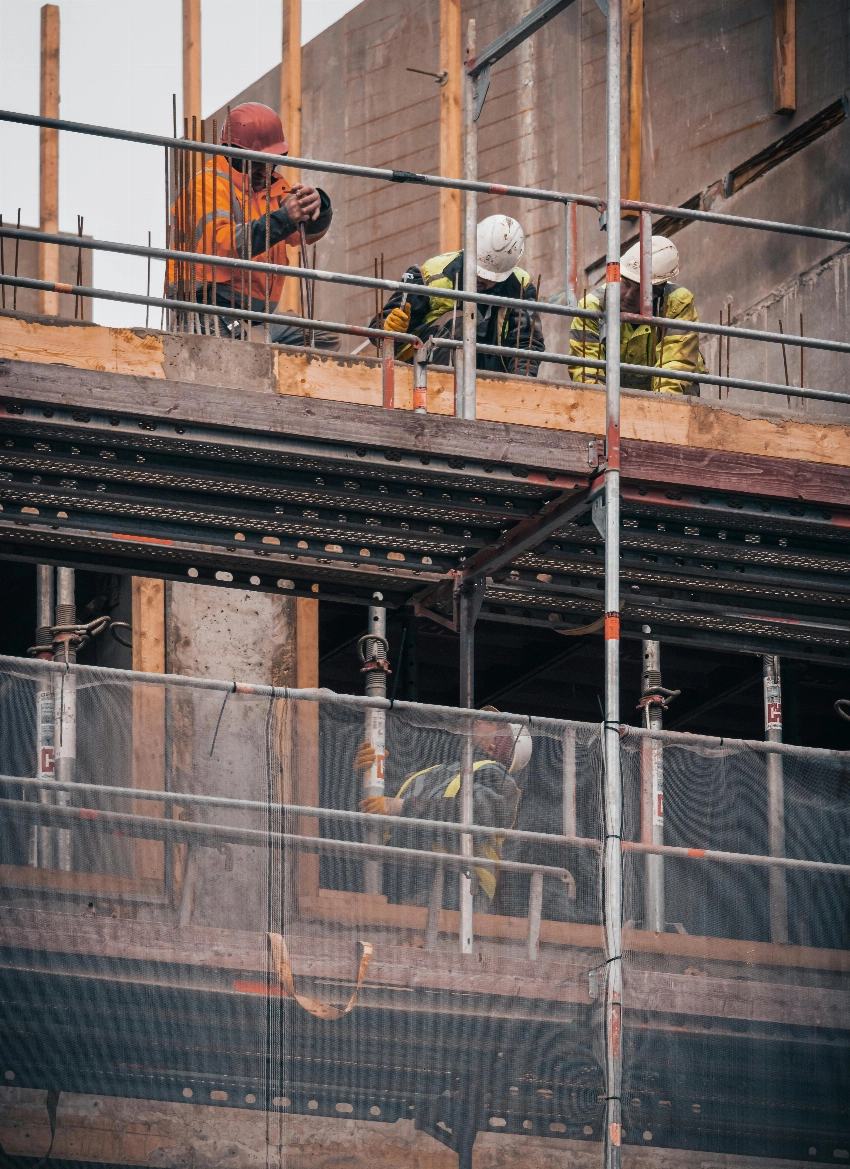
The Indian students undertaking Civil Engineering Ausbildung in Germany face certain challenges with language requirements and cultural changes in the construction industry.
Language Barriers
-
B1/B2 German is needed to communicate on the site and exams; technical construction vocabulary poses a challenge to beginners even after the certification.
-
Many newcomers are burdened by the dual training workload and the need to balance intensive language practice with the workload.
Work Adjustment and Culture.
-
The adjustment to direct German work culture, punctuality and hierarchy is unlike the Indian ones, which leads to isolation initially.
-
Outdoor strenuous fieldwork in different weather conditions is also an endurance test for people who have been accustomed to manual labour.
Application and Financial Hurdles.
-
Competitive outreach is needed to secure training contracts in the presence of preference to locals; a visa blocked account (€11,208) is an additional initial expense.
-
Adjustment is extended by homesickness and lack of support from the Indian community in the rural construction sites.
Advice by our Expert: While the German language requirement seems daunting, dedicated preparation with 8-10 months of intensive training can take most Indian students from zero to B2 level, and many construction companies now offer additional language support during the first year of Ausbildung.
How Can TerraTern Help With Civil Engineering Ausbildung in Germany in 2026?
TerraTern focuses on the mentoring of Indian applicants in Germany under the Ausbildung programs, such as Civil Engineering, with the end-to-end services up to the 2026 intakes.
Application Assistance
-
Conducts eligibility checks, document verification and enrollment following the initial counselling call.
-
Obtains conditional offer letters with employers and gets ready to interview based on cultural fit.
Language and Training
-
Offers certified training in Germany to the B1 level, needed in construction.
-
Offers visa processing services, such as those within 60-90 days.
Post-Landing Services
-
Provides taxi services to the airport, booking of rooms and orientation to jobs.
-
Grant programmes for permanent residence after training at 95% success rate.
Conclusion
In Germany, CEA 2026 is still a viable, realistic opportunity that Indian candidates fulfilling major qualifications such as 12th-grade (50-60% marks, science/technical desirable), B1/B2 German certificate, age, 18-30, and physical fitness can join the course. The Type D visa process (base financial documentation of a 11208 blocked account) provides entry to 3-year dual training tuition-free upfront, 1000-1600 stipends, and 90+ job placements as skilled technicians in construction shortages only by securing an employer contract first.
Although there are obstacles of language and adjustment, this path presents entry-level positions free of debt to stable careers, a PR professional track, and upskilling to Meister or degrees, which is better than conventional student studies as a fast route to financial independence.
To learn more about the latest Civil engineering Ausbildung in Germany requirements, contact TerraTern right away!




 AI Summary