

Key Highlights
- What is Ausbildung Laboratory Technician in Germany?
- What Are the Types of Laboratory Technician Ausbildung Programs Available in Germany?
- What Are the Eligibility Requirements for Ausbildung Laboratory Technician in Germany?
- How Long Does Laboratory Technician Ausbildung Take to Complete?
- What is the Ausbildung Laboratory Technician Salary During and After Training?
- What Are the Job Opportunities After Completing Laboratory Technician Ausbildung?
- How Do You Apply for a Laboratory Technician Ausbildung in Germany from India?
- What German Language Skills Do You Need for Laboratory Technician Ausbildung in 2026?
- Can Indian Students Get Permanent Residence After a Laboratory Technician Ausbildung in Germany?
- What Are the Living Costs in Germany During Laboratory Technician Ausbildung?
- What Skills and Competencies Will You Learn in Laboratory Technician Ausbildung in Germany in 2026?
- What is the Difference Between a Laboratory Technician Ausbildung and a University Degree?
- What Are the Top Cities in Germany for Laboratory Technician Ausbildung in 2026?
- How Can TerraTern Help Us in Ausbildung Laboratory Technician in Germany
- Germany's Ausbildung Program: Your Fast-Track to a High-Demand Career in 2026
- Conclusion
Ausbildung laboratory technician in Germany has provided Indian students with a practical way towards a stable career with scientific labs, combining practical training with classroom training through the dual system. Starting in 2026, this 3-3.5 year program provides trainees with the skills in analysis, experiments, and lab safety to lead to a high-demand position in biology, chemistry, or the medical field.
What is Ausbildung Laboratory Technician in Germany?
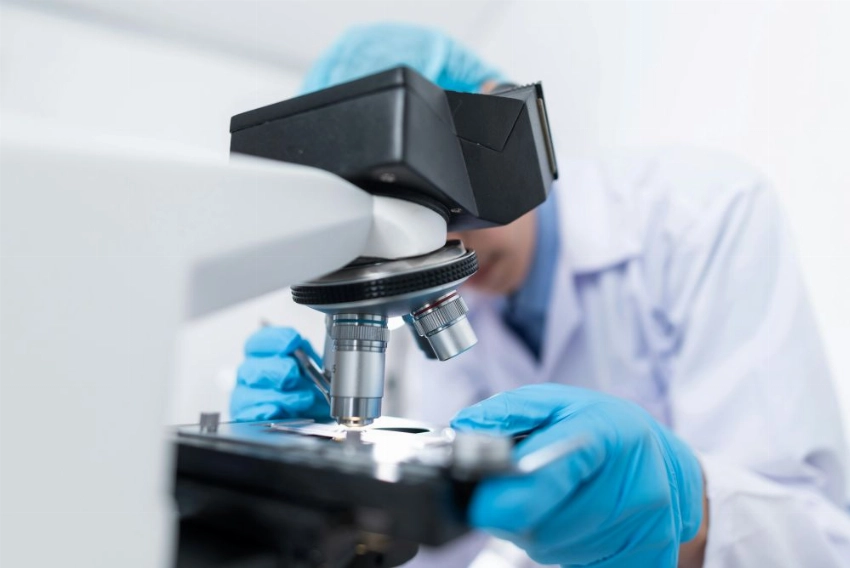
Ausbildung Laboratory Technician is a dual vocational training in Germany, which lasts for 3 years, with two different educational institutions: companies for practical lab education and vocational schools for theoretical education.
-
Dual System: Dual Ausbildung combines training 70% in the workplace (experiments, equipment use) and 30% in the Berufsschule (theory in science and safety).
-
Role & Duties: Technicians prepare samples, perform analysis, maintain the labs, document results, and ensure compliance with daily operations.
-
Specialisation: Holding a degree in Biology, Microbiology, Genetics, and Chemistry of synthesis, analytics, and clinical diagnostics of blood tests.
-
Certification & Benefits: IHK certificate with EU recognition No tuition + stipends (EUR1,000 - EUR1,400 /month)
-
Vs. University: Enter the job world faster and without the burden of debt, with a practical, rather than theoretical, focus.
Key Note: Unlike traditional degrees that focus solely on theory, Ausbildung Laboratory Technician ensures you're job-ready from day one with paid, industry-relevant training that 85% of German employers prefer when hiring, giving you a competitive edge in Europe's healthcare sector.
Also Read: List of Ausbildung Courses with Duration in Germany
What Are the Types of Laboratory Technician Ausbildung Programs Available in Germany?
Germany has four specialism areas for laboratory technicians as part of the laboratory technician Ausbildung qualification. Biology Laboratory Technician (Biologielaborant/in), Chemical laboratory Technician (Chemielaborant/in), Paint, Coating Laboratory Technician and Textile Laboratory Technician, all of which last 3 to 3.5 years in duration, with different Ausbildung laboratory technician qualification specialisations for biology and chemistry laboratory technicians and also cost technicians.
Biology Laboratory Technician (Biologielaborant/in)
This Ausbildung laboratory technician qualification is concerned with life sciences, and provides trainees with skills in microbiology, genetics, cell culture and molecular biology.
|
Aspect |
Details |
|
Focus Areas |
Microbiology, genetics, cell culture, and molecular biology |
|
Typical Employers |
Research institutes, Pharmaceuticals, biotech jobs, University Labs |
|
Core Skills |
Microscopy, DNA analytical skills, cell counting skills, and maintenance of cultures |
|
Training Salary |
EUR900-EUR1,100/month |
|
Post-Qualification Salary |
EUR2,800-EUR3,500/month |
|
Duration |
3.5 years |
Chemical Laboratory Technician (Chemielaborant/in)
This Ausbildung laboratory technician qualification focuses on analytical chemistry and prepares technicians for effective control and synthesis procedures in industrial facilities.
Clinical/Medical Laboratory Technician (Medizinisch-Technische/r Laboratoriumsassistent/in)
This Ausbildung laboratory technician qualification focuses on specialisation in clinical diagnostics for clinical-based healthcare; hence, more often this will require school-based rather than the common dual system.
|
Aspect |
Details |
|
Focus Areas |
Clinical diagnostics, blood banking, histology, microbiology |
|
Typical Employers |
Hospitals, diagnostic labs, and blood donation centres |
|
Core Skills |
Sample processing, automated testing, quality assurance |
|
Training Salary |
€900-€1,050/month (may vary as often unpaid school-based) |
|
Post-Qualification Salary |
€2,500-€3,200/month |
|
Duration |
3 years |
Pro tip: Biology and chemical laboratory technician programs offer the highest stipends and best job prospects, with 90% of graduates securing positions in Germany's thriving pharmaceutical and biotech sectors within 3 months of certification.
What Are the Eligibility Requirements for Ausbildung Laboratory Technician in Germany?

To qualify for the laboratory technician Ausbildung in Germany, Indian students must be in 12th grade, have a B1-B2 German proficiency, be between 18 and 30 years old and have an interest in lab sciences through biology, chemistry, or physics subjects.
Educational Qualifications Needed
The Ausbildung laboratory technician qualification needs a 12th with the science stream and especially good marks in biology, chemistry and mathematics for equivalency via the Anabin database.
|
Aspect |
Details |
|
Minimum Education |
12th grade (all streams, science preferred) |
|
Marks Requirement |
Minimum 60% (varies according to the company) |
|
Key Subjects |
|
|
Equivalency |
Recognition of the Anabin database |
|
Additional Advantage |
German Language Proficiency Requirements
Minimums for B1 German hold most programs, and for the best employers, it is a B2 Certificate of Skills, such as Goethe-Zertifikat or telc, which is recognised and would validate skills, including technical lab vocabulary.
|
Aspect |
Details |
|
Minimum Level |
B1 (B2 preferred) |
|
Accepted Certificates |
TestDaF, Goethe-Zertifikat, telc |
|
Key Focus |
Technical vocabulary in chemistry/biology |
|
Timeline |
6-12 months from beginner to B1 |
|
Costs |
Language schools €300-€800/month |
Age and General Requirements
Applicants between the ages of 18 and 30 are an ideal fit with the necessary requirements of having a valid passport, health fitness, normal colour vision, blocked account funds and insurance for the lab requirements.
|
Aspect |
Details |
|
Age Range |
18-30 years (up to 35 possible) |
|
Passport |
Valid with 2+ years remaining |
|
Health |
Good fitness, normal colour vision |
|
Financial Proof |
€11,208/year blocked account |
|
Insurance |
Full health coverage required |
Important Tip: While B1 German is the minimum requirement, students with B2 proficiency have 3x higher acceptance rates and receive priority consideration from top pharmaceutical companies like Boehringer Ingelheim and Merck, making intensive language preparation a worthwhile investment.
Also Read: Ausbildung Engineering Courses in Germany
How Long Does Laboratory Technician Ausbildung Take to Complete?
Ausbildung laboratory technician course programs in Germany are generally 3 to 3.5 years, when they are in the biology and chemistry path. At the same time, specialised programs can also be shorter, 2.5 - 3 years, representing the prior education or acceleration.
Standard Program Duration Breakdown
The Ausbildung laboratory technician course is structured into three years in progressive stages, starting from the basic skills, to specialisation, and independently working in the laboratory with IHK exams (reduction is rare in favour of prior qualifications).
|
Phase |
Duration & Focus |
|
Year 1 |
Foundation: basic techniques in the lab, safety, and basics of theory |
|
Year 2 |
Intermediate: advanced techniques, department rotations |
|
Year 3 |
Advanced: independent work, projects, IHK exam prep |
|
Exams |
Final IHK certification |
|
Shortening |
Maybe with past education (case-by-case) |
Time Commitment and Weekly Schedule
The Ausbildung laboratory technician course requires 35-40 hours a week, 3-4 days at companies, and 1-2 days at Berufsschule, and 25-30 vacation days and state holidays.
|
Aspect |
Details |
|
Total Hours |
35-40/week |
|
Company Time |
3-4 days (24-32 hours) |
|
School Time |
1-2 days (8-16 hours) |
|
Sample Schedule |
Mon-Thu company, Fri school |
|
Vacation |
25-30 days + 9-13 holidays |
Can You Complete It Faster? Acceleration Options
High performers in the Ausbildung laboratory technician course may fast-track off 6 months with employment permitting, though prior credits rarely transfer, and no real fast-tracking, but an emphasis on depth.
|
Option |
Details |
|
Acceleration |
6 months reduction for top performers |
|
Requirements |
Company approval, good grades |
|
Prior Credits |
Will rarely be accepted |
|
Fast-Tracks |
Non-formal; focus on learning |
|
Recommendation |
Require comprehensive mastery |
Important Note: The 3-3.5 year duration might seem long, but remember you're earning EUR900-EUR1,300 monthly while learning, totalling EUR32,400-EUR46,800 over the training period—essentially getting paid EUR40,000+ to gain a valuable European qualification instead of paying tuition fees.
What is the Ausbildung Laboratory Technician Salary During and After Training?
During Ausbildung laboratory technician salary trainees receive monthly end-of-training stipends ranging from EUR900 in the first training year to EUR1,255 in year three, totalling EUR38,000 - EUR42,000 during training, whereas certified professionals are paid between EUR2,500 and EUR3,800 per month (EUR30,000 - EUR45,600 a year).
Monthly Stipend During Ausbildung Training (2026 Rates)
Ausbildung laboratory technician salary depends on the year, company size, location, and sector, with chemistry often 5-10% higher than biology in large pharma. tarifvertrags.
|
Year |
Stipend Range |
Factors |
|
First |
€900-€1,050/month |
Company size, location |
|
Second |
€950-€1,150/month |
Industry sector (chemistry +5-10%), |
|
Third |
€1,000-€1,255/month |
Pharma firms higher |
|
Total |
€38,000-€42,000 |
Collective agreements |
|
Munich vs. Small City |
Munich: €1,100 avg; Small: €950 (higher living costs) |
- |
Post-Qualification Salary: What Laboratory Technicians Earn in Germany
Ausbildung laboratory technician salary post-certification from EUR 2,200 - EUR 2,800 entry-level to EUR 3,500 - EUR 4,500 senior: Pharma pay most, regions such as Bavaria 10 - 15% above average, plus bonus
|
Level |
Monthly Salary |
Annual |
|
Entry (0-2 yrs) |
€2,200-€2,800 |
€26,400-€33,600 |
|
Mid (3-5 yrs) |
€2,800-€3,500 |
€33,600-€42,000 |
|
Senior (8+ yrs) |
€3,500-€4,500 |
|
|
Specialized |
€4,000-€5,500 |
- |
|
Benefits |
Christmas bonus, vacation pay, insurance |
Pharma highest |
Total Financial Value: Ausbildung vs. University Degree
Ausbildung laboratory technician salary combined with a EUR38k Euro-bound EUR42k earned during the training, compared to EUR15k Euro-bound EUR25k University living costs, resulting in EUR53k - EUR67k Salary advantage in addition to 1-year earlier salary paid and no debt incurred.
|
Aspect |
Ausbildung |
University |
|
3-Year Total |
€38,000-€42,000 earned |
€15,000-€25,000 costs |
|
Net Advantage |
€53,000-€67,000 |
Student loans |
|
Career Start |
Immediate, +€30,000-€36,000/yr1 |
Delayed 1 year |
|
Work Rights |
Instant Germany authorization |
Post-grad visa |
Expert Advice: By completing laboratory technician Ausbildung instead of a traditional university degree, you'll be approximately EUR70,000-EUR80,000 better off financially after 5 years—that's earnings during training plus earlier career start, giving you a significant head start in building wealth in Germany.
Also Read: Ausbildung in Germany: Earn, Learn & Build Your Future
What Are the Job Opportunities After Completing Laboratory Technician Ausbildung?
Ausbildung laboratory technician jobs have a 92% employment rate within 3 months for graduates across 15,000+ Hospitals, research institutes, pharmaceutical companies, and diagnostics labs in Germany, and automatic EU work authorisation for 27 states.
Top Employers and Industry Sectors Hiring Laboratory Technicians
Ausbildung laboratory technician jobs lead to life in pharma giants, biotech innovators, research hubs, hospitals, and testing firms, providing stable jobs in high-demand sectors.
|
Sector |
Key Employers |
|
Pharmaceutical |
Bayer, Boehringer Ingelheim, Merck, Pfizer Germany, Novartis |
|
Biotechnology |
BioNTech, CureVac, Evotec, Qiagen |
|
Research Institutes |
Max Planck, Helmholtz Centers, Fraunhofer Society |
|
Hospitals |
Charité Berlin, University Hospital Munich, Heidelberg |
|
Diagnostic Labs |
Labour Berlin, MVZ Dr Eberhard, Bioscientia |
|
Chemical Industry |
BASF, Evonik, Wacker Chemie |
|
Environmental Testing |
TÜV, SGS, Eurofins |
|
Food Safety |
Quality control labs of major manufacturers |
Specific Job Roles and Career Paths Available
Ausbildung laboratory technician jobs contain a wide range of occupations from quality control to special diagnostic procedures, skills are matched, also in the fields of analysis, testing and lab operations.
|
Role |
Focus Area |
|
Quality Control Technician |
Product testing, making sure it is compliant |
|
Research Lab Assistant |
Experiments, data analysis |
|
Clinical Lab Technician |
Medical diagnostics |
|
Production Lab Technician |
Manufacturing support |
|
Environmental Specialist |
Sample of analysis |
|
Pharma Development Tech |
Formulation of drugs |
|
Microbiology Tech |
Cultures, pathogens |
|
Analytical Chemistry Tech |
Spectroscopy, titration |
|
Blood Bank Tech |
Processing, storage |
|
Forensic Lab Tech |
Evidence analysis |
Career Advancement and Further Education Opportunities
Ausbildung laboratory technician jobs offer a short time to take up supervision, along with Meister certification for a EUR 500-EUR 800 salary boost, university studies with credit transfers, and the possibility of EU mobility.
|
Opportunity |
Details |
|
Immediate Roles |
Lab Supervisor, Team Leader |
|
Further Quals |
Technician Meister (+€500-€800/month) |
|
Advanced Studies |
Bachelor's in Biotech/Chemistry |
|
Credit Transfer |
Ausbildung for university standing |
|
Dual Studies |
Part-time work + study |
|
Specializations |
Clinical chem, molecular diagnostics |
|
Management |
Lab Manager, QA, R&D Coordinator |
|
Mobility |
EU Blue Card, pan-Europe work |
|
Entrepreneurship |
Lab consulting business |
As per TerraTern Expert Shreya, Laboratory technicians with Ausbildung certification plus 2-3 years of experience can earn more than entry-level university graduates in related fields, and by year 5, your earning potential equals or exceeds that of bachelor's degree holders—proving that vocational excellence often outperforms academic credentials in Germany's merit-based job market.
How Do You Apply for a Laboratory Technician Ausbildung in Germany from India?
Applying for a laboratory technician ausbildung from india usually takes 8-12 months. It involves: reaching B1 German, preparing documents (CV, certificates, motivation letter), finding and getting a training contract, opening a blocked account of 11200 euros and applying for a national Type D visa.
Step 1: Language preparation and certification (4-8 months)
Admissions in Goethe-Institut/Max Mueller Bhavan/Good online Providers in India for B1/B2 German course.
-
Budget on the order of INR 30,000 to INR 60,000 for a complete course of B1 and work on basic grammar and lab-related vocabulary.
-
Prepare and take a recognised exam (Goethe-Zertifikat, telc or TestDaF), around EUR150 EUR200 (INR 13,000-INR 18,000)
-
Allow at least 6 months for an absolute beginner to progress from the absolute beginner level to the B1 level with regular practice.
Step 2: Credential Evaluation and Document Preparation (1-2 months)
Check for 12th-grade recognition through Anabin or by advice from the German authorities or consultants
-
Compile Documents: 10th /12th marksheets, Passport, CV in German, motivation letter, languagecertificate, photos, and lab certificates, if any.
-
English and World Languages: Translate and notarise academic documents (English-German) (~5-10 thousand German Marks for translation, ~2-5 thousand German Marks for notarisation);
Make sure to write a CV and a motivation letter in German and in standard German application style.
Step 3: Searching for Ausbildung Positions (2-4 months)
Use official portals, such as Make-it-in-Germany, Federal Employment Agency and IHK training boards, to search for a lab technician job.
-
Apply through pharma/biotech/hospitals/research Institutes company Career Pages forã Gerangular Ausbtung Stellen.
-
Explore incendie job sites (e.g., large German apprenticeship job websites) and filter for the laboratory technician role.
-
Send 15-25 well-tailored applications (modified for each employer, ideally 12-18 months ahead) (Aug-Sep).
Step 4: Interview Process and Securing Training Contract (1-2 months)
Attend virtual interviews (Zoom/Teams) in which employers test the German (B1+) and some basic science, and motivation.
-
Prepare to explain your interest in work in the lab, previous subjects in science and long-term plans in Germany.
-
If chosen, receive an Ausbildungvertrag with information on the start date, salary, working hours, and responsibilities.
-
Sign and scan the contract, then bring back a copy of the agreement and keep multiple copies for visa and future formalities.
Step 5: Financial Proof and Blocked Account (1-2 weeks)
Opening a blocked account (Sperrkonto), EUR11,208 for the first year at any recognised provider.
-
Pay for setup fees of around EUR50 to EUR 150, depending on provider and service package
-
You will be able to withdraw around EUR934 per month; your Ausbildung stipend will top this up.
-
For the first year, EUR934 (blocked) plus EUR 900-EUR 1,050 stipend, giving about EUR 1,834-EUR 1,984 per month. of EUR 983.
Step 6: Visa Application Process (2-3 months)
Apply for this national Type D visa for vocational training at the competent German Embassy/Consulate in India.
-
Send through passport, training contract, blocked account proof, language certificate, health insurance, accommodation details form and photos
-
Pay the visa fees (around EUR75) and attend the visa interview, which includes biometric data collection.
-
Expect processing times of 6-12 weeks or so before a final decision is made.
Step 7: Pre-Departure Preparations (1 month)
Now book your flight and book accommodation for a minimum of one to two weeks in some temporary accommodation in Germany.
-
Activating/finalising German health insurance, making an Anmeldung (residence registration) appointment.
-
Pack important documents, important clothes, medications and have EUR500-EUR1,000 in cash for the first few days.
-
Join online communities of Indians and others abroad, and use tools such as Deutsche Bahn, Google Maps, and Deep to make it easier to apply for Ausbildung in Germany and get settled.
Expert Tip: The most common mistake Indian applicants make is starting the German language learning too late—begin at least 12-15 months before your intended Ausbildung start date to ensure B1 proficiency and have adequate time for applications, as the entire process from zero German knowledge to arriving in Germany typically takes 12-18 months.
Also Read: Ausbildung Courses in Germany
What German Language Skills Do You Need for Laboratory Technician Ausbildung in 2026?
Laboratory technician Ausbildung, minimal B1 proficiency for visa and entry, B2 is recommended for mastering technical lab terminology, safety protocols, and communication with colleagues over the 3-year program
Minimum vs. Recommended Language Levels
While B1 covers basic visa and communication requirements as well as limits complex activities, B2 guarantees the success of vocational schools and career development; C1 has advantages for the best employers in the country.
|
Level |
Capabilities |
Suitability |
|
B1 (Minimum) |
Routine instructions, simple procedures; has problems with technical texts |
Visa/basic entry; vocational challenges |
|
B2 (Recommended) |
Technical vocabulary, SOPs, and participating in school |
Training success, advancement |
|
C1 (Advanced) |
Management eligibility, Meister progression |
Pharma companies, leadership |
Technical German Vocabulary for Laboratory Work
Key terms include chemistry, biology, equipment, safety, documentation, and actions needed for daily lab operations in Ausbildung.
|
Category |
Key Terms |
|
Chemistry |
Reagenz (reagent), Probe (sample), Titration, pH-Wert, Oxidation |
|
Biology |
Mikroskop, Zellkultur (cell culture), Verdünnung (dilution), Sterilisation |
|
Equipment |
Zentrifuge (centrifuge), Pipette, Brutschrank (incubator), Waage (scale) |
|
Safety |
Schutzbrille (safety goggles), Handschuhe (gloves), Abzug (fume hood) |
|
Documentation |
Versuchsprotokoll (experiment protocol), Laborbuch (lab notebook) |
|
Quality Control |
Qualitätssicherung, Kalibrierung (calibration), Validierung |
|
Verbs |
messen (measure), wiegen (weigh), verdünnen (dilute), zentrifugieren (centrifuge) |
Language Learning Resources and Timeline for Indian Students
Indian students can prepare for B1 through institutes or apps at pre-departure from India, followed by B2 in Germany through subsidised courses designed for German language for laboratory technician requirements.
As per TerraTern Expert: While B1 gets you through the door, students with B2 German proficiency report 60% less stress during training, 40% better grades in vocational school, and significantly higher job satisfaction. Investing an extra 3-4 months to reach B2 before arriving in Germany pays enormous dividends throughout your career.
Can Indian Students Get Permanent Residence After a Laboratory Technician Ausbildung in Germany?
Laboratory technician Ausbildung graduates are able to obtain German permanent residence (Niederlassungserlaubnis) after only 2 years of skilled work after qualification (2026 immigration reforms), cutting the previous 4-year waiting period and providing Indians with one of the fastest EU residency options in Europe.
The Ausbildung to Permanent Residence Pathway Timeline
Becoming a permanent resident (Ausbildung to Permanent Residence Pathway) Timeline:
-
During Ausbildung (3 years): Have a vocational training residence permit during the time of earning a stipend and developing skills.
-
Post-Ausbildung (2 years): Work as a qualified lab technician with a skilled worker permit
-
After 2 years of employment, apply for permanent residence when the criteria are met.
-
Total timeline: Time from start of Ausbildung to counterculture: 5 years, from start of Ausbildung to full PR status: 5 years
-
Key requirements: 60 months pension contributions, B1 German(B2 typical), financial self-sufficiency, legal/society, adequate housing.
Benefits of German Permanent Residence for Indians
Advantages of German permanent residence for indians
-
Unrestricted Work: Any job/employer/location in Germany with no permits
-
EU Mobility: Live/work freely with 27 EU states.
-
Family Reunification: Simplified spouse/children relocation.
-
Social Security: Full Pensions, access to unemployment benefits
-
No Renewals: Permanent status eliminates visa bureaucracy.
-
Citizenship Path: Can apply after five more year (total 10) or Quickest with integration.
-
Property/Education: Easier Loans, kids receive their education for free (in German).
Citizenship Option: From Ausbildung to German Passport
Citizenship option out of ausbildung to a German passport is:
-
Standard Path:10 years total (3 Ausbildung+2 work+5 PR).
-
Fast Track: C1 German community ties 8 years
-
Dual Citizenship:ále for India-Germany from new reforms 2023.
-
Passport Perks: Visa-free access to 190 countries, EU rights, and EU voting public-sector jobs.
-
No Deportation: this is for lifetime security in Germany.
-
Application Needs: Providing proof of B2/C1 knowledge, an integration certificate, finance, a clean record, a citizenship test, and an EUR255 fee.
Key Note: The Ausbildung pathway offers one of the most secure routes to European permanent residence for Indians—unlike uncertain work visa sponsorships, Ausbildung provides guaranteed residence during training, high post-qualification employment rates (92%), and clear PR eligibility that doesn't depend on finding a sponsoring employer, giving you complete control over your immigration journey.
Also Read: Ausbildung in Germany | Work While Studying
What Are the Living Costs in Germany During Laboratory Technician Ausbildung?
Monthly living costs while at laboratory technician Ausbildung2 EUR850 - EUR 1,400 by city Rent EUR350 - EUR700 Health insurance EUR120 Groceries EUR200 - EUR250 Transport EUR50 - EUR90 Fully covered by stipend EUR900 - EUR1,300 first-year blocked account EUR934/month
Accommodation Costs in Major German Cities
Shared Apartments (WG) Trainees are best off at EUR350-EUR550, most expensive in Munich or Frankfurt, and cheapest in Leipzig or Dresden. Utilities often included, deposit about 2 months rent reimbursed - see WG-gesucht.de early.
|
City/Type |
Monthly Rent |
|
Munich/Frankfurt (WG) |
€500-€700 |
|
Berlin/Hamburg (WG) |
€400-€600 |
|
Leipzig/Dresden (WG) |
€300-€450 |
|
Smaller cities (WG) |
€250-€400 |
|
Student dorms |
€250-€400 |
|
Studio apartment |
€500-€900 |
|
Utilities (separate) |
€80-€150 |
Monthly Budget Breakdown for Ausbildung Trainees
The monthly budget breakdown is:
|
Category |
Monthly Cost |
|
Rent (WG) |
€350-€550 |
|
Health insurance |
€120 |
|
Groceries |
€200-€250 |
|
Transport |
€50-€90 |
|
Phone/Internet |
€20-€40 |
|
Leisure |
€50-€100 |
|
Clothing/Misc |
€80-€150 |
|
Total |
€870-€1,300 |
|
Income (Yr1) |
€1,834-€1,984 |
Money-Saving Tips for Indian Students in Germany
Cook Indian meals (EUR150-EUR200 vs. eating out), Aldi/Lidl, student's discount (50% off transport/museums), second hand via eBay Kleinanzeigen/Vinted, Too Good To Go app.
|
Tip |
Savings |
|
Home cooking (Indian meals) |
€150-€200/month |
|
Discount supermarkets (Aldi/Lidl) |
€50-€100/month |
|
Student discounts |
Up to 50% off |
|
Second-hand (eBay/Vinted) |
€100-€300 initial |
|
Free activities (parks/libraries) |
€50-€100/month |
|
Indian stores (bulk spices) |
€20-€50/month |
|
Share resources (Netflix/WG cooking) |
€20-€40/month |
|
Bike vs. transport |
€50-€150 one-time |
|
Too Good To Go app |
50-70% off food |
As Per TerraTern Expert Divyash, choose cities like Leipzig, Dresden, Erfurt, or Jena for laboratory technician Ausbildung instead of Munich or Frankfurt—you'll save EUR300-EUR500 monthly on rent alone while receiving similar stipends, allowing you to save EUR10,000-EUR15,000 over the 3-year training period, giving you a substantial financial cushion for post-qualification life or travel within Europe.
What Skills and Competencies Will You Learn in Laboratory Technician Ausbildung in Germany in 2026?
Laboratory technician ausbildung builds more than 40 technical and professional skills related to lab safety, analytics, equipment handling, quality, documentation and troubleshooting skills to create independent professionals that can walk into any biology, chemistry or clinical lab.
Core Technical Laboratory Skills
Trainees learn advanced sample handling, analytics, molecular techniques, and equipment maintenance by rotating through sampling and receiving some instruction at the schools.
-
Sample Preparation: Sample Collection, sample labelling, sample storage, avoiding contamination, chain of custody
-
Analytical Techniques: Microscopy (light/fluorescence), spectrophotometry, chromatography (HPLC/GC/TLC), electrophoresis, titration, etc., pH calibration
-
Molecular Biology: DNA/RNA Extraction, PCR, Cell Culture, Microbiology, Aseptic Techniques
-
Equipment Operation: Centrifuges, incubators, autoclaves, balances, pipettes, automated analysers, and Preventive maintenance
Safety, Compliance, and Quality Control Skills
Programs focus on GLP standards, including hazard management and audit-ready documentation for regulatory compliance.
-
Laboratory Safety: Chemical handling/storage, PPE usage, Emergency procedures, Waste disposal (Gefahrstoffverordnung), MSD Interpretation
-
Quality Management: GLP/SOP implementation, Quality Control (QC) testing, Calibration/validation, ISO 17025, Internal/external audits
-
Documentation: Lab notebooks, electronic systems (LIMS), regulatory documentation, report writing/presentation
Professional and Soft Skills Development
Ausbildung encourages teamwork, critical thinking and digital skills to compete in today's labour market in addition to traditional technical skills.
-
Communication: Teamwork, supervisor reporting, inter-departmental communication, customer service in diagnostics
-
Problem Solving: Equipment troubleshooting, identifying errors in methods, optimising methods, and data interpretation
-
Time Management: Multi-experiment handling, deadlines, task prioritisation
-
Digital Literacy: LIMS, statistical software, data visualisation, Microsoft Office report
Pro Tip: Unlike traditional academic programs that focus heavily on theory, Ausbildung ensures you master hands-on laboratory skills through repetitive practice—by graduation, you'll have independently performed 500-1,000+ experiments, operated every major instrument multiple times, and troubleshot real problems, making you immediately valuable to employers without needing months of on-the-job training.
Also Read: Ausbildung Courses in Germany for Foreigners
What is the Difference Between a Laboratory Technician Ausbildung and a University Degree?
Laboratory technician Ausbildung is a 3-year-long paid dual training with 70% practical working with 30% theory for job-ready; University degrees require 3-4 years of paid theoretical study requiring additional on-the-job training.
Educational Structure and Approach Comparison
Ausbildung provides workplace skills through firm rotations and vocational school, which is in contrast to the campus-based theory in university, with limited labs.
|
Aspect |
Ausbildung (Dual) |
University (Bachelor's) |
|
Duration |
3-3.5 years |
3-4 years (+Master's 5-6) |
|
Location |
Company 70% + school 30% |
University campus |
|
Style |
Hands-on, practical |
Theory/research-heavy |
|
Financial |
Paid €900-€1,300/month |
Unpaid, costs €30k-€50k |
|
Entry |
12th grade + B1 German |
12th + B2/C1 + uni qual |
|
Outcome |
IHK certificate |
BSc degree |
|
Job Readiness |
Immediate |
6-12 months training |
Career Trajectory and Earning Potential Comparison (5-Year Projection)
The Ausbildung route generates €98,000-€114,000 in total earnings debt-free over five years, while university graduates face €30,000-€50,000 in costs before earning, creating a €100,000-€150,000 financial advantage for laboratory technician Ausbildung
|
Timeframe/Aspect |
Ausbildung Route |
University Route |
|
Year 1-3 |
Earn €38,000-€42,000 during training |
Spend €30,000-€50,000 (living costs, tuition) |
|
Year 4-5 |
Earn €60,000-€72,000 (€2,500-€3,000/month × 24 months) |
Year 4: Continue studies (costs); Year 5: Earn €36,000-€42,000 (entry-level) |
|
Total 5-Year Earnings |
€98,000-€114,000 |
€6,000-€8,000 (net after costs |
|
Position at Year 5 |
Mid-level or senior laboratory technician |
Junior laboratory scientist/analyst |
|
Debt |
€0 |
€20,000-€40,000 (international students) |
|
Net Financial Advantage |
€100,000-€150,000 ahead of university route |
- |
|
Career Stability |
Immediate permanent residence eligibility (5 years total) |
|
|
Work Experience |
5 years of practical laboratory experience |
Limited lab exposure, 1 year of professional work |
Which Pathway is Right for Your Career Goals?
Ausbildung is suited for practical learners who want to get paid quickly, and university is suited for research aspirations; hybrid is a way to combine both through studies after ausbildung.
|
Goal |
Choose Ausbildung If |
Choose a university if |
Hybrid Option |
|
Practical Skills |
Immediate jobs, industry labs |
Research/academia |
|
|
Finances |
Paid training, no debt |
Can afford no income |
Employer-sponsored degree |
|
Career |
QC/production, fast PR |
PhD, R&D leadership |
Experience + credential |
|
Timeline |
Early start/stability |
Prestige, management |
Best of both, secure |
Important Tip: For international students specifically, Ausbildung offers significantly lower immigration barriers (B1 vs. B2/C1 German, no university entrance exam, guaranteed residence permit during training, and direct pathway to work permit), making it the more accessible and less risky option for establishing a stable career and life in Germany compared to the competitive and expensive university route.
What Are the Top Cities in Germany for Laboratory Technician Ausbildung in 2026?
Munich, Frankfurt, Berlin, Hamburg, and Heidelberg collectively offer 200+ laboratory technician Ausbildung positions annually with top pharmaceutical and research employers, while Leipzig, Dresden, and Tübingen deliver equally quality training at 30-40% lower living costs with thriving biotech sectors.
Munich- Pharmaceutical and Biotech Hub
Munich leads Germany's biotech landscape with over 200 companies, including established firms and research facilities, offering the highest stipends but demanding premium living costs
|
Aspect |
Details |
|
Major Employers |
|
|
Annual Positions |
80-100 |
|
Average Stipend |
€1,050-€1,300/month (highest in Germany) |
|
Living Costs |
€1,100-€1,400/month |
|
Post-Qualification Salary |
€3,000-€3,800/month |
|
Pros |
Highest salaries, premium employers, international environment |
|
Cons |
Very expensive rent (€600-€800 shared room), competitive |
|
Best For |
Career maximisers prioritise top employers and opportunities |
Frankfurt- Chemical and Financial Services Labs
Frankfurt's chemical industry strength and international connectivity make it ideal for laboratory specialisations in pharmaceuticals and diagnostics.
|
Aspect |
Details |
|
Major Employers |
Sanofi, Merck, Fresenius, university labs |
|
Annual Positions |
60-80 |
|
Average Stipend |
|
|
Living Costs |
€1,000-€1,300/month |
|
Post-Qualification Salary |
€2,800-€3,600/month |
|
Pros |
Strong chemical sector, international airport (easy India visits) |
|
Cons |
Expensive housing, competitive market |
|
Best For |
Chemical laboratory technician specialisation |
Berlin- Research and Biotechnology Capital
Berlin has emerged as Germany's biotech startup hub, offering diverse opportunities, a large Indian community, and lower costs than Munich.
|
Aspect |
Details |
|
Major Employers |
Charité, BioNTech, Max Delbrück Centre, Bayer |
|
Annual Positions |
100-120 (most in Germany) |
|
Average Stipend |
€950-€1,200/month |
|
Living Costs |
€950-€1,250/month |
|
Post-Qualification Salary |
€2,600-€3,400/month |
|
Pros |
Vibrant startup scene, diverse culture, large Indian community |
|
Cons |
Lower salaries than Munich, competitive housing |
|
Best For |
Biology/biotech specialisation, cultural experience |
Leipzig, Dresden & Smaller Cities- Hidden Gems for Affordability
Smaller cities offer 40% lower living costs, with similar stipends and excellent vocational training, making them ideal for budget-conscious Indian students.
|
City |
Employers |
Annual Positions |
Stipend |
Living Costs |
Post-Qual Salary |
|
Leipzig |
20-30 |
€900-€1,100 |
€750-€950 |
€2,400-€3,000 |
|
|
Dresden |
TU Dresden, Qiagen, semiconductor labs |
20-30 |
€900-€1,100 |
€700-€900 |
€2,400-€3,000 |
|
Tübingen |
CureVac, Boehringer |
15-25 |
€950-€1,150 |
€700-€950 |
€2,500-€3,100 |
Pros of Smaller Cities: 40% lower costs, less competition, easier housing, better work-life balance, similar stipends, and excellent schools.
City Selection Factors to Consider
Choose your ideal city by weighing opportunities, costs, specialisation, community support, and lifestyle preferences for Ausbildung success.
|
Factor |
Top Choices |
Why |
|
Career Opportunities |
Munich, Berlin |
Most positions (180-220 combined) |
|
Affordability |
Leipzig, Dresden |
€700-€950/month vs €1,100-€1,400 |
|
Biotech/Pharma |
Munich, Frankfurt, Berlin |
Top companies, research hubs |
|
Medical Labs |
Hamburg, Berlin, Heidelberg |
Major hospitals, diagnostics |
|
Indian Students |
Berlin (large community), Frankfurt (connectivity) |
Cultural support, direct India flights |
|
Post-Training Jobs |
Munich, Frankfurt |
Highest salaries €3,000-€3,800 |
|
Quality of Life |
Leipzig, Tübingen |
Lower stress, affordable, excellent quality |
Expert Advice: Don't overlook Leipzig, Dresden, or Jena just because they're lesser-known—these cities offer the sweet spot of quality Ausbildung programs at reputable employers combined with living costs that are EUR300-EUR500 monthly cheaper than Munich or Frankfurt, allowing you to save substantially more money during training while receiving virtually identical professional certification and career opportunities.
Also Read: Food Technology Ausbildung in Germany for Indians
How Can TerraTern Help Us in Ausbildung Laboratory Technician in Germany
TerraTern provides end-to-end support for Ausbildung Laboratory Technician, including eligibility checks, counselling calls, and program enrollment.
-
Offers B1 German language training with certified trainers and interview preparation.
-
Secures conditional offer letters from German employers and handles document verification.
-
Manages visa processing (60-90 days), blocked account setup, and post-landing services.
-
Specialises in high-demand fields, such as laboratory technician, with a 95% placement guarantee.
Germany's Ausbildung Program: Your Fast-Track to a High-Demand Career in 2026
Latest Statistics & Trends (With Publication Dates):
-
Skilled Worker Shortage (2026): Germany faces approximately 90,000 unfilled laboratory and healthcare positions, with laboratory technicians among the top 10 in-demand vocations.
-
Salary Growth: Entry-level laboratory technicians in Germany earn EUR37,736-EUR41,625 annually, with senior professionals reaching EUR62,771.
-
Employment Rate: 92% of Ausbildung graduates secure permanent employment within 3 months of program completion.
-
International Recruitment: Indian students represent the fastest-growing demographic in German Ausbildung programs, increasing by 47% year-over-year.
-
Permanent Residency Timeline: New 2026 immigration reforms allow Ausbildung graduates to apply for settlement permits after just 2 years of skilled employment.
-
Monthly Stipends Increase: Training salaries for laboratory technicians rose to EUR930-EUR1,255 in 2026, up 8% from 2024.
-
Post-Qualification Salaries: Certified laboratory technicians earn starting salaries of EUR2,200-EUR3,000 gross monthly, with specialists reaching EUR3,500-EUR4,500.
Also Read: Medical Assistant Salary in Germany For Indians
Conclusion
Ausbildung laboratory technician jobs offer Indian students an unparalleled pathway to European careers, combining paid training (€900-€1,300/month), zero tuition, 92% employment rates, and permanent residence eligibility within 5 years. With 200+ annual positions across Munich, Berlin, and Frankfurt, plus €100,000+ earnings advantage over university routes, this dual vocational program delivers financial security, EU mobility, and lifelong career prospects in Germany's thriving pharmaceutical and biotech sectors.
Contact TerraTern for more information on Ausbildung Laboratory Technician in Germany.




 AI Summary