Key Highlights
- Latest Facts & News about Germany Waiter Salary
- Understanding Germany Waiter Salary
- Factors Influencing Waiter Salaries in Germany
- Taxes and Deductions for Waiters in Germany
- How to Maximize Your Waiter Job Salary in Germany?
- Experience Required for a Waiter Job in Germany
- Comparing Waiter Salaries in Germany to Other EU Countries
- Tax and Insurance Considerations as a Waiter in Germany
- Visa Requirements for Waiter Job in Germany
- How to Apply for Waiter Jobs in Germany from India?
- How TerraTern Can Help You with Germany Waiter Salary
- Conclusion
Germany waiter salary in 2025 depends on city, employer type, experience, and whether tips are included. Fresh salary data shows the average hourly pay for a waiter/waitress in Germany is around €12.00, while entry-level workers may start closer to €9.35 with total compensation included. Higher-paying roles can reach about €14.90 per hour, especially in busy urban restaurants, hotels, and tourist areas. Gross monthly pay often looks higher than take-home income because Germany deducts income tax and social contributions. A practical benchmark from 2026 salary calculators puts typical gross waiter pay at about €2,100 per month, but net pay varies by tax class, insurance, and working hours.
Latest Facts & News about Germany Waiter Salary
Engage readers with recent updates regarding Germany waiter salary:
-
Germany waiter salary increased to €12.41/hour in 2025, impacting base salaries for waiters.
-
Post-pandemic tourism surge has boosted demand for hospitality staff in cities like Berlin and Munich.
-
New EU labour laws mandate transparent tip distribution policies in restaurants.
-
Average tips for waiters in tourist-heavy regions now exceed €200–€500/month.
-
Bavaria offers the highest waiter salaries, averaging €1,929/month gross.
Understanding Germany Waiter Salary
Germany waiter salary depends on factors like work history, employer, and job location. In 2025, wages shifted due to new minimum wage rules, tipping practices, and living costs. Waiters in cities like Berlin and Munich earn more due to tourism. This guide compares gross and net salaries, including taxes and deductions, to help with career planning.
Gross vs Net Salary Breakdown as a Waiter in Germany
The table below shows German waiter salaries, including 30–40% deductions for taxes and social security. Net pay depends on base salary, tax class, and benefits like housing allowances, bonuses, or other perks.
|
Salary Type |
Monthly Earnings (€) |
|
Gross salary |
€1,190- €1,890 |
|
Net salary |
€950- €1,400 (after deductions of 30-40) |
Also Read: Immigration to Germany - Know All The Basics Of It Right Now
Hourly Wage Trends Salary of Waiter in Germany
The table shows average and minimum waiter wages in Germany for informed career decisions.
|
Wage Type |
Earings (€) |
|
Average Hourly Wage |
€12- €15 |
|
Minimum Wage |
€12.41 |
Factors Influencing Waiter Salaries in Germany
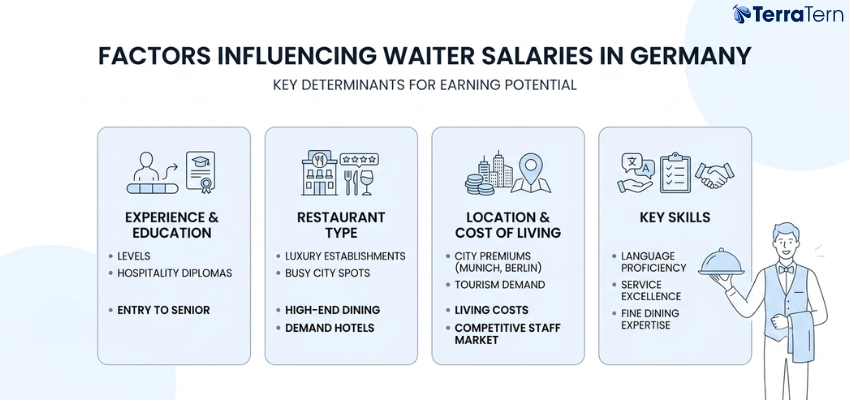
Germany waiter salary depends on factors like experience, education, employer, and location. High-end spots and busy cities pay more for language skills, fine dining, and good service. Hotels and restaurants often pay more to hospitality graduates. Wages in Munich and Berlin are higher due to tourism demand, living costs, and competition for skilled staff.
Experience-Based Earnings as a Waiter in Germany
The table shows German waiter salaries, with 30–40% deductions for taxes and social security. Net income varies based on salary, tax class, and benefits like bonuses or allowances. This breakdown helps hospitality workers estimate their take-home pay more accurately.
|
Experience |
Avg. Salary |
|
0–2 years |
€7,040/year |
|
5–10 years |
€14,840/year |
|
Source: WorldSalaries |
Regional Variations in Waiter Job Salary in Germany
This table shows how waiter salaries vary across different cities in Germany. Wages are higher in cities like Munich and Frankfurt due to the higher cost of living, tourism, and demand for skilled staff.
|
City |
Monthly Salary (€) |
|
Munich |
€1,760 |
|
Bremen |
€1,220 |
Also Read: Triple Win Project in Germany: Latest Opportunity & Process
Taxes and Deductions for Waiters in Germany
Taxes matter a lot when calculating Germany waiter salary. Germany applies income tax based on taxable income, and workers may also pay health insurance, pension contributions, and solidarity surcharge depending on earnings and status. Official guidance confirms that once you live and work in Germany for an extended period, you are generally taxed on income there. For food-service workers, the VAT rate for catering sales is currently reduced to 7%, while beverages are usually taxed at the standard 19% VAT rate. This does not directly change your salary, but it affects restaurant pricing, which can influence menu costs, customer spending, and sometimes tip patterns.
- Germany applies income tax based on taxable income, so take-home pay is lower than gross salary.
- Waiters may also pay health insurance, pension contributions, and solidarity surcharge, depending on earnings and status.
- If you live and work in Germany for a longer period, your income is generally taxed there.
- Catering sales have a reduced VAT rate of 7%, while beverages are usually taxed at 19%.
- VAT does not cut a waiter’s salary directly, but it can affect menu prices, customer spending, and tip amounts.
How to Maximize Your Waiter Job Salary in Germany?
Here are five simple ways to increase your salary as a waiter in Germany:
-
Research salaries to understand average pay and negotiate better compensation.
-
Work in Tourist Areas: Tourist hotspots in Berlin, Munich, and Frankfurt offer better tip opportunities.
-
Choose Busy Shifts: Weekends and holidays bring more customers and higher tips.
-
Improve Customer Service: Good communication and friendly service often lead to bigger tips.
-
Aim for High-End Restaurants: Upscale venues pay more and attract generous tippers.
Experience Required for a Waiter Job in Germany
Hospitality experience boosts waiter salaries in Germany, even without formal education. Employers value hospitality experience, social skills, customer focus, and stress management. Additionally, experience in high-end establishments or multilingual communication can further enhance earning potential.
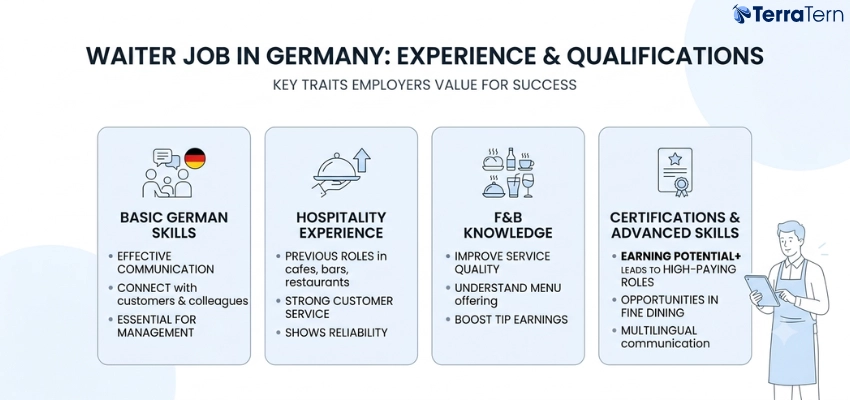
Key qualifications that employers look for include:
-
Basic German skills: Essential for effective communication with customers, colleagues, and management.
-
Hospitality experience in restaurants, bars, or cafés shows strong customer service skills.
-
Food and beverage knowledge improves service quality and can boost tip earnings.
-
Certifications in hospitality can lead to higher-paying roles in fine dining and luxury hotels.
Comparing Waiter Salaries in Germany to Other EU Countries
The table shows regional salary differences in Germany, based on living costs, labour laws, and demand for workers. Cities like Munich, Berlin, and Frankfurt offer higher wages due to higher living costs and strong tourism. In contrast, smaller towns and rural areas may offer lower wages due to reduced demand and lower living expenses. Understanding these variations helps job seekers choose where to work in hospitality.
|
Country |
Monthly Salary (€) |
|
Germany |
€1,500- €1,890 |
|
Austria |
€1,500 |
|
Switzerland |
€2,300 |
|
France |
€1,400 |
Tax and Insurance Considerations as a Waiter in Germany
Income tax and social security deductions reduce the average monthly salary in Germany for waiters. The income tax rate ranges from 14% to 45%, depending on earnings. Lower-income workers are taxed at the minimum rate, while higher wages fall into higher tax brackets. Understanding these brackets helps employees plan their budgets and anticipate take-home pay with the average monthly salary in Germany for waiters.
Visa Requirements for Waiter Job in Germany
Waiters in Germany pay 20% of their salary for social security, covering health, retirement, and unemployment. Medical benefits come from health insurance, while pension contributions secure future retirement income. Unemployment benefits provide temporary financial support until workers find new jobs. Hospitality employees contribute to these programs consistently across all regions of Germany.
Also Read: How to Migrate to Germany from India? Experts Guide
How to Apply for Waiter Jobs in Germany from India?
Follow these steps to secure a waiter job in Germany:
-
Update Your Resume – Highlight relevant hospitality experience.
-
Search for Jobs – Use platforms like Glassdoor, LinkedIn, and German job portals.
-
Apply for a Work Visa – Submit the necessary documents to the German embassy.
-
Prepare for Interviews – Learn basic German phrases and customer service etiquette.
-
Relocate and Register – Upon arrival, register your address with local authorities.
How TerraTern Can Help You with Germany Waiter Salary
TerraTern can guide you through every step of your job search in Germany, from finding waiter roles to understanding salary, tax, and visa basics. If you are unsure about pay, documents, or where to apply, TerraTern can help you make a clear plan and avoid common mistakes.
-
Find suitable waiter jobs based on your profile and experience.
-
Understand Germany waiter salary, net pay, and tax deductions.
-
Get help with work visa guidance and document preparation.
-
Learn how to improve your chances with better applications and interview support.
-
Compare job options so you can choose roles with better pay and growth.
Conclusion
Germany waiter salary ranges are competitive and influenced by experience, location, and workplace type. In 2025, wages increased due to a higher minimum wage and strong growth in the tourism industry. Waiters in busy tourist areas or high-end establishments earn more due to generous tips from guests. Language skills, training, and experience lead to higher-paying roles.
Learning languages like English and German opens more opportunities, especially in tourist areas. Customer service or management courses boost job opportunities and earnings. For more help, TerraTern is always there to help you get seamless access to Germany from India.