
Key Highlights
- What Happens After You Submit Biometrics?
- Canada Visitor Visa Processing Time After Biometrics (2026 Data)
- Canada Visitor Visa Processing Time After Biometrics From India (2026)
- Key Factors Affecting the Processing Time of the Canada Visitor Visa After Biometrics in 2026
- What is the Canada Visitor Visa Processing Time After Biometrics from India in 2026?
- What are the Recent Changes in Canada Visitor Visa Processing Times for Indian Applicants After Biometrics in 2026?
- What is the Canada Visitor Visa Processing Time After Biometrics 2026 Updates?
- How to Track Your Visitor Visa Application Status: Experts Guide
- What are the Tips to Expedite Your Canada Visitor Visa Processing in 2026?
- What are the Common Reasons for Delays in Canada Visitor Visa Processing After Biometrics in 2026?
- Can You Expedite a Canada Visitor Visa?
- What Status Updates Mean (Stage-by-Stage)
- 2026 Updates: What's Changed
- Conclusion
Canada visitor visa processing time after biometrics in 2026 is typically 2-8 weeks, depending on the applicant's country of origin, the completeness of their documents, and IRCC workload, with many simple applications now taking 3-6 weeks. In some cases (such as India), the official timeframe for the entire process in the early 2026 period was closer to 80-85 days, but "after biometrics" on-the-ground processing time for new, fresh files has tended to be about 3-5 weeks; some applicants have received decisions within 15-20 days if their case is straightforward and well-documented. These are average times, which may be longer for complicated cases, older backlogged files or applicants who have been refused in the past.
What Happens After You Submit Biometrics?
-
Your biometrics (fingerprints and photo) are uploaded to your application file in IRCC’s system, and your application status changes to "biometrics received".
-
IRCC officers will now be conducting a full review of your supporting documents, including your financial documents, travel history, reasons for visit, and connections to your country of origin.
-
Checks are made on your background and security; this takes a few weeks.
-
You may be asked to undergo a medical examination or provide other documents at this point, if necessary.
-
After all checks, your final decision is made: a visa may be granted (with a letter requesting your passport, if required) or refused with reasons provided.
-
If successful, you need to provide your passport (if requested) for stamping; if not, you may be able to apply again, addressing any problems.
Canada Visitor Visa Processing Time After Biometrics (2026 Data)
Here's a quick table of Canada visitor visa processing times after biometrics (2026 style) with approximate rates and ranges (note: these are estimates and may differ between countries and cases).
Canada visitor visa: processing after biometrics (2026-style)
|
Scenario / Audience |
Typical post-biometrics timeline |
Notes |
|
General visitor visa (all countries) |
3–6 weeks |
A lot of straightforward applications are decided 15-20 days later where documents are good. |
|
Indian applicants (visitor visa) |
2–4 weeks |
New guidance is that it will take around 25-35 days after biometrics, given volume from India. |
|
Cases with prior refusals or complexity |
6 weeks or more |
Additional scrutiny, multiple refusals or poor ties can delay processing. |
|
High‑quality applications (clear finances, strong ties) |
Often 15–20 days |
Consultants report quick decisions for well‑documented family visits or tourism. |
|
Official IRCC “overall” Canada visitor visa processing times (early to mid 2026) |
The average is about 20-60 days a month |
Online processing time calculator fluctuates in overall average, but many decisions are made within 3-4 weeks of biometrics being received. |
Note—These are average timelines. Canada visa processing times after biometrics depend on document verification and application complexity.
Canada Visitor Visa Processing Time After Biometrics From India (2026)
-
In 2016 for Indian nationals, Canada visitor visas normally take about 25-35 days to process after biometrics are received by IRCC, or 3-4 weeks for easy cases.
-
Recent estimates and consultants still report a slightly longer post-biometrics range of 2-4 weeks, depending on the number of applications, documents provided, and IRCC backlogs.
-
Simple and well-documented files (strong ties, good reason to travel, good financial standing) are often processed in around 15-20 days after biometrics.
- Longer times (beyond 4 weeks) may be needed for complex cases (including previous refusals, weak ties, or additional document requests), despite the overall India-specific processing time being now about 83 days from application to decision, not just biometrics.
-
You can see your precise progress after biometrics in the IRCC portal, where "processing time" is measured from when biometrics are entered into the system, not from the VAC visit.

One of the most essential tasks to do is to understand the difference between a work visa and a visitor visa, and then you need to take into consideration the Canada visitor visa processing time after biometrics, especially for those who are planning to visit Canada. After completing the biometrics submission, applicants will tend to go through several stages before receiving their final decision.
1. Average Timeline
The standard Canada visitor visa processing time after biometrics is 1-3 weeks, depending on the applicant's country of residence and individual case.
2. Application Stages
-
Biometrics Submission: Completed at a designated centre.
-
Application Processing: The visa office assesses the application.
-
Approval Decision: Applicants receive an update on the final decision.
These steps are streamlined but can vary based on individual circumstances, volume of applications, and documentation quality.
Also Read: How Much IELTS Score Required for Canada Work Permit?
Key Factors Affecting the Processing Time of the Canada Visitor Visa After Biometrics in 2026

Several factors influence the Canada visitor visa processing time after biometrics:
|
Factors |
Impact on Timeline |
|
Applicant's Country |
Varies by location (e.g., India-specific delays) |
|
Application Volume |
High volume may extend processing times. |
|
Document Accuracy |
Incomplete documents cause delays. |
|
Application Complexity |
Complicated cases take longer to review. |
According to IRCC experts, ensuring complete documentation and following the guidelines reduces Canada visitor visa processing time after biometrics.
What is the Canada Visitor Visa Processing Time After Biometrics from India in 2026?
For Indian applicants, the Canada visitor visa processing time after biometrics from India may slightly differ due to the high volume of applications from this region.
Average Timeline for Indian Applicants:
-
Typically, 2-4 weeks after biometrics submission.
-
Applicants may receive updates earlier if documents are complete.
Key Considerations for Indian Applicants:
-
Submit documents via the IRCC portal.
-
Ensure biometrics are completed promptly to avoid delays.
What are the Recent Changes in Canada Visitor Visa Processing Times for Indian Applicants After Biometrics in 2026?
The Canada visitor visa processing time after biometrics from India has seen minor updates:
-
In 2024, processing times ranged between 3-5 weeks.
-
IRCC has implemented measures to streamline applications, reducing delays for Indian applicants.
Timeline Overview:
-
Early 2024: Delays due to high demand.
-
Mid-2024: Processing improved with quicker updates.
-
2026 Projections: Canada visitor visa processing time after biometrics from India is expected to be further reduced with enhanced systems.
Also Read: Top Best Job Opportunities in Canada: Roles, Cities & More
What is the Canada Visitor Visa Processing Time After Biometrics 2026 Updates?
In 2026, the Canada visitor visa processing time after biometrics is expected to see improvements due to digital processing enhancements.
1. 2026 Average Timeline
-
1-2 weeks for simple applications.
-
3-4 weeks for complex cases.
2. Comparative Analysis
-
2023: Processing took 3-5 weeks.
-
2024: Improved to 2-4 weeks.
-
2026: Projected to be the fastest yet.
Express Processing Options in 2026
In 2026, expedited options for Canada visitor visa processing time after biometrics will benefit those needing urgent approvals.
1. Eligibility for Express Processing
-
Applicants with urgent travel needs (proof required).
-
Complete, error-free applications.
-
Specific categories like family visits or medical emergencies.
Example: In 2024, express processing helped reduce wait times for Indian applicants, improving the Canada visitor visa processing time after biometrics from India.
How to Track Your Visitor Visa Application Status: Experts Guide
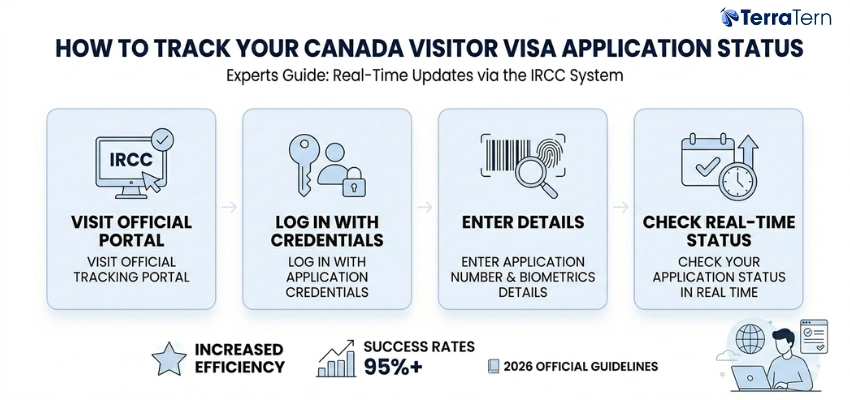
Tracking your Canada visitor visa processing time after biometrics is easy with the IRCC system.
Steps to Track Your Application:
-
Visit the official IRCC Tracking Portal.
-
Log in with your application credentials.
-
Enter your application number and biometrics details.
-
Check your application status in real time.
Tip: Use the IRCC web form for additional enquiries if delays exceed the expected Canada visitor visa processing time after biometrics.
What are the Tips to Expedite Your Canada Visitor Visa Processing in 2026?
Here are actionable tips to reduce the Canada visitor visa processing time after biometrics:
-
Submit Complete Documents: Ensure accuracy and completeness.
-
Follow IRCC Guidelines: Use the official checklist for visitor visas.
-
Early Biometrics Submission: Schedule biometrics promptly.
-
Consult Immigration Experts: Seek guidance for complex cases.
Expert Tip: Indian applicants can follow specialised advice to reduce Canada visitor visa processing time after biometrics from India.
Also Read: Top Hotel Jobs in Canada: Latest Jobs, Salary & More
What are the Common Reasons for Delays in Canada Visitor Visa Processing After Biometrics in 2026?
Understanding common issues helps applicants avoid extended Canada visitor visa processing time after biometrics.
Reasons for Delays:
-
Incomplete Documentation: Missing or incorrect information.
-
Background Checks: Longer verification for some applicants.
-
High Application Volume: Seasonal demand causes delays.
-
Health or Security Clearances: Special screenings required.
To minimise delays, ensure all requirements are met and verify documents before submission.
Ways to Avoid Delays:
- Make sure all the documents are in proper order.
- Complete your medical exam in advance.
- Double-check your application for any incorrect or missing information
- Always be quick to submit any extra documents requested by the authority
- Try to avoid submitting your application during peak seasons to bypass the high volume of submissions.
Also Read: Canada PR Process: Experts' Latest Fast Track Guide
Can You Expedite a Canada Visitor Visa?
-
No official fast-track visitor visa service: Canada does not have a routine option for an "express" or premium/priority service for non-business visitor visas; processing is based on the regular system and country-specific processing times.
-
Urgent/exceptional circumstance requests: If you have an urgent/emergency (serious illness or death in the family, urgent diplomatic or business travel), you can use the IRCC webform and relevant documentation to request urgent (expedited) processing, which will be considered on a case-by-case basis.
-
CAN+ process for some: If you have previously travelled to Canada or have a valid U.S. non-immigrant visa, you may be eligible for the CAN+ process, which may allow for faster (expedited) visa processing through certain visa application centres.
-
eTA instead of a visa (if eligible): If you are a citizen of an eTA-eligible country, you can get a decision much faster (typically minutes) than a visitor visa, so you can "expedite" your entry if you are eligible for an eTA.
-
Avoid delays, not true expediting: The main way to "expedite" your application is to avoid delays by ensuring your application is complete and well-organised, scheduling your biometrics as soon as possible, and promptly responding to requests from IRCC.
What Status Updates Mean (Stage-by-Stage)
Here's a simple, step-by-step guide to the meaning of some of the status updates commonly seen with Canada visitor visa applications:
-
“Application received” / “We received your application"
-
You have successfully submitted your application and fee; it is in the system queue but hasn't yet been reviewed by an officer. This will take 1-3 business days.
-
“In progress” / “We started processing your application."
-
Your file has been sent to an immigration officer for review; this is the document verification, background security check and decision-making stage, which is expected to take the longest time.
-
“We need more information from you.”
-
IRCC is requesting more documents, information, a medical examination or a police check; your case will be put on hold until they hear from you, so please respond by the deadline.
-
“Decision made”
-
A decision (approval or refusal) has been finalised and will be sent to you; you should receive an email or letter in 1-2 days.
-
“Finalized”
-
The decision has been made; your passport with the visa sticker or with a refusal letter is ready to be sent back or mailed to you.
-
“Biometrics received" / "Biometrics completed".
-
Your photo and fingerprints have been processed and added to IRCC's system; this is the start of the processing time, not the date of your VAC visit.
These messages provide an indication of where the file is in the processing chain, not the number of days left, so it is possible (and common) for the status (particularly "In progress") to remain the same for weeks while your file is being processed.
2026 Updates: What's Changed
-
Quicker visitor visa process for Indians: In early 2026, Indian citizens can expect significant reductions in visitor visa processing time; reports indicate the time is now around 23 days (down from 37 days) due to more efficient processing and additional staff.
-
Longer stays at the border by default: From 5 January 2026, border officers will be able to grant stays of up to 1 year to most genuine visitor visa applicants (rather than the default of 6 months) if they demonstrate adequate funds and an exit strategy.
-
More scrutiny and lower approvals: IRCC has indicated that visitor visas will be "harder to get" in 2026, with increased document scrutiny and a greater emphasis on strong ties to the home country to prevent fraud.
-
Greater focus on online and biometric-tied applications: The system is now more keen to see fully online files with timely biometrics; biometric delays or non-submission are now more likely to trigger file-processing delays or potential refuse-on-form scenarios.
-
Ongoing scrutiny of fraud and misrepresentation: 2026 guidance confirms that any errors or misrepresentations can result in longer processing, refusal, or bans, so there is more focus on evidence of genuine purpose, ability to pay, and intentions to return.
Conclusion
Canada visitor visa processing time after biometrics in 2016 is now quicker and more consistent, with most simple applications, particularly from countries such as India, being finalised within about 3-4 weeks of biometrics and many well-documented files being finalised within 15-20 days. Official IRCC reported processing times have also significantly improved, with the latest data showing mid-20- to high-50-day averages (depending on the month) – much lower than in previous years. But there are still delays for complex files, previous refusals, and partially missing information, so it's important to ensure your application is complete and well-organised and you promptly respond to IRCC emails to get processed in the quicker 2026 times.
Contact TerraTern for more information on AI jobs in Germany: Roles, Salaries & How to Apply.




 AI Summary