Key Highlights
- Latest Facts and News
- Why Indians Should Pursue Microbiology Jobs in Germany in 2026?
- Why Germany is a Hub for Microbiology Careers?
- Top 2 Types of Microbiology Jobs Available in Germany for Indians in 2026
- How to Apply for Microbiology Jobs in Germany in 2026?
- Which Cities Offer the Most Microbiology Jobs in Germany?
- Top Microbiology Jobs in Germany for Indians in 2026
- What German Language Skills Are Required for Microbiology Jobs?
- Top 5 Institutions and Companies Hiring Microbiologists in Germany
- Microbiology Jobs in Germany 2026: Salary Expectations and Benefits
- What Visa Do You Need for Microbiology Jobs in Germany?
- What Challenges Do Indian Microbiologists Face in Germany?
- Conclusion
Microbiology jobs in Germany are growing rapidly across pharma, biotech, research, and food safety sectors. Germany is home to world-class institutions like the Max Planck Institute and the Fraunhofer Society, offering excellent opportunities for both academic and industry-focused microbiologists. With strong research funding, high salaries, the EU Blue Card pathway, and the Germany Opportunity Card, the country has become a leading destination for Indian microbiologists, fresh graduates, and experienced life sciences professionals.
Here's what this guide covers:
-
Types of microbiology roles available in Germany
-
Salary expectations (€50,000 - €75,000/year)
-
Visa pathways: EU Blue Card & Opportunity Card
-
How Indian professionals can apply step-by-step
-
Top hiring companies and institutions
-
German language requirements
-
Best job portals for microbiologists in 2026
Latest Facts and News
-
Germany’s biotech sector employs 40,000+ professionals
-
Germany spends over 3% of GDP on R&D
-
Bayer, BASF, Merck, and BioNTech are actively hiring microbiologists
-
EU Blue Card salary threshold (general): €50,700
-
EU Blue Card salary threshold (shortage occupations/new entrants): €45,934
-
Glassdoor Germany lists 47+ open microbiology research positions
-
Environmental microbiology demand has increased due to sustainability regulations
Why Indians Should Pursue Microbiology Jobs in Germany in 2026?
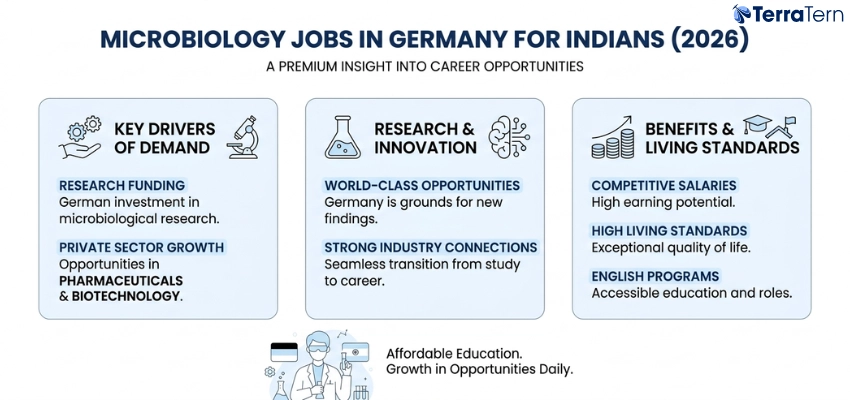
The demand for microbiology jobs in Germany is increasing daily. As pointed out in the latest news, Germany has invested a lot of money in microbiological research, which creates grounds for its new findings and employment.
Also, there is growth of more opportunities within industries such as the private sector, pharmaceuticals and biotechnology, which promoted many microbiology opportunities in Germany.
- World-class research opportunities
- Strong industry connections
- Affordable education
- High living standards
- Competitive salaries
- English-language programs available
Why Germany is a Hub for Microbiology Careers?
Germany is an attractive destination for microbiologists for several reasons:
-
Strong Research Infrastructure: Germany has very active research facilities and microbiology centres all over the country. The country has modern research institutions that ensure that the microbiologists get the equipment that enables them to conduct research.
-
Funding Opportunities: There are many funding sources for research proposals, both governmental and non-governmental. Other organizations like the Deutsche Forschungsgemeinschaft (DFG) include grants and scholarships for microbiological-related research.
-
Collaborations: Chances to extend partnerships with the most successful universities and scholars worldwide. The studied environment in Germany is highly collaborative, and shared knowledge promotes newcomers’ improvements in the research process.
-
Cutting-edge Technology: Opportunity to use other facilities, means, and equipment of the SPbSU Higher School. In Germany, the research institutions contain better research facilities, and microbiologists get quality equipment to perform research.
-
Supportive Environment: A friendly home for professional workers from other countries, with concerns about the different forms of support available. Germany is considered very welcoming for international professionals, so the change in environment will not cause microbiologists much stress.
The strong research infrastructure, funding opportunities, and collaborative environment make Germany a hub for microbiology careers. Microbiology jobs in Germany offer professional growth and the chance to work on pioneering research projects that have a global impact.
Also Read: Nursing Ausbildung in Germany: Latest Guide
Top 2 Types of Microbiology Jobs Available in Germany for Indians in 2026
Here are some common positions available for microbiology jobs in Germany:
1. Academic Positions
Academic roles in Germany include positions such as professors, researchers, and PhD candidates. Institutions like the Max Planck Institute, Helmholtz Association, and various universities offer these positions. Job titles and descriptions include
-
Professor of Microbiology: Leading research and teaching at universities. Professors in Germany are involved in both lecturing and conducting research, contributing to the academic growth of students and the scientific community.
-
Research Scientist: Conducting research projects in institutions. Research scientists work on specialised projects, often collaborating with other experts in the field.
-
PhD Candidate: Pursuing doctoral research in specialised fields of microbiology. PhD candidates are engaged in intensive research, aiming to contribute new knowledge to the field of microbiology.
Academic microbiology jobs in Germany provide an excellent platform for those interested in teaching and research. The presence of world-renowned institutions further enhances the appeal of these roles.
2. Industry Roles
The private sector offers numerous opportunities, especially in pharmaceuticals, biotechnology, and food safety. Top companies hiring microbiologists in Germany include Bayer, BASF, and Merck. Roles in this sector encompass:
-
Microbiologist in Pharmaceuticals: Working on drug development and safety testing. Microbiologists in the pharmaceutical industry are crucial in ensuring the efficacy and safety of new drugs.
-
Biotechnologist: Engaging in research and development of biotech products. Biotechnologists work on innovative solutions that leverage microbiological processes for industrial applications.
-
Food Safety Specialist: Ensuring the safety and quality of food products. Food safety specialists play a vital role in maintaining public health by conducting microbiological testing and implementing safety protocols.
The private sector's demand for microbiologists is growing, particularly in companies focused on pharmaceuticals and biotechnology. Microbiology jobs in Germany's private sector offer competitive salaries and the opportunity to work on cutting-edge projects.
Also Read: Germany Immigration- Benefits, Fees, Time and Jobs
How to Apply for Microbiology Jobs in Germany in 2026?
Indian professionals can apply for microbiology jobs in Germany by getting their degree recognised, building a German-format CV, and applying through targeted job portals.
1. Eligibility Criteria
To apply for microbiology jobs in Germany, you typically need:
-
A relevant degree (Bachelor's, Master's, or PhD) in microbiology or related fields.
-
Certifications and specialised training relevant to the job.
-
Proficiency in German (though some positions, especially in international companies, may require English).
Meeting the eligibility criteria is the first step towards securing microbiology jobs in Germany. Ensure that your qualifications align with the specific job requirements you are applying for.
2. Application Process
The application process involves several steps:
-
Prepare a CV: Tailor your CV to highlight relevant experience and qualifications. Emphasise your academic achievements, research experience, and any publications or presentations.
-
Write a Cover Letter: Address the specific job requirements and demonstrate your interest. A well-crafted cover letter can set you apart from other candidates.
-
Submit Applications: Use job portals, company websites, and academic institution career pages. Platforms like Indeed, Glassdoor and specialised academic job boards are excellent resources.
-
Attend Interviews: Be prepared for technical and behavioural interviews. Practice common interview questions and be ready to discuss your research and experience in detail.
-
Follow-up: Send thank-you notes and follow up on your application status. Following up shows your enthusiasm and professionalism.
Applying for microbiology jobs in Germany requires thorough preparation and attention to detail. Each step of the application process is crucial in securing a position.
The process becomes very smooth with the newly launched opportunity card. If you want to apply for a Germany Opportunity Card, then you should calculate your eligibility points using the Germany Immigration Calculator for free.

Which Cities Offer the Most Microbiology Jobs in Germany?
Munich, Berlin, Frankfurt, Heidelberg, and Hamburg are among Germany’s top cities for microbiology careers.
|
City |
Key Employers |
|
Munich |
Bayer, LMU Munich |
|
Berlin |
Charite, Robert Koch Institute |
|
Frankfurt |
Sanofi, B. Braun |
|
Heidelberg |
EMBL, DKFZ |
|
Hamburg |
Bernhard Nocht Institute |
Top Microbiology Jobs in Germany for Indians in 2026
For Indian microbiologists, Germany offers specific opportunities and challenges:
-
Visa Requirements: Ensure you meet the visa requirements for working in Germany. The German embassy provides detailed information on visa applications and requirements.
-
Cultural Adjustments: Be prepared for cultural differences and learn basic German to ease your transition. Understanding German culture and language can significantly enhance your experience.
-
Support Networks: Utilise Indian community networks and professional groups for support. There are numerous Indian associations and groups in Germany that offer assistance and networking opportunities.
Microbiology jobs in Germany for Indians are abundant, but it is essential to be well-prepared for the transition. Understanding visa requirements and cultural nuances and leveraging support networks can make the process smoother. Additionally, microbiology jobs in Germany for Indians provide ample opportunities to work in diverse research environments and contribute to significant scientific advancements.
Indian professionals can find microbiology jobs in Germany for Indians through various job portals and professional networks. Leveraging these resources can make the job search process more efficient and successful.
Furthermore, microbiology jobs in Germany for Indians often come with support from local Indian communities, which can ease the transition and provide valuable connections.
Also Read: How to Get Job in Germany from India? Latest Guide
What German Language Skills Are Required for Microbiology Jobs?
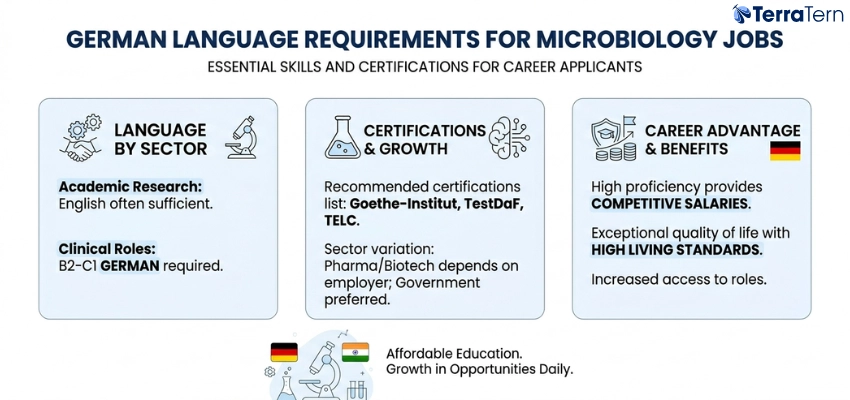
The German language requirements are:
Language Requirements by Sector:
-
Academic Research: English often sufficient
-
Clinical Roles: B2–C1 German required
-
Pharma/Biotech: Depends on employer
-
Government Roles: German preferred
Recommended Certifications:
-
Goethe-Institut
-
TestDaF
-
TELC
Top 5 Institutions and Companies Hiring Microbiologists in Germany
Leading institutions and companies in Germany include:
-
Max Planck Institute: Specialising in fundamental research in microbiology. The Max Planck Institute is renowned for its contributions to scientific research.
-
Fraunhofer Society: Applied research in various fields, including microbiology. Fraunhofer's focus on practical applications of research makes it a leader in innovation.
-
Bayer: Pharmaceutical company with a strong focus on microbiological research. Bayer offers numerous opportunities for microbiologists in drug development and safety testing.
-
BASF: Chemical company offering roles in industrial microbiology. BASF's commitment to sustainability and innovation makes it an attractive employer.
-
Merck: Global healthcare company with opportunities in microbiology. Merck's diverse range of products and research initiatives provides a dynamic work environment.
These institutions and companies are at the forefront of microbiological research and offer a variety of roles for microbiologists. Microbiology jobs in Germany at these organisations provide excellent career prospects and opportunities for growth.
Also Read: Germany Work Visa: Types, Fees, Eligibility & Benefits
Microbiology Jobs in Germany 2026: Salary Expectations and Benefits
Microbiologists in Germany can expect competitive salaries and benefits:
-
Average Salary: The average salary for a microbiologist in Germany ranges from €50,000 to €70,000 per year, depending on experience and position.
-
Benefits: Comprehensive healthcare, retirement plans, and a good work-life balance are common benefits.
Here is a table to show the average salary of microbiologists in Germany:
|
Job Role |
Average Salary (EUR/year) |
Average Salary (INR/year) |
|
Entry-Level Microbiologist |
50,000 |
45,50,000 |
|
Clinical Microbiologist |
55,000 |
50,05,000 |
|
Mid-Level Microbiologist |
60,000 |
54,60,000 |
|
Microbial Biotechnologist |
63,000 |
57,33,000 |
|
Research Scientist |
65,000 |
59,15,000 |
|
Industrial Microbiologist |
68,000 |
61,88,000 |
|
Senior Microbiologist |
70,000 |
63,70,000 |
|
Lab Manager |
75,000 |
68,25,000 |
Salary expectations for microbiology jobs in Germany are competitive, with variations based on the type of role and level of experience. In addition to attractive salaries, microbiologists in Germany enjoy comprehensive benefits that contribute to a high quality of life.
Read More: Top Medical Universities in Germany : Latest Guide
What Visa Do You Need for Microbiology Jobs in Germany?
Indian microbiologists typically need either the EU Blue Card or the Germany Opportunity Card to work in Germany.
|
Feature |
EU Blue card |
Opportunity Card |
|
Job offer required |
Yes |
No |
|
Salary threshold |
50,700 |
N/A |
|
Duration |
4 years |
1 year |
|
Permanent residency |
After 21-33 months |
After qualifying employment |
|
Family reunification |
Easier |
Standard rules |
What Are the EU Blue Card Requirements for Microbiologists in 2026?
Requirements are:
-
Recognised university degree
-
Job offer valid for at least 6 months
-
Minimum salary: €50,700 (general) and €45,934 (shortage occupations/new entrants)
-
Valid health insurance
-
APS certificate (for Indian applicants)
-
Visa application fee: €100
How Can Indian Microbiologists Use the Germany Opportunity Card?
The Germany Opportunity Card allows Indian microbiologists to enter Germany for up to one year to search for employment without a prior job offer.
Key Benefits:
-
No job offer required initially
-
Point-based eligibility system
-
Allows part-time work during job search
-
Ideal for MSc and PhD holders
Factors Considered:
-
Educational qualifications
-
Work experience
-
Age
-
German language skills
-
Financial proof
What Challenges Do Indian Microbiologists Face in Germany?
The biggest challenges include degree recognition, language barriers, housing shortages, and competition from EU candidates.
Common Challenges:
-
APS and degree recognition delays
-
German language barriers
-
High living costs during job search
-
Housing shortages in major cities
-
Visa sponsorship competition
Solutions:
-
Apply through the Opportunity Card
-
Learn German before relocation
-
Join Indian diaspora networks
-
Target international employers
Conclusion
Microbiology jobs in Germany offer Indian professionals one of the most rewarding career transitions in the life sciences sector. With strong salaries, globally recognised research institutions, industry-leading biotech companies, and immigration pathways like the EU Blue Card and Opportunity Card, Germany continues to attract microbiologists from around the world.
From academic research and pharmaceutical microbiology to food safety and environmental science, the country offers diverse opportunities for both fresh graduates and experienced professionals. By understanding the visa process, building a strong application, and leveraging the right job portals, Indian microbiologists can successfully build long-term careers in Germany.
To make your move to Germany easier to pursue a career in microbiology, contact TerraTern!




 AI Summary