Key Highlights
- What Is the Current State of Java Jobs in Australia?
- What Should Indian Java Developers Know About Working in Australia?
- How Do You Get a Java Job in Australia as an Indian Applicant?
- What Is the Average Salary for Java Jobs in Australia?
- What Are the Top-Paying Cities in Australia for Java Jobs?
- What Are Java Jobs in Melbourne, Australia Like in 2026?
- How Can You Get Your Dream Java Job in Australia?
- What's Next for Java Development in Australia?
- Conclusion
In 2026, Australia's technology industry is booming, and the role of Java jobs in Australia is highly sought-after by international talent. The market for backend professionals is booming with competitive salaries, simplified visa processes, and more. The opportunities are everywhere, especially in Melbourne –whether you're looking for a lucrative position as a Java developer jobs in Australia or a specific high-paying Java jobs in Melbourne. Moreover, skilled migration policies have established definite pathways, making the way to Australia Java developer jobs in Australia for Indian a breeze for the tech professionals from India. This detailed career overview includes information on salary breakdowns by region, visa information, and much more to get you started.

What Is the Current State of Java Jobs in Australia?
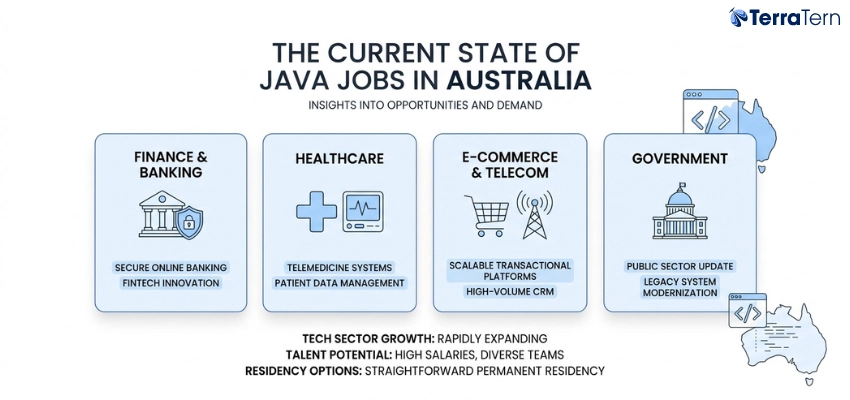
Java programming jobs are in demand in Australia, considering that its Tech sector is growing at a rapid pace and has a big scope to expand further in Australia. Indian developers have the potential to earn high salaries, work in teams of diverse cultures, and enjoy straightforward permanent residency options.
1. Top Industries Hiring:
-
People who are busy in the field of providing financial and banking services appreciate the significance of safe online banking services and the development of fintech.
-
Smartphones will be at the heart of the growing use of telemedicine for healthcare and robust patient data management systems.
-
E-commerce & Telecom: Scalable high-volume transactional and CRM platforms.
-
Government: Updating public sector information and systems.
2. In-Demand Skills for 2026:
-
Core Tech: Java17+, Spring Boot, and microservices architecture.
-
Cloud & DevOps: AWS/Azure/GCP technologies, Docker, Kubernetes and CI/CD pipelines.
-
Advanced Systems: AI/ML integration along with SQL-based record management and NoSQL-based record management.
-
Soft Skills: Effective communication for working and/or working collaboratively in an Australian setting.
Key Note: Cloud platform experience has shifted from a differentiator to close to a baseline expectation for Java roles in Australia if your resume doesn't show AWS, Azure, or GCP exposure, that's now one of the first gaps Australian recruiters will flag.
Also Read: Java Jobs in Australia: Top Cities, Salary, Scope
What Should Indian Java Developers Know About Working in Australia?
Key differences relate to the visa that Indian Java jobs in Australia for Indians need to complete, which is outlined in the Skills in Demand (SID) visa, as well as adapting to the culture of direct work. You will need to deal with the current visa system in Australia, such as the Skills in Demand (SID) visa, figure out how to complete an ACS skills assessment, and make changes to your working culture. Australia's natural openness and demand for Java developer jobs in Australia opportunities an appealing destination for PR visas.
What Visa Options Are Available for Java Developers in 2026?
The Skills in Demand (SID - Subclass 482) visa was introduced to replace the TSS visa program in Java jobs in Australia. The other PR visa categories are the points-tested Subclass 189 visa, state-nominated 190 visa, and regional 491 visa.
|
Visa Type |
Eligibility |
Duration |
Pathway to PR |
|
Subclass 482 — Skills in Demand (SID) visa |
Employer sponsorship; assessed under one of three salary-based streams |
Up to 4 years |
Possible via Subclass 186 after 2 years |
|
Subclass 189 (Skilled Independent Visa) |
Points-tested eligibility; no employer sponsorship needed |
Permanent |
Direct PR pathway |
|
Subclass 190 (Skilled Nominated Visa) |
Requires state or territory nomination |
Permanent |
Direct PR pathway |
|
Subclass 491 (Skilled Work Regional Visa) |
Requires regional nomination |
5 years |
PR pathway after 3 years |
Do You Need a Skills Assessment? (NEW)
Essential for most skilled visas (189, 190, 491, and often 482) targeting Java jobs in Australia.
-
Occupational Code: Potential affirmations of qualifications and experience that are appropriate for the Software Engineer (384411) occupational code.
-
Timelines to Process: Start this process early, as the ACS assessment adds some weeks when taking up Java jobs in Australia.
Cultural Integration and Work Environment
Taking the first step to getting ready for a Java job in Australia involves more than just being technically prepared.
-
Communication: The direct and open approach to feedback is valued.
-
Work-Life Balance: Timeliness and good use of time is emphasised.
-
Team Dynamics: Team building is done in an informal manner and is integrated into the work in a meaningful way, specifically with regard to job roles as Java developer jobs in Australia.
-
CPWG: Ongoing professional development is the expectation
Pro Tip: The shift from TSS to the Skills in Demand visa reduced the PR pathway wait from 3 years to 2 years for many 482 holders if you're weighing employer sponsorship against a points-tested pathway, this makes the sponsored route meaningfully more attractive than it was before December 2024.
How Do You Get a Java Job in Australia as an Indian Applicant?
Getting a Java job in Australia as an Indian applicant involves aligning your skills with local demand, completing an ACS skills assessment if pursuing a skilled visa, applying through Australia-focused job portals, and tailoring your resume to Australian hiring conventions.
-
Get your skills recognised: Align your expertise with the market; AWS, Spring Boot, or Microservices certifications meaningfully strengthen your profile for Java developer jobs in Australia for indian candidates.
-
Complete your ACS assessment early: If pursuing a skilled visa pathway, do this first as it is often the longest lead-time item.
-
Target local job portals: Apply on Australia-focused sites rather than generic global boards for better visibility to employers.
-
Optimise your resume: Follow Australian CV conventions, leading with key achievements rather than just responsibilities.
-
Strengthen communication: Confidence in English is genuinely assessed during interviews, as client interaction is common.
-
Target high-demand cities: Melbourne, Sydney, and Brisbane consistently show the strongest demand for developers.
As per our TerraTern Expert Divyansh, complete your ACS skills assessment before you start actively job-hunting, not after receiving an offer. It removes a major source of hiring delay and signals genuine visa-readiness to employers considering sponsorship.
What Is the Average Salary for Java Jobs in Australia?
The average salary for Java jobs in Australia ranges from AUD 70,000–90,000/year for entry-level developers to AUD 150,000–180,000/year for senior/lead-level and architect roles. The competitive compensation makes Java developer jobs in Australia for indian professionals highly rewarding.
|
Experience Level |
Average Salary (AUD) |
Average Salary (INR)* |
|
Entry-Level (0–2 years) |
70,000–90,000 |
47,07,500–60,52,500 |
|
Mid-Level (3–5 years) |
90,000–120,000 |
60,52,500–80,70,000 |
|
Senior-Level (6–10 years) |
120,000–150,000 |
80,70,000–1,00,87,500 |
|
Lead/Architect (10+ years) |
150,000–180,000 |
1,00,87,500–1,21,05,000 |
Important Note: The jump from Mid-Level to Senior-Level typically coincides with taking on architecture or team-lead responsibilities, not just additional years of coding. Building demonstrable system-design experience is what actually unlocks that pay band, more than tenure alone.
Also Read: Software Engineer Jobs in Australia: Pay, Visas & Guide
What Are the Top-Paying Cities in Australia for Java Jobs?
Sydney is the top-paying city for Java jobs in Australia, averaging AUD 110,000–140,000/year, followed closely by Melbourne at AUD 105,000–135,000/year. These major hubs continue to offer the best opportunities for Java developer jobs in Australia for indian tech workers.
|
City |
Average Salary (AUD) |
Average Salary (INR)* |
|
Sydney |
110,000–140,000 |
73,97,500–94,15,000 |
|
Melbourne |
105,000–135,000 |
70,61,250–90,78,750 |
|
Brisbane |
95,000–125,000 |
63,88,750–84,06,250 |
|
Perth |
90,000–120,000 |
60,52,500–80,70,000 |
|
Adelaide |
85,000–115,000 |
57,16,250–77,33,750 |
Expert Tip: Sydney's pay premium over Melbourne is real but modest factor in Sydney's meaningfully higher cost of living before assuming it's the better financial choice; Melbourne often nets out comparably once housing costs are considered.
What Are Java Jobs in Melbourne, Australia Like in 2026?
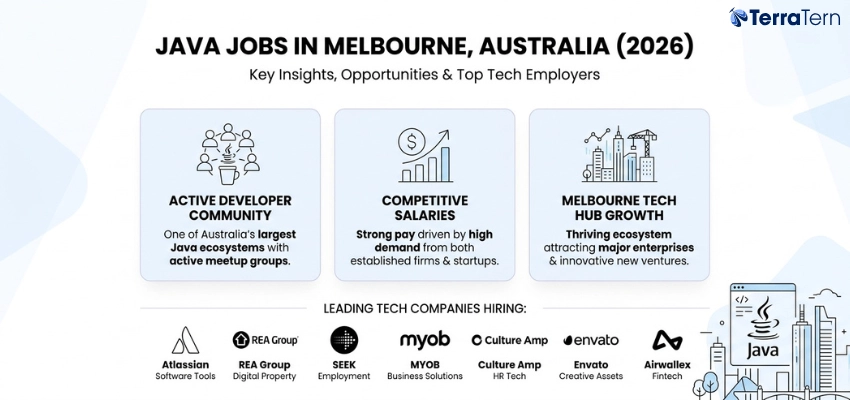
Java jobs in Australia offer strong opportunities at established tech companies and startups, with competitive salaries and one of the country's most active developer communities. Melbourne remains one of Australia's leading tech hubs, attracting major enterprises and a growing startup ecosystem, making it a prime destination for the java jobs in Melbourne Australia audience.
Melbourne Tech Companies Actively Hiring:
-
Atlassian: Global software development tools company.
-
REA Group: Leading real estate digital platform.
-
SEEK: Major employment marketplace using Java for backend services.
-
MYOB: Business management solutions company.
-
Culture Amp: Fast-growing HR tech company.
-
Envato: Digital marketplace for creative assets.
-
Airwallex: Fintech unicorn with Java-based financial infrastructure.
Networking and Learning Opportunities:
-
Melbourne Java User Group (JUG): Community for Java professionals to share knowledge and connect.
-
YOW! Developer Conference: Major annual tech event with strong industry speaker lineups.
-
GOTO Conference Melbourne: Focused specifically on Java development trends.
-
Meetups and Hackathons: Regular events hosted by startups and established tech companies.
Expert Advice: Getting involved with Melbourne JUG or similar communities before you even have a visa in hand is genuinely worth doing local tech networks are a real source of unadvertised opportunities and referrals in Melbourne's tight-knit developer scene.
How Can You Get Your Dream Java Job in Australia?
Landing Java jobs in Australia requires a resume tailored to Australian hiring conventions, solid preparation for technical and behavioural interviews, and genuine familiarity with the local tech stack expectations. Proper preparation is essential whether you are targeting roles nationally or specific Java jobs in Melbourne Australia.
Tailoring Your Resume for Australian Employers:
-
Use Australian English and standard local formatting conventions.
-
Lead with achievements, not just listed responsibilities.
-
Clearly list technical skills, Java, Spring Boot, and Microservices prominently.
-
Mention relevant certifications, such as Oracle Certified Java Developer (OCJD).
-
Keep it concise; two pages maximum is the norm.
Interview Preparation:
-
Prepare for standard coding challenges. Data structures and algorithms remain core to most technical rounds.
-
Review Spring Framework, RESTful APIs, and multithreading fundamentals thoroughly.
-
Practice on platforms like LeetCode and HackerRank.
-
Prepare for behavioural questions using the STAR (Situation, Task, Action, Result) method.
-
Research the specific company and tailor your answers accordingly—generic answers are noticeably less effective with Australian interviewers.
Important Tip: Australian technical interviews tend to weight behavioural and cultural-fit questions more heavily than some other markets. Don't over-invest in coding challenge prep at the expense of preparing genuine, specific examples using the STAR method.
Also Read: Associate Software Engineer Jobs: New Pay, Scope & More
What's Next for Java Development in Australia?
Java jobs in Australia are being shaped by continued AI integration, growing blockchain applications in financial services, accelerating cloud adoption, and rising demand for secure coding expertise. This evolution keeps markets for Java jobs in Melbourne Australia, and other major cities highly dynamic.
-
AI and Machine Learning: More Java developers are integrating AI capabilities directly into applications, not treating it as a separate specialisation.
-
Blockchain: Financial services companies continue exploring Java-based blockchain applications.
-
Cloud: Continued growth in AWS, Azure, and Google Cloud-based Java application development.
-
Microservices: High and growing adoption in enterprise applications prioritising scalability.
-
Cybersecurity: Rising demand for Java developers with genuine secure coding expertise, not just awareness.
Key Note: Cybersecurity-adjacent skills are quietly becoming one of the more differentiated additions a Java developer can bring to an Australian employer. It's a smaller applicant pool than general cloud or AI skills, and demand is rising steadily.
Conclusion
Java jobs in Australia in 2026 continue to offer exceptionally strong and dynamic opportunities for Indian developers looking to advance their global careers. With competitive salaries consistently offered across major tech hubs like Sydney and Brisbane, and particularly for those seeking lucrative Java jobs in Melbourne, the financial rewards are highly attractive. Furthermore, there is a genuine, sustained demand for skilled backend professionals across rapidly expanding sectors such as modern finance, healthcare, and e-commerce, ensuring long-term stability and growth. The migration process has also become significantly more transparent and accessible; following the structural shift to the newly implemented Skills in Demand visa framework, candidates now benefit from a clearer, more predictable visa pathway to permanent residency than in previous years. Whether you are just starting to explore Australian opportunities or are actively preparing your ACS skills assessment, staying current on both the evolving technical expectations and the nuanced visa landscape gives you a real competitive advantage.
To learn more about Australian Immigration, visit Terra Tern now !