

Key Highlights
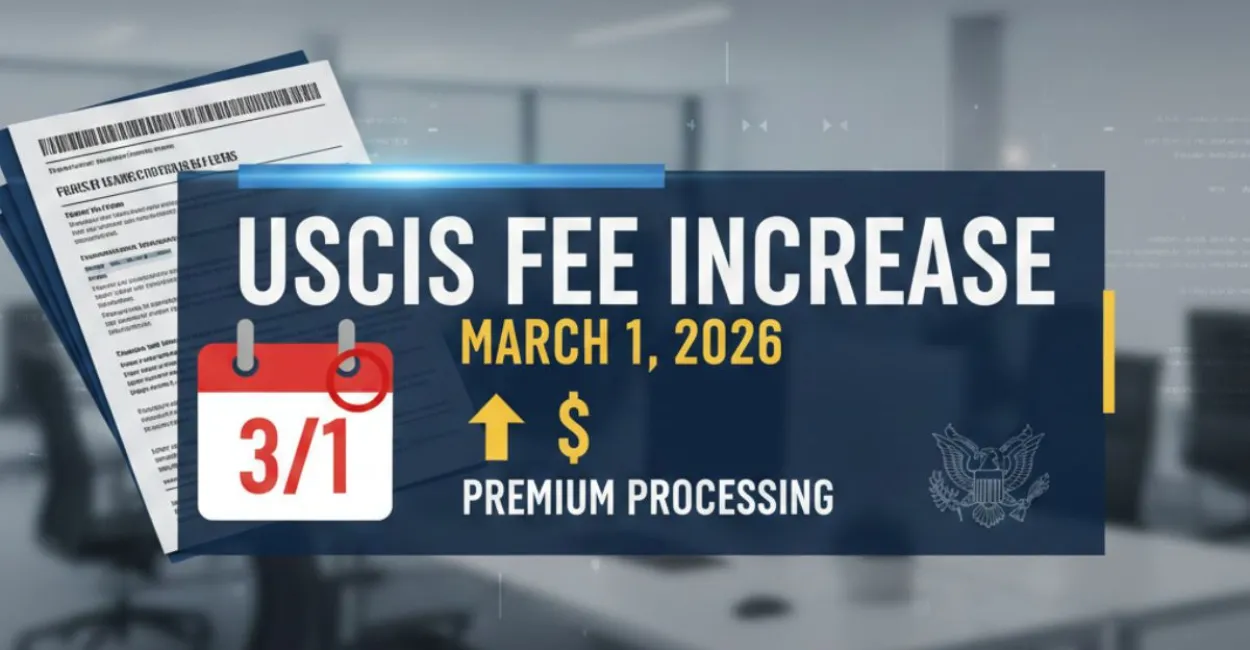
In an important move towards international workers, students, and employers who have depended on expedited immigration services, the U.S. Citizenship and Immigration Services (USCIS) implemented an organized increase in premium processing charges across various employment-related immigration applications. This fee increase, which is required under the USCIS practice of inflation indexing of its fees every 2 years, applies to important visa applications such as H-1B, L-1, I-140 immigrant petitions, and OPT applications, among others. The relocation is part of standard revision procedures to align service fees with operational expenses and inflation indicators that have side effects on global talent mobility and immigration planning.
What Is Premium Processing?
The USCIS has a premium processing service, which is an optional expedited version of adjudication of specific visa and immigration applications. Those who pay this extra fee are guaranteed a shorter time of processing (usually 1545 calendar days, depending on the form) than standard processing times, which can take several months. The service is especially useful when it comes to time-sensitive job gains, when it comes to travelling, or making a career change.
Also Read: Difference Between B1 and B2 Visa USA: Experts New Guide
Detailed Fee Changes Effective March 1, 2026
The recent fee hike can be applied to several USCIS forms that are eligible for premium processing. The new charges will be charged on any petitions postmarked on March 1, 2026, or later:
1. Form I-140 and Most I-129 Petitions
-
New Fee: $2,965
-
Previous Fee: $2,805
-
Increase: $160
These are classified as employment-based immigrant petitions, and most nonimmigrant worker visas, including H-1B, L-1, E-1/E-2, O-1, TN, etc.
2. I-129 H-2B & R-1 Visas
-
New Fee: $1,780
-
Previous Fee: $1,685
-
Increase: $95
These visas include temporary workers in nonagricultural fields (H-2B) and religious workers (R-1).
3. Form I-539
-
New Fee: $2,075
-
Previous Fee: $1,965
-
Increase: $110
This includes dependent and non-immigrant extension or change of status (e.g., F-2, J-2).
4. Form I-765
-
New Fee: $1,780
-
Previous Fee: $1,685
-
Increase: $95
This charge is imposed on those applicants who seek employment authorisation, such as applicants who have received F-1 Optional Practical Training (OPT) and would like their decisions to be expedited.
Why Is USCIS Raising Premium Processing Fees?
The fee increase, according to USCIS, is a part of a bi- annual inflation adjustment to make sure that premium services remain in line with the increased cost of administration and inflation. The adjustment factor, which is required by the Immigration and Nationality Act, enables the Department of Homeland Security to update the fee every two years according to the shifts in the Consumer Price Index (CPI). This has guaranteed that USCIS still finances the expedited processing infrastructure without compromising the service quality.
Who Will Be Affected?
The increase in fees will affect a wide group of stakeholders who will include:
-
Employers who submit an employment-based petition and use premium processing can have a quicker decision.
-
Expatriate workers want fast processing of work permits such as H-1B, L-1, or immigrant visas.
-
F-1 and STEM (apply through premium processing) international students requesting either an OPT or STEM OPT extension.
-
Immigration lawyers and human resource teams will need to plan on how to spend more.
This is to be considered in the fact that the eligibility criteria and processing timelines are not to be changed; the fee adjustment is limited to the premium processing service fee.
Also Read: How Many Types of Visa in USA? New Full Expert Guide
Strategic Considerations for Applicants and Employers
To individuals or businesses having impending filings, several practical considerations are realised:
File Before March 1, 2026
Mailed petitions that are received before the first of March will remain at the current (lower) price rate - a temporary saving opportunity.
Budget Adjustments in Immigration Planning
To prepare for the increase in the premium cost of processing, organisations are advised to revise immigration budgets and predictions starting in March 2026.
Consult Immigration Experts
Since the fee is imposed by USCIS on the basis of postmark dates only, wrong or expired payments will result in rejections and postponements. It is advisable to seek the assistance of qualified immigration professionals or attorneys.
Expert Perspectives and Community Response
Other issues and responses of applicants and lawyers have been pointed out in legal and immigration forums. The participants have indicated:
-
The increment of the fees is not arbitrary but a well-planned process related to inflation.
-
Premium processing will still be useful in cases where time is a concern, but higher prices will encourage selective application.
-
Error in payment of fees may cause rejections that will disrupt expedited schedules and result in extra expenses.
These insights reveal the way in which the immigration fraternity, including both the attorneys and the visa holders, is considering not only the short-term tactical options but also the long-term budgetary considerations.
Also Read: Cost of Transit Visa for USA: New Fees & Process Guide
Conclusion
The increase of the USCIS premium processing fee to take effect on March 1, 2026, will signify a significant change to international talent mobility, employers, international students, and foreign professionals navigating U.S. immigration routes. Although the expedited processing timelines can be regarded as a useful service, the increased expenses highlight the importance of planning and strategic filing. As the inflationary pressures interact with the government fee schedules of various governments around the world, it is essential that the stakeholders are updated on the regulatory changes and make petitions with the accuracy of avoiding delays and unnecessary expenditures. In the competitive international market of skilled employees and learners, awareness of these political changes is the key to successful immigration.
Contact TerraTern for more information.