

Key Highlights
- Immigration Officers Seen Wearing Meta AI Smart Glasses
- What Are Meta AI Smart Glasses?
- Why the Use of Smart Glasses Is Controversial
- Government Policy and Legal Questions
- Growing Use of Surveillance Technology in Immigration Enforcement
- Privacy and Civil Liberties Concerns
- Courtroom Incident Highlights Concerns
- Technology Versus Regulation
- Broader Implications for the Future of Policing
- Conclusion
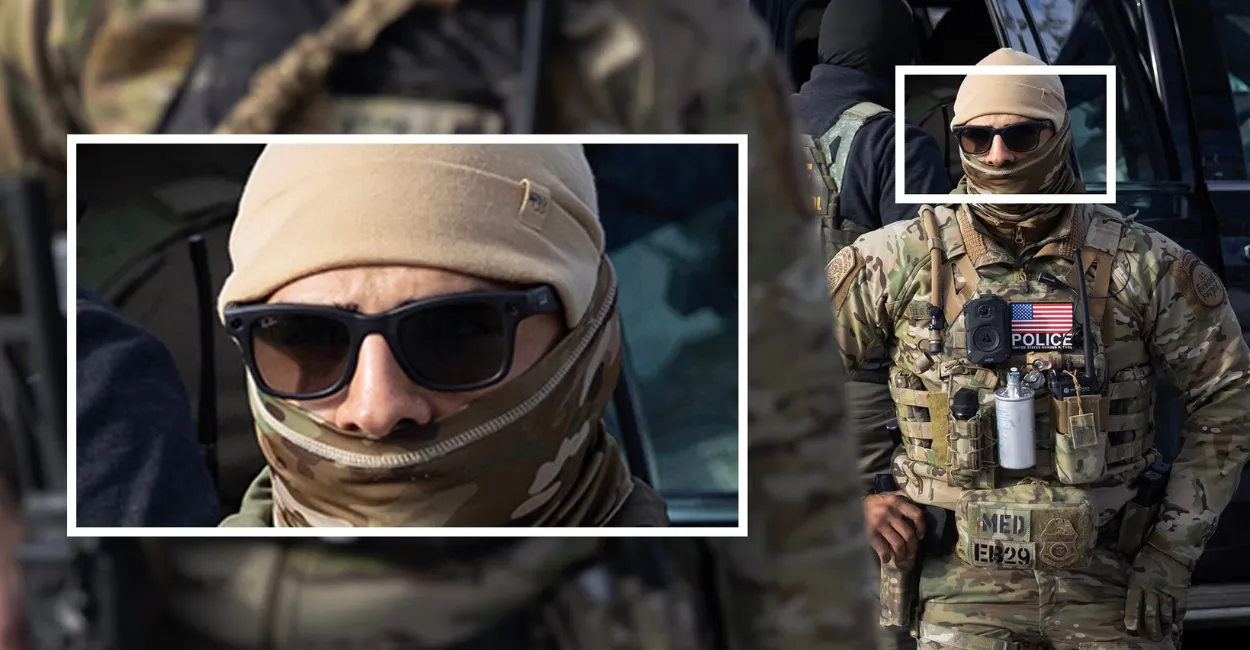
The accelerated development of wearable technology is changing how digital information is being consumed by people, yet it is also posing some tough questions when it comes to surveillance and privacy. A recent study has found that some US immigration officers wear Meta AI-powered smart glasses when they are on duty, and these may record members of the population during their enforcement measures and demonstrations. The disclosure has raised the eyebrows of civil liberties organizations and privacy analysts who caution that such activities may lead to confusion about what is considered legal law enforcement and mass surveillance. The scandal shows that the tension between technological innovation and the rights protection of citizens is increasing in an era of more potent digital instruments.
Immigration Officers Seen Wearing Meta AI Smart Glasses
It has been reported that immigration surveillance officers in a number of US states were caught using Meta AI smart glasses, a consumer product that can record video, capture photos, and analyze the surroundings using artificial intelligence to do so. The glasses also have the capability of livestreaming and accessing the internet, and hence sharing of real-time data.
Research indicates that the glasses have been used by agents of such agencies as the US Immigration and Customs Enforcement (ICE) and the US Border Patrol in their enforcement operations, including in arrests and encounters with protesters. Other witnesses argue that the machines were utilized in taking or capturing images of civilians in such missions.
Although the use of body cameras and facial recognition devices is already present in some police departments, the introduction of personal wearable devices is a novel practice. Critics say that this provides a grey area in terms of accountability and oversight.
Also Read: How Many Types of Visa in USA? New Full Expert Guide
What Are Meta AI Smart Glasses?
The smart glasses of Meta, in collaboration with Ray-Ban, are wearable items that look like the typical sunglasses; however, they have advanced technology. These glasses have cameras, microphones, speakers, and AI-driven capabilities to scan the visual environment and react to voice recognition.
Key features include:
-
In-built cameras with the ability to take pictures and short videos.
-
Audio recording and related speakers and microphones.
-
Voice recognition AI that can detect things or environments.
-
Internet access that facilitates live-streaming or the sharing of data.
These features render the glasses appealing to be used daily, including capturing social media material or getting AI help on the fly. However, they cause privacy issues as well sin, since it is possible to record in places where people are.
Why the Use of Smart Glasses Is Controversial
The outrageousness of the immigration officers using such glasses is informed by the possible misuse of the personal recording equipment by government officials.
The proponents of civil liberties are cautious that when police officers are allowed to record people without specific rules or control, it may result in a privacy breach. Legal professionals believe that the recording made by personal devices may not enjoy the same protection under the law as the footage on the body cameras of official authorities.
As an example, the use of official body cameras is usually predetermined in terms of instantaneous recording start, the duration of footage retention, and its accessibility. Conversely, the contents of over-the-counter devices could be stored, obtained, or shared outside the authorized systems.
According to one surveillance analyst, this may result in the recording of protesters or ordinary citizens in government databases, which may affect the right to speech and protest as well as the freedom of movement.
Government Policy and Legal Questions
US Department of Homeland Security (DHS) officials have asserted that the agency has no formal agreement with Meta to make the use of such glasses. The devices have no government purchase agreement recorded in procurement records as well.
Although the policy of DHS permits the use of personal sunglasses by the agents, they are not allowed to use personal equipment during their work.
This difference creates several legal issues:
-
Was the usage of glasses an active video recorder or a pair of eyewear?
-
Did they record anything, and, in those cases, was it stored in private or was it shared with other government systems?
-
Is there a deployment of the new wearable technologies that are sufficiently covered by the existing surveillance laws?
The question is a grey area, requiring clear answers, which may result in legal proceedings or even policy changes.
Also Read: Cost of Transit Visa for USA: New Fees & Process Guide
Growing Use of Surveillance Technology in Immigration Enforcement
The debate about AI glasses is not the only movement in the direction of more technological surveillance of immigration enforcement.
In the last 10 years, US border and immigration officials have resorted to sophisticated technologies, among which include:
-
Facial recognition systems
-
Biometric identification databases.
-
Licence plate readers were automated.
-
Body cameras provided by the government.
The tools are supposed to enhance security and efficiency of operations, yet they also raise concerns over the increase in surveillance authority.
The civil liberties groups feel that the implementation of consumer AI devices in law enforcement would further expand the division between personal technology and official surveillance equipment.
Privacy and Civil Liberties Concerns
The proponents of privacy have issued warnings that wearable AI technology will greatly increase surveillance levels.
Smart glasses look similar to ordinary sunglasses, hence other people in the vicinity might not suspect that they are being filmed. Even though Meta devices have a small LED light on them to show the recording, critics believe that the indicator can be hard to see in crowded areas.
Another concern that experts are concerned with is whether they can combine the glasses with other technological devices, including facial recognition software. In case the glasses were linked to the AI systems through video recordings, they would probably be able to recognize people on the go.
This may enable the government to spy on protestors, activists, or illegal aliens without their awareness.
According to civil liberties groups, this poses grave constitutional challenges, particularly on the freedom of speech and the right to peaceful demonstration.
Courtroom Incident Highlights Concerns
The surveillance presented by smart glasses also recently appeared in a court of law.
In one case, a civil trial involving Meta CEO Mark Zuckerberg, a judge threatened to intercept anybody wearing a pair of smart glasses in the courtroom to avoid recording jurors or proceedings. The judge pointed out that capturing jurors' faces using facial recognition technology may cause severe legal repercussions.
The case reveals that the wearing of recording technology is one issue that courts and other legal institutions are struggling to understand.
Technology Versus Regulation
The emergence of wearable devices driven by AI is moving at a quicker pace than legislation on their application.
Technology operators claim that these inventions bring a new method of capturing experiences, supporting disabled persons, and enhancing online communication. Regulators are, however, finding it difficult to cope with the innovation rate.
The dilemma is to strike a balance between technological development and the welfare of the citizens against intrusive surveillance.
The possible regulatory solutions might comprise:
-
Specific guidelines on the use of wearable technology by law enforcement.
-
Compulsory disclosure in the use of recording devices.
-
Stern data storage and sharing guidelines.
-
Surveillance technologies should be supervised independently.
There are no new laws in place, and without them, professionals fear that wearable AI devices may turn into a dangerous instrument of unregulated surveillance.
Also Read: US Visitor Visa B1/B2
Broader Implications for the Future of Policing
The controversy of Meta AI glasses may have a lasting effect on policing and law enforcement in countries around the world.
Due to the increased use of technology in our lives, it is possible that wearable devices can eventually be popular among officers in the streets. Such as a pair of intelligent glasses might be able to translate information in real time, have a database, or a GPS.
Nevertheless, when these tools are implemented without proper regulations, they might destroy the confidence that people have in the police.
Most analysts are of the opinion that the ongoing debate would compel legislators to come up with more explicit regulations on the use of AI-driven surveillance systems.
Conclusion
The fact that US immigration officers have started using the Meta AI smart glasses has sparked a significant discussion on the issue of surveillance, privacy, and the presence of the emerging technology in policing. Whereas wearable AI devices can be very useful, the application of these devices by government officials raises a lot of legal and ethical concerns. Such technologies may be used to develop surveillance beyond the limits that may jeopardize civil liberties and trust in society unless under strict control and with transparent policies. With the introduction of AI-driven devices, governments and regulators will have to balance the new innovation and the interests of fundamental rights carefully.
Contact TerraTern for more information.