

Key Highlights
- UAE Accelerates Digital Transformation in Higher Education
- A Unified Platform for Students and Universities
- Artificial Intelligence at the Heart of the Transformation
- Four Key Pillars Driving the Strategy
- Edu Hub Upgrade to Enhance Admissions and Registration
- Blockchain Technology to Strengthen Degree Verification
- Expansion of Qualifications Recognition Services
- Stronger Government and International Partnerships
- What the Digital Upgrade Means for International Students?
- Supporting the UAE's Vision for a Digital Future
- Conclusion
The United Arab Emirates (UAE) has unveiled an ambitious digital transformation project to redefine the higher education experience for students and universities throughout the UAE. The programme aims to streamline administrative processes, enhance service delivery, and incorporate new technologies like artificial intelligence (AI) and blockchain into the educational landscape, under the leadership of the Ministry of Higher Education and Scientific Research (MoHESR). The transfer is one of the UAE's many initiatives in the digital government space, and has established the UAE as a global leader in technology-based learning.
UAE Accelerates Digital Transformation in Higher Education
The Ministry of Higher Education and Scientific Research has initiated a comprehensive programme of digital transformation aimed at making the services provided at the Higher Education level faster, smarter, and more accessible. In this regard, the ministry will cut the number of electronic services it provides from 38 to 18 "streamlined services. The objective is to remove the unnecessary complexity and give students and institutions a smoother digital experience.
The program is part of the UAE government's efforts to streamline bureaucracy and enhance public services through the use of technology. The move is designed to help authorities be more efficient with their operations and provide more personalized service to users, while streamlining services. The consolidation of services and the use of intelligent digital solutions will help to improve the efficiency of the operations, while providing more personalized service to users.
Also Read: UAE Immigration: How to Move to the United Arab Emirates?
A Unified Platform for Students and Universities
One of the key aspects of the programme is the development of a single platform that will be available for students and higher education institutions. Users will be able to go to a single gateway to access a variety of academic and administrative services instead of multiple systems and procedures.
The platform is being created with two user journeys in mind:
Student Journey
Students will have easier access to services in relation to admissions, academic records, qualifications recognition, scholarships, and support programmes. The main goal of the system is to minimise waiting times and increase transparency in the educational process.
Institutional Journey
Universities and higher education institutions will be able to access integrated digital services, which will facilitate regulatory processes, data reporting, and compliance with accreditation requirements, as well as communication with government agencies. This should make administration more efficient and facilitate interinstitution collaboration and cooperation with regulators.
Artificial Intelligence at the Heart of the Transformation
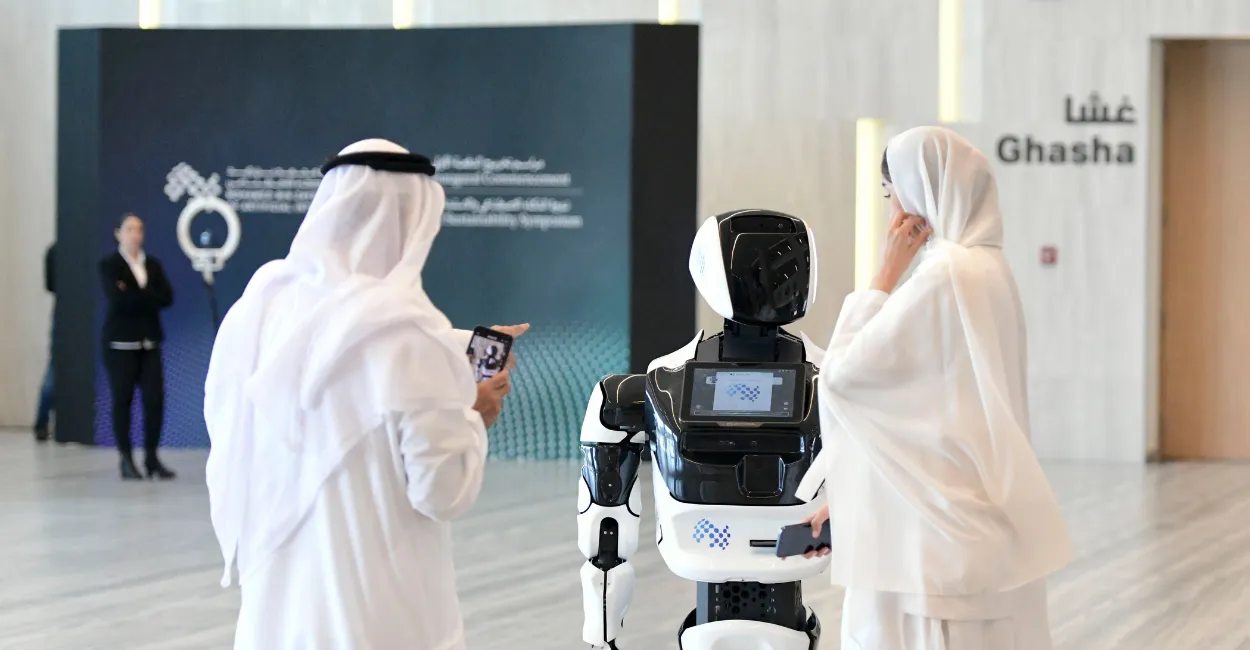
The increased adoption of AI is one of the most notable features of the initiative. AI technologies are being applied in various functions to improve services and decision-making.
The ministry says the following are some of the areas where AI is already being used:
-
Smart chatbots to answer student and customer questions.
-
The analysis and reporting of data.Data analysis and reporting.
-
Classification and processing of cases.
-
Ensuring timely service delivery
-
Assisting with technical and administrative recommendations
-
Boosting efficiency and productivity throughout the organization
These AI-driven solutions are expected to significantly cut response times, enhance accuracy, and facilitate proactive customer service. Instead of users having to make requests, future systems could predict what the user needs and suggest specific items in response to what data and user behavior indicate.
Four Key Pillars Driving the Strategy
The ministry's digital transformation strategy is anchored on four key pillars that will be used for implementation in the near future.
1. Automation and Efficiency
Repetitive tasks and workflows will be streamlined with automation. The ministry will speed up service delivery and cut down on administrative expenses by removing the manual processes.
2. Proactive and Personalized Services
The services will become more personal and individual in the future. AI and data analytics will be used to determine student needs and to provide personalized support.
3. Digital Accessibility
It emphasizes accessibility, making digital services easy to use and accessible to all students and institutions, irrespective of their location or situation.
4. Expanded Use of Artificial Intelligence
In the higher education sector, AI will remain a pivotal tool to assist in decision-making, service quality, and user experience.
Edu Hub Upgrade to Enhance Admissions and Registration
The ministry's admissions and registration platform for higher education institutions (Edu Hub) is among the projects that will be launched this year. The improved platform is anticipated to offer a seamless and smoother admissions process for prospective students.
Edu Hub has been modernised to align with the UAE's vision of a more connected educational system that will allow students to undertake key academic processes via one digital platform. Enhanced functionality and streamlined processes will help to minimise administration delays and improve the efficiency of university applications.
Also Read: How to Check UAE Visa Status Online by Passport Number?
Blockchain Technology to Strengthen Degree Verification
The UAE is also set to implement blockchain-based systems for academic qualifications. The development has the potential to streamline and enhance the authentication of degrees, making the process faster and more efficient.
The secure, tamper-proof records provided by blockchain technology could ease the challenge of credential verification for employers, schools, and government, among others. The UAE is seeking to minimize fraud and boost trust in academic qualifications through the digitization of academic records and their greater accessibility.
Expansion of Qualifications Recognition Services
The expansion of the qualifications recognition systems is another key focus area. The ministry plans to ease the process by which academic credentials can be recognized in the UAE by students and graduates.
This is part of the efforts undertaken in the context of the previous reform, which included automatic recognition of degrees from certain universities in the UAE. Thousands of graduates have already profited from the streamlined recognition processes, and authorities are looking to provide more.
Rapid recognition of qualifications can ease the entry into the labor market or into further education and training for the graduates and help to avoid bureaucratic hurdles.
Stronger Government and International Partnerships
MoHESR is enhancing the links with different government bodies and international partners engaged in academic verification and education services to support its digital transformation objectives.
The partnerships comprise integration with the Ministry of Human Resources and Emiratisation and with organisations that validate education qualifications. Better data sharing is likely to be more accurate, faster to process, and more integrated into a digital ecology.
The ministry is confident that these partnerships will help to improve governance and will help to build an environment for higher education that is more data- and evidence-based.
What the Digital Upgrade Means for International Students?
The UAE has emerged as one of the fastest-growing destinations for international education in the world. As universities are gaining students from all over Asia, Africa, Europe, and the Middle East, the development of digital services will undoubtedly improve the country's status as a global education hub.
International students will benefit from:
-
Faster admissions processes
-
Simplified documentation requirements
-
Improved qualification recognition
-
Improved support and scholarship opportunities.
-
Improved interactions with institutions
-
Enhanced academic record verification process
The enhancements may contribute to making learning more accessible and appealing in the UAE, where students are accustomed to a technologically advanced learning environment.
Also Read: UAE Visa Photo Size: New Requirements, Size & More
Supporting the UAE's Vision for a Digital Future
The UAE's initiative for higher education transformation is part of the UAE's vision to be a world leader in digital government services and innovation. The country has been dedicated to the growth of cutting-edge technologies, digital systems, and AI-enabled public services. The country is making progress to become a technology-driven nation, with recent developments such as the expansion of ultra-fast digital networks and smart government initiatives.
The UAE's adoption of AI, automation, and blockchain in higher education is shaping a system that has the potential to impact educational systems globally and regionally. The UAE's implementation of AI, automation, and blockchain in the education system could influence the higher education system in other parts of the region and beyond. The focus on efficiency, personalisation, and accessibility is symptomatic of the global shift towards digital-first public services.
Conclusion
The UAE's new digital transformation initiative represents a major step in the modernization of higher education services. The nation is creating a more efficient and student-centric education ecosystem through digitalisation of services, increased adoption of AI, modernised admissions processes, new blockchain authentication, and enhanced institutional integration. Throughout the programme, it is anticipated that the quality of services will be enhanced, bureaucracy will be minimized, and the UAE's reputation as a global leader in digital innovation and higher education excellence will be maintained.
Contact TerraTern for more information.