

Key Highlights
- Japan Announces New Residence Permit Fee Structure
- Permanent Residency Applications Face the Biggest Increase
- Why Is Japan Increasing Immigration Fees?
- Immigration Budget Also Sees Significant Growth
- How Will the New Fee Structure Affect Foreign Nationals?
- What This Means for International Students?
- Skilled Workers and Employers May Need to Adjust Their Plans
- Japan Continues to Welcome Foreign Talent Despite Higher Fees
- Should Applicants Apply Before October 1?
- What Should Prospective Migrants Keep in Mind?
- Conclusion
Japan is going to raise the residence permit and permanent residency visa application fees from October 1, 2026, as one of the largest immigration fee hikes in the country in recent years. The move follows record levels of foreign residents in Japan and the increasing costs of managing immigration in the country. The new fee structure will impact international students, skilled professionals, workers and long-term residents who renew or switch their residency status. The higher fees are designed to enhance immigration services and control the increasing number of foreigners in Japan, according to the government, but the increases will make it more expensive for thousands of people who intend to live and work in Japan.
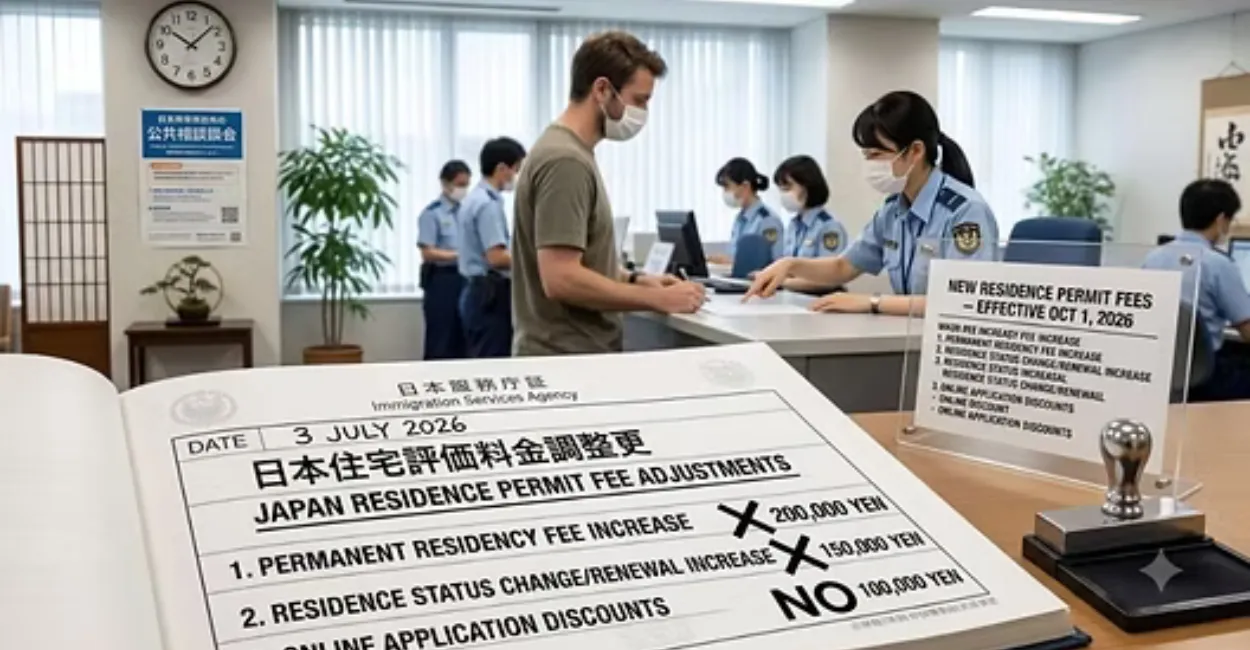
Japan Announces New Residence Permit Fee Structure
Applications for renewal of and change in residence status in Japan will be much more expensive from October 1st.
Currently, applicants pay a flat fee of 6,000 yen for any length of residence permit. The revised structure will instead be based on the length of stay that is awarded.
The new fee will range from 10,000 yen to 75,000 yen, depending on the length of time the applicant is approved for. This is a change from Japan's one size fits all fee policy to a more flexible fee policy that is dependent on the validity of the permit issued.
Also Read: Japan Immigration Made Easy: Everything You Should Know
Permanent Residency Applications Face the Biggest Increase
The biggest adjustment announced by the Immigration Services Agency in Japan is to the permanent residency application process.
Presently, foreign nationals are charged a modest fee for permanent residence application. But as of October 1, the fee will be raised significantly to 200,000 yen, or 20 times what it is now.
The rise is due to the government's recognition of the true costs of administering permanent residency applications, conducting background checks, immigration records, and assisting long-term foreign residents, it said.
This sudden surge will likely garner attention from expatriates, skilled workers and long-term residents who have been waiting to apply for permanent residency in Japan. Now more than ever, many applicants may want to submit their applications in advance of the new fee structure in October.
Why Is Japan Increasing Immigration Fees?
The decision is closely tied with Japan's fast-growing foreign resident population.
Japan has 4.1 million foreign residents in 2025, the highest-ever, up 9.5% from 2024, government statistics show.
This consistent development has created a strain for immigration officials who have to process visas, residence permits, comply with regulations, process paperwork, and provide assistance to foreign nationals.
The current fee structure does not adequately reflect the cost of services provided, officials say. The government has stated that it needs to adjust immigration charges again, as the rate of immigration keeps increasing and it is citing the need for sustainable funding of immigration management.
Immigration Budget Also Sees Significant Growth
The new fee system is part of Japan's broader initiative to enhance its immigration system.
The government has set aside 48.9 billion yen for managing foreign nationals in fiscal 2026, which was about 39 percent more than the initial amount it allocated in the previous fiscal year.
The extra money will be used for immigration processing, compliance monitoring, administrative support, and services and care for foreign residents throughout the country.
As Japan continues to attract greater international manpower to fill its manpower shortage, immigration systems must be expanded as well.
Also Read: Step-by-Step Process of Obtaining a Japan Tourist Visa for Indians
How Will the New Fee Structure Affect Foreign Nationals?
The new charges for residence permits will affect many foreigners in Japan, such as foreign students, highly skilled workers, technical interns, researchers, business people and family members. The updated charges will apply to all applications to renew, extend, or change residence status that are received after October 1.
The rise is an added expense for many applicants for legal residency to Japan. Over time, those who regularly renew their residence status could see a steady increase in immigration costs. Similarly, any aspirants for permanent residency will have to take into account the significantly higher application fee in their plans.
The new fees may not deter highly skilled professionals or employers who sponsor foreign workers, but they could mean extra fees for families and students who have several immigration processes underway at once, and for entry-level workers.
Those who qualify to apply before October 1 can apply on the existing fee system after meeting all the eligibility criteria and having the required documents on hand.
What This Means for International Students?
Japan is still considered one of the top destinations for international students in Asia with students from India, China, Vietnam, Nepal, Indonesia and South Korea among the other countries. It remains an appealing study place with its world-famous universities and advanced research institutes and its booming job market.
Generally, international students will need to re-apply for residence status or update their status throughout their study period. Under the new fee system, these administrative procedures could be more costly, increasing the cost of studying in Japan.
Although tuition fees and living costs are generally the biggest financial concerns of a student, the cost of immigration can emphasize the need to plan for immigration-related fees during the entire length of their stay.
Students planning to stay in Japan after graduation for job seeking should also review how the new fee structure may impact the renewal of their residence permits and/or long-term migrations.
Skilled Workers and Employers May Need to Adjust Their Plans
To meet the labour shortage, Japan has increasingly depended on foreign professionals in fields like healthcare, manufacturing, construction, engineering, the hospitality industry, information technology and caregiving.
In order to retain foreign talent, the country has developed a number of immigration methods in the last ten years, which have facilitated the living and working of foreign nationals in Japan. This has led to employers being more comfortable in hiring foreign nationals to fill the gaps in their workforce.
The increased residence permit costs will not impact the overall policy of Japan to welcome foreign talent. For businesses that sponsor employees, however, they may need to take a closer look at their relocation and immigration budgets, especially if they pay for visa and residence costs for foreign employees.
The new fees will be another consideration for professionals moving on their own, as well as the overall cost of moving to Japan.
Japan Continues to Welcome Foreign Talent Despite Higher Fees
The announcement is mainly for immigration fees, but there is no sign of a tightening of immigration policies or a decrease in opportunities for foreign nationals.
Japan has recently made several changes to be a more desirable place for international students, highly skilled professionals, entrepreneurs, and workers in areas experiencing a shortage of workers.
The growth of the foreign resident population is indicative of the ongoing reliance on foreign nationals for the country's economic development, innovation and demographic needs driven by an ageing population and low birth rate.
Therefore, the new fee regime should be seen as an administrative change, and not a policy change that will limit immigration. Eligibility conditions for foreigners to obtain residence permits or permanent residency will remain in force, but the cost and procedure of applying for them will be raised.
Should Applicants Apply Before October 1?
If you have already made plans to renew your residence or to apply for permanent residency, and you are eligible to do so, you may save a lot of money if you apply prior to October 1.
Those who are interested in permanent residency will benefit the most, since the application fee for permanent residency is significantly lower than the new fee. Likewise, applicants whose residence status is expiring may wish to apply before the new fee rates apply if they are able to do so during the period their residence status is valid.
Interested applicants should read the guidelines of the Immigration Services Agency, meet all the requirements and have the necessary documents ready ahead of time. An incomplete or ineligible application to prevent higher fees may be delayed or rejected.
In general, foreign residents will need to carefully plan and submit on time to minimise the financial impact of the revised immigration fee structure.
Also Read: Jobs in Japan for Indians: Latest Experts Job Guide
What Should Prospective Migrants Keep in Mind?
Coupled with tuition fees, relocation costs, housing, and living costs, the rise in Japan's residence permit fees underscores the need to plan for immigration costs. Administrative expenses now account for a larger portion of the migration budget for anyone who is relocating to Japan for education, work or permanent residence.
It is essential for prospective migrants to remain up to date with the current immigration laws and regulations, be aware of the fee for their particular residence status and be aware of any key application deadlines. Applicants can avoid unnecessary delays and ensure compliance with the new rules by consulting official government sources or qualified immigration experts.
The new fee arrangement may also need to be updated guidance given to international applicants by employers, educational institutions, and recruitment agencies. By communicating clearly about the hikes in costs, foreign nationals will be better prepared financially when they start their trip to Japan.
The increased costs of moving to Japan may be a bit more expensive than the total cost of relocation, but there are plenty of opportunities available in Japan due to its strong economy, excellent education system, advanced technology sector, and its rising demand for foreign talent.
Conclusion
Japan's recent hike in residence permit and permanent residency application fees is a measure taken due to the high cost of immigration administration and the high rate of foreign resident population growth in Japan, slated to take effect on October 1, 2026. While the new fee system will cost foreign students more, it does not indicate a shift in Japan's policy of attracting foreign talent in general. Rather, the government is looking to enhance immigration services, while ensuring the administrative expenses involved in applications are accurately captured in the fees. Renewers and those seeking permanent residency should check the revised fee schedule and, if they can, submit applications that meet the criteria in advance of the new fees. By planning and being aware of this, applicants can have better control of the financial aspect of their activities, and still be able to enjoy the opportunities for education, employment and long-term settlement Japan provides.
Contact TerraTern for more information.