

Key Highlights
- What is Chile’s New Digital Work Authorisation Certificate?
- Why has Chile Introduced the Digital Certificate?
- How Does the New Certificate Help Foreign Workers?
- How can Employers Use the Digital Certificate?
- Digital Certificate Does not Replace Immigration Checks
- What Does the Change Mean for Foreign Workers Seeking Jobs in Chile?
- Chile’s Broader Move Towards Digital Immigration Services
- Impact on Employers Hiring Foreign Nationals
- Could the Certificate Reduce Informal Employment?
- What Foreign Workers Should Keep in Mind?
- What Should Employers Do Under the New System?
- What Does This Mean for Chile’s Labour Market?
- Conclusion
Chile has recently launched a new digital Work Authorisation Certificate, dubbed “Habilitación Laboral,” to help employers and foreign nationals determine if a foreigner is legally allowed to work in Chile. The certificate, created by Chile's National Immigration Service (Servicio Nacional de Migraciones, SERMIG), is available online and free of charge, and can be used to more quickly verify an employee's eligibility.
The shift comes as Chile strives to modernise its immigration system, increase transparency of the labour market, and increase employer compliance with hiring foreigners. The new system is especially applicable to those employers who must determine a worker's immigration-related employment status prior to, or while, they are working.
What is Chile’s New Digital Work Authorisation Certificate?
The new Habilitación Laboral is a digital certificate that will enable foreign nationals and employers to determine if a foreign national has the legal authorisation to engage in paid work in Chile.
The certificate aims to simplify the process of verifying employment authorisations by transferring it online. The digital certificate will enable employers to establish the current employment-authorisation status of a worker, in addition to immigration documents or separate administrative checks.
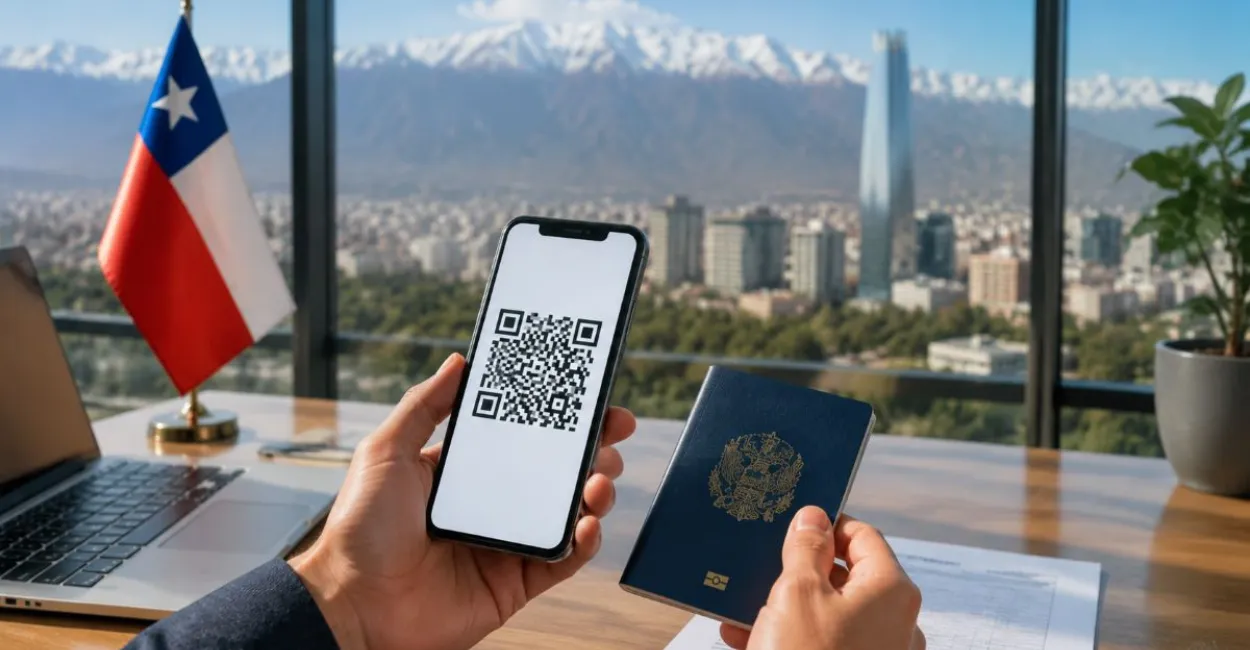
The report on the measure states that there is no cost for the certificate and it is available online. It also contains a QR code, which employers can use to digitally verify the document.
The measure does not supersede Chile's general compliance requirements for immigration. Instead, it offers a handy check that can complement the checks that employers are already legally expected to make.
Also Read: Digital Nomad Visa Canada: Experts Complete Guide
Why has Chile Introduced the Digital Certificate?
The introduction follows concerns by the government about foreign nationals working without permission.
Reports on the launch indicated that over 232,000 individuals had paid social-security contributions without holding valid permits, and some 40,000 employers may be subject to sanctions related to their employment-authorisation concerns. The new digital system is therefore not only designed to make the administration easier, but also to enhance the control of the labour market.
The project is part of a larger effort in Chile to modernise immigration processes. SERMIG has already digitized some of the immigration documents and procedures. In certain cases, for example, the Estampado Electrónico replaces the physical stamp in the passport for temporary residents, as a digital certificate of residency.
The new employment-authorisation certificate will allow authorities to facilitate employers in determining whether a foreign worker is allowed to work and will minimize manual verification.
How Does the New Certificate Help Foreign Workers?
One of the primary benefits for foreign workers is increased transparency on their employment status.
There may be several documents, permits, and validity periods involved in immigration and work authorisation procedures. A digital certificate is a supplemental document that can be used to establish eligibility for employment as needed by workers.
This may be particularly useful when starting a new job. A worker may give the certificate to an employer, who can then verify the information electronically, not just by looking at copies of immigration documents.
The digital version can also be more convenient for employees who must display their status remotely or submit employment-related documents to a potential employer.
Foreign workers, however, should be aware that holding the certificate does not imply that all the immigration requirements are null and void. The certificate is a verification process and should be read in conjunction with the worker's overall immigration record.
How can Employers Use the Digital Certificate?
The certificate may be used by the employer as a means to determine if the foreign national has been granted permission to undertake paid work in Chile.
The QR code is crucial as it offers a fast way to digitally confirm the document. An employer can check the certificate by accessing the digital verification mechanism as opposed to the manual assessment of information in the paper certificate.
This may be especially beneficial for businesses that frequently hire foreign employees. Human resources departments can include the certificate in their onboarding and compliance procedures to make certain that they are alert to any potential work authorisation issues before the employee starts work.
A digital verification system might also help ease administrative burdens and simplify periodic compliance checks for firms that have many foreign workers.
Also Read: Russian Work Visa for Indian: Costs, Types, Diff & More
Digital Certificate Does not Replace Immigration Checks
It is worth noting to employers and foreign workers that the new certificate does not substitute for a full immigration-status review.
The certificate is not a substitute for existing checks; it is meant to be used in addition to them. Complete verification of immigration documents continues to be relevant for compliance, Economic Times said.
Employers should thus maintain their scrutiny of the immigration documents, permits, and conditions that apply to a worker's situation.
This is significant because immigration status and work authorisation may be subject to different conditions. An individual can be authorised to stay in Chile and still be required to meet certain conditions before he/she can start working.
Businesses should not consider the digital certificate a replacement for immigration due diligence.
What Does the Change Mean for Foreign Workers Seeking Jobs in Chile?
The new system might help to clarify the work process for foreigners who are already in Chile or are engaged in the Chilean immigration process.
Not knowing if they can take a job they are interested in can cause a delay in the recruitment process for job seekers. Employers may also be hesitant to hire candidates if it is difficult to verify immigration and work-authorisation papers.
The use of a standardised digital certificate will help to solve this problem by providing a clear and unambiguous way for both parties to verify employment eligibility.
It could also minimise inadvertent non-compliance. Where employers can establish a worker's status more effectively, the employer might be better suited to determine when further immigration action is necessary prior to employment.
The certificate, however, shouldn't be seen as a new visa or immigration path for foreign professionals looking at Chile as a location to work. It is mainly a verification tool that works on a digital basis.
Chile’s Broader Move Towards Digital Immigration Services
The new certificate is part of a larger digitisation of Chile's immigration administration.
SERMIG has been progressively moving immigration processes onto the internet, such as the Estampado Electrónico for temporary residence permits. The electronic document provides a person with information, including the identity of the holder, the category of residence granted, and the date of expiration of the permit.
In addition, some work authorisation applications are available online in Chile. For instance, SERMIG's instructions for temporary visitors clarify the process for applying for work authorization via the Digital Procedures Portal.
These developments are an attempt to establish a more centralised and technology-based immigration system. Documentation can be faster and less paper-intensive for applicants, employers, and government agencies.
Impact on Employers Hiring Foreign Nationals
Among the first areas that will be affected for employers are compliance and recruitment processes.
Companies hiring foreign workers have to ensure that employees have the appropriate authorisation to perform their jobs. Employers may be subject to regulatory repercussions if the immigration and labour requirements are not met.
The new certificate can serve as another tool for employers to determine eligibility to work. It may also be easier for HR teams to keep track of records and be able to prove that proper checks were carried out, due to a digital verification process.
This is particularly true in industries where there is a significant reliance on foreign workers. Rapid verification can help minimise delays between recruitment and onboarding, and can increase employers' confidence in the documentation provided by candidates.
However, companies should seek immigration or legal advice when the situation of a worker is complex or when they are unsure of the requirements of a specific permit.
Could the Certificate Reduce Informal Employment?
One of the main goals of this initiative is to enhance formal employment and to cut down on the opportunities for foreign nationals to work without proper authorisation.
The number of foreign workers and employers reported gives an idea of the scope of the compliance problem. Administrative records identified more than 232,000 individuals who contributed but lacked valid documentation of their immigration status, suggesting that there are likely areas where there is a mismatch between the two.
Employers would be better able to detect early problems if a readily available verification system were available.
It could also make it less attractive for businesses to use incomplete or unreliable records as proof of authorisation, as employers will be able to rely on an official digital method to confirm authorisation.
The effectiveness of the system, however, will rely on the extent to which employers implement it and on the extent to which it can be integrated with other immigration and labour enforcement systems.
What Foreign Workers Should Keep in Mind?
Foreign nationals must continue to keep their immigration documents in good order and up to date if they are working in or wish to work in Chile.
Immigrant workers should verify the validity and conditions of their immigration status before accepting a job. They should also make sure that the information shown on any digital certificate is correct.
Chile's immigration system consists of various types of residency and work visa categories, and visa eligibility may vary based on the visa category. For foreigners who plan to stay in Chile temporarily, this type of residence is issued and is valid for a maximum period of two years (except in the case of seasonal workers).
The new certificate thus makes the verification process easier, but cannot remove the requirement for workers to know the conditions that are attached to their immigration status.
Also Read: Apply Now: Italy's New Digital Nomad Visa Welcomes You and Your Family
What Should Employers Do Under the New System?
Employers who seek to recruit foreign nationals may want to integrate the digital certificate into their compliance processes.
Businesses can:
-
Obtain the digital Work Authorisation Certificate from overseas employees (if required).
-
Check the certificate's digital verification mechanism or QR code to verify the certificate.
-
Verify the underlying immigration documents and conditions of the worker's permits.
-
Ensure the authorisation includes the proposed job.
-
Keep appropriate records of employment-authorisation checks.
If the status of a worker is not clear, please consult a professional immigration advisor.
These measures may help employers to prevent relying on one document as proof where further immigration verification might be needed.
What Does This Mean for Chile’s Labour Market?
Chile's move is another step towards the modernisation and streamlining of the foreign-worker administration.
Easier verification for employers could lead to less administrative hassle and better compliance. It might offer a better method for foreign workers to establish their legal ability to work.
The campaign could also help government officials to detect inconsistencies between immigration status and employment. More precise digital records can help with more precise enforcement and limit unnecessary paperwork for compliant workers and businesses.
Meanwhile, the success of the system will rely on correct information and awareness and ongoing coordination between immigration authorities and employers.
Conclusion
The introduction of the free digital Habilitación Laboral certificate is an important step towards modernising the foreign employment administration in Chile. The system can speed up and simplify recruitment and compliance processes by enabling employers and foreign workers to check work authorisation electronically. The QR code on the certificate may also be valuable for employers with international staff, and for foreign nationals, it could make it easier to prove their employment status.
The new certificate is not intended to replace immigration documents or a thorough compliance review; however, it should be regarded as an extra verification tool. The program could be a useful tool in developing a more efficient and transparent system for Chile's increasingly international workforce as the nation expands its digital immigration services.
Contact TerraTern for more information.