Key Highlights
- Latest Facts & News About IELTS Difficulty in 2026
- Understanding the IELTS Exam Structure in 2026
- What are the Key Factors That Make IELTS Difficult to Crack?
- Which Part of IELTS is Most Difficult? Section-wise Analysis
- Is It Really Difficult to Crack IELTS in 2026? Success Stories and Common Pitfalls
- What are the Expert Tips and Strategies to Make IELTS Easier in 2026?
- Which IELTS Is More Difficult in 2026 - Academic vs. General Training?
- Conclusion
The test takers asked, What is IELTS difficulty level? Different people have given varied answers according to their English skills and preparation. Knowing about how difficult is IELTS exam or is IELTS exam difficult would make you feel better because, like you, others also wonder whether it is that easy after a lot of practice, or whether they should question "Is IELTS test difficult?", or if people find is it difficult to crack IELTS due to the challenges they experience in certain parts like speaking or writing?
In this guide, we share expert tips and updated strategies to help you succeed in 2026.
Latest Facts & News About IELTS Difficulty in 2026
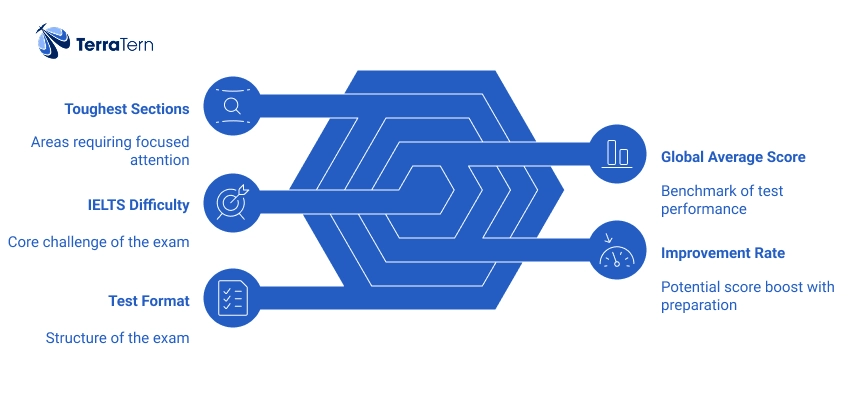
Before jumping to conclusions about how tough the exam really is, let’s look at some of the latest facts and updates that reveal what truly makes IELTS difficult in 2026 and why smart preparation can make all the difference:
-
IELTS remains the world’s most popular English proficiency test, with over 3.5 million test-takers annually.
-
The average global IELTS score is 6.3 bands, but over 40% of candidates improve by 2 bands with focused preparation in 3 months.
-
IELTS Academic and General Training tests have similar difficulty, though the Academic version’s reading and writing sections are considered slightly tougher.
-
Listening section challenges include exposure to multiple English accents and only one chance to hear the audio.
-
Time management is a major hurdle, especially in the reading and writing sections, due to strict time limits.
-
IELTS scoring is stringent, emphasising fluency, coherence, grammar, and vocabulary—minor mistakes can affect your band score.
-
Recent updates have made the IELTS computer-based test more accessible, but the difficulty level remains unchanged.
-
IELTS is now accepted by over 11,000 organisations worldwide, increasing its importance for study, work, and migration.
-
The cost of the IELTS exam has risen in several countries, making preparation even more crucial for first-time success.
-
Test takers report that regular practice with mock tests and understanding the format significantly reduces perceived difficulty.
Also Read: IELTS Score for Germany: Work & Study Requirements
Understanding the IELTS Exam Structure in 2026

One of the reasons why some students wonder is IELTS difficult. For once, many of them do not know, at least in theory, how the test is organised. Knowing the organisation is half the time a way to lessen tension and develop a smart preparation strategy. If you even ask yourself what and how difficult is the IELTS test difficult, the generalities will ease it for you during preparation.
This is what you need to know:
-
There are Four Modules: Listening, Reading, Writing, and Speaking, each intended to test one skill of the language.
-
Scoring: Each module is scored on a band scale from 0 to 9; the final score is an average of the four sections.
-
The Speaking Test: Is face-to-face with an examiner, unlike so many others.
-
No Negative Marking: Potentially wrong answers do not earn you negative marks.
What are the Key Factors That Make IELTS Difficult to Crack?
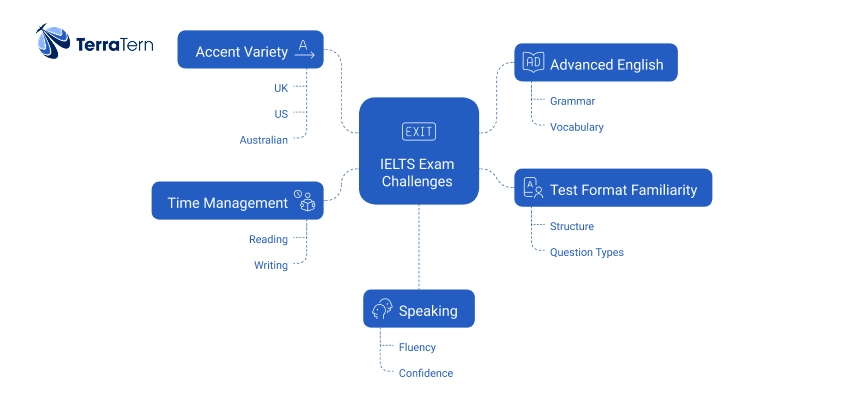
Many students and professionals ask whether IELTS is difficult, and the answer depends on various individual and test-related factors. While some candidates find it easy to achieve high bands, others experience tremendous stress. In this article, we'll explain the primary reasons the IELTS test is difficult and how to counteract them.
1. English Proficiency Level for IELTS
The level of English you have right now has a lot to do with how difficult IELTS is. While someone with a pretty good standard in English, focusing mostly on reading and writing, would find it pretty easy to manage, somebody with weaker points, for example, with grammar, vocabulary, or fluency, would find that even the simplest of questions can easily become hard. Guides according to the proficiency level of how difficult IELTS is:
-
Beginner/Intermediate: Grammar, vocabulary building, reading comprehension, graded readers, apps like Duolingo or BBC Learning English.
-
Advanced: Go high-level in the mock tests and review the feedback given to fine-tune answers.
2. Required Band Score for IELTS
The more ambitious your target band score, the more challenging the IELTS is likely to be, particularly in the Writing and Reading sections. For instance, scoring a 6.5 may seem fairly easy to achieve, but improving it to 7.5 requires precision, advanced vocabulary and grammar that is almost free of errors. More than 60 per cent of test takers aspiring for Band 7 and above actually improved their scores through focused preparation for two to three months.
3. Familiarity with the Test Format for IELTS
Not because the English is not very well done, but because they are not aware of the IELTS test format; most candidates feel overwhelmed. Even the most straightforward tasks can end up being quite troublesome if one does not know the different types of questions or what timing they have available. Key insights about the format:
-
Every module follows a definite time frame and has clear types of questions.
-
The Listening test samples different accents from various backgrounds, like the British, American, and Australian.
-
The IELTS Reading also combines skimming, scanning, and matching all strategies.
4. Time Management for the IELTS Exam
Yes, time pressure is one of the biggest challenges, especially in Reading and Writing. You get:
-
60 minutes for 3 long reading passages
-
60 minutes to write two structured responses in the Writing section
Also Read: Minimum IELTS Score for Australia Work Visa: Latest Guide
Which Part of IELTS is Most Difficult? Section-wise Analysis

Most candidates ask, is IELTS difficult for certain sections? Some of them seem more stressful than others, realising the truth that all have their special hurdles; it is a more personalised thing, depending on your likes and dislikes. Here's a breakdown of the IELTS exam difficulty, so you can focus your efforts where they most matter.
1. Listening Section Challenges in the IELTS Exam
This is an assessment of the listening section that tests the ability to understand a wide range of English accents under strict time constraints. There is only one chance per audio sample, making it easy to miss answers when not tuned in to what the audio is about. Why it feels difficult is not limited to:
-
Audio is played only once.
-
A mix of British, Australian, and American accents.
-
You have to listen and write your answer simultaneously.
-
Distractors are common false leads in conversation.
2. Reading Section Challenges in IELTS Exam
It's mostly referred to as the most difficult area of an examination, especially in an Academic setting. The passages take time to read, while the meaning of the questions typically eludes the reader. Some common problems include:
-
The time constraint is 60 minutes to answer 40 questions across three long passages.
-
Difficult college-level vocabulary
-
The questions could have been matching headings, true/false/not given statements, and problems based on inference.
3. Writing Section Challenges in IELTS Exam
Most people wonder why the is ielts difficult writing section is so tough because of the really high demands on grammar, coherence, and vocabulary, and all those features have to be demonstrated under time conditions. Struggle points:
-
Task 1: A description of data, trends, or a situation (academic) or a letter for some particular audience (general).
-
Task 2: Write a proper essay with arguments and examples.
-
Task 3: At least 150- and 250-word length correspondingly.
-
Task 4: Grading up is heavily influenced by grammar accuracy and coverage of key vocabulary.
4. Speaking Section Challenges in IELTS Exam
Meeting the examiner for the face-to-face interview can create a rather scary atmosphere for one not too confident about his or her fluency. But the very nature of examination skills in spoken IELTS requires thinking on one's feet and not just spoken fluency and coherence.
-
You are to sound fluent but grammatically accurate.
-
Part 3 requires spontaneity.
-
Hesitation, repetition, or fillers can lead to deductions.
Is It Really Difficult to Crack IELTS in 2026? Success Stories and Common Pitfalls
Is it difficult to crack IELTS? This will primarily be determined by the test-taker's preparedness, mental set, and knowledge about how they understood the examination, and this section will share their success stories and common mistakes to avoid, so that they can learn from them as they have already walked the path.
-
Ravi S. (India)
- I thought it was impossible at first. But after two months of daily practice and mock tests, I jumped from Band 6.0 to 7.5. The key was learning from my writing mistakes.
-
Ana G. (Brazil)
- Listening felt like the hardest section for me because of the different accents. But once I got used to it through daily podcasts, things got much easier.
Also Read: Everything About IELTS Learning & Exam Is Right Here!
What are the Expert Tips and Strategies to Make IELTS Easier in 2026?

A lot of students tend to ask whether is IELTS difficult. Often, the answers will differ according to the level of preparation. This is a difficult test, but an intelligent approach can make it easy. If you still wonder how difficult is IELTS, implement these proven tips to strengthen your confidence and performance. Use this checklist as a guide to your preparation and ease the tension of the exam day:
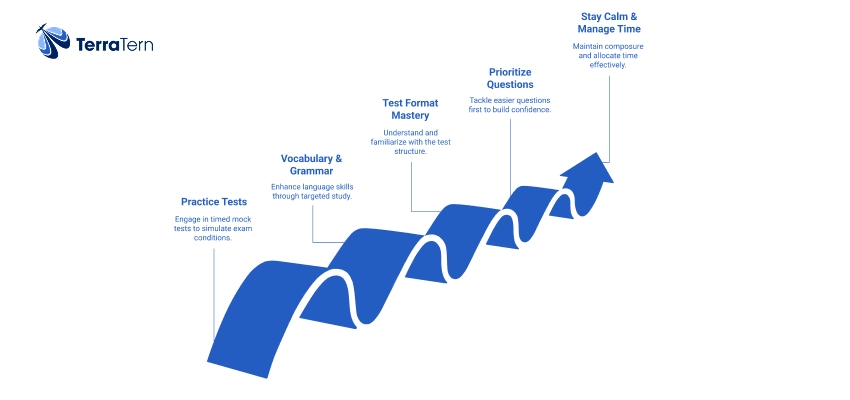
Practice with Mock Tests for IELTS
Simulating real conditions is one of the best ways to overcome any fear of the IELTS test. Why is this helpful?
-
Builds familiarity with the test format
-
Highlights weak areas early
-
Reduces test-day anxiety
Build Vocabulary and Grammar for IELTS
Use a rich vocabulary and good grammar to ensure high scores in the Writing and Speaking sections. Why is it essential:
-
Clarity and coherence in writing
-
Avoidance of repetition and filler words in speaking
-
Enhanced ability to paraphrase in reading and listening
Develop Time Management Skills for IELTS
Time pressure is one of the prime things people tend to mention when they describe is IELTS difficult, especially in the Reading and Writing sections. Why is it important:
-
Each section is strictly timed with no returning to a question for a second guess
-
Bad pacing could potentially lose time for unfinished answers
-
Smartly answering the easier questions could dramatically raise your score
Which IELTS Is More Difficult in 2026 - Academic vs. General Training?
A question often asked by test-takers is whether the IELTS exam is difficult. The answer depends on the version: the Academic IELTS and General Training IELTS tests differ. Both have the same Listening and Speaking modules; however, the Reading and Writing sections vary widely, often making the Academic version considerably more difficult for many. Let us see what each version differs and which may suit your goals and skill level.
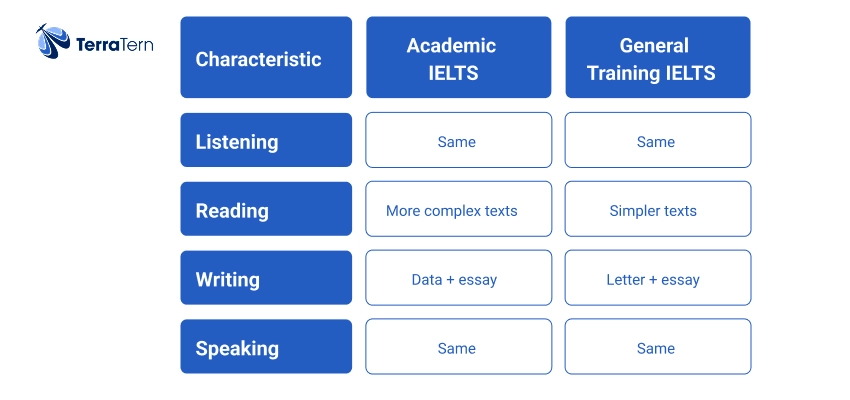
|
Section |
IELTS Academic |
IELTS General Training |
Difficulty Level |
|
Listening |
Same as General |
Same as Academic |
Equal |
|
Reading |
Complex tests from journals, books |
Simpler texts from ads, manuals, newspapers |
Academics are more difficult |
|
Writing |
Describe a graph or chart |
Write a formal/informal letter |
Academics are more difficult |
|
Speaking |
Same as general |
Same as Academic |
Equal |
Also Read: Documents Required for IELTS Exam: Latest Checklist
Conclusion
So, is IELTS difficult? Yes, but only if you go in unprepared. For most test-takers, the challenge comes not from the test itself, but from a lack of familiarity with its structure, strict timing, and scoring expectations. As we’ve seen, the answer to how difficult is IELTS depends on factors like your English proficiency, your target band score, and how well you manage your time.
While the Academic version may feel tougher in Reading and Writing, the General Training test still demands equal focus and strategy. Whether you're asking, “Is the IELTS exam difficult?”, “Is the IELTS test difficult?”, or even “Is it difficult to crack IELTS?”The good news is that thousands of candidates improve significantly with consistent effort and the right tools.
To know more such information, visit TerraTern.




 AI Summary