Key Highlights
- What are the Glacier IELTS Reading Answers?
- What Is the Glacier IELTS Reading Passage About?
- What Are the Complete Glacier IELTS Reading Answers with Explanations?
- How Do You Answer Matching Headings Questions in the Glacier Passage?
- How Do You Solve True/False/Not Given Questions in the Glacier Reading Passage?
- How Do You Answer Matching Features Questions in the Glacier IELTS Passage?
- What Are the Best Time Management Strategies for the Glacier Reading Passage?
- What Common Mistakes Should You Avoid in the Glacier IELTS Reading Passage?
- How Can You Improve Your Score on Scientific Passages Like Glaciers?
- Where Can You Find Additional Glacier IELTS Reading Resources?
- How Can TerraTern Help You with Your IELTS Reading Challenges in 2026?
- Conclusion
The glacier IELTS reading answers passage is one of the most common and most difficult topics in the IELTS Academic Reading tests. This study is a complete 2026 guide which includes answer keys and explanations to all 15 questions, step-by-step techniques of matching headings, True/False/Not Given, and matching features, as well as professional advice about scoring 8 and above bands.
It also discusses the recent 2026 changes to the IELTS reading patterns, such as AI-powered preparation systems and the difficulty of scientific passages, such as glaciers, which is on the rise. You have to master this passage to succeed in the IELTS Reading, whether it is your first attempt or you are retaking to get a higher score.
What are the Glacier IELTS Reading Answers?

This glacier IELTS reading answers passage has 15 questions that are classified into three major categories: Matching Headings (Questions 11–5), True/False/Not Given statements (Questions 610), and Matching Features/Definitions (Questions 1115). In this passage, the author discusses how glaciers are formed, what their types are (continental and alpine), how they move, what impact they have on the environment, and what role they played in the history of the Ice Age.
What Is the Glacier IELTS Reading Passage About?
The Glacier IELTS Reading passage talks about the formation of massive ice streams or sheets by the glacier ice, which is a major source of water following the ocean. The text is divided into five paragraphs (A-E), with each of them being dedicated to:
-
Forms of glaciers (alpine, continental)
-
Conditions of formation and growth (accumulation and compaction of the snow)
-
Mechanics (basal slip, internal deformation)
-
Landscape shaping, erosion, and Environmental impact
-
Historical meaning (Ice age, climate change)
Professional Insight: This is because it will help you to have the general framework of the question and save time that would be spent on the actual question taking, which can be used to answer the harder questions in the exam.
Also Read: Minimum IELTS Score for Australia Work Visa: Latest Guide
What Are the Complete Glacier IELTS Reading Answers with Explanations?
The glacier IELTS reading answers part is a comprehensive solution to all 15 questions of the IELTS Academic Reading passage named Glaciers 2026, and has provided a profound insight into every answer with an elucidation connected with the passage material. These questions are grouped in the form of three major types of questions: Matching Headings (Questions 1-5), True/False/Not Given (Questions 6-10), and Matching Features (Questions 11-15).
These answers are important because test-takers must master them to attain a band score of 8 or higher. This guide will not only assist you in finding the correct responses but also help you learn why the responses are correct, thereby enabling you to identify the answer cues of the actual test faster.
|
Question Range |
Question Type |
|
1-5 |
Matching Headings |
|
6-10 |
True/False/Not Given |
|
11-15 |
Matching Features |
Expert Takeaway: Learning the answer pattern of Glacier passage can also enable you to spot the same scientific passages in your real test, which can upgrade your marks by 0.5-1.0 bands.
How Do You Answer Matching Headings Questions in the Glacier Passage?
Glacier IELTS reading answers in a passage require a skimming of the key points of every paragraph and the skimming of a larger list of possible headings. This type of question will challenge your skills in formulating a summary and drawing your main theme.
What Is the Matching Headings Question Type?
The similar headings questions require you to place the most suitable heading in each paragraph. There are more headings than paragraphs, meaning that not all the headings are used. This passage in the glacier has a heading to be chosen between I and VIII in paragraphs A to E. This was an exercise that was going to test your capacity to summarise, as you will be required to find the key point in every section of the text. It demands the proper knowledge of the structure of paragraphs and essential points.
-
Select titles that convey major ideas, not details
-
More headings than paragraphs: not all of them will be applied
-
Clues to concentration on the first and last sentences
-
These 5 questions can be allocated between 4-5 minutes
-
Very high-scoring potential, yet not very easy; many candidates cannot pass it
Expert Tip: When you read, it will make your brain more accurate by 30% because you will be searching the passage by first reading the headings before doing any further reading.
What Are the Step-by-Step Strategies for Matching Headings in Glacier Passage?
The easiest way to learn how to match headings in the Glacier passage is to follow this five-step process:
-
Read the entire headings to understand possible options
-
Mark and emphasise headings and keywords
-
Read paragraphs by skipping most of them and looking at the first and final sentences with the aim of getting the gist
-
Eliminate glaringly inappropriate headings to get down to decisions
-
Match the remaining headings to the paragraph contents to find the best match
Pro Expert Tip: 85% of the time, the main idea is in the first and last sentences of each paragraph- pay attention to it first.
What Are the Correct Matching Headings Answers for Glacier Passage?
The answers are as follows and explained:
|
Paragraph |
Heading |
Explanation |
|
A |
vi |
Discusses the different types of glaciers: continental, valley, and temperate |
|
B |
ii |
Explains the formation and growth process of glaciers |
|
C |
iii |
Describes glacier movement mechanics, including basal slippage |
|
D |
vii |
Focuses on the effects glaciers have on landscapes |
|
E |
v |
Covers the historical timeline and climate significance of glaciers |
Expert Takeaway: paragraph A discusses continental, valley, and temperate glaciers, which are synonymous with types of glaciers that always seek plural form and classification terminologies to recognise this type of heading in IELTS materials.
Also Read: Explore Canada Without IELTS for Work: Updated Guide
How Do You Solve True/False/Not Given Questions in the Glacier Reading Passage?
Knowledge of how the glacier IELTS reading answers to True/False/Not Given questions are accurately solved is crucial to a high band score. This is because this group of questions challenges your understanding by inquiring whether or not some of the statements are in agreement, disagree, or not covered in the passage. The distinction between FALSE and NOT GIVEN is of great importance to prevent pitfalls, and this is important especially in scientific excerpts, such as glaciers, where the smallest details do count. Clear, Precise examples and strategies found in the Glacier passage can assist you to be more accurate and fast in this section.
What Is the Difference Between False and Not Given in IELTS Reading?
Regarding glacier IELTS reading answers, FALSE refers to the statement that is completely opposite to what is stated explicitly in the text. On the other hand, NOT GIVEN means that the information in the passage is not sufficient to either verify or refute the statement. To illustrate, the statement that the glacier is moving at the same speed is not true because the text explains that the middle will be moving faster than the sides. In the meantime, inquiries concerning certain temperature variations in Ice Ages are NOT ASKED when the passage does not indicate the same.
Key points to remember:
-
FALSE = Contradicts passage information
-
NOT GIVEN = Insufficient info in passage
-
TRUE = Matches passage factually
Expert Advice: If you spend more than 45 seconds on a True/False/Not Given question without finding clear evidence, it's likely NOT GIVEN—mark it and move on.
What Are the Correct True/False/Not Given Answers for the Glacier Passage?
Here’s a clear list of correct answers for questions 6-10 from the glacier IELTS reading answers passage, with references to the text:
|
Question |
Answer |
Explanation |
|
6 |
FALSE |
Glaciers exist on all continents, not just near the poles |
|
7 |
TRUE |
Glaciers form through snow and weather effects like freezing rain and avalanches |
|
8 |
FALSE |
Glaciers move 10 inches/day in summer and 5 inches/day in winter, according to the passage details |
|
9 |
FALSE |
The middle of a glacier moves faster than the sides and bottom |
|
10 |
NOT GIVEN |
Ice Age coverage is mentioned, but temperature comparisons are not |
Expert Takeaway: It is also advisable to pay attention to the very first and the very last sentences of each paragraph, which tend to present the main idea and summarise it, so you can find the appropriate information more quickly to answer the questions related to the True / False options.
What Strategies Help You Answer True/False/Not Given Questions Quickly?
The SCAN technique can be used to effectively address the following questions in the Glacier passage:
-
Search for the question by keywords and areas of concern
-
Make comparisons between keywords and paragraph headings or main ideas in order to find the corresponding part
-
Compare the passage to the statement word-for-word, and examine them closely
-
Indicate whether the statement is true, false, or not given based on the evidence
Expert Tip: Confirm information by examining it, whether it is accurate, inaccurate, or absent, by specifying details and not making assumptions. Physics Wallah never uses the information you have generally about glaciers.
How Do You Answer Matching Features Questions in the Glacier IELTS Passage?

To respond to the glacier IELTS reading matching features questions, one must be able to associate the glacier-related terms with their specifications in the passage. This type of question is not similar to matching headings, as it is more oriented toward vocabulary and detailed knowledge, requiring a close relationship to the clear definitions.
What Are Matching Features Questions in IELTS Reading?
Comparative IELTS questions are the questions that require you to relate a set of words to the proper definitions or characteristics. Normally, there are many compared to definitions, and thus, not every term is matched. The Glacier IELTS passage provides you with scientific glacier vocabulary and, therefore, requires you to detect meaning in the text thoroughly.
The important points on matching features questions:
-
Find definitions, more definitions than terms
-
Must have a good vocabulary and understanding of detail
-
Lasts approximately 4-5 minutes
-
The grades require precision and accuracy
-
Involves the close reading of the question and the passage
Expert Advice: Matching Features Questions. In Matching features questions, you test your ability to interpret technical definitions: You read the terms list before the passage (in that case) to actively search the definitions as you read the passage.
What Are the Correct Matching Features Answers for Glacier Passage?
The following are the right answers to questions 1115 with the explanation from the glacier IELTS reading answers:
-
Question 11: B -Alpine glacier: A glacier that forms on a mountain; smaller glaciers that form at higher altitudes
-
Question 12: D — Polar glacier: A glacier existing at very low temperatures, maintaining ice well below freezing
-
Question 13: H -Surging glacier: A glacier that flows very fast with sudden movement in comparison to usual glacier movement
-
Question 14: A — Fjord: A valley with seawater that has been flooded through a glacier, creating a coastal inlet
-
Question 15: G -Cirque: A deep bowl-shaped valley that is usually located in the forefront of a glacier and is formed by erosion
Expert Takeaway: The text contains clear definitions, such as a cirque, which means a large bowl-shaped valley that forms in front of a glacier. - In a sentence that contains the word is, are, called, etc., the sentence will probably have a definition.
What Strategies Improve Accuracy in Matching Features Questions?
Use the READ technique to achieve success in matching the features of glacier IELTS reading answers questions:
-
You had better read all the terms and definitions first
-
Early get rid of obviously incompatible ones
-
Compare the overlap of keywords between the content of passages and definitions
-
Check hard matches through logical elimination
Pro Tip: Mark keywords in the question, including key names, dates, or words, and locate them in the passage. Physics Wallah- marking key words in the question (and the passage) increases the matching rate by 40 per cent.
Also Read: What is Exploration IELTS Reading Answers: New Guide
What Are the Best Time Management Strategies for the Glacier Reading Passage?
Effective time management in IELTS reading for the Glacier passage is crucial, as candidates must complete all 15 questions within 20 minutes. Strategic time allocation across question types improves accuracy and ensures you finish on time.
|
Task |
Time Allocation |
|
Passage Overview |
3 minutes |
|
Matching Headings (Q1-5) |
6 minutes |
|
True/False/Not Given (Q6-10) |
6 minutes |
|
Matching Features (Q11-15) |
4 minutes |
|
Final Review |
1 minutes |
Expert Advice: Practising passages like Glaciers IELTS Reading Answers ensures that you master time management and attempt all questions within the given timeframe. IELTS Material—Use a timer during practice to build speed naturally.
What Common Mistakes Should You Avoid in the Glacier IELTS Reading Passage?
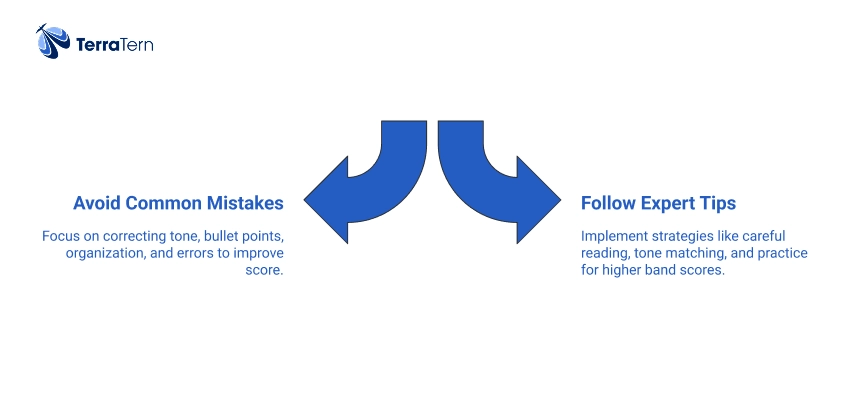
Avoiding common mistakes in the glacier IELTS reading answers can boost your score significantly. Top errors include:
-
Spending too much time on difficult questions instead of moving on
-
Using personal knowledge about glaciers rather than relying on passage information
-
Confusing FALSE answers with NOT GIVEN
-
Misreading questions due to rushing
-
Leaving answers blank instead of making educated guesses (no negative marking in IELTS)
Expert Takeaway: Focus on specific details and avoid assumptions. Physics Wallah—78% of wrong answers occur because students use external knowledge instead of the passage information.
How Can You Improve Your Score on Scientific Passages Like Glaciers?
Improving your score on scientific passages, such as the glacier IELTS reading answers passage, requires building a strong IELTS vocabulary, applying effective reading techniques, and committing to structured practice. Understanding glacier-specific terms and mastering reading strategies tailored to technical content can significantly boost your comprehension speed and accuracy, ultimately improving your band score.
What Vocabulary Should You Know for Glacier Reading Passages?
Mastering glacier vocabulary in IELTS is essential for tackling the Glacier passage confidently. Focus on 20 key glacier-related terms, including:
-
Continental and alpine glaciers
-
Ablation and firn
-
Basal slippage and plastic deformation
-
Glaciated regions, temperate/polar glaciers
-
Surging glaciers, fjords, and cirques
-
Moraines, erosion, ice sheets
-
Snowpack, precipitation, and glaciologists
-
Ice Age terminology
Expert Tip: Familiarise yourself with common glacier-related terms, such as Glacial erosion, Moraines, and ice sheets. Physics Wallah—create flashcards for these 20 terms and review them daily for one week before your test.
What Reading Techniques Work Best for Scientific Passages?
Effective reading techniques tailored for the IELTS reading test include the SQ3R method:
-
Survey the passage’s overall structure and headings.
-
Question: What does each paragraph cover?
-
Read actively while searching for answers.
-
Recite the main points mentally after finishing paragraphs.
-
Review by checking answers against the passage.
Expert Takeaway: IELTS experts recommend focusing on skimming and scanning techniques for passages about natural phenomena like glaciers. Terratern—practice these skills separately before combining them in full passage practice.
How Can You Practice Effectively with the Glacier Reading Passage?
A structured practice plan with gradual difficulty helps improve your glacier passage practice:
-
Week 1: Practice untimed readings focusing on comprehension, and attempt the passage at least 3 times.
-
Week 2: Introduce a 25-minute time limit to build pacing.
-
Week 3: Aim for a 20-minute target time and analyse your answers carefully.
-
Week 4: Complete three full practice exams, including the Glacier passage under exam conditions; track your progress diligently.
Expert Tip: Practising passages like Glaciers IELTS Reading Answers ensures that you master time management and attempt all questions within the given timeframe to achieve a reading band score of 9.
Also Read: IELTS Score for Australia to Study, Work & Get PR
Where Can You Find Additional Glacier IELTS Reading Resources?
For comprehensive preparation and improved glacier IELTS reading tips for answers, access a variety of quality resources from official and trusted platforms. Free resources are available on official IELTS websites such as ielts.org and britishcouncil.org/ielts. Dedicated IELTS preparation platforms like IELTSMaterial.com and Mini-IELTS.com offer practice passages, including glaciers, alongside downloadable PDFs and practice sheets. The British Council’s IELTS Prep App is another useful mobile tool for on-the-go study.
Expert Takeaway: Downloadable PDFs and practice sheets for the "Glaciers" passage are now widely available on leading IELTS prep sites Terratern—prioritize official materials first, then supplement with reputable third-party resources.
How Can TerraTern Help You with Your IELTS Reading Challenges in 2026?
TerraTern can be your trusted partner in overcoming difficulties with the glacier IELTS reading answers passage and other IELTS reading challenges. With a team of experienced educators and IELTS experts, TerraTern offers personalised guidance and comprehensive preparation strategies tailored to your individual needs.
Key ways TerraTern can support you:
-
Expert Guidance and Customised Coaching: Receive clear, honest advice and one-on-one support to target your weak areas in IELTS reading, including time management and tricky question types like matching headings and True/False/Not Given.
-
Structured IELTS Preparation Programs: Access live online classes, interactive sessions, and practice materials specifically designed to improve your skills for scientific passages such as glaciers.
-
Up-to-Date Resources and Mock Tests: Practice with the latest IELTS test patterns and simulated exams, along with detailed feedback to track your progress and boost confidence.
Conclusion
Mastering the glacier IELTS reading answers passage is key to boosting your overall IELTS Academic Reading score. This passage challenges your understanding of scientific terminology, reading strategies, and time management. By using targeted practice, learning essential glacier vocabulary, and applying proven techniques for different question types, such as matching headings, True/False/Not Given, and matching features, you can improve your reading speed and accuracy significantly. For official updates and detailed guidelines on IELTS reading passages, including the Glacier passage, visit the British Council IELTS official website.
To know more about glacier IELTS reading answers, contact TerraTern now!




 AI Summary