Key Highlights
- What is Accountant Salary Australia?
- What Is the Average Accountant Salary in Australia in 2026?
- What Are Latest Accountant Salary Ranges by Experience Level?
- How Do Current Accountant Salaries Differ by Australian Cities and States?
- What Determines the Senior Accountant Salary in Australia in 2026?
- How Much Is a Current Cost Accountant Salary in Australia?
- What Is the Current Treasury Accountant Salary Australia Range?
- How Much Is Accounts Clerk Salary Australia in 2026?
- What are the Latest Factors Influencing the Digital Account Manager Salary in Australia?
- What Current Key Factors Affect Accountant Salaries in Australia?
- What Is the Job Outlook and Demand for Accountants in Australia in 2026?
- How Can the Latest Accountants Increase Their Salary in Australia?
- What Current Qualifications and Skills Do Australian Accountants Need?
- How Do Accountant Salaries in Australia Compare Internationally in 2026?
- Conclusion
Accountant salary Australia is among the least fluctuating yet more recent, stable, and sought-after careers in Australia, with good earnings potential, career progression, and employment in nearly any industry, including finance and consulting, health, technology, and government. The need to hire experienced accountants will only grow as the Australian economy expands and companies become more data-oriented, which in turn will drive salaries up in 2026.
This blog disaggregates the accountant salaries by experience, state, industry, and position, and further elaborates on how accountants can earn more and the best-paying positions.
What is Accountant Salary Australia?
The average accountant salary in Australia will earn an average of between $75,000 and $90,000 a year in 2026, based on experience, location, education, and specialisation. The entry point of junior accountants is low, whereas top and specialised accounting positions may be above the 120,000-150,000 range.
2026 INDUSTRY CONTEXT SECTION
Latest Statistics & Trends:
-
Employment Growth (2025-26): The accounting profession employs over 200,000 professionals in Australia, with projected growth of 6.3% (33,200 new jobs) through 2026 (Source: Labour Market Insights, 2025-26)
-
Salary Inflation: Accountant salaries increased 4-5% year-over-year in 2025-26, driven by talent shortages and cost-of-living adjustments (Source: Robert Half Salary Guide 2025-26)
-
Hiring Trends: 34% of firms plan permanent hiring increases, while 33% are expanding contractor roles to maintain flexibility (Source: Robert Half Survey, November 2024)
-
AI Integration: 31% of firms encourage staff to use generative AI tools for routine tasks, with 49% planning AI upskilling programs (Source: Robert Half, 2026)
-
Remote Work Impact: Hybrid models are now standard, with 50% of candidates demanding flexible work arrangements as a key salary negotiation point
-
Skills in Demand: Financial analysis, business partnering, BI tools proficiency, and month-end management expertise command premium salaries
-
Sector Leaders: Healthcare, financial services, mining, and technology sectors offer the highest compensation packages in 2026
What Is the Average Accountant Salary in Australia in 2026?

The accountant's salary in Australia in 2025-26 is between 75000 and 90000 Australian dollars annually (one thousand four hundred and forty two dollars to one thousand seven hundred and thirty per week). On average, full-time accountants take between 64,200 and 89,000, based on their experience level, qualifications, location, and the size of their employer.
This range is informed by the various checked salary websites, all of which have diverse methodologies and sample sizes. Since different sources offer different salary data, it is possible to compare a few platforms and present the most precise view of the existing market trends.
Salary Sources (Updated 2026):
-
SEEK: $75,000–$90,000
-
Indeed: $78,564 (based on 2,200+ salaries)
-
Glassdoor: $89,000
-
PayScale: $67,416
-
Australian Government JSA: Median per week is 1,442
Quickly Salary Breakdown:
-
Weekly: $1,442–$1,730
-
Monthly: $6,250–$7,500
-
Hourly: $38–$45 (based on 38-hour weeks)
Accountants earn above-average salaries and have high job security across industries, compared to the Australian median wage of approximately 72,000.
Why the Numbers are Different (Methodology Differences)
Salary ranges are advertised at SEEK:
-
In fact, Glassdoor and Indeed rely on user-posted data
-
PayScale employs past + live information
-
Tax and employment samples are used in government data
These variations explain why there are slight differences in wage ranges across platforms.
What Are Latest Accountant Salary Ranges by Experience Level?
Accountant salary Australia vary significantly based on experience, with earnings increasing steadily as professionals move into higher-skill and leadership roles. Entry-level accountants typically earn between AUD 55,000 and 70,000 annually, while mid-level professionals with 3–5 years of experience average AUD 75,000 to 95,000. Senior accountants, team leads, and specialists often earn AUD 100,000 to 130,000+, depending on certifications, industry, and responsibilities.
This clear progression reflects Australia’s strong demand for skilled finance professionals and the value placed on experience, accuracy, and advanced financial expertise.
Graduate Accountant Salary
- New graduates accountant salary Australia normally earn between 55,000-65,000 as an annual wage
- The starting packages of Big 4 firms can be slightly larger due to their formal training and promotion systems
Junior Accountant Salary
- There is a range of $60,000–75,000 in accountant salary Australia with experience of 1-3 years, and the salary growth is more rapid among individuals who start the CPA/CA certification.
Mid-Levell Accountant Salary
- Mid-level accountants with 3-7 years of experience have accountant salary Australia range of 75,000-90,000, especially in tax, audit, or management accounting.
Senior Accountant Salary
- Senior accountants earn between 95,000 and 120,000, depending on the industry, the complexity of their duties, and location
How Do Current Accountant Salaries Differ by Australian Cities and States?
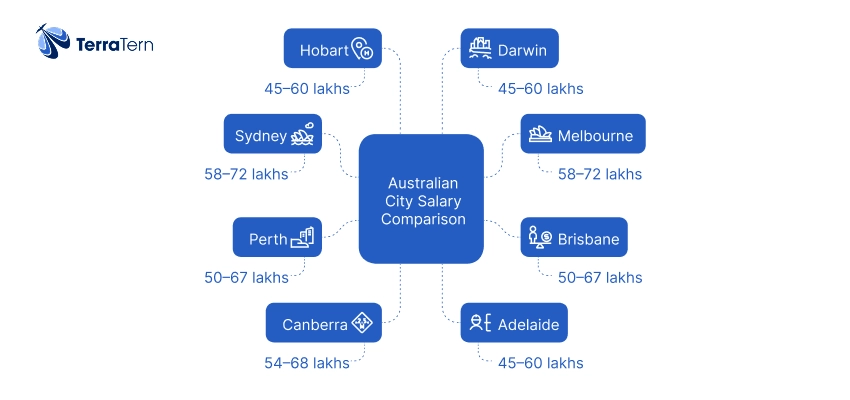
The highest accountant salary Australia are in Sydney and Melbourne (85,000-95,000), then Perth and Brisbane (75,000-85,000), and finally in the regions (65,000-75,000), given that the cost of living is lower and the market is smaller.
What Do Accountants Earn in Sydney?
What is an accountant's salary in Sydney?
-
Average salary is $88,000 (Glassdoor)
-
Range is $72,500–$109,000
-
31% higher cost of living
-
Big 4, financial services, tech, and corporates are the major employers
-
Good, competitive, and best-paying market
How Much Do Melbourne Accountants Make?
What is an accountant's salary in Melbourne, Australia?
-
Average salary is $85,000–$95,000
-
High concentration of professional services and health care
-
Expanding fintech and start-ups
-
Compensation is good pay plus a higher quality of life as compared to Sydney
What Are Perth Accountant Salaries?
What is an accountant's salary in Perth?:
-
Average range is $75,000–$85,000
-
Pay gap in the mining and resources industry
-
Higher fluctuations because of project cycles
-
FIFO accounting opportunities
Brisbane Accountant Salary Expectations
What is an accountant's salary in Brisbane?
-
Range is $70,000–$85,000
-
Reduction in the cost of living + increased employment opportunity
-
Strong demand for construction, infrastructure, and logistics
Are Adelaide and Canberra Salaries Competitive?
What are accountant salary Australia in Adelaide and Canberra?
-
Adelaide: $65,000–$75,000
-
Canberra: $75,000-85,000 (government-heavy economy)
Canberra has better job security but needs security clearances in certain positions.
What About Regional Australia Accounting Jobs?
What are accountant salary Australia in regional area?:
-
Salary is $60,000–$75,000
-
Lighter competition
-
Bonuses and work incentives in the region
-
Expanding job opportunities through hybrid/remote work
-
Improved working life and reduced living expenses
Also Read: Skilled Independent Visa Australia 189
What Determines the Senior Accountant Salary in Australia in 2026?
The average senior accountant salary in Australia is between 95,000 and 120,000, with the 10 per cent in the highest category making a pay of up to 143,500. Such a salary range is determined by years of experience, professional qualifications, industry, company size, and accounting specialisation.
The level of experience of any senior accountant is usually 7-15 years, and his or her responsibility is complex financial reporting, strategic advisory, supervision of a team, and regulatory compliance- this is much more advanced than the work of a general or mid-level accountant.
Salary distribution of senior accountant salary in Australia (Revised 2026):
-
25th Percentile: $86,750
-
50th Percentile (median): ~$105,000
-
75th Percentile: $120,000
-
90th Percentile: $143,500
For comparison:
-
General Accountant Average: ~$90,000
-
Average Senior Financial Accountant: $137,000
Key Factors That Determine Senior Accountant Salary
-
Years of Experience (7–15+ years)
- The longer the experience directly raises the bands of salary, particularly those roles with complex reporting and leadership
-
Professional Certifications (CPA/CA)
-
CA ANZ: 20–30% salary premium
-
CPA Australia: Premiums on salary: 15-25 per cent
Professionals with higher levels of technical and advisory services receive much higher pay
-
Industry Sector
-
Best-Paid: Financial services, mining, technology, energy
-
Less Remunerated: Non-profit, small companies
Salary variations reach up to $25,000+ as pioneered by the industry.
-
Company Size & Complexity
- The larger the business or multi-entity group, the higher the payments due to broader reporting requirements
-
Specialized Expertise
- Tax planning, audit leadership, financial control, and system implementation (SAP/Oracle) skills attract high compensation
-
Leadership & Team Management
- Being in charge of junior employees or involved in finances increases earning potential
-
Location
-
Sydney Senior Accountants: $110,000–$135,000
-
National Average: $95,000–$120,000
How Much Is a Current Cost Accountant Salary in Australia?
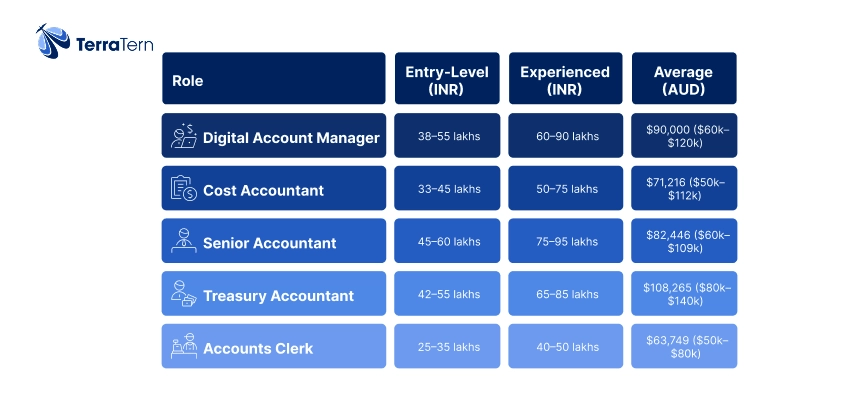
Salary Range (2026) of Cost Accountant: $100,000 120,000 AUD:
On average, the cost accountant salary in Australia is between 100K and 120K, according to SEEK. A starting position averages about 70,000, and with experience in the field, particularly in manufacturing or mining, a cost accountant can earn up to 140,000.
A cost accountant is necessary in industries with a complex production cycle, as they assist businesses in optimising costs, enhancing efficiency, and achieving a higher profit margin.
Multiple Sources of Salary Data for Cost Accountant Salary in Australia
-
SEEK: $100,000–$120,000
-
PayScale: $70,791
-
Indeed: $99,614 average
-
Entry-Level: $63,802
-
Mid-Career: $81,984
What is the Motive Behind Cost Accountant Salaries?
-
Role & Responsibilities:
- Cost accountants examine production costs, monitor inventory, support budgetary calculations, and assist in pricing decisions. They directly affect the financial performance with their work.
-
Industry Variations:
Some of the best-paid industries are:
-
Manufacturing & Production
-
Mining & Resources
-
Construction
-
Supply Chain & Logistics
Big companies in these industries usually pay six figures.
-
Skills That Boost Salary:
-
Cost variance analysis
-
Budgeting and forecasting
-
ERP knowledge (SAP, Oracle, NetSuite)
-
Inventory management
-
Advanced Excel & Power BI
-
Certification Premium
-
CMA (Certified Management Accountant).
-
CPA Australia
The two certifications lead to high earnings and opportunities for managerial positions.
-
Career Path & Salary Growth
- Cost Accountant- Senior Cost Accountant- Cost Accounting Manager- Financial Controller- Finance Director
The best employees will have the opportunity to become leaders and earn above $160,000.
What Is the Current Treasury Accountant Salary Australia Range?
Wage Scale Treasury Accountant (2026): 90000-140000+ AUD:
The average treasury accountant salary in Australia is between 90,000 and 140,000, and is determined by experience and field. The treasury accountants who work in the entry level earn between 80,000-95,000, and their counterparts in the senior levels, such as banking and corporate treasury, earn as much as 140,000 and above.
As a result, treasury accountants are in demand, and their work involves some of the most technical aspects of finance: liquidity and cash flow, FX transactions, and debt.
Experience-Based Salary Breakdown of Treasury Accountant Salary Australia
-
Entry-Level: $80,000–$95,000
-
Mid-Level (3–7 Years): $100,000–$120,000
-
Senior/Advanced: $125,000–$140,000+
What Are the Motives Behind Treasury Accountant Salaries?
-
Industry Concentration:
Increased salaries are usual in:
-
Large corporates
-
Banking & financial services
-
Energy & telecom
-
ASX-listed companies
-
Key Skills Required:
-
Cash flow forecasting
-
Financial risk management
-
FX and money market business
-
Debt and investment management
-
Tools of treasury reporting ( Kyriba Treasury Calculators, SAP Treasury ).
-
Certification Advantage:
-
CTP (Certified Treasury Professional)
-
CFA (Chartered Financial Analyst)
The certifications can greatly improve earnings at a high level.
-
Location Premium:
- Sydney (financial hub) is $120,000–$150,000
Increased wages due to banking and the massive concentration of corporations.
-
Role Comparison:
-
Treasury Analyst: $82,000–$114,000
-
Treasury Accountant: $90,000–$140,000
Treasury accountants are better paid because they have broader roles in liquidity and risk management.
Also Read: Immigration To Australia: Everything You Need To Know
How Much Is Accounts Clerk Salary Australia in 2026?
Salary Range Accounts Clerk (2026): $60,000 -70,000 AUD:
Accounts clerk salary Australia ranges between 60,000-70,000, and entry-level jobs have a pay rate of 50,000, and an experienced accountant has a maximum of 80,000. The accounting function is handled by accounts clerks who assist with day-to-day financial processes, including invoicing, data entry, and reconciliations.
Salary Breakdown:
-
Entry-Level: $48,000–$55,000
-
Experienced Clerks: $65,000–$80,000
-
Accounts Payable Clerk: An average of $60,285
-
Hourly Rate: ~$26.52 (PayScale)
Accounts Clerk Salary Australia: What Determines Accounts Clerk Salaries?
-
Role & Responsibilities
-
Processing invoices
-
The management of accounts payable/receivable
-
Bank reconciliations
-
Sustaining financial records
-
Helping accountants with the reporting
-
Career Progression Pathway
-
Accounts Clerk, Secretarial Clerk, Assistant Accountant, Accountant, Senior Accountant
-
Most clerks with a Certificate IV in Accounting are promoted to assistant accountants within 1-2 years
-
Pay-Raising Skills
-
Experience with MYOB, Xero, and QuickBooks
-
Good accuracy & attention to detail
-
Basic reporting/budgeting skills
-
Excel proficiency
-
Industry Variations
-
Corporate Companies: Better pay
-
SMBs: Less but more adaptive roles
What are the Latest Factors Influencing the Digital Account Manager Salary in Australia?

Digital account manager salary in Australia ranges from an average of $85,000 to $110,000, depending on the experience in digital marketing, work industry (tech/advertising earns top pay), client portfolio, and skill in the analytics platforms- top-level managers earn 120,000 or more.
A digital account manager (DAM) will manage client relationships, create digital marketing plans, oversee campaign performance, and deliver measurable business results. A digital account manager works in the marketing, advertising, and digital transformation spheres, unlike a conventional accountant, who is involved in managing financial records, budgets, and compliance.
Salary Breakdown of a Digital Account Manager Salary Australia
-
Entry-Level: $65,000–$80,000
-
Mid-Level: $85,000–$100,000
-
Senior DAM: $110,000–$130,000
Salary Factors are important to the Digital Account Manager
1. Experience and Depth of Skills in Digital Marketing
Practical experience in key digital channels directly raises the salary:
-
PPC campaign management
-
Meta and Google Ads
-
SEO strategy planning
-
Email automation
-
Social media strategy
-
Creation of a content roadmap
Multi-channel growth strategies are led by senior DAMs, who thus earn about $120K+.
2. Sector of Industry (Most to Least Paying)
The influence of industry is high on earnings:
-
Tech/ SaaS: Lowest-paying because of the low budgets of clients
-
Digital advertising agencies: competitive, often with bonuses
-
E-commerce: Big campaigns = better compensation
-
Retail, real estate, education: Moderate income
-
NGOs/ small businesses: Reduced pay scales
Digital account managers working in the technology industry receive 10-20 per cent higher remuneration than those in other industries.
3. Client Portfolio Size and Complexity
The bigger the portfolio, the larger the revenue responsibility, the larger the salary.
-
Managing ad spend portfolios of $1M+ increases salary by $10K–$20K
-
Enterprise clients are usually high-premium payers
4. Martech Proficiency/Analytics
Tools that have a major influence on salary:
-
Google Analytics 4
-
HubSpot CRM
-
SEMrush / Ahrefs
-
Salesforce
-
Looker Studio
-
CMS (Shopify, WordPress) products
The more tools are mastered, the more the power of negotiation for a salary.
What Current Key Factors Affect Accountant Salaries in Australia?
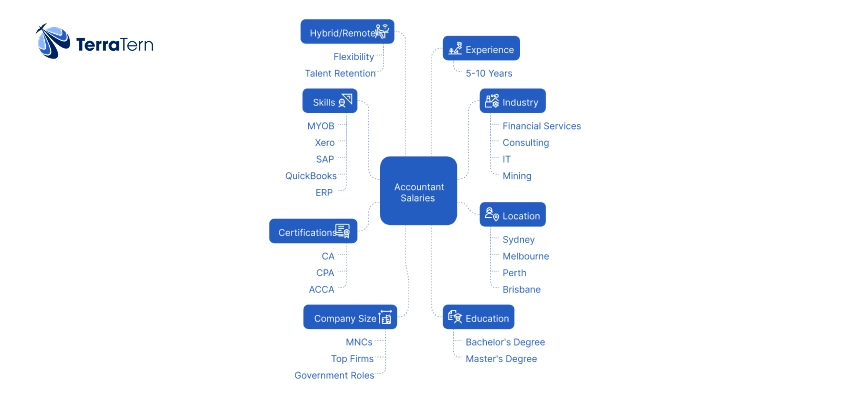
Six primary factors determine an accountant's salary in Australia: professional certifications (CPA/CA add 15–25%), years of experience, industry sector, company size, geographic location, and specialised skills (tax, audit, forensic accounting)—with top earners combining multiple premium factors.
How Do Professional Certifications Impact Salary?
Certifications significantly influence earnings:
|
Certification |
Salary Increase (Dollar) |
|
CPA Australia |
+15,000–25,000 |
|
CA ANZ |
+18,000–30,000 |
|
ACCA |
Globally recognised, +10,000–20,000 |
|
CMA |
+12,000–20,000 |
Which Industries Pay Accountants the Most?
Highest paying areas for accountants:
-
Financial Services: +15-20% above average
-
Mining & Resources: +12–18%
-
Technology & IT: +10–15%
-
Healthcare: +8–12%
Big 4 accounting companies: Competitive, fast-track promotions.
Government: Red pay but good benefits.
Low-paying categories:
-
Non-profits
-
Small businesses (SMBs)
Does Company Size Affect Accountant Pay?
Does company size affect an accountant's salary in Australia?
-
Big Firms (500 and Above Employees): Best salary, organised development
-
Mid-Sized Companies: Fair salary + family-friendly work
-
Small Firms: Less pay yet more skills.
-
Multinationals: +$10K–$20K premium
What Specialised Skills Command Higher Salaries?
The skills that result in high pay increments:
-
Tax Accounting: +$8K–$15K
-
Forensic Accounting: +$12K–$20K
-
Financial Analysis / FP&A: +$10K–$18K
-
ERP Systems (SAP, Oracle): +$5K–$12K
-
Data Analytics (Power BI, Tableau): +$8K-15K
-
IFRS / International Standards: +$7K -15K
How Does Education Level Impact Earnings?
Education is a thing, yet not so great as experience:
-
Bachelor's Degree: Minimal qualification
-
Master’s in Accounting: +$10K–$15K
-
MBA: +$15K–$30K for managerial roles
What Is the Job Outlook and Demand for Accountants in Australia in 2026?
The growth of the accounting industry is very high in Australia, with 33,200 new roles in the industry expected to be created over the next 6 years (6.3% growth through 2026) due to an expansion in the economy, the complexity of the regulatory environment, and the rise in digital transformation of the industry, accounting is one of the most stable industrial sectors with fixed demand over the long term as of today.
Labour Market Performance & Development
-
Current workforce of 200,000+ accountants
-
Demand expected to grow 6.3% by 2025-26
-
Recruiting in all the big sectors
Key Drivers of High Demand
-
Improving regulatory and tax compliance
-
Growth of SMEs and startups
-
Complex financial reporting specifications
-
Internationalisation of companies
-
Automation and digital transformation
Hiring Trends for 2026
-
34 per cent of companies intend to make permanent hires
-
33% growing contractor functions on account of project accounting
Strong Demand in
-
Tax
-
Audit
-
FP&A
-
Business advisory
Effect of Automation
-
The automation is diverting functions
-
Less manual data entry
-
Greater advisory, analytical, and strategic work
-
The practice of automation is not decreasing the demand for accountants
Job Security & Resilience
Accounting remains:
-
Recession-resistant
-
It is one of the most stable professions
-
Mobility(any industry requires accountants)
How Can the Latest Accountants Increase Their Salary in Australia?
Five established strategies can allow an accountant in Australia to earn more, and they are: acquiring certifications (CPA/CA), acquiring specialisation (tax/forensic), transitioning to well-paying industries, negotiating based on market data, and advancing to senior management positions.
What Certifications Boost Accountant Pay?
Best pay growth certifications:
-
CPA Program
-
CA ANZ
-
CMA
Benefits:
-
Faster promotions
-
Higher earning potential
-
Available line to management.
Also Read: Visitor Visa Australia Subclass 600
How Does Specialisation Increase Earning Potential?
Specialisation with high pay:
-
Tax accounting
-
Forensic accounting
-
Treasury
-
FP&A
-
Healthcare accounting
-
Mining industry accounting
Should I Move Cities or Change Industries for Higher Pay?
Best-paying cities:
-
Sydney
-
Melbourne
-
Perth (mining)
Top-paying industries:
-
Financial services
-
Mining
-
Technology
Remote jobs provide international pay as well.
What Are Effective Salary Negotiation Strategies?
What are some effective accountant salary negotiation strategies?
-
Compare salaries based on market reports
-
Current quantified commendations
-
Negotiate on performance cycles
-
Request concessions in the event of a salary budget restraint
-
Prepare counteroffers
How Can I Advance to Senior and Management Roles?
Accountant-Senior-Manager-Controller/CFO:
-
Build leadership skills
-
Enhance communication/presentation
-
Seek mentorship
-
Become members of professional associations
-
Master strategic decision-making
What Current Qualifications and Skills Do Australian Accountants Need?

Bachelor of Accounting/Commerce (minimum) degree, registration by CPA Australia or CA ANZ, technical knowledge (MYOB, Xero, Excel), and soft skills (communication, analytical thinking, problem-solving) are obligatory, and ongoing professional enhancement is the only way to grow and improve professionally.
Employers in Australia seek a good combination of formal and professional memberships, technical skills, and soft skills. In Australia, accounting is a professional field that is controlled, and professional growth largely relies on compliance with these standards.
What Educational Requirements Must Accountants Meet?
1. Minimum Standard Bachelor's Degree Requirement:
The majority of entry-level positions in the field of accounting presuppose 3- 4 years of a Bachelor of Accounting and Bachelor of Commerce or Bachelor of Business and a major in Accounting. Courses typically include:
-
Financial Accounting
-
Management Accounting
-
Auditing
-
Taxation
-
Corporate Finance
-
Business Law
-
Economics
2. Accredited University Degrees:
- UNSW, University of Melbourne, Monash, ANU, and QUT are Australian universities that provide accredited accounting programs in line with CPA and CA careers.
3. Master’s Degree Benefits:
A Master of Professional Accounting (MPA) or a Master of Commerce ( Accounting) assists:
-
The international students address the skill-assessment requirements
-
Get better or professional jobs
-
Speed-track into CA/CPA programs
4. International Qualifications:
International accountants can require:
-
Foreign degree certification
-
Bridging programs
-
Extra courses to satisfy CPA/CA standards
5. Skill Assessment for Migration:
In the visas of PR (189/190/491), skills are determined by:
-
CPA Australia
-
CA ANZ
-
IPA
Educational equivalency, English proficiency, and related subjects are checked by each body.
Which Professional Bodies Govern Australian Accounting?
There are three major professional accounting bodies in Australia:
1. CPA Australia (Certified Practising Accountant)
Provides internationally recognised certification, which specialises in:
-
Accounting
-
Finance
-
Business strategy
-
Ethics
2. CA ANZ (Chartered Accountants Australia and New Zealand)
Attended to as a leader and accountant of strategy. Preferred for:
-
Audit
-
Advisory
-
Corporate finance
-
Big 4 positions
3. Institute of Public Accountants (IPA)
Good at small business accounting and public practice.
-
Membership Benefits
-
Professional credibility
-
Access to high-paying roles
-
Continuing Professional Education (CPE)
-
Networking opportunities
-
Ethical governance
Ethics and professional standards involve the integrity of the profession and discuss recorded instances that breached the code of practice.<|human|>Ethics and professional standards entail the integrity of the profession and address documented cases that violated the code of practice.
Australian accountants are obliged to adhere to:
-
APES standards
-
CPE requirements
-
Annual membership renewals
What Technical Skills Are Essential?
Employers demand good knowledge of accounting and analytical packages:
1. Accounting Software
-
MYOB
-
QuickBooks Online
2. ERP Systems
-
SAP
-
Oracle
ERP experience raises wages by 10-15%.
3. Excel Proficiency
-
Pivot tables
-
VLOOKUP/XLOOKUP
-
Power Query
-
Macros
-
Financial modelling
4. Financial Modelling and Analysis
Understanding:
-
Budgeting
-
Forecasting
-
Cash flow analysis
5. Data Analytics & Automation
Tools include:
The use of these tools is becoming a necessity as a result of digital transformation.
What Soft Skills Set Top Accountants Apart?
Technical skills land you a job, soft skills a promotion.
Key soft skills include:
-
Communication: Clarifying financial information
-
Critical Thinking: Problem analysis
-
Details: Must be paid attention to.
-
Time Management: Dealing with reporting deadlines
-
Teamwork: Finance, human resources, and operations
-
Business Knowledge: Commercial comprehension
-
Customer relationship management
-
Flexibility: Dealing with fast regulatory and technological developments
How Do Accountant Salaries in Australia Compare Internationally in 2026?
Accountant salaries in Australia are competitive globally, ranking among the top 15 worldwide with higher purchasing power than the UK ($55,000–70,000 USD) and competitive with Canada ($50,000–65,000 CAD), though lower than the US ($65,000–85,000 USD)—balanced by quality of life, universal healthcare, and work-life balance.
Accountants considering global careers often evaluate salary potential, quality of life, tax structures, and cost of living. Australia performs strongly across all categories, making it one of the most attractive destinations for finance professionals.
Also Read: How To Prepare For Australia Immigration Interview: Student Visa
Australia vs Major Global Destinations: Salary Comparison
1. United States
-
Salary: $65,000–$85,000 USD
-
Advantages: Greater nominal wage, a huge company market
-
Disadvantages: Costly healthcare, short leave, and increased stress
2. Canada
-
Salary: $50,000–65,000 CAD
-
Pros: Good work-life balance
-
Cons: A little lower buying power than in Australia
3. United Kingdom
-
Salary: £40,000–£55,000
-
Pros: Global finance hub
-
Cons: Expensive living, low wages, and low wages
4. New Zealand
-
Salary: $60,000–$75,000 NZD
-
Advantages: Work-life balance and the same culture
-
Cons: Lower salary bands
5. Singapore & Hong Kong
-
Salary: Equivalent or a little bit higher than in Australia
-
Disadvantages: Expensive living and rent
6. UAE & Middle East
-
Salary: Competitive
-
Key Benefit: Income tax-free
-
Cons: Minimal long-term residency options
Purchasing Power Adjusted Comparison
When adjusting for:
-
Rent
-
Groceries
-
Tax
-
Healthcare
-
Transportation
Australia has always led the UK and Canada, and was nearly equal to the US with lower nominal wages.
Quality of Life Factors
Australia excels in:
-
Clean environment
-
Medicare (universal health care)
-
4 weeks of annual leave
-
Strong labor rights
-
Low crime rates
-
High stability and safety
Tax Implications and Take-Home Pay
Since the tax rates in Australia are higher than those in the UAE/Singapore, there exist benefits such as:
-
Superannuation
-
Public healthcare
-
Paid leave
-
Develop superior net worth among most professionals
Immigration Pathways & PR Advantages
-
Australia is compared to the US or the UK
-
Migration based on clear points
-
PR pathways for accountants
-
Skilled migrants are highly employable
Conclusion
The accountant salary Australia in 2026 remains an excellent career in terms of training capacity, consistent growth in the career, and the variety in the work-related opportunities in industries, making it one of the most lucrative jobs that can be taken up by local and foreign talent. As salary increases in accordance with demand, skills crunch, and the digital revolution, accountants who invest in professional qualifications, specialise in the high-growth fields, and develop robust analytical and advisory capabilities are best placed to achieve the top jobs.
Regardless of a graduate's entry level or aspirations to hold top leadership roles, the future remains unwaveringly clear: the dynamic financial landscape in Australia values skills, flexibility, and continuous learning, which guarantees accounting professionals a safe, future-proofed career.
Contact TerraTern for more information on accountant salary Australia.




 AI Summary