

Key Highlights
- Background: The UK’s Changing Immigration Landscape
- What the New Immigration Plan Proposes
- Why More Than 100 MPs Oppose the Plan
- The Government’s Argument: Restoring Control and Public Trust
- Political Fallout Within the Labour Party
- Economic Implications of the Proposed Reforms
- What Happens Next?
- Conclusion
Immigration issues around the United Kingdom have reached the latest stage of political turmoil after over 100 members of parliament (MPs) in the Labour Party voted against planned changes that were presented by the new Prime Minister (Keir Starmer) government. This has caused an internal uproar in the ruling party over the policy changes, which are intended to transform the way the migrants are granted residency and citizenship. The advocates of the reforms contend that the reforms are needed to regain a sense of trust amongst the population about the border control and the establishment of a more equitable migration system. According to critics, though, the proposals will hurt economic competitiveness, social division, and compromise the traditional position of Labour on immigration. With the debate becoming heated, the controversy underscores wider conflicts in the migration policy, economic priorities, and political cohesion in the UK.
Background: The UK’s Changing Immigration Landscape
The issue of immigration has been one of the politically sensitive issues of the United Kingdom for over a decade. Since the arguments over Brexit and the issue of irregular migration across the English Channel, the governments of the day have tried to redefine immigration policies in order to balance between the economic demands and border control.
-
The present Labour government under Prime Minister Keir Starmer has pledged to enormously cut net migration without obstructing legal migration routes to skilled workers and refugees. The government has noted that there is a need to have a controlled and fair system of immigration, which is more concerned with the economic contribution and integration into society.
-
The influence of these endeavors is also informed by the social anxiety of the unlawful crossings and demands by the political opponents who want a tougher approach to immigration. According to policymakers, the risk of losing public trust and turning the system unsustainable is possible without reform.
Nevertheless, the most recent bundle of recommendations has resulted in some surprising opposition among the very ranks of the Labour Party and has revealed that there are severe rifts in the way migration is perceived to be handled.
Also Read: Unlock Opportunities with UK Startup Visas
What the New Immigration Plan Proposes?
The reforms will strive to restructure a number of factors of the UK immigration system, especially the settlement pathways and the residency laws.
-
Among the critical aspects are the issues of complicating the process of acquiring permanent residency or citizenship in the United Kingdom by lower-earning migrants. Meanwhile, the policy would simplify the settlement of migrants having higher paying jobs or skills.
-
Practically, it implies that the system would be selective and also closely linked to economic value. Migration into highly skilled professionals, technology employees, and experts may have easier settlement paths, whereas migrants with low incomes might have a more demanding set of rules.
-
According to the advocates of the reform, the UK needs to compete with other countries for talent and decrease its dependence on low-wage migration. Such policies, however, caution critics, risk establishing a two-tier system of immigration that is undervalued of fewer skilled workers in other areas of the economy, like social care and hospitality.
The other area of the wider reform programme is to restrict the regulations on asylum and refugee protection, and some plans are aiming at decreasing the long-term protection of refugees and setting temporary protection.
Why More Than 100 MPs Oppose the Plan?
The most notable movement in this argument has been the magnitude of the internal opposition within the ruling party of Labour.
Over 100 Labour MPs have even signed a confidential letter calling on the government to change its mind on the reforms. The legislators were worried that the initiatives would harm migrant workers, undermine the social ideals of Labour, and undermine the UK as a welcoming society in the global arena.
Their objections are estimated to amount to approximately a quarter of the parliamentary Labour Party and thus, one of the most massive internal revolts that the government has ever experienced.
Opponents feel that the policy could:
-
Inequalities disadvantage migrant workers of lower income.
-
Develop unfair settlement regulations.
-
Damage industries that are overdependent on migrant labour.
-
Weaken the longstanding traditions of equity and equality of Labour.
Other MPs are also concerned that the policy change might go against the immigrant communities and younger voters who have been traditional supporters of Labour.
The message that was relayed to the Home Secretary is indicative of mounting impatience among members of parliament who believe that the reforms are driving the party towards a more stringent immigration policy that borders on the promotion of policies by conservative or right-wing parties.
Also Read: UK Work Visa for Indians: Jobs, Costs & Rules
The Government’s Argument: Restoring Control and Public Trust
Nevertheless, the government leaders continue to insist that immigration reform is needed, despite the backlash.
-
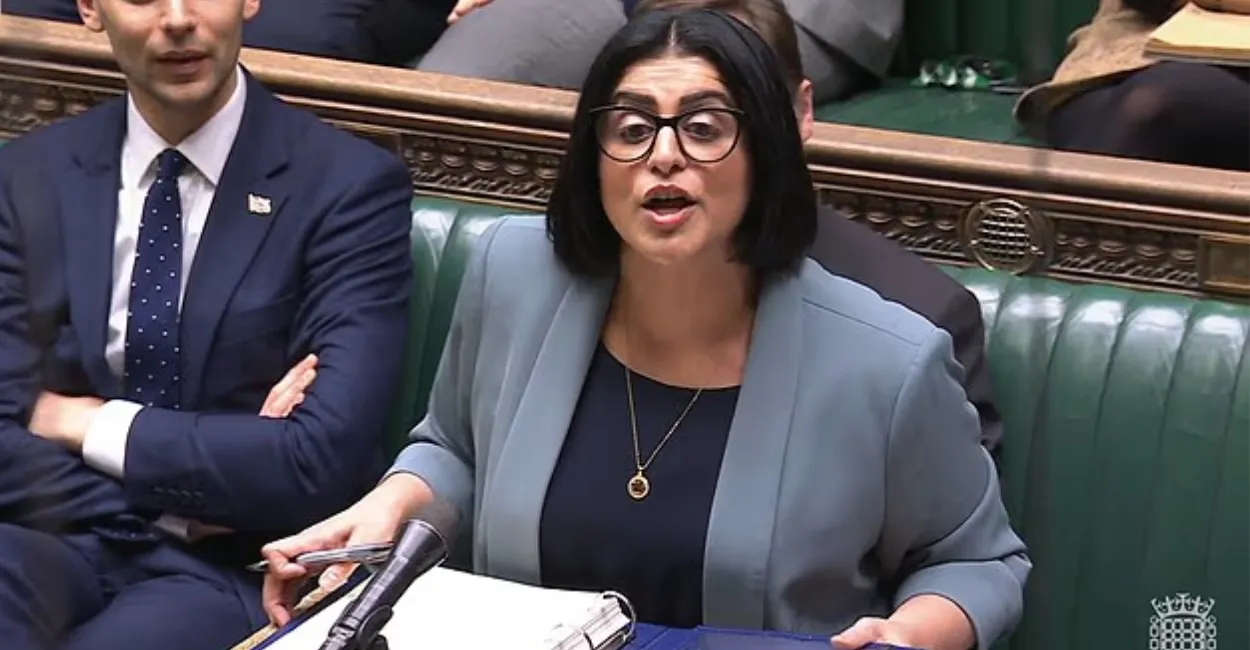
Home Secretary Shabana Mahmood and other top officials say that stringent immigration policies are the best way of regaining trust in the system. They insist that migration control does not have to be incompatible with progressive values, but a step to guarantee fairness as well as order.
-
The government feels that the prepared remarks indicate that restoring control at the border is in line with the promise of responsible government and economic stability by the Labour government.
-
According to the argument by officials, the reforms are meant to provide a balance between humanitarian responsibility and economic realities. By choosing skilled migrants, the government is sure to increase the level of productivity and innovation and make sure that immigration serves the interests of the national economy.
Proponents of the plan believe that the UK needs to embrace a more progressive system of immigration to be able to compete in the global market.
Political Fallout Within the Labour Party
The scandal has also instigated one of the greatest internal political problems of the Starmer government since it assumed power.
-
Criticism of the leadership is that it has been moving too far to the right in terms of restrictive migration policies. It is criticised by people as a tactic that could hurt the identity of the party that believes in social justice and the rights of immigrants.
-
The rebellion may turn into a significant test for Starmer, according to the political analysts. Provided that the opposition in the party persists in its increase, the government might not be able to pass some of the points of the reforms via parliament.
-
The matter is quite delicate as the issue of immigration has become a major Britolitical motif. The general opinion of the population on the level of migration is still high, and political parties are under pressure to prove their effective border management.
This is a tricky situation that the Labour leadership findsitselfs in, as they have to address the issues of voters and still keep the party intact.
Economic Implications of the Proposed Reforms
Immigration has been vital in the UK economy, particularly in areas where there is a shortage of labour.
-
Migrant workers are important in the health sector, construction, agriculture, and hospitality. Opponents believe that with the tightening of the policy on lower-income migrants, the labour shortage in these sectors might increase.
-
Economists caution that the restriction of migration in some areas may have the effect of increasing the cost of running a business and slowing the economy.
-
Although the proponents of the policy believe that the high-skilled migration may help boost productivity and lure international talent. They are convinced that a more selective immigration system would lead to employers investing more in the training of domestic workers.
The argument is indicative of a larger issue that many developed economies are grappling with, which is the dilemma of meeting the demands of the labour market and the political need to restrict migration.
Immigration, Public Opinion, and Political Pressure
It is impossible to interpret the current controversy outside of the general political setting in the United Kingdom.
-
Immigration is one of the most debatable topics in British politics. The fear of irregular migration, especially the small boats crossing the English Channel, has raised a matter of debate among people.
-
Governments have tried different approaches to deal with the problem, such as signing agreements with European nations to control the number of migrants and tightening border control.
-
Both left and right political parties are under pressure to demonstrate that they are concerned about immigration rates and border security in the eyes of the people.
-
In the case of Labour, it is especially a complicated challenge. The party has to strike the right balance between its conventional support for migrants and refugees and the fact that voters are concerned with immigration control.
Also Read: A Complete Guide to UK Family Visa
What Happens Next?
The immigration reform plan is not certain in the future.
-
In case the opposition in the Labour Party is still increasing, then the government might have to make changes to the proposals or come to some compromises with dissenting members of parliament. Certain aspects of the reform might need the approval of the parliament, and so the political unity is essential.
-
According to the political analysts, the debate can define the larger government agenda on migration and economic policy.
-
It can also affect future elections since immigration is something that can characterise a good number of voters.
In the meantime, the state of affairs illustrates the extent to which the immigration policy may be divisive even within a single political party.
Conclusion
The campaign against the intended immigration reforms in the UK is a historic one in British politics. The debate has brought about a huge divide in the ruling Labour Party and raised very fundamental issues on how the migration strategy in the country should be. Although the government claims that the reforms should be made to reestablish order and economic stability, critics caution that the reforms will tend to destroy fairness and negatively affect the reputation of the UK as an open society. The future of the immigration policy in the United Kingdom and the direction of the leadership of the Starmer government might be determined by the outcome of this dispute as the political negotiation proceeds.
Contact TerraTern for more information.