


Key Highlights
- What Is the Interim Federal Health Program (IFHP)?
- Why Is Canada Introducing Co-Payments?
- The Co-Payment Structure: What You’ll Pay
- How Co-Payments Will Work in Practice
- Who Is Affected by the New Rules?
- Reactions and Public Response
- How to Prepare for the Changes
- Potential Impact on Health Services Access
- Conclusion
Canada will also initiate the introduction of co-payments on some health services for some immigrants under interim federal health program (IFHP) starting May 1, 2026, as a major change in its immigration health policy. A significant shift that was proposed within the frame of Budget 2025 is an indication of a change in the manner in which refugees, asylum seekers, and other qualified foreigners are offered health care support.
Although basic health services like doctor visits and inpatient services will be entirely included under the insurance, additional services like medical prescriptions, dental, vision, counselling, and assistive equipment will have small co-payments. The shift of the health care policy is an effort conducted by Ottawa in trying to strike a balance between the long-term sustainability of the IFHP and the increased demand for health services.
What Is the Interim Federal Health Program (IFHP)?
Interim Federal Health Program (IFHP) is a temporary and federal health coverage program for some categories of immigrants who are yet to be covered by provincial or territorial health insurance plans. Typically, this includes:
-
Refugee applicants who are awaiting their applications.
-
Resettled refugees
-
Protected persons
-
Some of the victims of family violence and other vulnerable foreign nationals.
The IFHP bridges the gap between arrival and provincial health insurance, providing access to required medical services in the period between arrival and the actual eligibility to provincial health insurance. Through the existing system, the beneficiaries are given basic health care cover that has no direct cost to them at the point of service.
Also Read: Canada
Why Is Canada Introducing Co-Payments?
The governments of Canada have mentioned increased usage and demand for supplemental health services as the main factor behind the new policy of co-payment. By making the beneficiaries contribute a part of the cost of accessing some non-core services, Ottawa expects to enhance the financial sustainability of the IFHP such that necessary health support can be guaranteed to the future generations of beneficiaries. The co-payment system is supposed to be a middle ground, i.e., to maintain universal access to essential medical services and to distribute the cost burden of extra services.
The Co-Payment Structure: What You’ll Pay
On May 1, 2026, the following out-of-pocket payments will be required by the beneficiaries of IFHP:
1. Prescription Medications
-
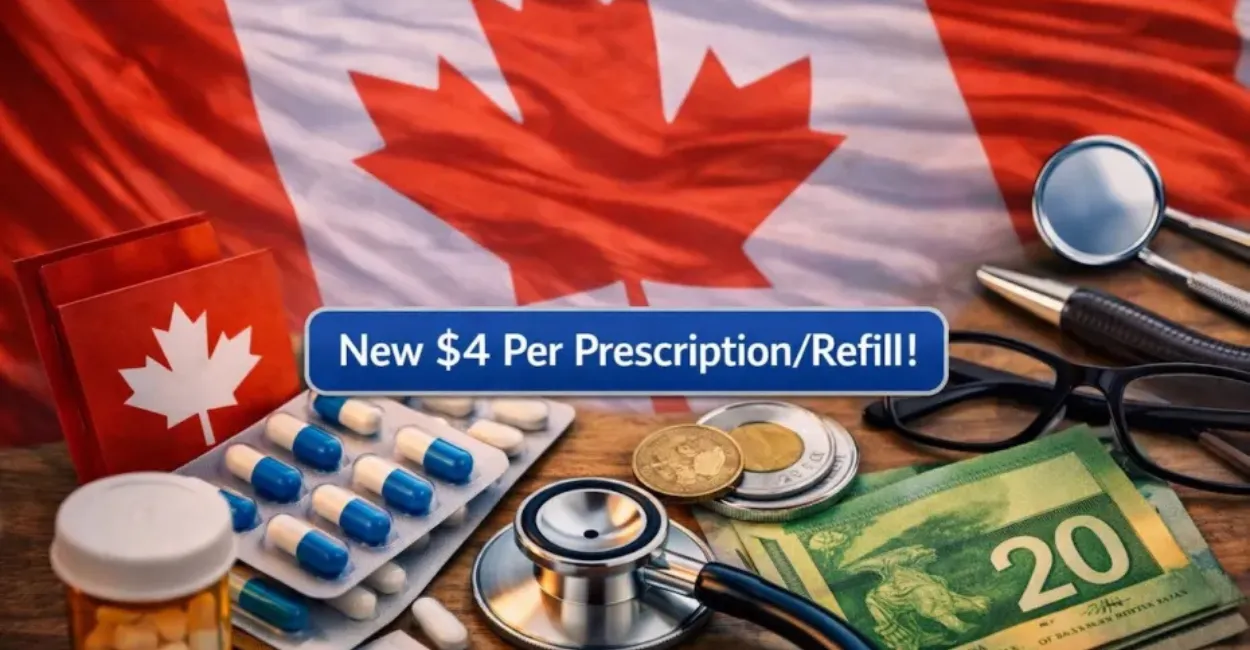
A non-profit charges four dollars on every eligible prescription filled or refilled under the IFHP.
-
This low fee will be foreseeable and affordable to individuals who have continued medication requirements.
2. Supplemental Health Products and Services
Co-payment of 30 percent on the price of supplemental services that are eligible, such as:
-
Dental care
-
Vision care
-
Mental health counselling
-
Physiotherapy/occupational therapy.
-
Assistive technologies (e.g., hearing aids, prosthetics, etc.)
-
Long-term care products, home care.
These are payments made directly to the health care provider upon service.
3. Basic Care Still Free
The basic practices like doctor visits, hospitalisation, emergency service, and the elementary diagnostics are all fully covered with no co-payments.
Also Read: A Comprehensive Guide to Express Entry Canada
How Co-Payments Will Work in Practice
In accordance with the new policy, the co-payments will be gathered as follows:
-
The beneficiaries should ensure that their health care provider is covered by IFHP.
-
Before receiving non-basic services, they ought to inquire whether or not they will pay a co-payment and ensure that it is not too much.
-
The co-payment is given to the service provider directly by the IFHP, and the service provider pays the rest of the cost.
-
All the co-payments that patients make are highly advised to retain the receipts as a record, in case of problems with reimbursement.
The government has also issued guidance to enlighten the beneficiaries on how not to be surprised at the pointof care, such as using registered providers and checking the details of the co-payments ahead of time.
Who Is Affected by the New Rules?
The co-payment terms apply to the eligible beneficiaries of the IFHP, which are:
-
Claimants who are awaiting hearings are refugees.
-
Resettled refugees
-
Protected persons
-
Some of the temporary residents are due to humanitarian reasons.
It includes the people who require supplementary health benefits that are not provided by provincial plans.
Notably, the change does not apply to Canadian citizens or permanent residents, who are still able to get health care via the provincial or territorial insurance plans after their eligibility.
Reactions and Public Response
The new policy has brought both positive and negative responses:
-
The proponents believe that the co-payments will aid in controlling the rise in demand and the sustainability of the IFHP to maintain necessary health care in the vulnerable groups.
-
Critics argue that even small charges would discourage low-income refugees and asylum seekers from obtaining the treatments they need, particularly dental, vision, or mental health care, which previously had been free at the point of service.
-
The social media and forums have reflected different views, and some have even said that the prices are modest compared to the normal prices of health care, and there are also fears that the costs to the already weak people are going to be high.
How to Prepare for the Changes
The following steps are recommended before May 1, 2026, for the benefits and stakeholders:
-
Find IFHP providers with official means.
-
Determine the co-payments in advance.
-
Redefine what services are regarded as supplemental and basic.
-
Always have close receipts of all co-payments so that there is no future verification problem.
Such proactive measures could assist in avoiding misunderstandings and economic shocks after implementing the co-payment system.
Also Read: A Guide to Canada Visitor Visa from India
Potential Impact on Health Services Access
Although the basic medical services are free of charge, the introduction of co-payments for additional services can also affect the way beneficiaries recommend the services:
-
Others will postpone or cut their use of dental, vision, or other non-emergency services because of initial expenses.
-
Patients who have long-term illnesses and have to make regular prescriptions may get the co-payment repeatedly.
-
Before the services are actually rendered, the providers can be more active in having clear communication regarding fees and coverage.
Finally, the effectiveness of the policy will be evaluated in the long term, depending on the uptake rate, a trend in access, and the influence of the policy on the financial sustainability of the IFHP.
Conclusion
The policy of introducing health co-payments to some immigrants who entered Canada under IFHP on May 1, 2026, is an important change in policy that will allowfor balancing access to fewer financial burdens. The government, by asking small out-of-pocket payments when one needs supplemental services such as prescription medications, dental and eye care, but still maintains full coverage over the basic medical services, believes that the program can be sustainable and continue to cover future beneficiaries. Even as the policy roll-out is imminent, beneficiaries and health care providers will have to adjust to the new structure, and clear communication and preparation will be important in enhancinga smooth transition.
Contact TerraTern for more information.