Key Highlights
- What is an Australia Job Vacancy free visa?
- What is an Australia Job Vacancy Free Visa Sponsorship?
- Why is Australia Offering Visa Sponsorship Jobs in 2026?
- Which Visa Types Offer Free Sponsorship for Job Vacancies in Australia?
- What are the Top 10 Industries Offering Australia Job Vacancy Free Visa Sponsorship?
- Who is Eligible for an Australia Job Vacancy Free Visa Sponsorship?
- How to Find Australia Job Vacancy Free Visa Sponsorship Opportunities?
- What is the Step-by-Step Application Process for an Australia Job Vacancy Free Visa?
- How Much Do Visa Sponsorship Jobs in Australia Pay?
- What are the Common Challenges and How to Overcome Them?
- What are the Pathways to Permanent Residency from Visa Sponsorship Jobs?
- How Can TerraTern Help You Secure an Australian Job Vacancy Free Visa?
- 2026 Industry Context Section
- Conclusion
The 2026 job vacancy free visa program is in place in Australia to address the interest in the hard skills shortage in the country. Currently, there are over 6,000 sponsored jobs in place, that is, in the healthcare, IT, trades, hospitality, education, and pretty much everything sectors, on offer, provided that you have at least two years of experience, the right qualification and good command of English.
Employers are even making it sweet: free visa sponsorship, transportation assistance, a temporary place to stay, and even flexible working hours. The majority of attention is still grabbed by Sydney and Melbourne, but in the recent past, people have actually been considering regional spots as well. The action is largely out of India, the Philippines and the UK. Individuals tend to seek visas such as 482, 494 and 186. And here is the best part of it all great deal of these jobs will make you eligible for permanent residence.
What is an Australia Job Vacancy free visa?

Australia Job Vacancy Free Visa is not a mere buzzword. It entails the readiness of an Australian business to sponsor talented foreign workers due to their inability to find the appropriate match at home. They pay your visa charges and assist in the paperwork, which makes the process of going over a lot easier. These are employment opportunities that occur in such sectors as healthcare, IT, trades, and hospitality, where they are actually required.
The Temporary Skill Shortage (Subclass 482), Employer Nomination Scheme (Subclass 186), and Skilled Employer Sponsored Regional (Subclass 494) are the most widespread ones. There are short-term visas, and some may result in an indefinite stay in Australia. As long as you manage to strike the right position and satisfy the qualifications, you stand a genuine opportunity of permanent residence.
Also Read: Top Job Opportunities in Australia: New Pay, Scope & More
What is an Australia Job Vacancy Free Visa Sponsorship?
The job vacancy visa sponsorship of Australia is used by employers to invite skilled foreign workers to the country when they are unable to find the intended individuals domestically. The employer can do it like this: the employer has an official permission to sponsor a person, he chooses a certain full-time job and demonstrates that he made all attempts to give an Australian person a job, but to no avail. After that is sorted, the foreign employee applies for a visa, which is job-related.
At times, the company will even pay the visa fee and will include additional benefits. The two most popular ones include Subclass 482 (Temporary Skill Shortage) and Subclass 186 (Employer Nomination Scheme). This entire process assists in bridging the gaps in the workforce, and to most individuals, this is a door to permanent residence in Australia.
Specialist Advice: Unlike self-funded visas, where applicants bear all costs, employer-sponsored "free visas" shift financial responsibility to Australian businesses facing genuine skill shortages, making migration accessible for qualified professionals who might otherwise face prohibitive upfront costs.
Why is Australia Offering Visa Sponsorship Jobs in 2026?
Australia is taking the next level of sponsoring more visa jobs in 2026. And honestly, it's a big deal. They require human beings so badly in the field of healthcare, IT, construction, hospitality, and education. The economy is picking up pace, yet there were simply no locals to work and to work. That is why now employers are being encouraged by the government to bring in skilled workers overseas to occupy those vacancies.
It is not simply a matter of making things mend. They are also hoping to provide the economy with a genuine boost, ensure the growth of regional towns and ensure the continuity of the services of vital importance. Besides, emerging global talent keeps Australia on its toes as far as innovation and infrastructure are concerned. The good news? The entire exercise is becoming easier, and there are easier visa sponsorship processes being implemented.
Specialist Advice: Australia's visa sponsorship surge isn't temporary—it's a structural response to long-term demographic shifts. The ageing baby boomer generation creating simultaneous retirements across critical sectors means international talent will remain essential through 2030 and beyond, providing sustained opportunities for qualified migrants.
Also Read: How to Get PR in Australia from India: Latest Guide
Which Visa Types Offer Free Sponsorship for Job Vacancies in Australia?
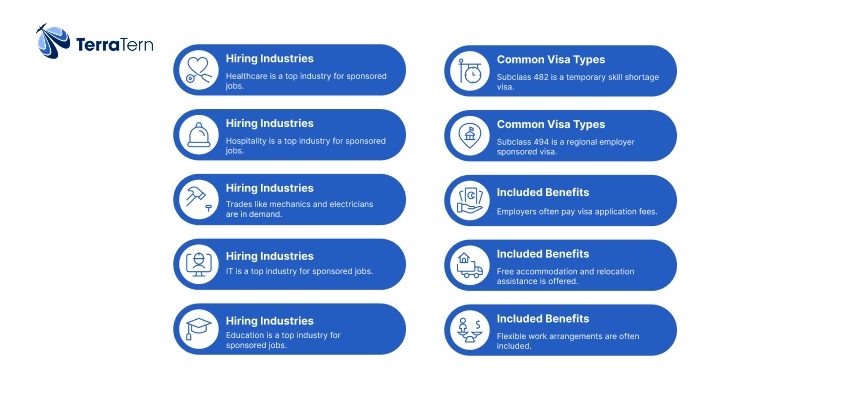
The most common types of visa offered and providing free sponsorship in terms of employment opportunities are mostly available in Australia, and they include:
- Temporary Skill Shortage Visa( Subclass 482): This is one that offers employers an opportunity to temporarily bring in skilled labour to cope with shortages in labour supply.
- Visa scheme- Employer Nomination Scheme Visa (Subclass 186): According to the scheme, employers are granted permanent residency when they nominate skilled employees to fill permanent vacancies.
- Skilled Employer Sponsored Regional Visa (Subclass 494): This is aimed at the regions to address the skills deficiency by employing them by sponsoring foreign workers.
- Regional Sponsorship Visa ( Subclass 187 ( phased out but applies in transition )): this used to be applied to regional sponsorship.
- Training Visa (Subclass 407): This is an application to get on-the-job training that may be sponsored by an employer. Such visas must be sponsored by the employers, in which the employer bears the visa charges and gives the worker a particular job position. In most cases, the worker does not pay the visa fee.
Subclass 482 - Skills in Demand (SID) Visa
The Subclass 482 Skills in Demand (SID) Visa allows employers in Australia to hire overseas skilled workers to be in their country up to a period of four years, to fill unfilled positions where the local employees do not have the necessary skills. It is quite exceptionally adaptable- various streams are based on your salary and job, not to mention that the work experience requirements are no longer that challenging as they used to be. Permanent residence is also available later on the road. To employers who are finding it difficult to get the right individuals in Australia, this visa allows hiring qualified professionals outside the country with ease, and it is legal.
Subclass 494 - Skilled Employer Sponsored Regional (Provisional) Visa
The Subclass 494 Skilled Employer Sponsored Regional (Provisional) Visa enables regional Australian employers to sponsor skilled labourers to occupy the jobs they cannot fill with local skills because of labour shortages in the specified regions in non-metropolitan areas such as Sydney, Melbourne, and Brisbane. This is a temporary visa that is valid for a period of 5 years, it mandates one to reside and work in a regional zone, and it provides a chance to permanent residency after 3 years of work with the sponsor.
Subclass 186 - Employer Nomination Scheme (Permanent)
Subclass 186 Employer Nomination Scheme (ENS) Visa is an opportunity to establish a life in Australia, should an employer in Australia desire you. There are two ways to get there: If you are already in Australia on a 482 visa, you use the Temporary Residence Transition stream. In case our employer nominates you directly based on your own skills, then that would be the Direct Entry stream. Then there is the Labour Agreement stream, which applies to folks who are under special agreements with the government. To obtain this visa, you have to be nominated by your employer, be in a job that is listed on the skilled list, and you must have three years of applicable work experience. You will also be required to fulfil the English language requirement and some health and character checks.
Comparison Table: Visa Subclass Features
The following is the comparison table of some major characteristics of Visa Subclasses 482, 494 and 186 in Australia:
|
Feature |
Subclass-482 Skills in Demand (Temporary) |
Subclass-494 Skilled Employer Sponsored Regional (Provisional) |
Subclass-186 Employer Nomination Scheme (Permanent) |
|
Type of Visa |
Temporary |
Provisional (Regional) |
Permanent |
|
Duration |
Just up to 4 years |
Just up to 5 years |
Permanent |
|
Geographic scope |
Anywhere in Australia |
A designated regional area only |
Anywhere in Australia |
|
Nomination by employer |
Required |
Required |
Required |
|
English requirement |
IELTS 5.0 or higher |
IELTS 6.0 or higher |
IELTS 6.0 or higher |
|
Work experience |
Relevant experience 1+ years |
relevant experience 3 or more years |
3+ years relevant experience |
|
Age limit |
None |
Under 45 |
Under 45 |
|
Pathway to Permanent Residency |
Through the Subclass 186 nomination in 2 years |
Direct via Subclass 191 after 3 years of regional living |
Immediate permanent residency |
|
PR stage employer role |
Must sponsor |
Not involved |
Employer sponsors |
This table indicates the variations in the duration, geographical focus, and eligibility, and permanent residency routes to these prime employer-sponsored visa subclasses in 2026.
Specialist Advice: For Indian professionals, the 482 Skills in Demand visa typically offers the fastest entry point (2-6 months processing), while 494 regional visas provide the clearest PR pathway if you're willing to work outside major cities—often with better salary packages and lower competition.
Also Read: Temporary Skill Shortage Visa Australia (TSS): Updated
What are the Top 10 Industries Offering Australia Job Vacancy Free Visa Sponsorship?
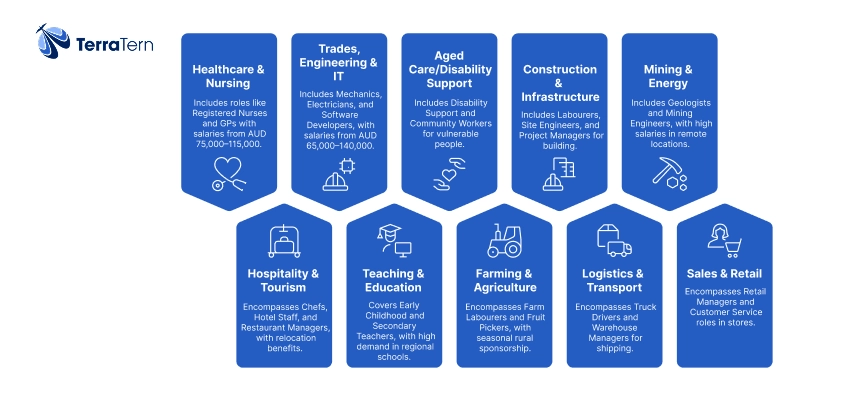
Australia Job Vacancy, free visa sponsorship, the most promising industries in 2026 are:
-
Physiotherapists, workers and Registered Nurses in aged care.
-
Hospitality and Tourism - Hotel employees, restaurant managers, and Chefs.
-
Trade, Engineering and Information Technology Electricians, software developers and plumbers.
-
Education and teaching - Special needs teachers, early childhood teachers.
-
Aged Care/Disability Support Disability support workers, personal care assistants.
-
Agriculture and Farming- Fruit pickers, dairy, and farm labourers.
-
Construction and Infrastructure - Project manager, Labourers, and IT engineers.
-
Transport- truck drivers, Logistics and Transport, forklift operators, warehouse managers.
-
Mining and Energy- Mining engineer, electricians, safety officers.
-
Sales and Retail- Customer service representatives, retail managers, store supervisors.
Other benefits of visa sponsorship offered by these sectors include relocation, permanent residency opportunities due to acute skills shortage issues in the whole of Australia.
Healthcare & Medical Services:
The demand for healthcare and medical positions is high throughout Australia, not to mention that in 2026, you might want to get visa sponsorship. Consider such jobs as registered or enrolled nurses, healthcare assistants, aged care workers, disability support staff, GPs, radiologists, and midwives; they are all on the list. The Australian population continues to age, and it is not possible to have enough workers.
Therefore, employees of high calibre are sought after. The employers are not resting on their laurels and sponsoring visas such as the Temporary Skill Shortage (Subclass 482), the Skilled Employer Sponsored Regional (Subclass 494) and the Employer Nomination Scheme (Subclass 186). To top that, most jobs have benefits in addition, such as relocation costs and actual career advancement.
Information Technology & Software:
Australia’s tech scene is booming, and that means IT and software jobs with visa sponsorship are everywhere in 2026. Right now, if you’re good with code or know how to keep networks running, companies want you. They need software developers, systems analysts, cybersecurity pros, network engineers, database admins—you name it.
The point is that there is a lack of competent IT individuals. Thus, companies are also outsourcing abroad with visas such as Subclass 482, 494, and 186 to do the filling. The benefits are quite good: high payments, assistance with the relocation, and the actual possibility of being permanently resident in the country. As the digital transformation gains momentum, the demand in this sector is not going to drop soon.
Hospitality & Tourism:
Australia’s Hospitality & Tourism scene is packed with visa sponsorship jobs for 2026. Think chefs, hotel managers, restaurant supervisors, tourism coordinators — roles like these are in high demand because the industry just can’t find enough skilled workers locally. So, employers step in and sponsor overseas talent through visas like Subclass 482, 494, and 186. These programs don’t just fill jobs in cities; they reach into regional areas too. If you land one, you get perks like help with relocation, solid pay, and, for some, a real shot at permanent residency.
Skilled Trades (Construction & Maintenance):
Australia needs skilled workers in construction and maintenance, and it needs them now. There just aren’t enough people to fill all the jobs, so employers are really trying to make it easier. If you’re an electrician, plumber, carpenter, fitter and turner, welder, or a construction manager, you’re exactly who they want.
They’re even helping with visas—like the Temporary Skill Shortage (Subclass 482) and the Skilled Employer Sponsored Regional (Subclass 494)—to bring people in. Pay’s pretty good, too. You’re looking at about $36 an hour, and these aren’t short-term gigs. These jobs stick around, and a lot of them can lead to permanent residency. Australia’s growing fast, and it needs skilled people to keep everything on track. If you’re handy, this is your moment.
Education & Childcare:
Australia’s Education and Childcare sector is throwing the doors wide open to overseas workers in 2026. They’re serious about it, too. They arrive in most cases on the Subclass 482 (Temporary Skill Shortage) or the subclass 186 (Employer Nomination Scheme) visas.
They are currently seeking early childhood educators, childcare workers, nursery teachers, and group leaders, i.e., they want to hire all people who have worked with young kids. And this is some good news: childcare workers have only made it to the lists of skilled occupations, which means that obtaining permanent residency is now much easier. Employers are trying to make it as easy as they can- they tend to facilitate the visa, relocation, training, and the remuneration is solid as well. The industry is in a boom, and Australia is ready to have new faces.
Engineering:
If you’re an engineer thinking about Australia in 2026, things look pretty exciting. Companies in infrastructure, construction, mining, and tech really want people—civil, mechanical, electrical, mining engineers, and project coordinators, too. And they’re not just posting job ads; they’re actually sponsoring visas like Subclass 482 and 186 because they need skilled folks right away.
The pay’s solid, they’ll help you move, and if you’re planning to stick around, permanent residency is a real possibility. Whether you’re into big city living or something quieter out in the regions, there’s demand everywhere.
Agriculture & Farming:
Australia’s farms need people badly. Whether it’s picking fruit, working with dairy cows, shearing sheep, or driving tractors, there’s a real shortage in just about every corner of agriculture. To fill the gap, the government offers special visas, like the Agriculture Visa and the Subclass 482 Temporary Skill Shortage visa. These give overseas workers a way in, so they can lend a hand with everything from looking after animals to operating machinery and keeping day-to-day farm life on track.
The pay’s pretty good, and you can stick around for up to three years, as long as you meet certain requirements. Sometimes, these jobs even open the door to permanent residency. But there’s a catch—employers have to be registered sponsors, and they often work through programs run by the government, like the Pacific Labour Scheme, to bring in skilled workers from overseas. This setup keeps Australia’s farms running and gives people from other countries a real shot at good work.
Accounting & Finance:
Right now, Australia’s accounting and finance world is full of opportunities, especially if you’re eyeing a move in 2026. Companies are actively looking for accountants, auditors, financial analysts, and tax experts—and they’re open to sponsoring the right candidates. If you already hold credentials from CPA Australia or Chartered Accountants ANZ, you’ve got a real advantage.
Most employers rely on the Subclass 482 (Temporary Skill Shortage) and Subclass 186 (Employer Nomination Scheme) visas to hire overseas talent. The pay’s solid, there’s a genuine path to permanent residency, and you’ll find roles in both public and private sectors. If you want to jumpstart your finance career in a fast-moving economy, Australia is honestly a great place to land.
Social & Community Services:
Right now, Australia’s accounting and finance scene is buzzing with opportunities, especially if you’re thinking about making a move in 2026. Companies want accountants, auditors, financial analysts, and tax pros—and they’re ready to sponsor people who fit the bill. If you’ve got CPA Australia or Chartered Accountants ANZ credentials, you’re already ahead.
Most employers use the Subclass 482 (Temporary Skill Shortage) and Subclass 186 (Employer Nomination Scheme) visas to bring in international talent. Pay is strong, there’s a clear path to permanent residency, and you’ll find jobs in both the public and private sectors. If you want to kick off your finance career in a country that’s moving fast, Australia is honestly a solid place to go.
Automotive & Transport:
Australia’s Automotive & Transport sector is wide open for visa sponsorships in 2026. If you’re a truck driver, mechanic, automotive technician, or heavy vehicle operator, there’s a real need for your skills—especially if you’ve got experience. Truck drivers are in short supply, mainly for long-haul freight, FIFO mining work, and regional routes. Employers are actively sponsoring workers through Subclass 482 (Temporary Skill Shortage), 494 (Skilled Employer Sponsored Regional), and other regional visas. They’re not just offering jobs either. You’ll see competitive salaries—truck drivers pull in about $73,000 a year—plus relocation help and a clear path to permanent residency. Skilled mechanics and technicians also have plenty of options, whether you want to work in a busy city shop or a regional service centre.
Expert Opinion: Healthcare and IT sectors offer the highest combined volume (3,300+ positions) and best salary prospects for Indian professionals, with well-established credential recognition frameworks. However, don't overlook skilled trades—electricians and plumbers often command premium rates (AUD 85,000-110,000+) in regional areas with faster PR pathways.
Also Read: ACCA Jobs in Australia: Latest Salaries, Scope & Guide
Who is Eligible for an Australia Job Vacancy Free Visa Sponsorship?

The specifications to qualify to be sponsored by Australia under the Job Vacancy Free Visa Sponsorship in the year 2026 are usually:
-
An authentic employment opportunity with a registered Standard Business Sponsor (SBS) in Australia.
-
The nominated position should be listed on either the Skilled Occupation List (SOL) or the Regional Occupation List (ROL).
-
Education and job experience are required for the job.
-
Age requirement, which normally is below the age of 45 years (there are exceptions).
-
Fluency in the English language is usually established through IELTS or similar tests.
-
Health and character tests, such as medical tests, police clearance.
-
Such an employer needs to prove that the position is real, full-time, and is paid in accordance with the Temporary Skilled Migration Income Threshold (TSMIT), which in the year 2026 is AUD 70,000.
-
Meeting of the Australian labour market testing that depicts no appropriate local applicants.
-
Some subclasses of the visa also attract skills evaluation by the accredited bodies.
Such criteria are aimed at the fact that sponsored workers are both qualified and meet the demands of the labour market of Australia, as well as the integrity of the immigration programs.
Mandatory Eligibility Criteria
Australia job vacancy free visa sponsorship in 2026 must have mandatory eligibility requirements:
-
The candidate is required to have a proper job offer from an approved Australian employer that is a Standard Business Sponsor.
-
The nominated occupation should be on the corresponding Skilled Occupation List or Regional Occupation List.
-
The nominated position requires the applicants to possess relevant qualifications, skills recognised in the industry, and relevant work experience.
-
There is a requirement to acquire English language skills that satisfy the visa criteria.
-
The age limit is that the applicants should not exceed 45 years old (there are exceptions to this).
-
Health and character checks, such as medical examination and clearance from the police, are mandatory.
-
The vacancy should be a real job, full-time and should adhere to the Salary thresholds and Labour market testing regulations in Australia.
-
Employers should establish that they require overseas labour due to the lack of availability of local labour.
-
The laws on pay, conditions and worker rights in the Australian workplace should be complied with.
-
Sponsorship is usually associated with a certain visa subclass, being either Temporary Skill Shortage (Subclass 482), Skilled Employer Sponsored Regional (Subclass 494) or Employer Nomination Scheme (Subclass 186).
The criteria will provide equal, authentic employment with visa sponsorship in Australia, to facilitate the labour market needs in the country.
Employer Sponsorship:
In Australia, employer sponsorship means a company brings in skilled workers from overseas to fill real jobs—not just ticking boxes. To do this, businesses need to show they’re financially solid, actually try to hire locals first, and pay fair, market-rate salaries. They also have to stick to government rules the whole way through.
Occupation Requirements:
Skills, experience, and education matter, of course. So do qualifications, certifications, and actual abilities. You need sharp communication and teamwork. Problem-solving comes up all the time. Staying within legal boundaries is non-negotiable. Some tasks are unique to the role, and flexibility helps you handle whatever comes your way. People count on your reliability. Training never really stops, and performance standards keep you on track. Industry know-how, interpersonal skills, and technical know-how push you further. And honestly, motivation ties it all together.
Work Experience:
Work experience means actually getting out there and doing real work—paid or not. It’s where you pick up skills, learn how things are done, and figure out the habits that help you land a job and get ready for your career.
Skills Assessment:
A skills assessment looks at what a person really knows and what they can actually do on the job. It highlights strengths, points out areas that need work, and helps figure out what training makes sense. Employers use all kinds of tools—tests, hands-on tasks, interviews, job simulations, you name it. These assessments play a big role in hiring, spotting who needs more support, keeping track of performance, and planning out careers. In the end, they give employers a straight answer about how well someone matches the job.
English Language Proficiency:
English language proficiency is all about how comfortably someone can read, write, speak, and understand English in day-to-day situations. Most people use tests like IELTS or TOEFL to figure this out, but there are also plenty of custom and online exams out there. These tests look at your grammar, vocabulary, how well you follow what you read or hear, your pronunciation, and just how smoothly you can get your point across. You might find yourself picking answers from a list, writing essays, or even chatting through interviews and giving presentations.
Systems like CEFR and ACTFL sort you into different levels. This makes it easier for schools, universities, and employers to see where you stand or to check if you’re ready to move up.
Salary Thresholds (2025-2026):
Salary thresholds for 2025-2026 really come down to where you live, and honestly, it’s a mix of regular minimum wage rules and extra salary requirements for visas or work permits. Let’s look at Canada. Starting April 1, 2025, the federal minimum wage climbs to $17.75 an hour. Provinces do their own thing—British Columbia edges up to $17.85, and Ontario hits $17.60 an hour from October 1, 2025. If you’re thinking about temporary foreign workers, there’s another layer.
The high-wage stream bumps up its threshold from June 27, 2025. In Ontario, that’s $36.00 per hour, and British Columbia cranks it even higher at $36.60. The EU isn’t any simpler. Every country sets its own bar—Austria, for example, asks for about EUR 66,738 a year for an EU Blue Card. Bottom line? These salary thresholds never sit still. Governments tweak them pretty often to keep up with the economy and new laws.
Health Requirements:
Thinking about moving abroad in 2026? You’ll need to get a medical exam first. They’re really checking for stuff like TB and syphilis, and you have to prove you’ve had all your vaccines—measles, mumps, rubella, polio, COVID-19, all the usual suspects. The doctor will run through your medical history, check your organs, and probably ask a bunch of questions.
If you’re headed to the US, get ready for even more scrutiny. They’re digging deeper into things like obesity, diabetes, and heart disease, since they want to know if you could end up costing their healthcare system extra. Sometimes they’ll even ask about your family’s health. Every country has its own list of required shots and tests, but skipping them isn’t an option if you want that visa. It’s just one of those hoops you have to jump through to keep everyone safe.
Character Requirements:
If you want to immigrate in 2026, you’ll need to show you have “good moral character.” That doesn’t just mean staying out of trouble. You need to prove you follow the law, act responsibly, and actually contribute to your community—usually over the last three to five years. These days, officials don’t just look at your criminal record.
They’re interested in the bigger picture: Are you working steadily? Helping out in your neighbourhood? Supporting your family? Paying your taxes? Even smaller stuff, like a bunch of traffic tickets or acting carelessly in public, can hurt your chances. Bottom line: they want real proof you’re ethical and responsible before they let you move forward with your application.
Age Requirements:
If you’re looking to immigrate in 2026, age rules depend a lot on which category you’re applying for—like whether you’re a dependent child, a student, or applying on your own. Most of the time, immigration offices consider a child to be unmarried and under 21. That’s the standard for family-based and employment-based cases.
But lately, with policy changes from USCIS, there’s more focus on something called the Child Status Protection Act, or CSPA. Basically, it lets certain kids “freeze” their age, so they don’t lose eligibility just because they turn 21 while waiting for paperwork. For most dependent visas, 21 is the age limit, but sometimes rules shift a bit, depending on the situation or the specific visa. So, while 21 is the usual cutoff, it’s worth checking the latest guidelines, since there are a few exceptions.
India-Specific Considerations:
Looking at 2026, India isn’t messing around with its immigration rules. If you’re a foreign national, you have to register with the authorities on time—no excuses, or you’ll face fines. The new Immigration and Foreigners Act spells out exactly how visas, entry, staying, and even leaving the country work now. Employers have to track everything about their foreign hires, and airlines or other carriers have more to do as well. Biometric checks are just part of the routine, and everything’s gone digital. Arrival cards, e-visas—you handle it all online, so getting through the border is way quicker and easier for travellers. But don’t think you can skip a step. Following the rules isn’t optional anymore; it’s mandatory.
Expert Tip: The 2026 reduction in work experience requirements (2 years → 1 year) significantly broadens eligibility, particularly for recent graduates with strong qualifications. Indian IT professionals with just 1 year of experience in relevant technologies can now qualify, opening opportunities 12-24 months earlier in their careers.
Also Read: Australia Job Visa: Types, Requirements & Process Guide
How to Find Australia Job Vacancy Free Visa Sponsorship Opportunities?
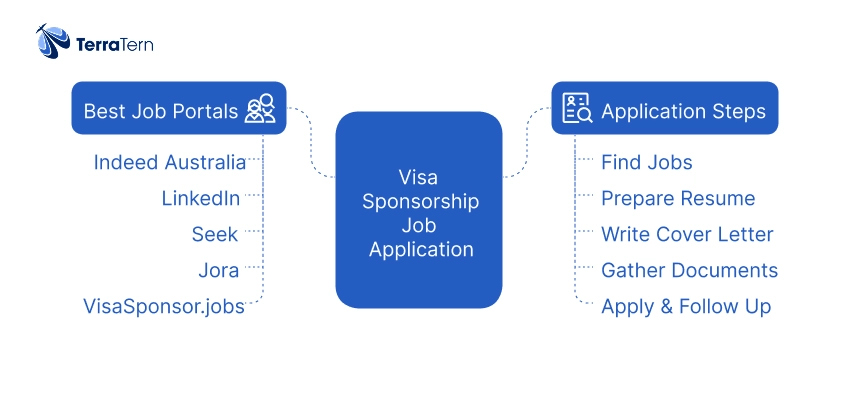
Here’s how to dive in. Start with the key visas: subclass 482 (Temporary Skill Shortage) and subclass 494 (Regional Employer Sponsored). These two open up opportunities in healthcare, hospitality, IT, engineering, and skilled trades. Don’t just scroll through listings for hours—go straight to the good stuff on job boards like Indeed Australia, Seek, LinkedIn, Jora, or VisaSponsor.jobs. Search for jobs that actually mention “visa sponsorship available.” When something catches your eye, make sure your resume and cover letter fit what Australian employers expect.
Show them, right up front, that you need sponsorship. You want to pop out of the pile, not disappear into it. A lot of employers cover visa costs, and some even help with relocation. To qualify, your skills need to line up with Australia’s Skilled Occupation List, your English should be strong, and you’ll need solid work experience. Once you get that job offer from a registered sponsor, your employer nominates you, and you apply for the visa through ImmiAccount. That’s your ticket in.
Top Job Portals for Visa Sponsorship
Best visa sponsorship job search sites comprise:
-
LinkedIn: Visa sponsorship job listings are extensively listed in the world and country-specific, including employer information.
-
In fact, filter jobs with a keyword of visa sponsorship in different industries.
-
Glassdoor: Organisations place sponsorship advertisements, as well as company reviews and salaries.
-
Seek (Australia): It focuses on Australian visa sponsorship employment options in such areas as healthcare and IT.
-
VisaSponsor.jobs: Visa sponsorship jobs specifically in the world job search.
-
Jora: Sources visa sponsorship jobs.
-
CareerOne (Australia): Posts visa sponsorship jobs in Australia mostly.
-
482Jobs: Catering to the Australian jobs that are sponsored by the employer in subclass 482
These portals will disseminate the latest prospects and materials on the eligibility, application procedures and employer sponsorship engagement.
SEEK:
SEEK stands out as one of Australia’s go-to job sites, especially if you’re looking for visa sponsorship opportunities. You just type in keywords like “visa sponsorship,” pick your preferred location, salary, or job type, and you’re off. Most listings come straight from verified employers, and they’re usually upfront about whether they offer sponsorship. You can apply directly or set up a profile to keep track of your applications easily. Because employers on SEEK generally follow sponsorship rules, it’s a solid choice for anyone outside Australia hoping to land a job there.
Indeed Australia:
Indeed is one of Australia’s go-to job sites, loaded with millions of listings. If you’re after visa sponsorship jobs, it’s got you covered—you can just filter your search and see what pops up. The site isn’t just about job ads either. You’ll find company reviews, salary details, and a bunch of tools to help you build your resume. People trust Indeed to bring up-to-date job openings, especially if you’re looking in healthcare, construction, IT, or hospitality, where sponsorship is often an option. For international candidates, the process feels pretty straightforward. You get simple application steps and access to a huge pool of employers willing to sponsor.
482Jobs:
482Jobs.com brings together thousands of real Australian jobs that offer visa sponsorship, especially for skilled workers after subclass 482 visas.
LinkedIn:
LinkedIn isn’t just for networking—it’s a huge, global job board where you can find visa sponsorship roles, check out employer reviews, and connect with people who’ve been there.
Jooble Australia:
Jooble Australia pulls job listings from all over the country, so if you’re after visa sponsorship jobs, you can search across dozens of sites in one place.
Workforce Australia:
Workforce Australia, run by the government, matches you with jobs, training programs, and up-to-date info on visa sponsorship—basically everything you need to start working and settling into life in Australia.
Approved Sponsor Register Strategy
If a business in Australia wants to hire skilled workers from overseas, it needs to become a Standard Business Sponsor. That means applying to the Department of Home Affairs and jumping through a few hoops. First, the business has to be legally operating in Australia. It also needs to offer real, full-time jobs that show up on the official Skilled Occupation List. On top of that, it has to pay market rates and stick to all the local employment and immigration rules.
Once approved, sponsors can nominate specific roles for overseas workers—usually after showing they’ve tried to hire locally first through Labour Market Testing. The most common visa for this is the Subclass 482 Temporary Skill Shortage visa. This isn’t a “set and forget” deal, though. Sponsors have to keep paying fair wages, hang onto proper records, and let the authorities know if anything changes. The whole point? Fill skill shortages in a way that’s fair and above board. With this setup, businesses can nominate several workers over a five-year approval window. For some, it even opens the door to permanent residency down the track.
Recruitment Agencies Specialising in Visa Sponsorship
If you’re looking for agencies in Australia that really know their way around visa sponsorship, here are a few names you’ll want to remember:
-
Neurone Recruitment, based in Perth, digs deep into global talent. They work closely with migration agents and make the sponsorship visa process way less stressful for employers. They don’t just stop at matching you with a job—they handle profiling, onboarding, and keep supporting both businesses and candidates long after the paperwork is done.
-
Titan Recruitment is all about engineering and tech. They have a solid system for bringing in international candidates, thanks to a labour-on-hire setup. Titan takes care of everything—visas, migration, you name it—and can help you work toward permanent residency.
-
Konnecting Skilled Migration and Recruitment blends recruitment and migration services. They’re hands-on, guiding both employers and candidates through every twist and turn of skilled migration and visa sponsorship.
Industry-Specific Job Boards
Australia Industry-Specific Job Boards:
-
Healthcare: Healthcare Australia, physician jobs, medical jobs are jobs specialising in health, such as doctors, nurses, and health allied professionals.
-
Creative Arts: The Creative Store, ArtsHub specialises in visual arts, media production, design and performance jobs.
-
Education: Teaching Jobs, Australian Education Jobs are aimed at teaching and academic jobs.
-
Environment and Agriculture: NRM Jobs serves the careers of environmental science, agriculture, and sustainability.
-
Finance & Banking: eFinancialCareers provides jobs in finance, fintech, compliance jobs, and banking.
-
Sports & Leisure: Sports People employs sports training, coaching and leisure management.
-
Non-Profit: Ethical jobs, ProBono Australia to nonprofit and social impact jobs.
-
Backpacker & Temporary: Backpacker Job board matches international working holidaymakers with hospitality short-term and seasonal employment.
These industry-specific boards will offer job seekers specific job listings, tools, and industry-related advice.
Effective Job Search Strategies
The good job hunting strategies are:
-
Niche Search: Select boards related to the industry, interesting websites like Seek, Indeed, and LinkedIn.
-
Networking: Use LinkedIn contacts, trade shows, alumni associations, and professional associations.
-
Customisation: Tailor application documents (resumes and cover letters) to the job, prioritising the applicant and his/her skills and sponsorship needs.
-
Use email alert: in portals, you can set up email notifications whenever there are new postings based on some criteria, like visa sponsorship.
-
Introduce yourself to Recruiters: Go through recruiting agencies which specialise in visa sponsorship and employer-paid options.
-
Research Employers: Research which companies previously sponsored visas, then call the HR or recruiting department.
-
Social Media: Be present in such social media as LinkedIn, Facebook groups, and other potentially useful forums.
-
Skills & Certifications: Enhance employability with industry-level skills, certifications and language.
-
Follow Up: It is always a good idea to follow up with the application and interviews and express interest.
-
Keep Track: One should be informed of immigration policies, visa policies and market demands in certain occupations.
Networking Strategies
The job hunting networking strategies include:
-
Use LinkedIn: Create a full and professional profile; join the appropriate groups; connect with industry professionals; comment on posts and share.
-
Visit Industry Events: Attend conferences, trade shows, webinars and local meetups to meet the recruiters and peers in person.
-
Informational Interviews: Ask people in the field that you are interested in to have a short meeting so that they can help you understand the field better and get acquainted with them.
-
Alumni Networks: Alumni portals of universities or previous workplaces are to be used to get contacts or mentors.
-
Social Media Engagement: Visit Facebook groups or job market and visa sponsorship forums and engage in discussions.
-
Volunteer: Volunteer work helps you build contacts and gain experience in your industry.
-
Referrals: Requests a contact to assist you in getting hired by managers or to refer you to vacant positions.
-
Follow Up: Nurture relationships with contacts with periodic messages or exchange of helpful materials, which keeps them at the top of mind.
-
Write Elevator Pitch: Prepare a brief overview of what you can do and what your career objectives are so that you can use it during networking.
-
Be Authentic and Serviceable: Be interested in win-win relationships, but not favours only.
Specialist Advice: The most overlooked strategy is directly approaching companies on the approved sponsor register—they've already invested in sponsorship infrastructure and are legally positioned to sponsor. Target companies that recently posted visa-sponsored jobs, as they have active hiring authority and a budget allocated for international recruitment.
Also Read: Finance Jobs in Australia: New Pay, Visa, Scope & More
What is the Step-by-Step Application Process for an Australia Job Vacancy Free Visa?

The process of filling in the application form for securing an Australian job vacancy with free visa sponsorship is usually done in the following steps:
-
Find Eligible jobs: See Skilled Occupation List on the Check Australia list of eligible jobs with visa sponsorship (usually subclass 482 or 494).
-
Find Sponsoring Employers: Use job portals (Seek, Indeed, 482Jobs.com) and recruitment agencies that specialise in visa sponsorship to identify employing companies that will accept their sponsorship.
-
Write Application Documents: Adapt a Resume and a cover letter to the Australian standards, including details on skills, work experience, and eligibility to be sponsored.
-
Apply: You can apply directly via job portals or by employer websites by specifying that you need a visa sponsorship.
-
Interview & Accept: Interview according to request and obtain employment with a registered Standard Business Sponsor.
-
Employer Nomination: Your employer submits a nomination application to the position with the Department of Home Affairs.
-
Visa Application: online application with ImmiAccount with supporting documents to the corresponding visa (e.g., Temporary Skill Shortage 482 visa).
-
Health Checks: Health checks and present police clearances.
-
Visa Decision and Travel: Wait until the visa is approved, and start planning on how to relocate and work in Australia.
-
Post-Arrival Compliance: Employer and employee are to abide by the rules of sponsorship, such as requirements for wages and visa.
This is done to ensure the workers are given opportunities that will be fully sponsored to allow them to work and be in Australia legally.
Phase 1 - Pre-Application Preparation (1-3 months)
Phase 1 - Pre-Application Preparation (1-3 months) of Australia Job Vacancy Free Visa entails:
-
Researching the Skilled Occupation List of eligible occupations that are appropriate for your skills.
-
Evaluating and collecting the necessary qualifications, skills demonstrations, and English language proficiency outcomes.
-
Writing and optimising an Australian-style resume and cover letter for visa sponsorship employment.
-
Posting on key job boards and recruitment firms dealing in sponsorship.
-
Connecting with your industry and with Australian employers or sponsors.
-
Gathering required documents like academic certificates, work references, passport and IDs.
-
Knowledge of visa requirements, employer sponsorship requirements and procedures.
-
Enhancing competencies or qualifications as required by the job requirements or organisation
-
You have to plan the finances and schedule towards the visa application.
This is a preparation to make sure that one is ready to pursue a focused and compliant job search and visa sponsorship application.
Skills Assessment:
Have the right Australian authority review your qualifications and work experience to make sure you meet the visa requirements for your job.
English Language Test:
Take an approved test—IELTS, TOEFL, or something similar—to show you meet the English standards for your visa.
Document Gathering:
Pull together your school certificates, work references, ID, plus any health or character checks you need.
Job Search & Securing an Offer:
Search job boards, connect with recruiters, and network to find employers who sponsor visas. Land a formal job offer to move forward.
Phase 2 - Employer Sponsorship Process (1-3 months)
Phase 2 -Employer Sponsorship Process (1-3 months) involves:
-
Employer Nomination: Employer makes an application under nomination to be recognised as an Approved Sponsor and nominates the job position under visa sponsorship.
-
Labour Market Testing: The activities of the employers to demonstrate the attempt to recruit local employees and then hire overseas employees are under the law.
-
Sponsorship Approval: The employer is given sponsorship approval by the Department of Home Affairs.
-
Contract Negotiation and Offer: The negotiation and conclusion of the employment contract under the market rates of payments and according to the sponsorship requirements.
-
Notification Obligations: Employer engages in commitments of continuous reporting and compliance obligations regarding the sponsored employee.
-
Visa Application Support: The Employer submits documentation required to support Visa nomination to support the visa nomination of the employee.
This procedure guarantees the employer sponsorship needed to submit visas.
Employer Sponsorship Approval (if not already approved):
First, the employer needs to get approved as a sponsor. They send the Department of Home Affairs proof that their business is legit, financially stable, and follows the law. The department has to sign off on this before the employer can nominate anyone from overseas.
Position Nomination:
After getting the green light, the employer picks the exact job they want to fill. They nominate that position, making sure it matches one of the roles on the Skilled Occupation List. They also have to show they’re offering a fair market salary and actually need someone with those skills.
Phase 3 - Visa Application (You complete this step)
Phase 3 - Visa Application (You fill out this step) entails:
-
The online visa application is done through ImmiAccount, and the visa subclass (usually Subclass 482 Temporary Skill Shortage visa) is selected.
-
Presenting the necessary documents like your passport, skills evaluation, the results of the English language test, employment proposal letter, employer nomination, certificates of health, and character.
-
Making payments of the visa application fee and other relevant expenses.
-
Undergoing health checkups by panel doctors.
-
Issuing police clearance certificates to satisfy character.
-
Reacting to any further requests by the Department of Home Affairs as soon as possible.
-
Monitoring the status of the applications online and being in a position to give additional information when asked.
You are then issued a visa grant authorising you to work in Australia legally and reside in Australia on the terms of the sponsorship.
Lodge Visa Application:
Fill out your visa application online through ImmiAccount. Make sure you include all the right forms and supporting documents.
Visa Application Fees (2025-2026):
Pay the required processing fees. The cost depends on your visa type—usually, primary applicants for the Subclass 482 Temporary Skill Shortage visa pay around AUD 1,290. If you have family members applying with you, or if you want faster processing, expect extra charges.
Submit Biometrics (if required):
Depending on where you’re from and where you live, you might need to go to a biometrics centre. There, you’ll give your fingerprints and have your photo taken for identity checks.
Phase 4 - Health and Character Checks
Phase 4—Health and Character Checks—is a big step in the visa process, especially for Australian visas. Here, the government wants to know two things: Are you healthy enough, and do you have a clean record? First, you need to go through medical exams at approved clinics. They’re checking to make sure you don’t pose a risk to public health or put extra strain on the healthcare system. You’ll probably have a physical, a chest X-ray, and blood tests. If everything comes back fine, those results usually last for a year.
Sometimes, though, they’ll ask for more tests if something pops up. Next comes the character check. You have to prove you’re of good character, which means gathering police clearance certificates from every country where you’ve lived for at least a year in the past decade. They’re looking for criminal records, ties to shady groups, or anything that could threaten public safety. If you hide something, you risk getting your visa refused. Immigration reviews all the evidence, and they have the final say—they’ll look at things like public interest, whether you show remorse, rehabilitation, and other details before making a call.
Health Examinations:
You have to get checked by approved panel doctors to show you don’t have any major health issues and that you meet the immigration health rules.
Police Clearance Certificates:
You need official documents from every country where you’ve lived for 12 months or more in the past 10 years. These certificates prove you don’t have a serious criminal record. They’re usually valid for a year when you apply.
Phase 5 - Visa Decision & Preparation
Phase 5 — Visa Decision & Preparation — is where things really come together. Here, the consular officer looks over all your documents, checks your health and background, and reviews your interview. They decide if you get the visa or not, based on whether you meet all the rules and have turned in everything they need. If you’re approved, you’ll get clear steps on what to do next, like sending in your passport for stamping and getting ready to travel. If you’re refused, the officer explains why.
Sometimes they’ll ask for more info or need extra time for administrative checks, which can slow things down. Usually, there’s a deadline to send in any missing documents. Miss it, and you might have to apply again and pay new fees.
At this point, it’s smart to get your travel plans in order, make sure you know exactly what’s required to enter your destination, and really understand your visa conditions. Respond quickly and honestly to any requests from immigration — it makes the process smoother and helps you avoid delays or even a refusal.
Await Visa Decision:
Wait for your visa decision. Keep an eye on your email or check your status online, and if they ask you to do anything else, just follow their instructions.
Visa Grant Notification:
Once you get your visa approval—either by email or in the mail—double-check all the details. Then get your documents ready for collection, just like they tell you.
Plan Relocation:
Now it’s time to plan your move. Sort out your travel, find a place to stay, organise your money, and make sure you understand your visa rules. Get everything lined up so the move goes smoothly.
Expert Tip: The most common application delays stem from incomplete police certificates or medical examinations. Schedule your Indian PCC and health checks immediately upon receiving visa lodgment acknowledgement—don't wait for specific requests. This proactive approach can reduce processing time by 4-8 weeks.
Also Read: Driver Jobs Australia for Indians: Pay, Visa & More
How Much Do Visa Sponsorship Jobs in Australia Pay?
Visa sponsorship jobs in Australia cover a pretty wide pay range. Most salaries run from about AUD 55,000 up to AUD 207,000 a year, depending on your field and how much experience you bring. If you’re just starting, expect something close to AUD 65,000. The best in the business can pull in around AUD 304,000.
Healthcare’s a big one—nurses usually earn between AUD 80,000 and 110,000. IT jobs land in the AUD 90,000 to 150,000 range. Construction workers earn about AUD 70,000 to 100,000, and hospitality roles pay less, closer to AUD 45,000 to 60,000. If you land a skilled job on the priority migration list, you’ll probably see higher pay. For general labour, it’s about AUD 25 to 32 an hour. These visa sponsorship roles don’t just let you work—they often open doors to permanent residency too.
Minimum Salary Thresholds (2025-2026)
Here’s what you need to know about the new salary rules for Australian employer-sponsored visas in 2025-2026:
-
The Core Skills Income Threshold (CSIT): AUD 76,515
-
Temporary Skilled Migration Income Threshold (TSMIT): AUD 76,515
-
Specialist Skills Income Threshold (SSIT): AUD 141,210
These numbers kick in for new nominations from July 1, 2025. Employers have to pay whichever is higher: the relevant threshold or the going market rate for the job. The point is pretty clear — Australia wants to make sure skilled migrants get a fair deal and that local workers aren’t pushed out or undercut.
Salary Ranges by Industry & Occupation
|
Industry/Occupation |
Average Annual Salary (AUD) |
Average Annual Salary(INR) |
Notes |
|
Information Technology |
75,000 -150,000 |
4325815-8651631 |
Soft Engineers, IT managers. |
|
Healthcare |
70,000 to 110,000 |
4037527-6344529 |
Nurses, allied health professionals. |
|
Construction and Engineering |
65,000-120,000 |
3749040-6921304 |
3rd Class- Engineers, skilled trades. |
|
Finance & Accounting |
60,000 -130,000 |
3460652-7498080 |
Accountants, financial analysts. |
|
Education & Training |
55, 000-95,000 |
3172264-5479366 |
Teachers, educators. |
|
Hospitality & Retail 4 |
45,000 -70,000 |
2595489-4037527 |
Service industry jobs |
|
Skilled Trades |
60,000 -100,000 |
3460652-5767754 |
Electricians, plumbers, carpenters. |
|
Mining & Resources |
Up to 150,000+ |
Up to 8651631+ |
High-paying positions, established employees. |
|
Legal Services |
90,000 -150,000 |
5190978-8651631 |
Lawyers, legal consultants. |
|
Marketing & Communications |
70,000 -120,000 |
4037527-6921304 |
Marketing managers, content creators. |
The salaries are differentiated based on some parameters, such as geographical location, experience, and size of the company. The average Australian wage amounts to approximately AUD 65,000. The average annual rise in wages is 3.4%.
Additional Benefits & Perks
Visa sponsorship employment in Australia may have some other benefits and perks besides the wage, including:
-
Employer-based or employer-subsidised health insurance coverage.
-
Leaves of paid annual and public holidays according to the Australian labour legislation.
-
Employer Superannuation (retirement fund), which is usually 11-12 per cent of salary.
-
Professionally funded or assisted opportunities for training.
-
Relocation benefits such as travel cost reimbursement and accommodation.
-
Work-life balance programs, such as flexible working schedules and telecommuting.
-
Mental health and well-being employee assistance programs.
-
Sponsored employees have Access to permanent residence and citizenship.
-
Dependent visa sponsorship and family sponsorship.
-
Benefits such as bonuses, commissions, and performance rewards are available at the workplace.
Such benefits contribute to the job appeal and career and settlement planning in the long term in Australia. There are many different benefits depending on the employer and industry.
Regional Salary Premiums
Salary Premiums in Australia 2026 by Region:
-
Many jobs have income premiums in the region, rural and remote areas, as opposed to major cities.
-
In professions, trades, personal services, clerical work, operation of machinery and labour positions, there are premiums.
-
Activities where the income level is higher in a given region are executives, manufacturers, engineers, teachers (special and vocational education), medical practitioners, mechanics, electricians, bakers, carers, chefs, truck drivers, and cleaners.
-
The net incomes in the regional areas exceed 80 jobs, taking into consideration the cost of housing and living.
-
The expensive labour is pushed by regional labour shortages, which generate additional job openings and wage gains outside metropolitan centres.
-
There is variation in income premiums depending on area remoteness: the best premiums are in the remote/ very remote areas; inner and outer regional areas also make significant improvements.
-
This tendency dispels the myth of the high-income being confined to the major cities.
Such regional wages put oil into the incentive for workers to put into consideration to move to non-urban areas that have good employment and better financial gains.
Tax Considerations
Taxation of the visa sponsorship employment in Australia entails:
-
Income tax is progressive, with the tax rates ranging between 0 per cent and 45 per cent depending on the income brackets.
-
Legal employees will have to receive a Tax File Number (TFN) to be employed and report tax.
-
Pay As You Go (PAYG) tax is a percentage charged on the salary of an employee and paid by the employer to the Australian Taxation Office (ATO).
-
Visa holders can be subject to a classification of resident or non-resident in regard to tax; the residency status influences the tax rates and exemptions.
-
Most residents have a 2% Medicare charge levied, which covers the healthcare provided to the people; there are exemptions.
-
There are allowable work-related deductions and offsets, donations and dependents.
-
Tax returns should be submitted annually to balance the tax remitted against a refund or to submit more tax.
-
The employer contributions to Superannuation (a mandatory minimum of 11-12 per cent) represent tax-benefit retirement savings.
-
There are several taxation agreements in place with most countries to ensure that individuals do not pay taxes on the same income twice.
-
It will be best to employ the services of a tax specialist or an accountant to help with compliance and minimise tax requirements.
Awareness of tax implications is one way through which visa workers can manage money and be compliant when working in Australia.
Cost of Living Comparison
|
Expense Category |
Sydney (AUD) |
Melbourne (AUD) |
Brisbane (AUD) |
Perth (AUD) |
Adelaide (AUD) |
|
Rent (1-bedroom apt |
2,300 – 3,200/month |
1,900 – 2,600/month |
1,800 – 2,400/month |
1,700 – 2,300/month |
1,300 – 2,000/month |
|
Food & Groceries |
600 – 900/month |
550 – 850/month |
550 – 800/month |
550 – 850/month |
500 – 750/month |
Electricity, Water, Gas, and Internet. |
200 – 350/month |
180 – 300/month |
180 – 300/month |
180 – 300/month |
150 – 280/month |
|
Transportation |
150 – 200/month |
130 – 180/month |
120 – 170/month |
120 – 170/month |
100 – 150/month |
|
Health Insurance |
100 – 200/month |
90 – 180/month |
90 – 180/month |
90 – 180/month |
80 – 150/month |
Prices are dependent on lifestyle, location, and family size. The most expensive, in general, is Sydney, then Melbourne and Brisbane. Small cities and towns have a lower cost of living, and this provides a monetary benefit over big metropolitan cities.
Expert Tip: Regional Australia offers the best total compensation package—a Registered Nurse in Sydney might earn AUD 80,000, but the same role in regional Victoria pays AUD 95,000-105,000 with employer-provided housing (worth AUD 20,000+), effectively delivering AUD 115,000-125,000 in total value while fast-tracking PR eligibility.
Also Read: High-Paying Hospitality Jobs in Australia For Indians
What are the Common Challenges and How to Overcome Them?

Some of the issues that visa sponsorship workers experience in Australia are:
-
Overcoming the complicated visa application procedures and documents.
-
Achieving health and character check.
-
Getting used to new working environments and cultures.
-
Getting appropriate and affordable housing, particularly in large cities.
-
Balancing financial strain because of fluctuations in the cost of living.
-
Developing new support systems and integrating into society.
-
Knowing the Australian employment legislation and employee rights.
-
Managing a language barrier affects communication and performance in the job.
-
Managing any possible delays or uncertainty in obtaining the visa.
-
Efficiently accessing healthcare and other required services.
Overcoming these difficulties:
-
Consult legal opportunities on immigration early enough to have full and proper applications.
-
Health and character tests must be well prepared.
-
Participate in cultural orientation and training at the workplace.
-
Planning and searching for housing opportunities far.
-
Plan the budget, budgeting on the amount of money to spend on living in a particular location and the salary within the area.
-
Both social integration and interacting with other people.
-
Learn about labour laws and rights in the workplace.
-
Enhance language proficiency by attending classes and doing exercises.
-
Be updated on visa status through the official avenues; be patient and active.
-
Use communal resources and government services in support of health and welfare.
The foreseeability of these issues and the active development of strategies led to the creation of a smoother transition and the success of job retention in Australia.
Challenge 1: Finding Employers Willing to Sponsor
It is quite difficult to locate Australian employers that are eager to sponsor since the sponsorship is expensive, controlled and perceived as risky to most businesses.
Key reasons it is difficult:
-
Quite a number of small/medium companies are not informed of the sponsorship process and often believe that it is too difficult or too expensive.
-
Employers have to demonstrate that they cannot locate qualified local labourers and have to fulfil quite rigid legal, remunerative, as well as bookkeeping requirements.
-
It is only possible to sponsor real jobs full-time in occupations that qualify; thus, some jobs cannot be sponsored.
Factual means of getting around this obstacle:
-
Already sponsored target employers (enter 482 visa sponsorship or TSS visa, or subclass 482/186/494 in job-site search filters and on LinkedIn)
-
Target shortage jobs in which organisations have difficulties finding staff nearby (medicine, IT, engineering, trades, regional jobs)
-
Develop a solid profile: the relevant qualifications, 23 years or more of experience, proficiency in English, and an Australian-style CV.
-
Meet hiring managers and owners (LinkedIn, industry and meetups) rather than using job boards alone.
-
Offer to work on a non-sponsored basis where you already have another visa into Australia, and then apply to be sponsored later once you have demonstrated your worth (where applicable).
-
Make it clear to prospective employers (in cover letter and interviews) that you know how to handle their sponsorship requirements and that you are willing to take a long-term commitment.
Being strategic (right occupations, right regions, and employers with a record of sponsoring) and having good networking tends to make the process of finding a sponsor much more realistic.
Challenge 2: Skills Assessment Delays and Rejections
The common challenges that the Australian skilled visa applicants face include skills assessment delays and rejections because of:
-
Processing backlogs due to high demand, standard cases can take 812 weeks to process, though in high-demand periods or complicated cases may take even longer.
-
Unfinished or wrong submission of documents that lead to further requests for information, which prolongs the processing time.
-
Raising fees beginning in October 2025, which is likely to discourage timely applications and add to application spikes.
-
Off periods during holidays and administrative shutdowns, like ACS closing between December 19, 2025 and January 5, 2025, lead to delays in late submissions.
-
Refusal based on failure to meet the Australian standards, absence of related qualifications or proof of work experience.
To overcome such challenges:
-
Make copies of all the documents and check carefully before handing in, according to the checklists of the assessors.
-
The early application before visa run-out dates is needed to prevent last-minute rush and vacation shutdowns.
-
Complex cases or appeals: Seek professional advice or get registered migration agents to help with appealing to the Department of Immigration and Citizenship.
-
Take priority processing options where they apply (where there has to be urgency).
Preparation in advance and knowledge of evaluation requirements are highly important in mitigating the chances of delays and adverse results in skills assessment processes.
Challenge 3: English Language Proficiency Requirements
English Language Proficiency Requirements of the Australian visa entail the provision of adequate skills in reading, writing, speaking and listening English.
Key points:
-
Since 7 August 2025, the Department of Home Affairs has accepted new English test providers such as CELPIP General, LanguageCert Academic, and Michigan English Test (MET), along with IELTS and PTE.
-
There are minimum score requirements across all known tests, depending on the type of visa to obtain and preferred level of English (Functional, Vocational, Competent, Proficient, Superior).
-
Greater English proficiency scores may be more points towards skilled migration visas in the General Skilled Migration scheme (20 points Superior, 10 Proficient).
-
Examinations have to be done in secure test centres; prior test outcomes before 7 August are valid within a period of 3 years based on visa subclass.
-
Good command of English is essential in communication at work workplace, social integration and fulfilling visa requirements.
To save time and rejection of applications, applicants need to choose the appropriate test with care and ensure that they have the appropriate score, depending on the type of visa they are applying for.
Challenge 4: High Application Costs
Australian skilled Tier 1 visa application fees are high and have various fees that increase to a great extent.
Key costs (2026):
-
Application fee (main applicant): AUD 3,210 to AUD 4,910 based on visa subclass (e.g. subclass 482, 186, 189, 190).
-
Extra applicant charges: AUD 805 (adults), AUD 1,230 (partner/spouse), and AUD 400-1250 (dependents under the age of sixteen).
-
Nomination fee charged to employers: approximately AUD 330 to 540.
-
The cost of skills assessment depends on the authority assessed and may be multiple hundreds of AUDs.
-
The cost of taking English language tests is about AUD 350.
-
Legal/agent possible cost between AUD 1,500 and 7,950 in case of professional services.
-
Annual Skilling Australians Fund (SAF) is paid by employers with a business turnover which are based on annual business turnover of between AUD 1,200 and AUD 5,000 annually for the visa.
-
All these costs should be highly budgeted and may be an obstacle to both applicants and employers who sponsor such applications, particularly to families. Planning finances, investigating waiving (or at least reducing) fees where available, and choosing the appropriate visa subclass soon help minimise risks of going over budget.
Knowing all the concerned expenses removes any shock and facilitates the sponsorship and visa processing process.
Challenge 5: Credential and Qualification Recognition
Credential and Qualification Recognition in Australia entails demonstrating your foreign qualification and working experience by meeting the Australian standards needed to migrate and be employed as a skilled worker.
Key aspects:
-
Skills tests through specified testing bodies compare the foreign qualifications and experience to the Australian standards in certain jobs.
-
Recognition can be a formal skills assessment, recognition of prior learning (RPL), or other bridging courses, or exams that are demanded by regulated professions.
-
Assessment and recognition of overseas qualifications is supported by some states and territories in order to help incorporate qualifications into the local labour market.
-
In order to accumulate points and obtain a visa, applicants should make sure that their qualifications are appropriate to their nominated occupation.
-
The Australian qualification recognition promotes the transparency of qualifications to both employers and immigration authorities and is the main key to the success of employment and visa applications.
This can be achieved by undertaking early and comprehensive credential assessment, which may involve upskilling, and by contacting the assessing body or the professional organisation that will accredit the candidate.
Challenge 6: Visa Scams and Fraudulent Job Offers
Visa Scams and Fraudulent Job Offers- This is a problem for Australian visa applicants, where there is a high risk of being targeted.
Common scam types:
-
False employment offers in Australia with high-paying positions, after which they ask them to send huge amounts of money for visa processing or job placements.
-
Fraud under the name of Australian government officials/departments using forged emails, letters or websites seeking personal documents or money. Impersonation scam on Australian citizens and Permanent Residency holders.
-
Illegal migration agents posing as registered but illegal.False Migration Agents.
-
Guaranteed visa or expedited processing offers that cannot be conducted in line with the immigration law.Unrealistic Promises
-
Fraudulent messages that represent official institutions to collect sensitive data or finances.Phishing Emails or Calls.
How to protect yourself:
-
Never believe an offer of a job and the employers before checking them and the employers through the company websites and channels of contact.
-
Only registered migration agents can be utilised, and this is found on the official governmental website of Australia.
-
Do not pay money to strangers who claim to be agents or job brokers unless you have signed an agreement with them and have clear evidence that they are valid.
-
Watch out for circumstances where unsolicited emails or phone calls inform you that they are the immigration authorities, who might be requesting your personal information or payments.
-
Report any suspected scam to the Department of Home Affairs or the Australian High Commission.
Paying attention, checking the validity, and utilising the official means allow one to evade being a victim of such fraud and save their personal and financial well-being.
Expert Opinion: The single most preventable mistake is falling for visa scams—if any employer asks for upfront payment or "processing fees" before providing a job offer, it's fraud. Legitimate Australian employers NEVER charge employees for sponsorship; they bear these costs as business expenses for recruiting skilled talent.
Also Read: Hotel Jobs in Australia: New Salary, Visa, Tips & More
What are the Pathways to Permanent Residency from Visa Sponsorship Jobs?
The application of Visa Sponsorship Jobs Permanent Residency (PR) in Australia can involve:
-
ENM Subclass 186 Employer Nomination Scheme (ENS)
-
Direct PR visa in which an Australian employer sponsors the worker to work in a permanent position.
-
Subcategories: Temporary Residence Transition (to applicants who have worked on subclass 482 TSS visas with 2-3 years of work experience), Direct Entry (to applicants who are overseas-based), Labour Agreement.
-
Conditions on nominated occupation, skills evaluation, command of English and pertinent work experience.
-
Subclass 494 Skilled Employer-Sponsored Regional (Provisional) Visa.
-
To employers of skilled workers in regional Australia for a period of up to 5 years.
-
Visa holders are allowed to apply to be granted permanent residency after 3 years of work in the region through subclass 191.
-
Temporary Skilled Shortage Visa (Subclass 482)
-
Temporary work permit of up to 4 years of employment under the employer sponsorship.
-
In transition to permanent residence, you can transition via subclass 186 ENS (TRT pathway) or 494 regional pathway.
-
There are other alternative routes to PR, such as the General Skilled Migration (subclass 189, 190), which do not need employer sponsorship.
Through the process, employers have to be certified sponsors and abide by the law. The choice of occupation, location and applicant profile determines the choice of the right visa and pathway.
Pathway 1: From 482 Visa to Subclass 186 (Employer Nomination Scheme)Pathway 11: Subclass 482 Visa (Temporary Skill Shortage) to Subclass 186 (Employer Nomination Scheme).
-
This route goes by the name the Temporary Residence Transition (TRT) stream under subclass 186 visa.
-
It targets workers who have worked at least 3 years in the nominated occupation with the Australian employer sponsoring the worker on a 482 visa.
-
The worker must be nominated by an approved sponsor of the employer for a permanent skilled position.
-
The candidate should qualify in terms of age, competencies, mastery of the English language, health, and character.
-
The TRT stream enables eligible 482 visa holders to move to permanent residence without the necessity of another skills assessment.
-
This will offer a direct and sometimes quicker path to permanent status for those who are already employed under employer sponsorship.
-
It has the requirement of full-time, continuous employment with the employer who is sponsoring an individual throughout the qualifying period.
This is the route that joins the initial temporary sponsorship through the 482 visa and permanency and stability through the 186 visa, on the condition that all the requirements are met.
Pathway 2: From 494 Visa to Subclass 191 (Permanent Residence Regional)
Subclass 494 Visa to Subclass 191 Permanent Residence (Skilled Regional) Visa.
The subclass 191 visa provides those who hold a 494 Skilled Employer Sponsored Regional provisional visa to apply to gain permanent residence after a minimum of 3 years. Permanent Residence (Skilled Regional) visa (Subclass 191)
The eligibility requirements are:
-
Being the holder of a subclass 494 visa, most likely to the extent of at least 3 years.
-
Being in the business, residence and studies in a particular geographic region for a period.
-
Earning a minimum income per year, with recordings through Australian Taxation Office (ATO) notices of assessment.
-
Adhering to the terms of visas
-
Satisfying health and personality needs.
-
The visa provides permanent residency and gives the visa holder the opportunity to live, work, and study in any part of Australia and enjoy Medicare, sponsor eligible relatives and become a citizen when residency requirements are fulfilled.
-
The applicant has to maintain clear records, like a lease agreement, employment contract, pay slips, and bank statements, to justify residency and work history in the regional areas.
This will provide the skilled workers who contribute to the workforce of regional Australia with a clear transition path into permanent residency after demonstrating their intention to live and work in the region for over 3 years. Subclass 494 visa to Subclass 191 visa transition
Pathway 3: Direct Entry ENS Subclass 186
Direct Entry Employer Nomination Scheme (ENS) Subclass 186 Visa
This visa lets skilled workers jump straight to permanent residency if an Australian employer nominates them. You don’t need to have held a temporary visa like the 482 first.
What employers need:
- They must be actively running a business in Australia and actually need someone for a full-time, ongoing role.
- The job you’re nominated for has to be on the Core Skills Occupation List (CSOL) and pay at least AUD 53,900 a year, matching the local market rate.
What applicants need:
- You need a positive skills assessment for the job you’re nominated for. At least three years of full-time work experience in that field. You should be under 45, unless you qualify for an exemption. English matters—think IELTS band 6 or above. You also have to meet health and character checks, and if your job requires a licence or registration in Australia, you need to have that sorted.
Pathway 4: General Skilled Migration (Independent)
Pathway 4: General Skilled Migration (Independent) – Subclass 189 Visa
The Subclass 189 visa gives skilled workers a shot at permanent residency in Australia, no strings attached. You don’t need an employer, a family sponsor, or a nod from a state or territory government.
Here’s what you need to qualify:
-
Pick an occupation from the Medium and Long-Term Strategic Skills List (MLTSSL).
-
Get your skills assessed and approved by the right authority.
-
Score at least 65 points on the points test. They’ll look at things like your age, English skills, work experience, education, and a few other factors.
-
Be younger than 45 when you get your invitation.
-
Clear the health and character checks.
How do you apply? Start by submitting an Expression of Interest (EOI) through SkillSelect. If your points and occupation line up with what Australia needs, you’ll get an invitation. Once you’re invited, you’ve got 60 days to get your application in, with all the paperwork ready to go.
PR Timeline Comparison Table
|
PR Pathway |
Processing time: |
Description |
Notes |
|
Subclass 482 to 186 (TRT) |
5 to 10 months |
This is for people moving from a Temporary Skill Shortage visa to the Employer Nomination Scheme permanent visa. |
You need three years of continuous work with your sponsoring employer. |
Subclass 494 to 191 |
Around 6 to 12 months |
Regional provisional visa holders can apply for permanent residency after three years of regional work. |
You have to meet minimum income and residency rules in a designated regional area. |
|
Subclass 186 Direct Entry |
5 to 10 months |
This route gives skilled workers direct permanent residency if an employer nominates them, even if they’ve never held a 482 visa. |
You’ll need a skills assessment, relevant experience, be under 45, and meet English requirements |
|
General Skilled Migration 189 |
6 to 12 months |
A points-based visa for skilled workers, letting you get permanent residency without employer sponsorship. |
You need an invitation through SkillSelect and have to meet the minimum points score. |
Processing times aren’t set in stone. They depend on how complex your application is, if your documents are all there, and how busy the government is. Employer-sponsored pathways usually mean you need prior work with your sponsor, while independent skilled visas rely on your points and when you get an invitation.
Maximising PR Success: Strategic Planning
The Strategic Planning of Permanent Residency (PR) Success in Australia entails several steps:
Select The Right Visa Pathway:
Evaluate employer-sponsored and General Skilled Migration visa eligibility requirements.
-
Pick careers that are sought after to process them quickly and have better acceptance.
Exceed and Meet Requirements:
-
Score high on the English language test to earn more points and be able to communicate effectively.
-
You should get positive skills tests done promptly to prevent time wastage.
-
Complete, current, on-the-job experience with the nominated occupation.
Find Safety in Sponsorship and Work:
-
Establish a good rapport with the recruited Australian employers to be visa-sponsored.
-
Regional areas: Target regional pathways and additional points by targeting regional areas, where possible.
Develop fully and correctly Developed documentation:
-
Arrange all school, job, medical and character paperwork in order.
-
Seek professional guidance to be compliant and eliminate any loopholes.
Follow the Policy of immigration:
-
Keep updated on visa requirements, application times and job lists.
-
Change strategy fast in order to utilise the new opportunities or address the new needs.
Plan Finances Wisely:
-
Allowance on application fees, tests, assessment and living expenses in periods of transition.
-
Take into account the temporary accommodation and relocation expenses of regional pathways.
Seek the services of a professional:
Registered migration agents or immigration lawyers can be used to assist in the process, particularly in complicated cases.
Early preparation, strategic planning and compliance enhance success in the timely approval and easy transition to permanent residency in Australia.
Expert Opinion: The 494→191 regional PR pathway is often overlooked but extremely strategic—it has no age limit (unlike 186's under-45 requirement), allows employer mobility after 3 years, and costs significantly less (AUD 465 vs AUD 4,770). For workers over 40 or those wanting job flexibility, the regional route is superior despite the extra year of waiting.
Also Read: Top 10 Best Regional Areas In Australia For PR
How Can TerraTern Help You Secure an Australian Job Vacancy Free Visa?

TerraTern is able to assist you in obtaining an Australia job vacancy-free visa through the provision of comprehensive immigration and job placement services to qualified migrants. Their key support includes:
-
Professional advice regarding the choice of available visa routes, which do not presuppose employer vacancies, including the General Skilled Migration visas (Subclass 189).
-
Help with points test evaluation, tooptimise the number of points based on age, experience, qualifications, and English proficiency to improve the possibility of obtaining a visa.
-
Organisation of skills testing for the identified officials to effectively satisfy Australian visa regulations. One-on-one consultation on job choices based on the in-demand vacancy lists with a higher likelihood of visa permits.
-
Advice on submitting and filing correct, compliant visa applications and Expression of Interest (EDI) by means of SkillSelect. Matching and networking with the Australian employers to create a good profile to migrate based on skills.
-
Keeps you informed on changes in immigration policy so that you can change strategies and submissions. Continuous assistance throughout the visa procedure to reduce the time wastage and enhance the success rates.
With the help of TerraTern, you will be able to navigate the complex points-based system and apply to those visa categories, which do not rely on the availability of job vacancies with employers but rather increase your chances of being granted permanent residency in Australia much faster and with less uncertainty.
Comprehensive Visa Sponsorship Services
Full Visa Sponsorship Services normally cover:
-
Evaluation of eligibility, counselling on the most appropriate visa subclasses to be employed as a sponsor (e.g., subclass 482, 186, 494).
-
Leadership and assistance to employers to be eligible to be approved sponsors and act in legal compliance.
-
Help to prepare and file nomination applications with the Department of Home Affairs. Arrangements of applicant documentation, skills tests, English proficiency tests, health tests and character tests. Overseeing visa application procedures for sponsored workers and their families. Handling the shift in immigration policies and keeping clients informed on time.
-
Briefing the employers and employees on their rights, responsibilities and compliance requirements.
-
After visa grant assistance, such as guidance on visa conditions, renewals and eligibility for permanent residency.
-
Industry-specific tailored strategies, regional sponsorship chances and facilitating short-term and permanent visa routes.
These services ensure the complicated sponsorship and visa procedure workflows are simplified, the chances of refusals and delays are minimised, and the success of employer-employee migration is increased.
Why Choose TerraTern?
Select TerraTern to sponsor your visa and migration to Australia due to the following reasons:
-
Experience: TerraTern has extensive knowledge of the Australian immigration legislation, visa types and sponsorship conditions, which ensures that it presents precise and well-informed advice.
-
Individualised Service: Individual plans are based on personal situations, qualifications and career objectives so as to achieve maximum visa success.
-
End-to-End services: This is the support of the eligibility check till visa application, support on the employer sponsoring and after the approval compliance.
-
Network Access: Good access to Australian employers and industry organisations to increase job placement and sponsorships.
-
Open Processes: Fee, schedule, and requirement communication are essential to ensuring that there are no surprises or delays.
-
Expertise: A history of supporting trained practitioners on their complicated visa journeys.
-
Holistic Solutions: Can you combine migration advice with job matching and settlement support to help you during your entire relocation process?
-
Continuous Updates: Staying in touch with the clients about changes in immigration policies and being proactive.
TerraTern enjoys the benefits of a holistic strategy and is committed to its expertise, providing maximum opportunity to obtain an Australian visa sponsorship and realise long-term goals of career and settlement in Australia.
Get Started Today
Start your journey with TerraTern today. You’ll get real advice on Australian visa sponsorship, a migration plan tailored just for you, help connecting with employers, and support every step of the way. We make the path to permanent residency smoother and a lot less stressful.
Specialist Advice: Working with experienced consultants like TerraTern can reduce application processing time by 30-40% through optimised documentation, direct employer connections, and proactive issue resolution—often paying for itself through faster employment start dates and avoiding costly application mistakes.
Also Read: Check Your Australia Visa Status Online Fast and Easy
2026 Industry Context Section
Latest Statistics & Trends:
1. Market Growth Data (2026):
-
6,000+ active visa sponsorship vacancies as of November 2025
-
18% year-over-year increase in employer-sponsored positions
-
Median sponsored salary: AUD 114,864 annually (senior roles: AUD 200,000+)
-
Processing time improvements: 70% of applications completed within 3-4 months
2. Industry Developments:
-
Skills in Demand (SID) visa replaced the TSS 482 visa in December 2024
-
Work experience requirement reduced from 2 years to 1 year minimum
-
New three-tier system: Core Skills, Specialist Skills, Labour Agreement streams
-
Short-term 482 visa holders are now eligible for PR after 2 years (previously: no pathway)
3. Salary Threshold Updates (2025-2026 Financial Year):
-
Core Skills Income Threshold: AUD 76,515 (increased from AUD 70,000)
-
Specialist Skills Threshold: AUD 141,210
-
Temporary Skilled Migration Income Threshold (TSMIT): AUD 73,150
4. Source Country Rankings:
-
#1: India - Leading supplier for healthcare, IT, and engineering roles
-
#2: Philippines - Hospitality, healthcare, trades
-
#3: United Kingdom - Teaching, nursing, skilled trades
-
#4: Nepal - Hospitality, construction
-
#5: Indonesia - Construction, farming, hospitality
5. Top Hiring Sectors (Vacancies Available):
-
Healthcare & Medical: 1,800+ positions
-
Information Technology: 1,500+ positions
-
Hospitality & Tourism: 1,200+ positions
-
Skilled Trades (electricians, plumbers, welders): 900+ positions
-
Education & Childcare: 600+ positions
6. Expert Insights:
Australia's shift to the Skills in Demand visa framework represents a strategic recalibration of immigration priorities, favouring genuine skill shortages while streamlining permanent residency pathways. The reduction in work experience requirements makes Australia more competitive globally for emerging talent." - Department of Home Affairs, Migration Policy Update 2026
7. Trend Analysis:
-
Regional visa sponsorship is growing 25% faster than metropolitan areas
-
The technology sector demand is accelerating due to digital transformation initiatives
-
Healthcare staffing crisis driving aggressive international recruitment
-
Hospitality recovery post-pandemic is creating unprecedented opportunities
Conclusion
The visa options of Australia regarding a job vacancy-free visa that are planned to be established in 2026 will provide migration of skilled migrants with the scope of choice in terms of obtaining permanent residence status without employer sponsorship. With General Skilled Migration visas, including subclass 189, applicants are able to pursue their migration objectives on their own, by satisfying points-tested requirements, such as occupation relevance, skills assessment, and English fluency.
Additional efficient paths, such as regional visas (subclass 494 to 191) and employer-nominated visas (subclass 186 direct entry), offer other avenues that are in line with personal considerations and labour or requirements in a region. It requires planning, proper preparation, and professional advice, including the one that TerraTern provides, to overcome complicated conditions and make the most out of the approval opportunities and become an Australian resident with a permanent profession.
To learn more about Australia Job Vacancy Free Visa: Latest Guide for 2026, contact TerraTern right away!


 AI Summary