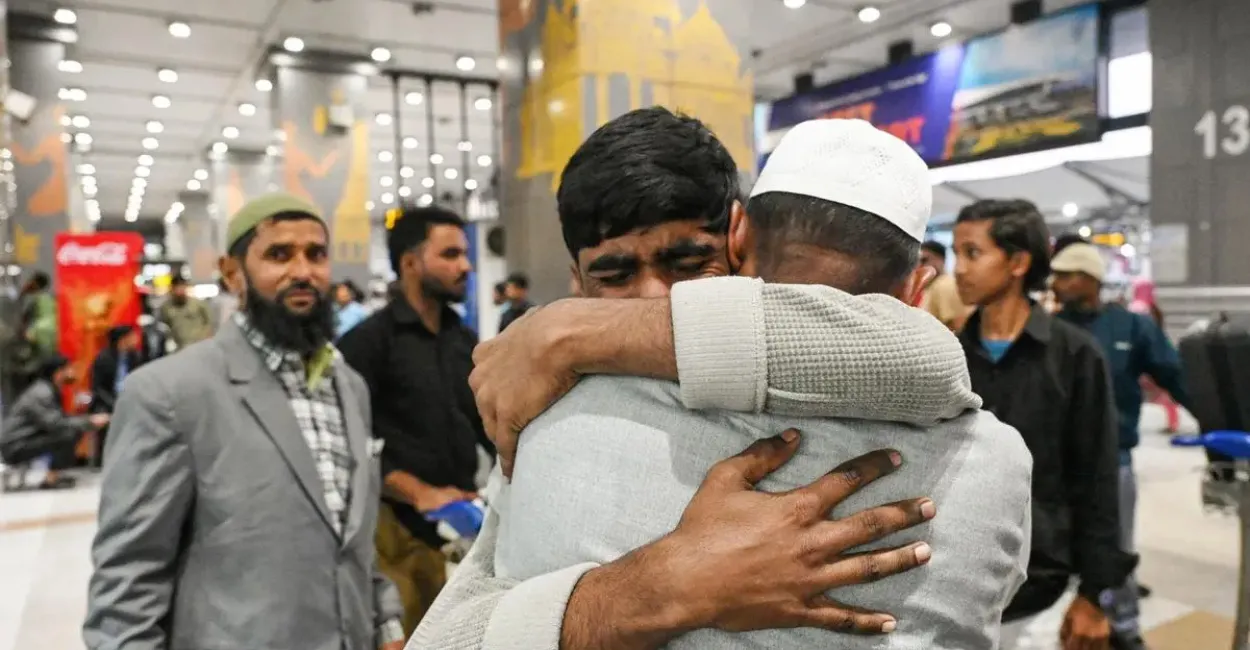


The growing geopolitical situation in West Asia is starting to trickle into the world economies and labour markets. In India, the threat to the India-Gulf labour corridor is among the greatest issues, as it is an established migration route that sustains millions of workers and their families. The process of recruiting Indian workers into the Gulf countries has also been slow, with fears that more than 300,000 job placements are at stake, in case the situation persists.
Conventionally, the Gulf region is a significant place where Indian employees work in the construction, energy, healthcare, and services sectors. The current war and increased security risks are, however, compelling companies to delay projects and hires. The ensuing slackness may have extensive repercussions on the remittance flows, employment opportunities, and the economic stability of India.
Understanding the India–Gulf Labour Corridor
IndiaGulf labour corridor is an outflow of Indian migrants to the Gulf Cooperation Council (GCC) nations that include the United Arab Emirates, Saudi Arabia, Qatar, Kuwait, Oman, and Bahrain. This movement has, over the decades, proven to be one of the most significant movements in the world in terms of labour.
Every year, millions of Indians come to the Gulf to work in the construction and hospitality, and oil and gas industries. Such workers usually remit home a substantial amount of their income, which provides support to families and also helps in the local economies in India.
In the Gulf region, there are approximately nine million Indians nowadays, which makes them one of the biggest expatriate groups in this area. Their remittances of over 125 billion dollars in a year are a financial lifeline to millions of households around India.
Due to this extensive economic and social link, any activity within the region can easily impact the migration process, labour recruitment, and flows of remittances.
Also Read: Work Visa for Gulf Countries For Indians New Guide
West Asia Conflict and Rising Regional Uncertainty
The tensions that exist in West Asia are a consequence of a quickly growing conflict between Iran and other regional powers. Military attacks, counterattacks, and shipping lanes have left the Gulf region in a volatile environment.
This was further aggravated by military measures and retaliations in late February 2026, which precipitated wider instability,y including the disruptive effects in strategic maritime routes like the Strait of Hormuz.
This is among the most significant energy highways in the world, carrying a significant portion of world oil shipments passing through it. Any interference in this is not only impacting the energy market systems, but also the regional trade and aviation, as well asthe movement of labour.
Due to the growing tense situation, businesses in the Gulf are becoming apprehensive about establishing new projects or increasing their workforce. According to the recruitment agencies, employers are postponing their hiring decisions, awaiting the stabilisation of the geopolitical situation.
Recruitment Slowdown for Indian Workers
The decrease in the recruitment of overseas employees in India is one of the short-term consequences of the conflict. Government authorities and recruiters state that the uncertainty in the Gulf has led to a suspension of hiring within companies.
Based on the industry estimates, over 300,000 Indian workers are likely to suffer job placements delayed in case the conflict extends for a number of months.
This is not always an indication that there is no more demand for labour. Rather, it is a wait-and-watch strategy by employers, who desire to escape such risks as committing to new projects or staffing the organisation in a time of increased risk.
Gulf economies largely rely on migrant labour,r especially the South Asian labour. That is why analysts assume that the slowdown may only be temporary in case the conflict stabilises.
Nevertheless, as long as the instability continues, the effect might be even greater, impacting labour demand and the incomes of migrant workers.
Why the Gulf Remains Critical for Indian Workers
Nevertheless, irrespective of the sometimes tense geopolitical relations, the Gulf region remains one of the most desirable overseas working options for Indian workers.
This close relationship can be attributed to several reasons:
High Demand for Skilled and Semi-Skilled Workers
There are major infrastructure and energy developments throughout the Gulf, which present an endless need for labour. Indians occupy jobs in the construction, health, logistics, retail, and hotel sectors.
Geographic Proximity
Gulf is relatively near India, and therefore, the workers can travel home easily as opposed to other destinations.
Strong Economic Links
Over the decades, trade, investment, and cultural links between India and the Gulf countries have been strengthened.
Established Migration Networks
Indian recruitment agencies, training centres, and community networks have established migration ecosystems.
Due to the above factors, the migration flows between the Gulf and India have been known to bounce back at a high rate following disruptions.
Also Read: West Asia Conflict Shocks Kerala Families: Gulf Exams Postponed Overnight
Potential Impact on Remittances
Remittances are currently one of the biggest concerns about India, as it may face a decrease in the event of a significant slack in the labour corridor.
The overseas workers have been essential in the Indian economy through remittances. They assist in supporting the household incomes, increase the consumption,n and enhance the balance of payments of the country.
Remittance flows may decrease in case of any job decline in the Gulf orif workers lose their jobs owing to the project delays.
This would have specific impacts on high migration-dependent states in the Gulf, like:
-
Kerala
-
Uttar Pradesh
-
Bihar
-
Telangana
-
Tamil Nadu
Analysts fear that a protracted war may result in unemployment in such industries as construction and services, where Indians are employed.
A reduction in remittances not only impacts the families but also affects the local economies that rely on the income of migrants.
Broader Economic Implications for India
The India-Gulf labour corridor is only a segment of a very big economic relationship between India and West Asia.
The area is very crucial in various aspects:
Energy Imports
India obtains almost half of its crude oil imports from West Asia.
Any distraction in energy supplies has the potential to augment fuel costs and inflation.
Trade and Investment
The Gulf market is a significant one for Indian exports, which include food products, textiles and precious stones.
Financial Flows
The Gulf nations, particularly the UAE, are major investors in the Indian economy.
Due to such connections, the instability within the region may have ripple effects on various sectors in India.
Impact on Global Energy and Trade
The war has already brought volatility in the oil markets across the world. The price of oil shot to more than 100 barrels because of the heightening of tensions.
-
The oil prices are high, and this affects the transportation costs and cost of production in the world, which can cause inflation.
-
The world trade routes are also facing difficulties in shipping. Other shipping companies have closed transit in major shipping routes as a result of insecurity.
These advances are leaving uncertainties in the industries that rely on smooth international trade.
Government Monitoring and Preparedness
The Indian government is keeping a watch on events in West Asia to safeguard the national interests and the safety of the Indian citizens.
-
Governments are monitoring the state of affairs to have stable supply chains and ensure that necessary products are available on the local market.
-
The country is also well endowed with good relationships with various countries in the region, and hence, India can manoeuvre through complicated geopolitical situations.
-
In the case of past disasters, like the Iraq and Yemen conflicts, India has been able to evacuate thousands of its citizens in mass rescue missions. Contingency plans will probably undergo revision to ensure the situation gets better.
Also Read: Bahrain’s Golden Visa: The Gulf’s Most Flexible Residency Route?
Will the Labour Corridor Recover?
Although the current slowdown has occurred, numerous analysts feel that the India-Gulf labour market is resistant.
-
The economies of the Gulf are still dependent on migrant labour in the development of infrastructure, tourism, energy projects and services.
-
Recruitment will be fast rejuvenated after the stability has been restored, as there will still be a need for workers.
-
Nevertheless, the crisis demonstrates that migration systems are exposed to geopolitical shocks. It also casts doubts on the necessity to expand the employment destinations of Indian workers abroad.
-
Several other countries are also becoming alternative labour markets, and these include Japan, Germany, Australia and Canada.
Diversification would assist in decreasing the reliance on one area to get foreign jobs.
Conclusion
What is happening in West Asia has cast a dark cloud over the India-Gulf labour corridor, as concerns about delayed recruitment, possible job loss, and reduced remittances are raised. Having millions of Indian workers who depend on their jobs in Gulf countries, the migrant families and the Indian economy, in general, have high stakes.
Although the present stagnation seems to be predetermined by uncertainty more than structural changes, long-term instability may have more far-reaching implications. The experience highlights the significance of geo-political stability in terms of the migration flows and economic relationships.
At this point, there is a wait and watch attitude by policymakers, recruiters and workers. In case the tensions decrease, the corridor will likely get going again. Nevertheless, the crisis is a reminder of the fact that conflicts around the world can easily change the patterns of migration and economic relations.
Contact TerraTern for more information.