

Key Highlights
- Why the US Introduced New Immigration Rules
- New Fees for Asylum Seekers
- Stricter Penalties for Non-Payment
- New Form I-94 Fee Introduced
- Tougher Work Permit Rules for TPS Holders
- New Visa Interview Questions for Applicants
- Impact on Indian Applicants and Students
- Concerns From Immigration Advocates
- Economic Impact on Employers and Industries
- Public Comment Period and Future Changes
- Conclusion
The United States has unveiled far-reaching changes to immigration policy that will likely affect asylum seekers, temporary workers, visa applicants, and employers who rely on immigrant labor. The new regulations, issued by the Department of Homeland Security (DHS) under the One Big Beautiful Bill Act (H.R. 1), revise fee structures, increase compliance requirements, and impose stricter scrutiny on immigration procedures. The changes are in the context of increasing political pressure on the US about immigration control and border management. To migrants and international applicants, particularly those coming out of countries with high demand for immigrants, such as India, the reforms may translate to high costs, more paperwork, and more uncertainty in the entire immigration process.
Why the US Introduced New Immigration Rules?
According to the DHS and the US Citizenship and Immigration Services (USCIS), the reforms are supposed to enhance the cost recovery and the enforcement of immigration. Officials have claimed that the immigration system has been under increasing pressure due to the growing number of asylum applications, the rising demand for visas, and the backlog in processing.
The US government thinks that by adding extra fees and stricter eligibility checks, it will be in a position to reduce the abuse of immigration pathways while ensuring that it generates more revenue to support immigration operations. Another point that the authorities make is that the screening is more rigid and should be maintained to maintain the integrity of the visa system.
But critics feel that these changes may have a disproportionate impact on vulnerable migrants, low-income applicants, and families seeking refuge in the United States. Advocacy groups and immigration lawyers have cautioned that increased financial costs would deter legitimate claims of asylum and make it more challenging to legally migrate.
Also Read: How Many Types of Visa in USA? New Full Expert Guide
New Fees for Asylum Seekers
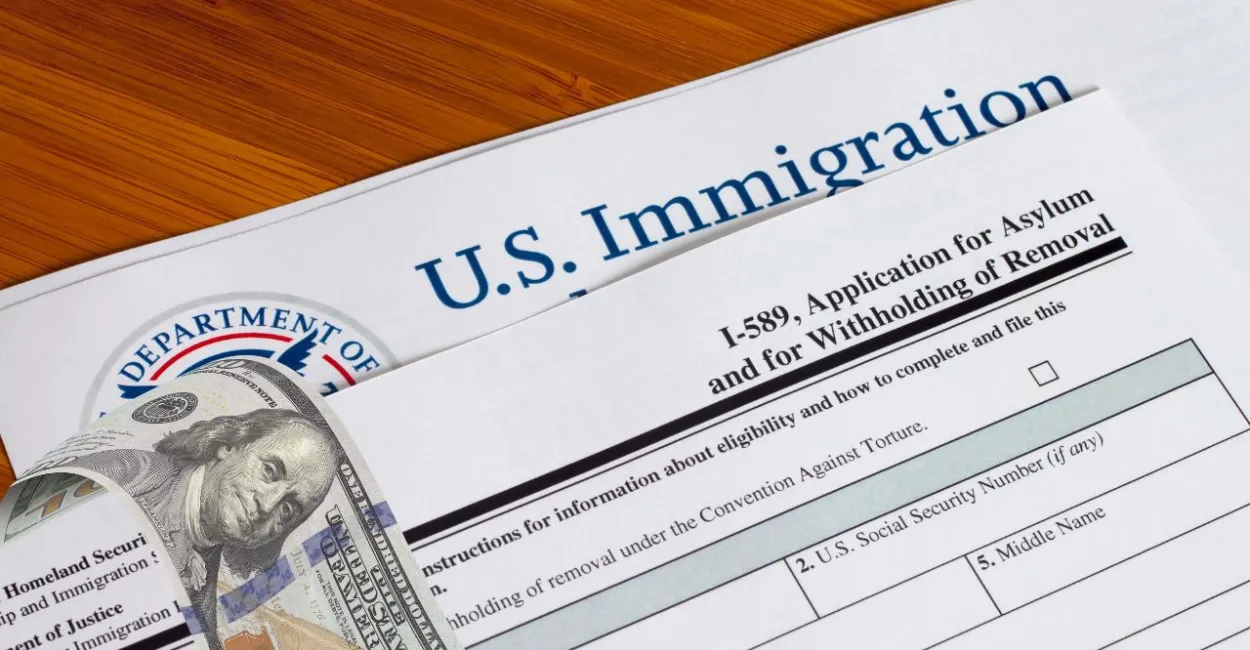
Among the most important changes are the establishment of an initial asylum application fee, as well as a periodic annual fee that will be paid by pending asylum cases. Earlier, in the United States, applicants did not have to pay any filing fees on their applications.
The new rule requires that asylum seekers now have to pay a filing fee when submitting their application and additional charges each year as their cases are pending. According to DHS, these are only meant to reimburse the administrative costs and deter fraud claims.
The requirement of paying the annual fee has been of concern since asylum cases in the US normally take years to be resolved due to the backlog in the courts. The applicants may thus be subjected to paying two or more times in a long queue.
The immigration experts are concerned that the asylum seekers who are already struggling financially may not be able to maintain these frequent payments. Non-adherence to the fee requirements can have devastating consequences, such as delays, application rejection, loss of work authorization, or even removal proceedings.
Stricter Penalties for Non-Payment
The DHS has also come up with strict compliance regulations that are associated with the new asylum fees. Those applicants who do not pay the annual charges on time may face serious penalties.
It is reported that the consequences can include:
-
Withdrawal of work permits.
-
Adverse or termination of asylum cases.
-
Removal of immigration protections.
-
Possible deportation proceedings
These more enforcement mechanisms are an indication of a significant change to the US immigration policy. The old system was more about the application eligibility and background checks, whereas the new framework is more about financial compliance as a part of immigration status management.
To most asylum seekers who already have to deal with housing, employment, and legal issues, the new financial requirements might cause further distress.
New Form I-94 Fee Introduced
The other significant change is the introduction of a fee on Form I-94, which captures the arrival and departure information of foreign nationals entering the United States.
Form I-94 is commonly used by tourists, temporary workers, students,s and business travelers. It is also a documentary of legal entry and is frequently needed to verify employment, renew a visa, issue a driving license, and file immigration applications.
Although the precise structure of fees might be varied depending on the visa types and processing options, the introduction of a new I-94 charge implies that the overall immigration-related costs can now be expected to increase.
The total financial obligation can be significantly increased by SEVIS fees, legal expenses, and other expenses that international students and professionals have already paid to apply to the visa program.
Also Read: Cost of Transit Visa for USA: New Fees & Process Guide
Tougher Work Permit Rules for TPS Holders
The reforms also impose more stringent limitations on the employment authorization of persons under Temporary Protected Status (TPS).
TPS is given to individuals of nations that are confronting armed conflict, natural disasters, or any unusual humanitarian catastrophe. It enables the qualified persons to live and work lawfully in the United States temporarily.
With the new policy developments, the validity time of work permits associated with TPS can be shortened and more stringently controlled. The applicants may be subjected to tighter renewal schedules and even greater scrutiny in the process of seeking employment authorization.
Employers that depend on TPS employees can also find themselves in more administrative problems due to more frequent permit renewals and documentation needs.
New Visa Interview Questions for Applicants
In addition to the fee reforms, the US government has also increased screening measures for non-immigrant visa applicants.
Under the new guidelines, consular officers must now pose extra questions to the applicants that are related to asylum during the visa interviews. The applicants could be questioned about his/her fear of going back to his/her home country or whether he/she had faced persecution or harm.
According to officials, these questions are meant to single out those who can be using temporary visas as a gateway through which they can seek asylum after entering the US.
This may result in visa rejections for applicants who declare that they are afraid of going back to their home country. Immigration experts think that this policy may have a particular effect on the applicants from politically unstable or conflict-affected areas.
Critics believe that these extra questions can be confusing and anxiety-inducing to the real travellers, students, and workers who are seeking legal non-immigrant visas.
Impact on Indian Applicants and Students
Indian nationals are one of the largest numbers of international students, skilled employees, and visa applicants in the United States. Thus, these changes in policy might significantly impact Indian applicants in various visa categories.
There is a possibility that students who apply for F-1 visas face more scrutiny in their interviews and additional costs. The professionals who apply for H-1B visas or work-related immigration benefits might also incur extra administrative costs due to the new fee structures.
The new charging and compliance requirements may render the process financially unsustainable for asylum seekers of South Asian origin. The immigration consultants anticipate the increased demand for legal services as the applicants attempt to deal with the new regulations and evade fines.
The reforms also come at a time when US immigration pathways are already on the brink due to lengthy processing times, backlogs on visas, and policy changes.
Concerns From Immigration Advocates
Several immigrant rights groups and advocacy groups have been critical of the new rules, claiming that it introduces an unnecessary barrier to vulnerable populations.
Critics argue that the implementation of recurring asylum fees will undermine humanitarian protection by deterring individuals fleeing persecution from seeking legal protection. Others claim that the policy considers asylum as a revenue-generating process rather than a humanitarian duty.
It is also feared that the more demanding interview questions may have an impact on refugees and those applicants who come from the dangerous regions. Advocacy groups caution that those who are actually in danger may not even mention their concerns in an interview because they fear losing their visas.
Immigration lawyers have also noted that the new regulations may complicate compliance issues, resulting in unintentional violations and more legal challenges.
Economic Impact on Employers and Industries
The policy alterations can also impact US employers and heavily labour-intensive industries that heavily depend on the immigrant workforce.
Businesses that hire temporary foreign workers, TPS holders, or asylum applicants with a work permit may experience disruption in case workers lose their permits due to non-payment or other reasons.
The technological, healthcare, hospitality, agricultural, and logistical industries rely heavily on immigrant labourers. The higher cost of immigration and increased restrictions might lead to labor shortages and administrative overhead for employers.
Other business groups have also raised the issue that too restrictive immigration policies might decrease the supply of skilled talent and adversely affect economic productivity.
Also Read: Intracompany Transfer Visa USA
Public Comment Period and Future Changes
Though the new DHS rule will become effective 30 days after being published in the Federal Register, the government has provided a 60-day period during which the public can make comments.
This implies that immigration lawyers, advocacy groups, businesses, and people who are affected can provide feedback or objections before the rules are made permanent.
Other parts of the regulations could still develop depending on the reaction of people and the future issues of law. But the general trend is that the US government is headed towards greater rigor in immigration enforcement, greater compliance standards, and greater financial burden on applicants.
Conclusion
The recent changes in the US immigration laws represent one of the most important changes in immigration policy in recent years. The US government is sending signals of a more enforcement-focused immigration management strategy by introducing new asylum fees, more stringent compliance regulations, tougher visa interview procedures, and stricter work permit regulations. Although authorities claim that the reforms are needed to make the systems efficient and prevent fraud, the critics are afraid that the reforms can impose too much burden on vulnerable migrants, international students, and legal visa applicants. To those people who are planning to relocate to the United States, appreciating these changing regulations will now be more crucial than ever as the process of immigration becomes more and more expensive, complicated, and under close examination.
Contact TerraTern for more information.