

Key Highlights
- What Is the Trump Gold Card Visa?
- The Big Promise: A $1 Trillion Vision
- Only One Approval: A Slow and Surprising Start
- Why So Few Approvals? Key Challenges
- Comparisons with Global Investor Visa Programs
- Political and Ethical Debate
- Economic Impact: Potential vs Reality
- What Lies Ahead for the Gold Card Visa?
- Conclusion
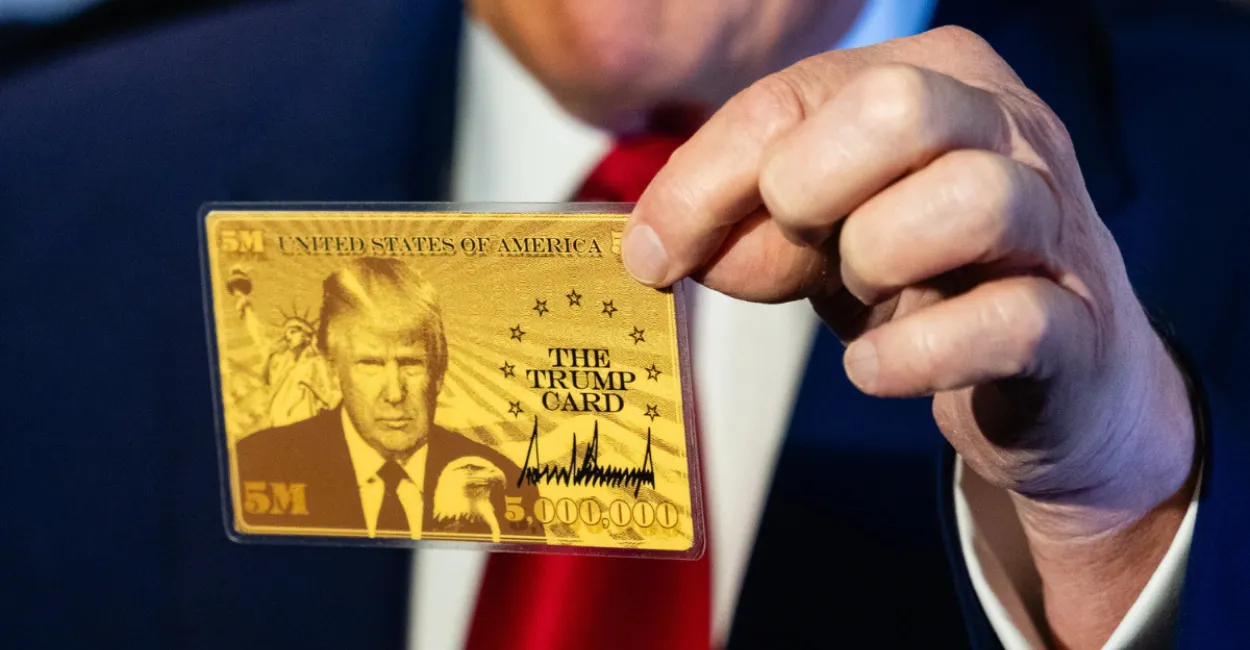
The so-called Gold Card visa programme that Donald Trump has been so heavily hyped has returned to the headlines, only to be underwhelmed by its underperformance. The initiative promised to rake in huge amounts of money and change the immigration policy, as touted as a revolutionary way for wealthy foreigners to secure residency in the United States in exchange for a $1 million contribution. Nevertheless, one applicant has been accepted months after its launch, even though thousands showed initial interest. This sharp difference between the expectations and the reality has brought controversy regarding the viability of the programme, its legal status,s and its long-term effect on the migration patterns in the world.
What Is the Trump Gold Card Visa?
The Trump Gold Card visa is an investor-specific immigration programme, which seeks to confer U.S. citizenship on foreign nationals on condition of a major financial deposit. This scheme is not based on job creation like in the traditional investor visa, like the EB- 5, but is directly paid to the U.S. government.
Applicants must pay: The processing fee, which is non-refundable, is about 15,000.
-
After background checks, a one-million-dollar contribution.
-
In its turn, successful candidates are granted a status that is similar to that of a green card, which enables them to work and reside in the United States, with a possible road to citizenship.
Alternations to the programme are also:
-
Corporate sponsorship packages at $2 million per employee.
-
An additional tax benefit and a price tag of $5 million on a proposed Platinum Card.
Also Read: Trump Advocates for Green Cards for Foreign Graduates of U.S. Colleges
The Big Promise: A $1 Trillion Vision
Right at the beginning, the Trump administration had set the Gold Card visa as a significant economic move. The scheme was estimated to bring in billions and even trillions of revenue in the long run, as it would bring in rich investors all around the world.
Thousands of people are reported to have registered for pre-registration during the initial promotion, proving the great interest of people all over the world. There were estimates of tens of thousands on waiting lists, which created some optimism about the success of the programme.
The larger objective was two-fold:
-
Enhance economic development in the U.S. via foreign capital.
-
Provide a simplified immigration process to high-net-worth persons.
-
But the truth thus far is a very different thing.
Only One Approval: A Slow and Surprising Start
This is despite the ambitious projections, the programme has so far been able to approve only one applicant. This was disclosed in a congressional hearing where Commerce Secretary Howard Lutnick admitted that little progress had been made.
-
According to officials, the programme is in its infancy, and it is going through a rigorous vetting process. It is believed that there are hundreds of applications yet to be reviewed, indicating that the number of approvals can grow in the future.
-
However, the difference between expectations and real results has caused eyebrows to be raised. In the case of a programme that initially gained thousands of applicants, one approval is either a pointer to operational bottlenecks or a pointer to more serious concerns with prospective investors.
Why So Few Approvals? Key Challenges
The slow development of the Gold Card visa programme could be explained by several factors:
1. Rigorous Background Checks
It has been emphasized that the applicants go through stringent vetting procedures to guarantee national security. This might be postponing approvals to a great extent.
2. Legal and Constitutional Concerns
Opponents say that the programme might not be supported by appropriate legislative action since immigration policy normally needs approval by Congress.
3. High Financial Barrier
A $1 million contribution is a substantial requirement, even for wealthy individuals, especially when compared to other global investor visa programmes.
4. Uncertainty Around Benefits
There are still questions concerning the manner in which funds will be spent and whether the visa has enough benefits relative to the ones being used.
5. Reputation and Trust Issues
The fear of transparency and stability over the long-term could scare away potential applicants who could spend large amounts of money.
Also Read: Trump's Birthright Citizenship Order Shakes H-1B Community
Comparisons with Global Investor Visa Programs
The idea of golden visas is not a novel one. Other countries like Canada, the United Kingdom, and some European countries have offered residency before, in exchange for investment.
Nevertheless, there are crucial distinctions that distinguish the Trump Gold Card:
-
Direct payment to the government, rather than investing in businesses.
-
More expensive entry than most international programmes.
-
Quicker processing claims, but not yet in the results.
Interestingly, other countries have reduced or cancelled such programmes with fears of inflation of housing prices, money laundering, and national security threats.
Political and Ethical Debate
The Gold Card visa has caused a heated political and public opinion debate. According to critics, the programme is establishing a pay-to-enter immigration system that favors the rich at the expense of others.
-
Advocates, on the contrary, perceive it as a practical method of attracting international capital and talent. They claim that affluent immigrants are able to play a big part in economic growth, innovation, and employment.
-
The programme is also indicative of a greater contradiction in U.S. immigration policy, tightening the door on many and opening it to a few with the financial means.
Economic Impact: Potential vs Reality
The Gold Card visa has not materialised as much as promised economically. Although authorities estimated billions of dollars in revenue, the fact that only a single applicant received approval indicates the disconnect between the theory and practice.
When scaled successfully, the programme would be able to:
-
Raise lots of government income.
-
Lure foreign investors and businesspersons.
-
Enhance the economy of the U.S.
But in the event that the existing trends are maintained, it will turn into an ineffective policy experiment instead of a groundbreaking program.
Also Read: Trump Administration Intensifies Immigration Crackdown: Key Policy Shifts
What Lies Ahead for the Gold Card Visa?
The programme will be dependent on various factors in the future:
-
Quickness and openness of the approval process.
-
Legal predictability and possible involvement of Congress.
-
International reputation and confidence of investors.
-
Pricing or eligibility changes.
The next few months will be critical in deciding whether the programme will take off or not, with hundreds of applications reportedly in the pipeline.
Conclusion
The Trump Gold Card visa programme came out with dramatic promises of transforming the U.S. immigration system and creating enormous returns to the economy. However, its initial performance, with only one approved applicant, casts much doubt on its viability and popularity. Although the officials are hopeful of further approvals, the gradual implementation of the programme, legal ambiguities, and cost-prohibitiveness indicate a journey that will not be easy. The future of the policy tool will be decided by how well these issues are solved in the coming months, whether it will become a successful policy tool or be a controversial experiment.
Contact TerraTern for more information.