

Key Highlights
- Germany’s New India Education Strategy
- Indian Students Continue to Drive Germany’s Education Growth
- Focus Shifts Toward Research Collaboration
- Indo-German Higher Education Roadmap Gains Importance
- Why Germany Is Not Prioritizing Campuses in India
- Balanced Mobility Becomes a Key Objective
- India’s Growing Importance in Global Education
- Opportunities for Indian Universities
- Challenges That Still Remain
- Future of Indo-German Academic Relations
- Conclusion
Germany is shifting from student exchanges to long-term engagement and institutional partnerships in its higher education partnership with India. This is happening as Indian students are now the largest international student population in Germany, with more than 60,000 enrolments. German higher education institutions, particularly the German Academic Exchange Service (DAAD), are now seeking to forge a more reciprocal, long-term educational relationship with India, beyond enrollments and student mobility.
Germany’s New India Education Strategy
India has long been a top study-abroad destination for Indian students, particularly in STEM fields such as engineering, IT, AI, and manufacturing. Low tuition fees, industrial relations, and work opportunities after study were all factors in attracting Indian students.
But German education officials now contend that the partnership has become unbalanced, with a significant influx of students from India to Germany, but relatively fewer German students and universities in India. DAAD officials have now unveiled a new strategy to balance this relationship by emphasising institutional partnerships and joint research networks.
The new approach focuses on:
-
Joint research initiatives
-
Faculty collaboration
-
Dual-degree programs
-
Institutional partnerships
-
Innovation ecosystems
-
Knowledge exchange
-
Regional academic cooperation
While Germany does not want to focus solely on international student mobility, it seeks to build long-term educational partnerships that can serve the interests of academia, research, industry, and government in both India and Germany.
Also Read: How to Get a Job in Germany from India: Comprehensive Guide
Indian Students Continue to Drive Germany’s Education Growth
While the shift in strategy is evident, student mobility continues to play an important role in Indo-German education. Over 60,000 Indian students are now studying in Germany, forming the largest group of international students.
This increase is due to several factors:
Affordable Higher Education
Public universities in Germany have low or non-existent fees, making it an affordable choice for Indian students compared to the US, UK, or Australia.
Strong Demand for Skilled Talent
Germany has labour shortages in areas including:
-
Engineering
-
Healthcare
-
IT and software
-
Renewable energy
-
Manufacturing
-
Research and development
Indian students are increasingly seen as a valuable source of skilled workers.
Post-Study Work Opportunities
The post-study work option in Germany enables graduates to stay in the country and look for work, adding to its popularity among students.
High-Quality STEM Education
Germany is well known for its technical education, research, and industry links in the fields of engineering and applied sciences.
Despite the new emphasis, Germany will continue to host many Indian students in the years to come.
Focus Shifts Toward Research Collaboration
A major part of the new plan is the research collaboration between Germany and India.
Indian and German universities are supposed to engage more with each other in strategic and emerging areas, such as:
-
Artificial intelligence
-
Climate science
-
Sustainable technologies
-
Robotics
-
Advanced manufacturing
-
Biotechnology
-
Green energy
-
Digital innovation
Future academic collaborations will be based on research ecosystems rather than recruitment systems, according to education experts.
This is in line with international developments as nations are seeking to forge innovation-based collaborations that integrate education, technology, and economic development.
Also Read: Work Abroad: Secure a Job Seeker Visa for Germany
Indo-German Higher Education Roadmap Gains Importance
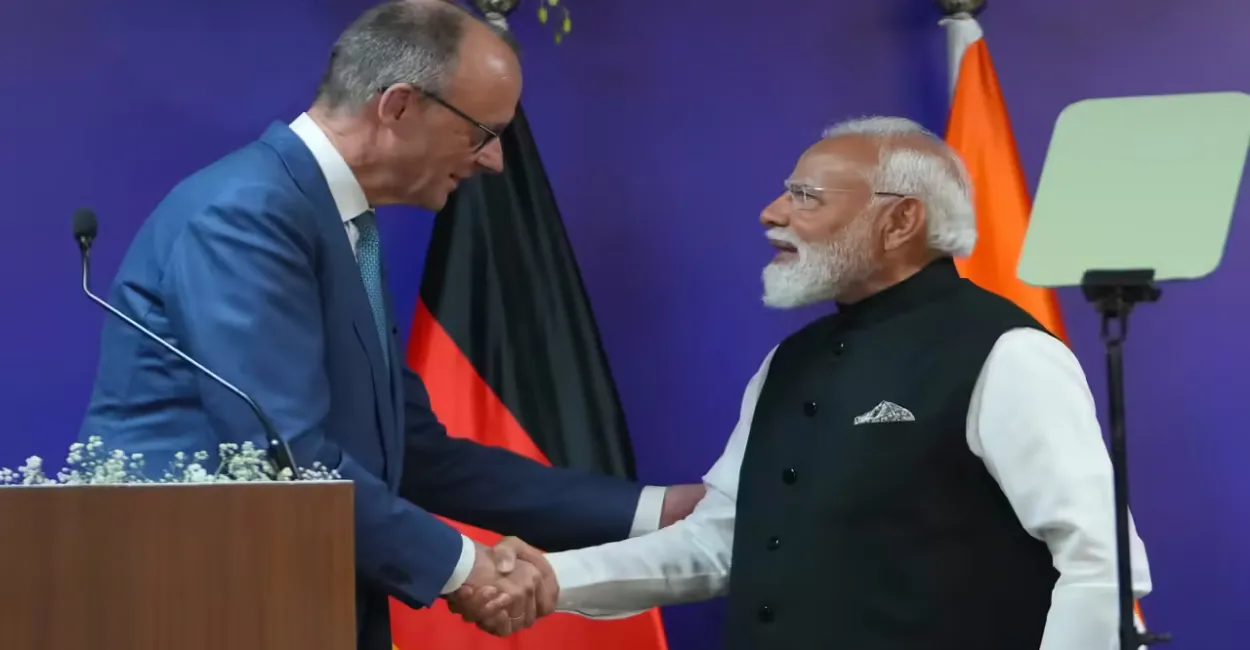
This also aligns with the Indo-German higher education roadmap unveiled earlier in 2026 in talks between Indian Prime Minister Narendra Modi and German Chancellor Friedrich Merz.
The roadmap aims to:
-
Strengthen university partnerships
-
Encourage faculty mobility
-
Support collaborative innovation
-
Promote dual and joint degrees
-
Increase academic exchange programs
-
Increase skill development programs
Educational partnerships are now emerging as a key component of India-Germany strategic partnership, complementing trade, technology, manufacturing, and green energy.
The roadmap shows the growing recognition on both sides of higher education as part of economic and geopolitical partnerships.
Why Germany Is Not Prioritizing Campuses in India
Although many international universities are exploring options to set up campuses in India under the National Education Policy (NEP), German universities are not keen on physical expansion.
There are several reasons for this approach, according to experts:
Public Funding Model
German universities are generally publicly funded and not profit-making.
Curriculum Adaptation Challenges
German authorities believe education systems cannot be simply transplanted overseas without adjusting to local academic, regulatory, and cultural needs.
Preference for Collaborative Models
Rather than establishing infrastructure-heavy campuses, Germany favours partnerships, student exchanges and research institutes that offer flexibility and minimise risk.
This means that partnership-driven expansion is set to be the norm rather than German university campuses in India.
Balanced Mobility Becomes a Key Objective
German authorities have also stressed the importance of more balanced mobility.
Currently:
-
Many Indian students come to study in Germany
-
Few German students study in India
Now Germany wants to increase the number of German students and academics working with India. This could lead to:
-
More semester exchange programs
-
Collaborative internships
-
Joint research visits
-
Faculty immersion initiatives
-
Language and cultural exchange programs
The development could also help India build on its aspirations to become a higher education hub.
India’s Growing Importance in Global Education
India's higher education system is a critical partner for many nations.
India has millions of students, and its universities are growing rapidly, with increasing research capacity.
The National Education Policy 2020 has further sped up internationalization by promoting:
-
Foreign university partnerships
-
Academic mobility
-
Joint degrees
-
Research collaborations
-
International campuses
-
Digital learning ecosystems
The new German strategy is part of this global shift in international education from mobility to knowledge partnerships.
Opportunities for Indian Universities
India's new Germany strategy may open up big opportunities for its higher education sector.
Access to Advanced Research Networks
Access to better European research networks, funding and technological partnerships may be available to Indian universities.
Greater Faculty Development
Collaborative research and faculty exchange programs can enhance academic experience and training.
Industry Collaboration
The industrial sector in Germany may offer opportunities for:
-
Applied research
-
Startup incubation
-
Technology transfer
-
Skill-based training
International Recognition
Collaboration with top German universities can help Indian universities improve their rankings and reputation.
Inclusive partnerships can also help state universities and those from remote areas.
Also Read: Best German Language Learning Books for Beginners
Challenges That Still Remain
While the outlook is positive, there are some challenges in increasing Indo-German collaboration.
Scale of India’s Education System
India has a vast network of universities and students.
Visa and Administrative Processes
Collaborative research may need more efficient visa, funding and coordination processes.
Funding Constraints
Public universities in Germany may have funding constraints when expanding research collaboration.
Awareness Gaps
Students and institutions in smaller cities in India lack awareness of opportunities for study and research in Germany.
Overcoming these obstacles will be key to long-term success.
Future of Indo-German Academic Relations
India's collaboration with Germany is part of a shift in the world of higher education. Nations are now focusing on ecosystems, innovation and knowledge diplomacy, rather than student mobility.
Germany is a safe and research-focused partner for India. For Germany, India is a source of talent, scale, innovation, and future.
The relationship is set to move beyond student mobility to knowledge creation.
Conclusion
The shift in Germany's India strategy from student mobility to other areas of collaboration is a significant development in India-Germany higher education. Although India will continue to be a significant source of students for Germany's higher education sector, the future partnership is likely to focus on research, institutional collaboration, innovation and long-term engagement. Through joint research, dual degrees and faculty exchanges, the India-Germany education partnership has the potential to be a landmark academic partnership in the next decade.
Contact TerraTern for more information.