


Key Highlights
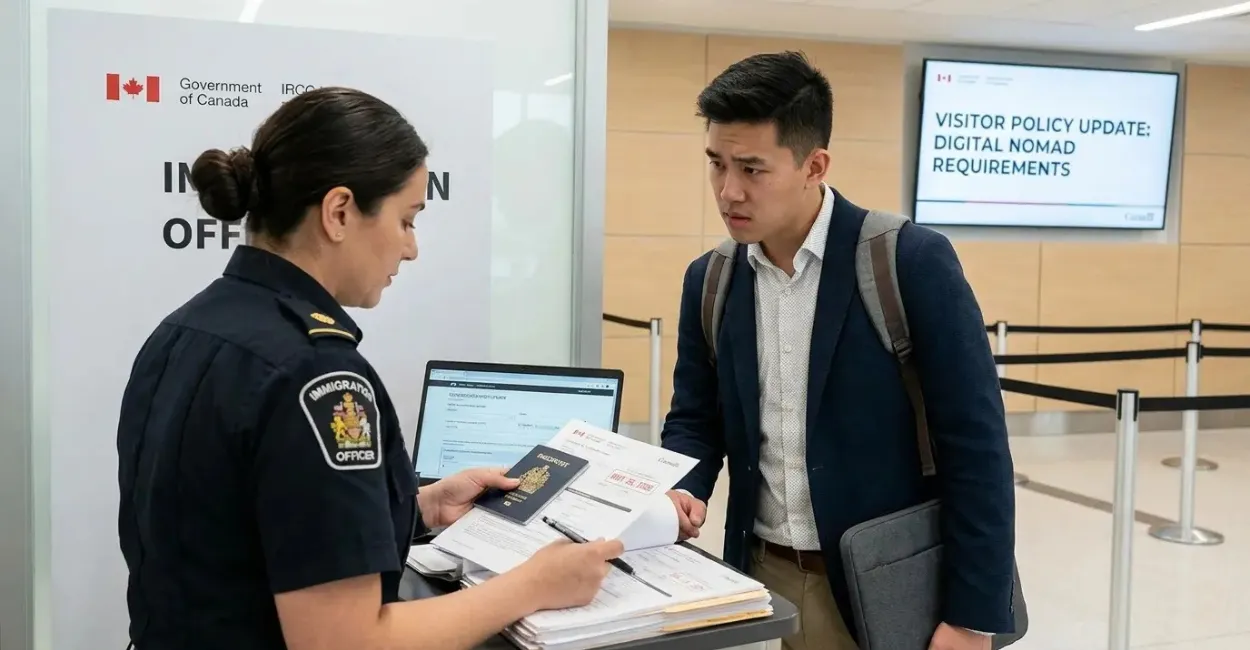
Canada has tightened documentation rules for digital nomad workers, marking a major shift for remote workers planning to live and work from the Great White North. The new IRCC instructions, published on May 26, 2026, now require digital nomads to prove 100% of their income comes from outside Canada, a significant change from previous relaxed requirements.
Canada Tightens Digital Nomad Visa Requirements: What Changed?
Canada has introduced stricter documentation requirements for remote workers entering under visitor status. The update was published in new instructions for Canada immigration officers under "Temporary residents: Digital nomads" on the IRCC website.
|
What Changed |
Before May 2026 |
After May 26, 2026 |
|
Documentation Required |
Minimal same as regular visitors |
Proof of foreign income, employment contracts, bank statements |
|
Income Proof |
Not specifically required |
100% foreign income must be documented |
|
Employment Verification |
Optional |
Mandatory foreign employer contracts required |
|
Family Members |
Not clearly specified |
Must apply for own temporary resident status |
|
Extension Process |
Not clarified |
Must apply for visitor record to stay beyond 6 months |
What Documents Digital Nomads Must Now Provide?
Remote workers entering Canada as visitors must now present sufficient documentation, including:
-
Proof of employment or freelance contracts with entities outside Canada
-
Income statements, pay stubs, or client invoices showing foreign income
-
Bank statements (6 months) showing the source of funds and foreign income deposits
-
Evidence of ties to the home country proving the intention to leave Canada after the authorized stay
-
Valid visitor visa (TRV) or eTA, depending on nationality
-
Proof of accommodation in Canada
-
Financial support evidence showing the ability to cover living expenses
Also Read: Cost of Study in Canada for Indian Students
Important Clarifications Under New Rules
The update does not create a new visa or work permit category. Instead, it gives officers clearer instructions on what digital nomads must prove before relying on the work-permit exemption under Canadian immigration rules.
-
Canadian Employer Work: A digital nomad may start working for a Canadian employer only if they qualify under section 186 of the Immigration and Refugee Protection Regulations (IRPR) for a different work permit exemption, or obtain a proper work permit later
-
Extensions Beyond 6 Months: Those who want to stay longer than the authorized period must apply for a visitor record
-
Family Members: Family members travelling with digital nomads must also apply for their own temporary resident status; they cannot automatically accompany
What Does This Means for Indian Remote Workers?
For Indian citizens planning to work remotely from Canada, the changes mean:
-
No separate digital nomad visa exists; you enter on a regular visitor visa (TRV)
-
A 6-month bank statement showing proof of funds is mandatory.
-
Employment letter and payslips from the current company are required.
-
Updated resume and work experience letters needed.
-
Visa application fee CAD 100.
-
Biometric fee CAD 85.
Also Read: Latest Eligibility for Canada PR from India: Experts Guide
Why Canada Made These Changes?
The Canadian government has introduced stricter documentation requirements for digital nomads to address several concerns that have emerged since the policy was first established in January 2024. Here's what's driving these changes:
-
Travelers could enter Canada with just a visitor visa and minimal proof of remote work.
-
Immigration officers couldn't verify if remote workers were genuinely earning foreign income.
-
Some digital nomads were working for Canadian clients while claiming to work for foreign employers.
-
The system lacked clear enforcement mechanisms.
Protecting the Canadian Labour Market
The tougher evidentiary standard serves a critical purpose: protecting Canadian workers and businesses. Here's why this matters:
-
Preventing Unfair Competition: Without proper documentation, foreign remote workers could potentially undercut Canadian businesses by offering lower rates without paying Canadian taxes or following employment standards
-
Ensuring Fair Tax Treatment: Digital nomads earning Canadian income should pay Canadian taxes and comply with local employment regulations
-
Maintaining Labour Standards: Canadian workers deserve protection from foreign workers who bypass proper work permit processes
-
Preserving Immigration System Integrity: Clear rules ensure that temporary visitor status isn't misused as a backdoor work permit
Also Read: Canada Ends Policy Allowing Visitors to Apply for Work
Conclusion
Canada's digital nomad visa rules have become significantly stricter as of May 26, 2026, requiring remote workers to provide comprehensive documentation proving 100% foreign income. While digital nomads can still work remotely from Canada for up to six months without a work permit, the new IRCC instructions place the burden of proof on travelers to demonstrate they won't enter the Canadian labour market. For Indian citizens and other international remote workers, careful preparation of employment contracts, bank statements, and income proof is now essential before attempting entry. For official updates on Canada digital nomad visa requirements and IRCC immigration rules, visit the Immigration, Refugees and Citizenship Canada (IRCC) official website. To know more about Canada digital nomad visa, visit TerraTern now!