Key Highlights
- BAMS Jobs in Germany: Career Options and Scope
- How to Find Ayurveda Doctor Vacancies in Germany
- Ayurveda Therapist Salary in Germany and Europe
- What Types of Ayurveda Jobs in Germany Are Available for Indian Professionals?
- Are There Ayurveda Jobs in Germany Specifically for Indian Doctors?
- Ayurveda Doctor and Therapist Jobs in Germany for Indian Professionals
- Trainee program to become a junior Ayurveda chef (m/f/d)
- How to Establish a Career in Germany as a BAMS Graduate: Learn German
- Benefits of Working in Germany as a BAMS Graduate
- Conclusion
As Ayurveda continues to gain momentum in Germany, there is a growing demand for professionals who can apply its principles to healthcare and wellness. The number of Ayurveda jobs in Germany for Indian in 2026 will continue to rise, with opportunities for BAMS graduates, Ayurvedic therapists, massage therapists, and wellness consultants available in wellness centres, Ayurveda clinics, spas, rehabilitation centres, yoga retreats, and integrative-health practices.
As more Indians venture into Europe's complementary-medicine market, the search for ayurvedic doctor jobs in Germany, ayurveda doctor vacancy abroad, BAMS jobs in Germany, ayurveda doctor vacancy in Germany, and Germany Ayurveda jobs is rising. The scope, however, is dependent on the qualifications and licensing: if an Indian doctor in BAMS can not practise as a medical doctor in Germany, or foreign healthcare qualifications are not recognised or assessed for equivalence before a work visa can be supported. Independent practice of Ayurveda medicine can be performed by the licensed German medical doctor or a Heilpraktiker who has completed the necessary state exam; under the relevant local legislation, Ayurvedic therapists can work in the field of supporting wellness.
If you're looking into the salary of an Ayurveda therapist in Europe, Ayurveda therapist vacancy in Germany, BAMS scope in Germany, or Ayurveda doctor vacancy in Europe, then 2026 has exciting yet regulated prospects for candidates, which can be pursued with employer sponsorship, German language skills, and recognised qualifications, along with an understanding of the German healthcare licensing landscape. This blog will cover ayurvedic doctor jobs in Germany, ayurveda doctor vacancy abroad, bams jobs in germany, ayurveda jobs in germany, ayurveda doctor vacancy in germany, germany ayurveda jobs, ayurveda therapist vacancy in europe salary, ayurveda therapist vacancy in germany, ayurveda doctor vacancy in Europe, bams scope in Germany.
BAMS Jobs in Germany: Career Options and Scope
-
BAMS (Bachelor of Ayurvedic Medicine and Surgery) is an academic degree recognised in Germany, but the degree does not allow the holder to be registered as an “Arzt” (physician) in Germany.
-
The majority of the graduates of BAMS are involved in the wellness and complementary-health fields either as Ayurveda therapists, Panchakarma specialists, or consultants for wellness in spas, hotels, and Ayurveda centres.
-
Others take the path towards the Heilpraktiker (natural health practitioner) route, which means they can work independently with alternative techniques in a limited fashion following a state health-office examination.
-
Career possibilities are available in Ayurvedic clinics, Ayurvedic retreat centres, luxury wellness resorts, and integrative health centres providing both Ayurvedic and conventional care.
-
BAMS can take on more advanced positions, such as senior therapist, centre manager, or trainer, within existing chains with further German language skills and qualifications.
-
Typically, a salary of €27,600–40,000 per annum for therapists, and up to €45,000–75,000 per annum for experienced doctors/consultants in high-quality centres, depending on the city and employer.
-
Long-term scope is progressing as awareness of the holistic-wellness market grows in Germany, but Ayurveda is not regulated by the state; it is complementary medicine.
Also Read: Job Vacancies in Germany for Indians: Latest Experts Guide
How to Find Ayurveda Doctor Vacancies in Germany
-
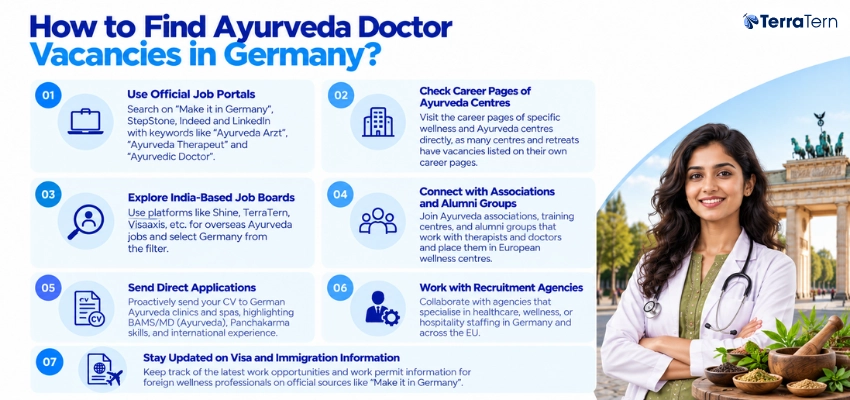
Use official job portals like “Make it in Germany” and general boards (StepStone, Indeed, LinkedIn) with the keywords “Ayurveda Arzt”, “Ayurveda Therapeut” and “Ayurvedic Doctor”.
-
Visit career pages of specific wellness and Ayurveda centres directly, as many centres and retreats have vacancies listed on their own career pages.
-
Apply to India-based job boards that have jobs for overseas candidates in Ayurveda (Shine, Terratern, Visaaxis, etc.) and select Germany from the filter.
-
Connect with Ayurveda associations, training centers, and alumni groups that work with therapists and doctors and place them in European wellness centers.
-
Proactively send CVs to German Ayurveda clinics and spas that include BAMS/MD (Ayurveda), Panchakarma skills, and international experience.
-
Collaborate with recruitment agencies that have a specialism in healthcare, wellness, or hospitality staffing in Germany and across the EU.
-
Keep an eye on visa and immigration information (Make it in Germany, etc.) regarding available work opportunities for highly qualified and foreign wellness professionals, as well as information on work permits.
Ayurveda Therapist Salary in Germany and Europe
-
The average salary ayurvedic doctor jobs in Germany is approximately €34,100 gross per year, ranging from €27,600 to €39,500 gross per year for Ayurveda therapists.
-
Wellness centres or luxury hotels with established long-term therapists can expect to pay between €36,000 and €40,000, or even higher per year.
-
The starting point for entry-level therapist positions may be closer to the bottom end of the range ( €27,000–€30,000), particularly in smaller towns or for seasonal resorts.
-
Senior therapists, Panchakarma specialists, or those who have management responsibilities can earn from €40,000 – €45,000 depending on their responsibilities and location.
-
In Europe, the typical range for an Ayurveda therapist salary is around €27,600–€39,500, with similar salary ranges across the various countries.
-
In premium wellness brands or high-cost cities (Munich, Frankfurt, Hamburg), pay can be higher to reflect living expenses and demand.
-
In resort and hotel environments, this can include non-cash compensation like performance bonuses, training allowances, meals, and accommodations.
Also Read: Truck Driver Salary in Germany Per Hour For Indians
What Types of Ayurveda Jobs in Germany Are Available for Indian Professionals?
-
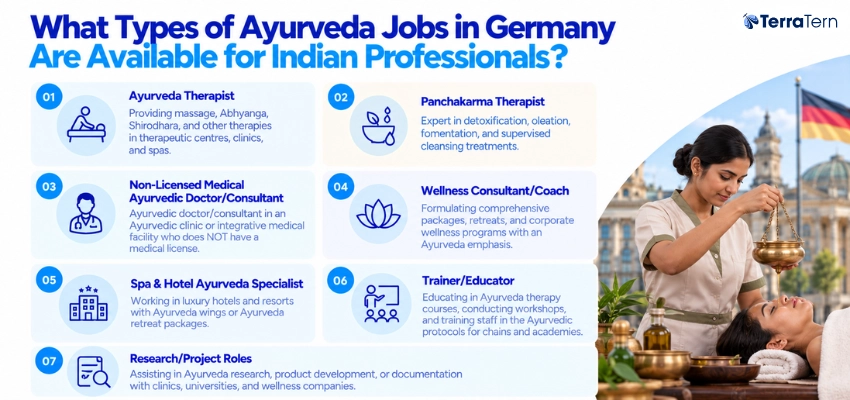
Ayurveda Therapist: Providing massage, Abhyanga, Shirodhara, and other therapies in therapeutic centres, clinics, and spas.
-
Panchakarma Therapist: Expert in detoxification, oleation, fomentation, and supervised cleansing treatments.
-
Non-Licensed Medical Ayurvedic Doctor/Consultant: Ayurvedic doctor/consultant in an Ayurvedic clinic or integrative medical facility who does NOT have a medical license.
-
Wellness Consultant/Coach: Formulating comprehensive packages, retreats, and corporate wellness programs with an Ayurveda emphasis.
-
Spa & Hotel Ayurveda Specialist: Working in luxury hotels and resorts with Ayurveda wings or Ayurveda retreat packages.
-
Trainer/Educator: Educating in Ayurveda therapy courses, conducting workshops, and training staff in the Ayurvedic protocols for chains and academies.
-
Research/Project roles: Assisting in Ayurveda research, product development, or documentation with clinics, universities, and wellness companies.
Are There Ayurveda Jobs in Germany Specifically for Indian Doctors?
-
Yes, there are jobs specifically advertised for Indian BAMS/MD (Ayurveda) holders, particularly as Ayurvedic doctors, consultants, or senior therapists at wellness centres.
-
There are numerous job openings that specify BAMS or MD (Ayurveda) from a reputed Indian institution as a mandatory requirement for an Ayurveda doctor.
-
Such jobs are typically not in the field of medicine, but in the complementary/wellness branch.
-
Hands-on skills like Panchakarma and classical knowledge are also sought after in top-notch centres and are the forte of Indian Ayurveda doctors.
-
There are some employers who can support the visa application process for skilled workers, especially if they have a lot of experience and are fluent in German.
-
Some Indian doctors also get licensed as Heilpraktiker to expand their practice in the alternative medicine system in Germany.
-
Overall, there are opportunities available, but they are limited to certain clinics, chains, and wellness brands, and not the conventional medical system.
Also Read: Truck Driver Jobs in Germany for Indians: New Update
Ayurveda Doctor and Therapist Jobs in Germany for Indian Professionals
-
Indian BAMS/MD (Ayurveda) graduates are eligible to find employment as an ayurvedic doctor jobs in Germanyr and therapist in clinics, retreats, and wellness centres throughout Germany.
-
In Ayurveda, the roles of therapists are more focused on the practical application of therapy, while doctor/consultant roles focus on diagnosis, treatment planning, and patient education.
-
Employers will prefer candidates who have 2+ years of clinical experience, have good Panchakarma skills, and have basic-Intermediate (A2-B1) German language skills.
-
The average salary of a therapist is approximately €27,600–€40,000, and for an experienced ayurvedic doctor jobs in Germany in a solid centre, it is €45,000–€75,000.
-
Typical visas include the skilled worker visa or a visa for professionally experienced workers with a specific job offer for a non-regulated wellness job.
-
The Indian degree is recognised through Anabin (H+ status), and this recognition also does not lead to a medical licence in Germany.
-
Depending on the language, exams, and local networking, it is possible to progress to senior consultant, centre head, trainer, or Heilpraktiker position.
Trainee program to become a junior Ayurveda chef (m/f/d)
-
The Course: A vocational training course that combines Ayurvedic nutrition knowledge with professional kitchen techniques for the role of a cook/chef in wellness centres, clinics, or retreats.
-
Typical structure: Theory modules on basic concepts of Ayurveda, nutrition, and spice theory, intensive cooking training, and a supervised internship.
-
Ideal for hobby or professional chefs, dietitians, nutritionists,s and BAMS graduates looking for a culinary-Ayurveda career.
-
Language requirement: Basic (B1–B2) German is required for most programs, job positions, and working environments in order to interact with clients, work in a team, and be safe at work.
-
How to become an Indian: Apprenticeship training visa from the training provider or an employer that is willing to provide an “Ausbildung”/trainee contract; after a contract is signed, a training visa will be required from the German training provider.
-
Earnings when training: Trainees are usually paid a monthly allowance (around €850-€1200 per month in year 1 and rises year on year, depending on the employer sector).
-
Outcome: Certification as an Ayurveda cook/ chef with a solid CV for a junior position in Ayurvedic kitchens, wellness resorts, and integrative-health centres.
Also Read: Ausbildung or Masters Which is Better in Germany for Indians
How to Establish a Career in Germany as a BAMS Graduate: Learn German
-
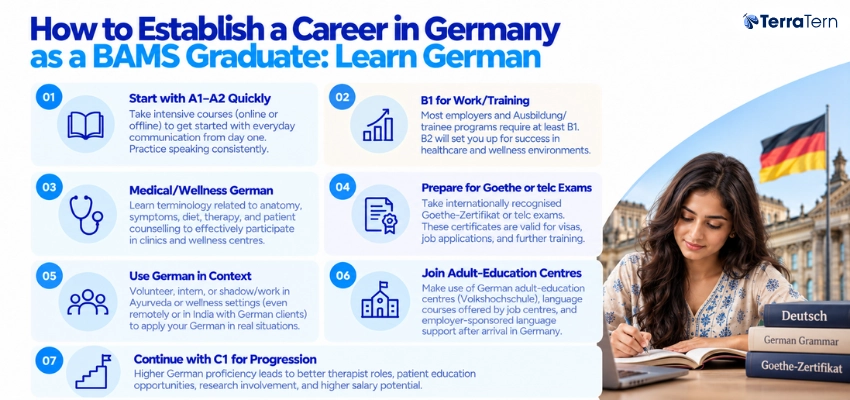
Start with A1–A2 quickly: Intensive courses (online or offline) to get started with the language of everyday communication, starting from the first day of the course; consistent speaking practice.
-
B1 for work/training: Most employers and Ausbildung/trainee programs require at least B1; B2 will set you up for success in healthcare/wellness environments.
-
Medical/wellness German: Knowledge of terminology in anatomy, symptoms, diet, therapy, and counselling of patients to be able to participate in clinics and wellness centres.
-
Prepare for Goethe-Zertifikat exams or telc exams; exams are known internationally, and certificates are valid for visas, job applications, and other further training applications.
-
Use language in context: Volunteer, intern, or shadow/work in Ayurveda/wellness settings (even remotely or in India with German clients) to put German in context.
-
Spend time in German adult-education centres (Volkshochschule), language courses offered by the job centres, and employer-sponsored language support after arrival in Germany.
-
Continue with C1 for progression: Higher German leads to higher levels of therapist employment, patient education, research, and higher pay.
Benefits of Working in Germany as a BAMS Graduate
-
Ayurveda in high demand: Ayurvedic doctor jobs in Germany market is well-established, and clinics, spas, and wellness resorts are actively seeking trained therapists and practitioners.
-
Accepted in complementary medicine: Ayurveda is recognized in complementary/alternative medicine, allowing complementary/alternative practice and wellness occupations.
-
Handsomely paid with benefits: Health or well-being workers may be paid well and be offered added benefits such as paid leave and a structured work schedule.
-
Establish vocational pathways: Certified training (e.g., Ayurveda cook, therapist), higher studies, integration to the team of integrative-health.
-
Work–life balance: Standard conditions of work, protected nights and weekends at work, and generous vacation policies help create sustainable long-term careers.
-
Residency prospects: Training/employment + opportunity for a residence permit for employment purposes and, following successful employment, a path towards a longer-term residence.
-
International standards, research culture and EU mobility: Your profile is enriched by exposure to international standards, research culture and EU mobility and thus strengthened for senior careers or entrepreneurship.
Also Read: Finance Jobs in Germany: Latest Jobs for Indians
Conclusion
Finally, Ayurveda careers in Germany for Indians in 2026 hold promise, but the path to success involves careful selection of a career trajectory and navigating the licensing and visa procedures in Germany. Typically, Ayurvedic doctor jobs in Germany, BAMS jobs in Germany, and any Ayurveda doctor vacancy in Germany or Ayurveda doctor vacancy in Europe involve formal recognition of foreign qualifications, as well as the command of the German language-where diagnosis or medical treatment is to be deemed-German medical authorisation or Heilpraktiker authorisation is required.
Thus, a person who is interested in exploring career opportunities in Germany after finishing their Ayurveda studies should differentiate between the roles in the clinical practice, wellness therapy, massage, nutrition counselling, and spa-based Ayurveda doctor vacancies abroad, as the scope and salary vary significantly. Wellness centre and spa positions might be more of a possibility than positions held by physicians for those looking for an Ayurveda therapist job in Germany or comparing an Ayurveda therapist job salary in Europe.
Together with recognised training and practical experience, German language skills and a valid work or recognition visa, the BAMS scope in Germany is strongest. Germany's recognition visa makes it possible for applicants to attend required qualification measures, normally with a minimum of A2-level German and proof of financial capacity. If qualified Indian Ayurveda professionals can find a way to verify the employer, to know the legal scope of their work, and to establish a valid chain via recognised qualifications and legal sponsorship, they have a bright future ahead in 2026.




 AI Summary