

Key Highlights
New attempts to question the U.S. H-1B visa programme have been cast in recent days following reports; an Indian district served by the Chennai U.S. consulate, was alleged to have processed approximately 220,000 H-1B visas. Critics argue that the number is over 2 times the official quota of 85,000 in a year. The allegation has sparked intense controversy in the United States over the fairness and integrity of the H-1B visa program, with the effects of immigration policy, labour market and bilateral perceptions.
What Happened: The Allegation Against Chennai
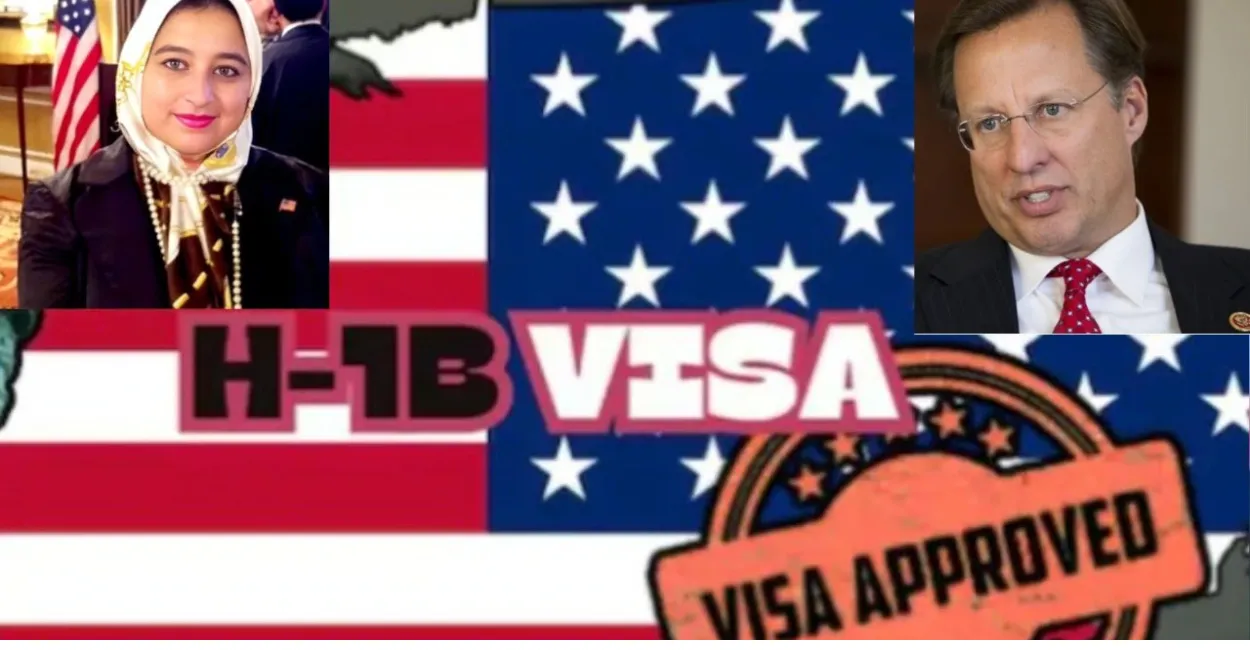
In a recent report by a leading Indian financial daily, a former U.S. Congressman and economist, Dave Brat, gave fresh impetus to the publicity on the H-1B visa system, namely the preponderance of Indian applications run at the consulate in Chennai. Brat stated that at one time Chennai was processing about 220,000 H-1B visas in a cycle, which is by far more than the statutory limit of 85,000 on the program per year.
He claimed that this level of concentration of visas within a single district puts the American workers at risk, and on one of the podcasts, he stated, When you hear H-1B, you picture your family, and these fake visas just stole their future.
To add to this, the controversy, former U.S diplomat and Indian origin consular official Mahvash Siddiqui stated that she had witnessed what she termed as industrialised fraud during her tenure at the Chennai consulate between 2005 and 2007. She estimates that 80-90 percent of H-1B visas out of India at that period had forged degrees or other fraudulent credentials, or the visa holders were not actually high-skilled.
Siddiqui claimed that there were investigations and red flags of suspicious apps inside the organization but the activities were terminated under political pressure. She asserted that consular officials that tried to conduct further investigations were declared rogue agents.
Also Read: How Many Types of Visa in USA? New Full Expert Guide
Why It Matters: Dominance, Integrity and Policy Questions
Why this allegation matters:
India's Outsize Share
According to statistics, during the past few years, the Indian nationals have already occupied approximately 70-73 percent of all H-1B approvals in the annual basis. That makes India the far biggest provider of H-1B visa holders in the world with the demand being particularly vigorous in such areas as technology, engineering and specialized professions.
This preeminence implies that a significant change in the H-1B programme, whether it is related to tighter audits, higher fees or the restructuring of the allocation procedure, is likely to impact Indian applicants more than others.
Allegations of Fraud and Misuse
The new scandals, when the numerical statements (220,000 visas through Chennai) are mixed with personal statement (the claims made by Siddiqui as fraud), cast great doubts upon the system honesty. Assuming true, it implies that there is the possibility of abuse, falsified records and procedures that encourage quantity rather than quality.
These accusations, had they been confirmed, would not only serve to damage the reputation of the H-1B visa system, but also spread anti-immigrationism, particularly among the people who feared American labour displacement.
Impact on U.S. Labour Market and Immigration Policy
Due to massive abuse of H-1B visas, critics say it is compromising the initial purpose of the programme that is to enable employers in the US to recruit foreign professionals to fill specialty positions that cannot be easily fulfilled by individuals within the country. As high numbers of supposedly unqualified candidates get visas this can lower the wages, can restrict the chances of the American workers and distort the labour market.
The 2025 administration of the U.S. government has already suggested reform to address such criticisms such as a new one-time fee to each visa application, greater audits, increasing prevailing wage minimums, and a move towards a merit-based or wage-based selection mechanism rather than a lottery system.
Such policy adjustments seem to be aimed at making sure that only truly qualified and high-skilled professionals are accepted, and the mass approvals should be reduced, which may significantly affect the visa beneficiaries of Indian origin.
Also Read: US Visitor Visa B1/B2
Criticisms and Counterpoints
The claims are not taken at is, by everybody. Advocates of the H-1B system insist that there is evident need of professionals with skills, particularly in the technology, AI, engineering sectors, which American graduates do not scale. They argue that a crackdown or sweeping reforms can be detrimental to the U.S. competitiveness, innovation, and growth.
In addition, the visa-sponsoring employers, particularly in technology and consulting industries, are still relying heavily on Indian labour to occupy specialised positions, to meet tight project deadlines or to overcome skill shortages. The large approval rates of Indian applicants indicate not only large volumes but also demand dynamics.
Conversely, critics of the new arguments suggest caution, pointing out that visa records are easily distorted, and consular records may consist of renewals, extensions or other types, and not only newcomers. According to them, the reform of the system should be directed at transparency, skill validation and equity, but without any wholesale discrimination of a nationality.
Also Read: Cost of Transit Visa for USA: New Fees & Process Guide
What’s Next: Reforms, Investigations, and Global Implications
With this seriousness of allegations, the months to come may be marked with more investigations into consulates, visa issuing and auditing of applications. The reforms that are proposed by the U.S. government, such as higher wages, extra charges, selective hiring based on merit can decrease the massive number of H-1B visa from the governments of other countries all over the world, especially to the source countries with high volumes such as India.
By passing the reforms, Indian professionals will have a harder competition and tougher documentation requirements with less chances in general including professionals who wanted to go as H-1B. Indian IT companies, outsourcing firms and consultants, heavy on H-1B placements might have to reconsider their hiring and deploying policies.
Meanwhile, the discussion will cause the Indian tech labor force to consider other means of entry remote work, international remote recruiting, visa policies in other countries, or training to qualify based on higher pay and skill requirements.
Lastly, there are bigger issues involved in this controversy, which are immigration fairness, global talent mobility, the way immigrants are viewed in the countries they enter, and the trade-off between national workforce security and international talent mobility.
Conclusion
The report that one Indian district had issued about 220,000 H-1B visas has fuelled a contentious discussion of the suitability, honesty and objective of the U.S. H-1B visa programme. As the system is described by former officials as one full of industrialised fraud, what started as a critique of a single outlier has become a larger confrontation with over-representation, possible abuse, and structural disequilibrium.
In the case of the United States, the scandal highlights an underlying conflict, that between the necessity to train talented workers on a global scale and the political, economic requirements to defend local workers. In India, the H-1B approvals hegemony has long been a symbol of global competitiveness, although the increasing questioning can now trigger a reconsideration of the export and validation of talent.
The next few months are going to be crucial. When the suggested reforms are implemented, the situation of the Indian professional population, as well as the foreign skilled labor worldwide, may change radically. It is not only the question of numbers anymore, but the question of trust, transparency, fairness, and the future of the global talent mobility.
Contact TerraTern for more information.