
Key Highlights
This IELTS General Reading Practice Test consists of multiple reading passages in 3 Sections. Section 1 consists of 2 paragraphs on "Cornwall" and " Bees". Section 2 covers " The Printing Process" and “Yoga”; Section 3 focuses on "British Study Centres English Language School." The test includes a variety of question types, such as Matching Statement, Sentence Completion, Summary Completion, Diagram Completion, Yes/No/Not Given, Table Completion and Multiple Choice Questions. You have 60 minutes to complete the entire test.
Section 1{Q1-Q14}
Cornwall
IELTS Sentence Completion (Q1–Q6)
Bees
IELTS Multiple Choice Question ( Q7-Q10)
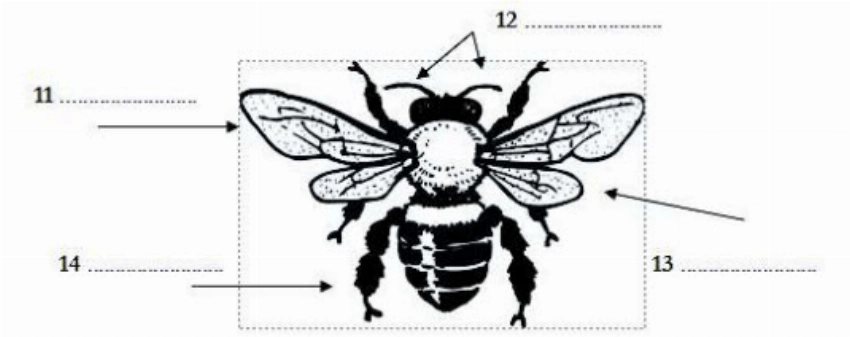
IELTS Diagram Completion ( Q11-Q14)
Section 2 {Q15-Q27}
The Printing Process
IELTS Sentence Completion (Q15–Q20)
Yoga
IELTS Matching Statement (Q21–Q27)
Section 3 {Q28-Q40}
British Study Centres English Language School
IELTS Table Completion (Q28–Q34)
IELTS Yes/No/Not Given (Q35–Q40)
READING GENERAL: TEST PAPER 66
Section 1
Read the information below and answer questions 1-6.
Cornwall
It’s hard not to fall in love with Cornwall. For some, it’s the happy memories of a childhood seaside holiday. For others, it’s the brief fling of a teenage summer. For most, it’s a passionate affair that lasts a lifetime…so let the affair begin!
Where Is Cornwall?
Located in the far west of Great Britain, Cornwall is almost completely surrounded by the sea and has a magnificent 300-mile coastline. It is also the location of mainland Great Britain’s most southerly promontory, The Lizard, and one of the UK’s most westerly points, Land’s End.
What’s So Special About It?
There are lots of things Cornwall is loved for: the dramatic coastline with its captivating fishing harbours; the spectacular beaches and the pounding surf that provide a natural playground for a variety of water sports; and of course, the Cornish pasty and cream teas.
Expect The Unexpected
But there are also lots of things about Cornwall that may surprise you. For instance, the wilderness of Bodmin Moor with its panorama of big skies. There’s also the dynamic art scene found mainly in West Cornwall, inspired by the naturally stunning landscapes. More recently, Cornwall has become known for a food scene to rival London and beyond.
History And Culture
Cornwall also has a tremendous history based on its Celtic roots; its Celtic Cornish culture; the warmth and friendliness of the people; and the Cornish language that can be seen in the village names. Cornwall is truly unique.
Why not visit some of Cornwall’s most iconic experiences? From towering castles and beautiful gardens to places steeped in legends and history, you’ll be spoilt for choice. Here are a few to get you started.
Trebah Garden – Near Falmouth
One of the great gardens of Cornwall and rated among the 80 finest gardens in the world, discover the magic of this beautiful Cornish valley garden with over four miles of footpath.
Lanhydrock – Bodmin
Lanhydrock boasts a magnificent late Victorian country house with gardens and a wooded estate. Discover two sides of Victorian life: those ‘below stairs’, and those ‘upstairs’.
Geevor Tin Mine – Bear Penzance
Geevor tin mine is one of the largest preserved mine sites in the country and a Cornish Mining World Heritage Site. Housed in two acres of listed buildings, Geevor’s collections and guides bring the story of Cornwall’s rich industrial past to life.
Questions 1-6
Complete the sentences below.
Choose NO MORE THAN THREE WORDS from the passage for each answer.
Cornwall has stunning coastal views, including the most 1. ……………point in Great Britain.
Apart from the coastal views, the amazing landscapes have inspired an unexpected but thriving 2. ……………
Cornwall can now be compared to 3. …………………for its food and amazing chefs.
One thing that makes Cornwall different from the rest of England is its 4. …………heritage.
The perfect place to discover insights into lifestyles from a bygone era is 5. ……………..
The perfect place to discover insights into Cornwall’s industrial past is a 6. ……………….
Read the text below and answer questions 7-14.
Bees
Worker bees are between 8 and 19mm in length. They are divided into three distinct parts: head, thorax, and abdomen. They have an almost completely black head, a golden-brown and black thorax with patches of orange, and yellow bands that are easily seen on the abdomen. At the front of the head are two antennae for sensing their environment. They have four single wings. The largest are called forewings, and the smallest hindwings. The hind legs are specialised for collecting pollen – each leg is flattened to form a pollen basket near its end.
Love them or hate them, we need bees to pollinate many important food crops, including most fruit and vegetables. Bee-pollinated crops are important sources of vitamins A and C and minerals such as calcium. By pollinating attractive wildflowers like bluebells and poppies, bees also help support the natural environment that people love – benefiting us culturally, economically, and ecologically. Calculations from the University of Reading show that £510 million of annual total crop sales in the UK are pollinated by bees and other insects.
What would happen if there were suddenly no more bees to pollinate these crops? This is a question being asked by farmers, beekeepers, and scientists because bees are now dying in their millions, and they want to know why.
It’s widely recognised now that changes in agriculture are the main cause of bee decline across Europe. For example, hay meadows, which are rich in plant species, have declined by 97 per cent since the 1930s, removing an important food source for bees. This has happened because of the trend towards growing the same crop (monocultures) over large fields. This has reduced the diversity of available flowers and led to the removal of hedges. Species that have more specialised food needs, like the Shrill Carder Bee, have been particularly hard hit. It is now listed as an endangered species.
With fewer hedges, bees find it more difficult to move between feeding and nesting sites. This is because hedges act as corridors for bees to move along, but with fewer hedges, movement becomes more difficult. Pests and diseases are also a major threat to honey bees and other managed bees. The Varroa mite is thought to be one of the main causes of native honey bee loss. The impact on wild bees is harder to assess, but ‘spill-over’ of diseases and pests between wild and managed bees has increasingly been observed. Climate change affects the timing of plant flowering and bee emergence from hibernation, so bees may emerge before enough food is available.
Questions 7-10
Choose the correct letter, A, B, C or D.
7. Apart from pollinating crops, how else do bees help us?
A. Economically
B. Economically
C. Ecologically
D. All of the above
8. Why has the variety of flowers available for bees to pollinate fallen?
A. Conservation measure
B. Less hedges
C. Fertilizers
D. Urban development
9. There are many reasons for the decline in bees, but what is one of the major reasons for the shrinking numbers of native honey bees?
A. Varroa mite
B. Spill-over
C. Managed bees
D. Hard to assess
10. Why might bees end their hibernation at a different time?
A. To pollinate more flowers
B. To get more food
C. Climate change
D. To emerge with other bees
Questions 11-14
The diagram below shows the worker bee. Label the diagram.
Choose NO MORE THAN TWO WORDS from the passage for each answer.
Section 2
Read the text below and answer questions 15-20.
The Printing Process
The world entered its first information revolution when the first printing press was built in 1450. Before this, typical ways of recording information were to carve words onto clay tiles and bamboo, or to write on parchment or papyrus. Fast forward to the digital age, the second information revolution, and it has now become possible to self-publish, have books printed in paperback or as an e-book, and some books are even free!
Digital Warehouse
Long gone are the days when every book was printed before there was a buyer. Why print thousands of books only to find out that very few people want to buy them? Now it is possible to work with a printer in a process called Print On Demand (POD) and only print a paperback when you have an order. To do this, a printer has a digital warehouse with every book stored electronically. Once an order is placed, the printer has all of the electronic data necessary to print and deliver the book to its intended destination. Every month, money is sent to all of the authors who have sold books that month.
Giving Your Book To The Printer
Once written, an author can send their book electronically to the printer in the form of a PDF file or as a hard copy that can be scanned and digitised by the printer. Processing fees for all services from a printer are minimal, but allow you to have access to large distribution networks of not only online bookstores but also brick-and-mortar retailers. These people may not buy your book, but your book will be in their catalogues, and they will order from the printer if someone asks for it.
Two Concerns
Speed is not the only priority for the printer; they are also concerned with quality and have 10 quality control checks on each book before it is shipped. Sharp graphics and crisp text make it virtually impossible to distinguish a POD book from the more traditional offset copies. As technology continues to improve, this can only get better. As an author, it is possible to choose the type of book you want: paperback, hardback, or e-book (now the most popular form of book), the size of your book, the type of paper, and the type of cover (laminated, cloth, or jacketed for hardbacks).
Questions 15-20
Complete the sentences below.
Choose NO MORE THAN THREE WORDS from the passage for each answer.
We experienced our first information revolution with the development of the 15. …………….
It is no longer necessary to print books in their 16. ……………..
Print On Demand works by making sure that the printer has been given all of the relevant 17. ………………
If necessary, the printer will scan and digitise your 18. ………………..
Latest technology makes the difference between offset printing and Print On Demand almost 19. ……………..to tell.
Apart from the traditional hardback and paperback books, authors can now publish in 20. ………………form.
Read the text below and answer questions 21-27.
Yoga
Developed more than 5,000 years ago, yoga can be a way of life that benefits you physically, mentally, and spiritually. But where to start? Here is a quick summary of five of the most common yoga styles practised today.
Hatha
Originated in India in the 15th century. Slow-paced, gentle, and focuses on breathing and meditation.
Purpose – Introduces beginners to yoga with basic poses and relaxation techniques.
Benefits – Relieves stress, provides physical exercise, and improves breathing.
Good for – Beginners wanting to learn the basics of yoga.
Vinyasa
Similar to Hatha, basic poses and breath-synchronised movements. Stresses the Sun Salutation, 12 poses where movement is matched to the breath.
Purpose – Links the breath with movement, builds lean muscle mass throughout the body.
Benefits – Helps improve strength and flexibility, tones the abdominal muscles, and reduces the risk of heart disease, high blood pressure, and type 2 diabetes.
Good for – Beginners and advanced yogis alike seeking to strengthen their bodies.
Ashtanga
Metaphorically focuses on eight limbs. Fast-paced, intense with lunges, push-ups.
Purpose – Helps improve one’s spiritual self.
Benefits – Relieves stress, improves coordination, and helps with weight loss.
Good for – Fit people looking to maintain strength, stamina, and spirituality.
Iyengar
Covers all eight aspects of Ashtanga yoga and focuses on bodily alignment. Standing poses are emphasised, and are often held for long periods of time.
Purpose – Strengthens and brings the body into alignment.
Benefits – Helps improve balance, speeds up recovery from injury, and builds up body strength.
Good for – Beginners who want to learn the correct alignments in each pose and those with injuries, balance issues, and chronic medical conditions like arthritis.
Bikram
Practised in a 95 to 100 degree room. A series of 26 poses that allows for a loosening of tight muscles and sweating.
Purpose – Flushes out toxins and deeply stretches the muscles.
Benefits – Speeds up recovery from an injury, enhances flexibility, and cleanses the body.
Good for – Beginners, advanced yogis who want to push themselves and those with injuries.
Questions 21-27
Look at the following statements and the list of yoga styles below.
Match each statement with the correct style, A-E.
NB: You may use any letter more than once.
Yoga Styles
A. Hatha
B. Vinyasa
C. Ashtanga
D. Iyengar
E. Bikram
21. A style where breathing and movement are in harmony.
22. A style that focuses on improving your posture.
23. A style for starters wanting to improve their breathing.
24. A style that can help recovery from an injury and help with posture.
25. A style for someone hoping to lose weight.
26. A style that helps muscles relax.
27. A style that helps you to develop your spirituality.
Section 3
British Study Centres English Language School
English For Life
Language courses at British Study Centres are planned and delivered to equip students with the language skills they need to achieve their future dreams. This is achieved through ongoing structured dialogue between the student and teacher involving the use of tutorials, needs analysis questionnaires and so on.
School Locations
Study English in four of the UK’s most exciting cities: London, Oxford, Brighton and Bournemouth.
English Courses
Choose from a range of General English, Exam Preparation (including IELTS) and Business English programmes.
History Of British Study Centres
British Study Centres was founded in the 1930s by Joseph Cleaver, grandfather of the current Chairman and Chief Executive, Simon Cleaver. The state-of-the-art Oxford language school is fitted with the very best in language learning facilities, offering students a unique modern learning experience. To this day, the Company remains a family firm, privately owned and managed by Simon and his family.
In the early days, the Company concentrated on correspondence courses and quickly established offices and examination centres across the entire (then) British Empire and beyond and in the process became the UK’s largest group of correspondence colleges. In the 1970s, the Company, now run by Joseph’s sons, James and Thomas, began to focus on face-to-face tuition with the establishment of vocational colleges in London, Oxford and Brighton.
In the 1990s, the Company established its first English language school in Oxford in 1996, followed by Brighton in 2002 and London in 2004. Since then, all of these schools have expanded to cope with increasing demand. In 2008, the Company moved into the young learners market with the acquisition of ICH (International College Holidays), which specialised in vacation courses for 10-15-year-olds. They now run these courses in 5 institutes, including the University of Brighton. In 2010, the fourth school for adults opened in the south coast town of Bournemouth. In the same year, they opened a specialist Teacher Training Facility in Oxford. In 2012, live online lessons were launched with teachers using the latest video conferencing technology.
In recent years, the Company has been honoured to win a number of awards associated with the language school industry, including twice a winner of Study Travel Magazine’s coveted ‘Star’ English Language School Europe award in 2010 and 2012, and a winner of Study Travel Magazine’s ‘Star’ Junior Courses for under 18s in 2012.
Study English In Oxford, BSC, A City Made For Students!
40,000 students and 39 unique university colleges give Oxford a very special ‘student’ atmosphere – an ideal place to learn English! It has a deserved worldwide reputation for the quality of education. Oxford University is the oldest English-speaking university in the world, dating back to 1249. It is consistently ranked in the top three in the world. Oxford is located in the heart of England and benefits from excellent road and rail links to London (50 minutes) and the rest of the UK. The city sits on the banks of the Thames and boasts a variety of world-famous museums, galleries and libraries. Besides the traditional, there are hundreds of modern restaurants, pubs, clubs and riverside cafes to enjoy.
Key Facts for Oxford BSC
No. of students (peak season) – 325
No. of students (low season) – 175
Average age – 25
Minimum age – 16
Average class size – 11 (max 14)
Questions 28-34
Complete the table below.
Choose NO MORE THAN THREE WORDS AND/OR A NUMBER from the passage for each answer.
|
Year |
Events In British Study Centres |
|
1930s |
First established by the current owner’s grandfather 28. ………………… |
|
1970s |
Three 29. ………………….were opened as the new face of the company |
|
1990s |
The first English-language school was opened in Oxford |
|
30. ……………….. |
Six years after the first school, another was opened in Brighton |
|
31. ……………… |
The third school was then opened in 32. ………………….. |
|
2008 |
The University of Brighton is now one of 33. ………………where vacation courses are held for youngsters |
|
2010 |
Another school was opened |
|
2012 |
34. …………………made it possible to have lessons online |
Questions 35-40
Do the following statements agree with the information given in the reading passage?
In boxes 35-40 on your answer sheet, write
YES: If the statement agrees with the views of the writer
NO: If the statement contradicts the views of the writer
NOT GIVEN: If it is impossible to say what the writer thinks about this
35. There is not much interaction between the student and teacher.
36. James Cleaver is Simon Cleaver’s father.
37. Oxford University is the oldest university in the world.
38. There are a few banks by the Thames.
39. They never teach students older than 25.
40. They never have more than 14 students in the class.
Answers

Unlock Remaining Answer

