
Key Highlights
This IELTS Academic Reading Practice Test consists of three reading passages. Passage 1 is titled "Diabetes", along with Passage 2, which consists of"Contaminating The Arctic", followed by Passage 3, which covers "The Story Of Coffee". The test includes a variety of question types, such as Summary Completion, Diagram Completion, Flow Chart Completion, Matching Headings, Matching Sentence Ending, Yes/No/Not Given, and True/False/Not Given. You have 60 minutes to complete the entire test.
Passage 1 {Q1–14}
Diabetes
IELTS Yes/No/Not Given (Q1-Q7)
IELTS Matching Sentence Ending (Q8-Q11)
IELTS Multiple Choice Question (Q12-Q14)
Passage 2 {Q15–27}
Contaminating The Arctic
IELTS True/False/Not Given (Q15-Q21)
IELTS Summary Completion (Q22-Q27)
Passage 3 {Q28–40}
The Story Of Coffee
IELTS Matching Headings (Q28-Q33)
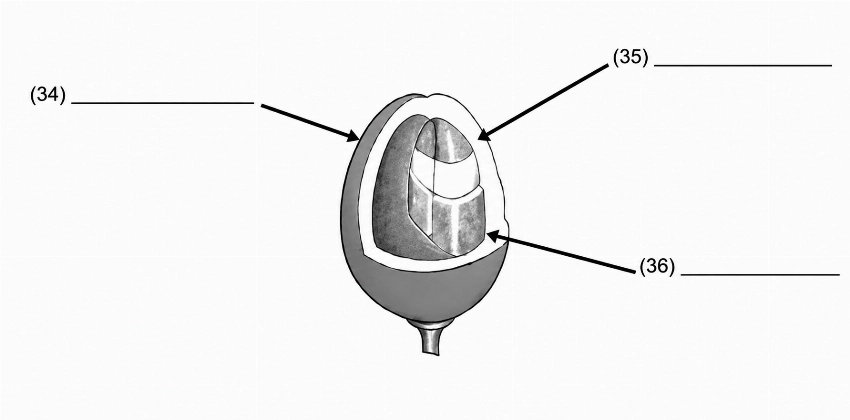
IELTS Diagram Completion (Q34-Q36)
IELTS Flow Chart Completion (Q37-Q40)
READING ACADEMIC: TEST PAPER 74
Passage 1
Diabetes
Here are some facts that you probably didn’t know about diabetes. It is the world’s fastest-growing disease. It is Australia’s 6th leading cause of death. Over 1 million Australians have it, though 50% of those are as yet unaware. Every 10 minutes, someone is diagnosed with diabetes. So much for the facts, but what exactly is diabetes?
Diabetes is a group of conditions in which there is too much glucose in the blood. Here’s what happens: the body needs glucose as its main source of fuel or energy. The body makes glucose from foods containing carbohydrates, such as vegetables (like potatoes or corn) and cereal foods (like bread, pasta, and rice), as well as fruit and milk. Glucose is carried around the body in the blood, and the glucose level is called glycaemia. Glycaemia (blood sugar levels) in humans and animals must be neither too high nor too low, but just right. The glucose circulating in the bloodstream now has to get out of the blood and into the body's tissues. This is where insulin enters the story. Insulin is a hormone made by the pancreas, a gland sitting just below the stomach. Insulin opens the doors that allow glucose to move from the blood into the body's cells, where energy is produced. This process is called glucose metabolism. In diabetes, the pancreas either cannot make insulin or the insulin it does make is not enough or does not work properly. Without insulin doing its job, the glucose channels are shut. Glucose builds up in the blood, leading to high blood glucose levels, which cause the health problems linked to diabetes.
People refer to the disease as diabetes, but there are actually two distinct types. Type 1 diabetes is a condition characterised by high blood glucose levels due to a complete lack of insulin. It occurs when the body’s immune system attacks the insulin-producing beta cells in the pancreas and destroys them. The pancreas then produces little or no insulin. Type 1 diabetes develops most often in young people but can appear in adults. Type 2 diabetes is the most common form of diabetes. In type 2 diabetes, either the body does not produce enough insulin or the cells ignore the insulin. Insulin is necessary for the body to use sugar. Sugar is the basic fuel for the body's cells, and insulin moves sugar from the blood into the cells.
The diagnosis of diabetes often depends on the type of diabetes the patient is suffering from. In Type 1 diabetes, symptoms are usually sudden and sometimes even life-threatening – hyperglycaemia (high blood sugar levels) can lead to comas – and therefore it is mostly diagnosed quite quickly. In Type 2 diabetes, many people have no symptoms at all, while other signs can go unnoticed, being seen as part of ‘getting older’.
Therefore, by the time symptoms are noticed, blood glucose levels in many people can be very high. Common symptoms include: being more thirsty than usual, passing more urine, feeling lethargic, always feeling hungry, having cuts that heal slowly, itching, skin infections, bad breath, blurred vision, unexplained weight change, mood swings, headaches, feeling dizzy and leg cramps.
At present, there is no cure for diabetes, but there is a huge amount of research looking for a cure and to provide superior management techniques and products until a cure is found. Whether it’s Type 1 or Type 2 diabetes, the aim of any diabetes treatment is to get your blood glucose levels as close to the non-diabetic range as often as possible. For people with Type 1 diabetes, this will mean insulin injections every day, plus leading a healthy lifestyle. For people with Type 2 diabetes, healthy eating and regular physical activity may be all that is required at first:
Sometimes tablets and/or insulin may be needed later on. Ideally, blood glucose levels are kept as close as possible to the non-diabetic range, so frequent self-testing is a good idea. This will help prevent the short-term effects of very low or very high blood glucose levels, as well as potential long-term problems. If someone is dependent on insulin, it must be injected. Insulin cannot be taken as a pill. The insulin would be broken down during digestion just like the protein in food. Insulin must be injected into the fat under your skin for it to get into your blood. Diabetes can cause serious complications for patients. When glucose builds up in the blood rather than entering cells, it can cause problems. Short-term problems are similar to the symptoms, but long-term high blood sugar levels can lead to heart attacks, strokes, kidney failure, amputations and blindness. Having your blood pressure and cholesterol outside recommended ranges can also lead to problems like heart attack and stroke, and in fact, 2 out of 3 people with diabetes eventually die of these complications. Young adults aged 18 – 44 who get type 2 diabetes are 14 times more likely to suffer a heart attack, and are up to 30 times more likely to have a stroke than their peers without diabetes. Young women account for almost all the increase in heart attack risk, while young men are twice as likely to suffer a stroke as young women. This means that huge numbers of people are going to get heart disease, heart attacks and strokes years, sometimes even decades, before they should.
Questions 1-7
Do the following statements reflect the views of the writer in Reading Passage 1?
In boxes 1-7 on your answer sheet, write:
YES: If the statement agrees with the information
NO: If the statement contradicts the statement
NOT GIVEN: If there is no information on this in the passage
1. Carbohydrate foods are the body’s source of glucose.
2. Diabetics cannot produce insulin.
3. Some patients develop diabetes due to faults in their own immune systems
4. Hyperglycaemia leads to type 1 diabetes being diagnosed quite quickly.
5. Artificial insulin is the most effective treatment for those patients requiring insulin.
6. Frequent check-ups at the doctor can drastically reduce the chances of suffering from problems related to diabetes.
7. The majority of diabetics develop heart problems or suffer strokes.
Questions 8-11
Complete the following statements with the best ending from the box below.
Write the appropriate letters A-H in boxes 8-11 on your answer sheet.
8. Bizarre as it may seem, many people with diabetes………….
9. Insulin is a hormone that allows glucose to be absorbed by…………….
10. Non-severe type 2 diabetes can be solely treated by………….
11. Increases in diabetes related heart problems are mainly seen in…………...
|
A. a healthy lifestyle |
B. never suffer any ill effects |
C. women |
D. people are also suffering strokes |
|
E. body cell |
F. the pancreas |
G. do not realise the fact |
H. injections |
Questions 12-14
According to the text, which of the following are symptoms of diabetes?
Choose THREE letters (A-G) and write them in boxes 12-14 on your answer sheet.
A. Hot flushes
B. Muscle pains
C. Nausea
D. Losing consciousness
E. Tiredness
F. Bleeding gums
G. Dilation of the eyes
Passage 2
Contaminating The Arctic
Our perception of the Arctic region is that its distance from industrial centres keeps it pristine and clear from the impact of pollution. However, through a process known as transboundary pollution, the Arctic receives contaminants from sources thousands of miles away. Large quantities of pollutants pour into our atmosphere and our lakes, rivers, and oceans on a daily basis. In the last 20 years, scientists have detected an increasing variety of toxic contaminants in the North, including pesticides from agriculture, chemicals and heavy metals from industry, and even radioactive fallout from Chornobyl. These substances have invaded ecosystems worldwide, but they are especially worrisome in the Arctic.
Originally, Arctic contamination was largely blamed on chemical leaks, and these leaks were thought to be “small and localised.” The consensus now is that pollutants from around the world are being carried north by rivers, ocean currents, and atmospheric circulation. Due to extreme conditions in the Arctic, including reduced sunlight, extensive ice cover and cold temperatures, contaminants break down much more slowly than in warmer climates. Contaminants can also become highly concentrated due to their significantly longer lifespan in the Arctic.
Problems of spring run-off into coastal waters during the growth period of marine life are of critical concern. Spring algae blooms easily, absorbing the concentrated contaminants released by spring melting. These algae are, in turn, eaten by zooplankton and a wide variety of marine life. The accumulation of these contaminants increases with each step of the food chain or web and can potentially affect northerners who eat marine mammals near the top of the food chain. Pollutants respect no borders; transboundary pollution is the movement of contaminants across political borders, whether by air, rivers, or ocean currents. The eight circumpolar nations, led by the Finnish Initiative of 1989, established the Arctic Environmental Protection Strategy (AEPS), under which participants agreed to develop an Arctic Monitoring and Assessment Program (AMAP). AMAP establishes an international scientific network to monitor the current condition of the Arctic with respect to specific contaminants. This monitoring program is extremely important because it will give a scientific basis for understanding the scope of the problem.
In the 1950’s, pilots travelling on weather reconnaissance flights in the Canadian high Arctic reported seeing bands of haze in the springtime. It was during this time that the term “Arctic haze” was first used to refer to this smog of unknown origin. But it was not until 1972 that Dr. Glenn Shaw of the Geophysical Institute at the University of Alaska first put forth ideas of the nature and long-range origin of Arctic haze. The idea that the source was long-range was very difficult for many to support. Each winter, cold, dense air settles over the Arctic. In the darkness, the Arctic seems to be increasingly polluted by a buildup of mid-latitude emissions from fossil fuel combustion, smelting, and other industrial processes. By late winter, the Arctic is covered by a layer of this haze the size of the continent of Africa. When the spring light arrives in the Arctic, a smog-like haze makes the region, at times, look like the pollution over cities such as Los Angeles.
This polluted air is a well-known and well-characterised feature of the late winter Arctic environment. In the North American Arctic, episodes of brown or black snow have been traced to continental storm tracks that deliver gaseous and particulate-associated contaminants from Asian deserts and agricultural areas. It is now known that the contaminants originate largely from Europe and Asia.
Arctic haze has been studied most extensively in Point Barrow, Alaska, across the Canadian Arctic and in Svalbard (Norway). Evidence from ice cores drilled in Greenland's ice sheet indicates that these haze particles were not always present in the Arctic but began to appear only in the last century. The Arctic haze particles appear to be similar to smog particles observed in industrial areas farther south, consisting mostly of sulfates mixed with carbon particles. It is believed the particles are formed when gaseous sulfur dioxide produced by burning sulfur-bearing coal is irradiated by sunlight and oxidised to sulfate, a process catalysed by trace elements in the air. These sulfate particles, or droplets of sulfuric acid, quickly capture the carbon particles that are also floating in the air. Pure sulfate particles or droplets are colourless, so it is believed that the haze's darkness is caused by mixed-in carbon particles.
The impact of the haze on Arctic ecosystems and the global environment has not been adequately studied. The pollutants have only been studied in their aerosol form over the Arctic. However, little is known about what eventually happens to them. It is known that they are removed somehow. There is a high likelihood that the contaminants end up in the ocean, likely in the North Atlantic, the Norwegian Sea, and possibly the Bering Sea — all three are very important fisheries.
Currently, the major issue among researchers is to understand the impact of Arctic haze on global climate change. The contaminants absorb sunlight and, in turn, heat up the atmosphere. The global impact of this is currently unknown, but the implications are quite powerful.
Questions 15-21
Read passage 2 and look at the statements below.
In boxes 15-21 on your answer sheet, write:
TRUE: If the statement is true
FALSE: If the statement is false
NOT GIVEN: If the information is not given in the passage
15. Industry in the Arctic has increased over the last 20 years.
16. Arctic conditions mean that the breakdown of pollutants is much accelerated
17. Pollution absorbed by Arctic algae can eventually affect humans.
18. The AEPS has set up scientific stations in the Arctic to monitor pollution.
19. Arctic pollution can sometimes resemble US urban pollution.
20. Evidence that this smog has only occurred in the 20th Century has been found in the ice on the polar ice cap.
21. Research has shown that aerosol Arctic pollutants remain in the air indefinitely.
Questions 22-27
Complete the summary relating to Arctic Haze below.
Choose your answers from the box below the summary and write them in boxes 22-27 on your answer sheet.
NB: There are more words than spaces, so you will not use them at all.
Theories that the origins of spring, arctic haze, first seen over the ice cap in the 1950s, came from far away were at first not 22. ……………This haze is a smog formed in the dark, arctic winter by pollution delivered to the Arctic by storms 23. ……………in Europe and Asia. It is known to be a recent phenomenon, as proof from 24. ………………shows it only started to occur in the 20th Century. The smog consists of sulphates and carbon, the latter creating the 25. …………………of the haze. Due to a lack of research, the final destination of the pollution is unknown, but it probably ends up in the 26. ………………and therefore into the food chain. Scientists are presently more worried about the 27. ……………effect it has on climate change.
|
burning |
terrible |
ice cores |
valid |
certain |
|
originating |
sea |
destroying |
theories |
unknown |
|
agriculture |
decided |
bird life |
dissipating |
accepted |
|
gases |
darkness |
air |
density |
|
Passage 3
The Story Of Coffee
A. Coffee was first discovered in Eastern Africa in an area we know today as Ethiopia. A popular legend tells of a goat herder named Kaldi, who observed his goats acting unusually frisky after eating berries from a bush. Curious about this phenomenon, Kaldi tried eating the berries himself. He found that these berries gave him renewed energy.
B. The news of this energy-laden fruit quickly moved throughout the region. Coffee berries were transported from Ethiopia to the Arabian Peninsula and were first cultivated in what is today the country of Yemen. Coffee remained a secret in Arabia before spreading to Turkey and then to the European continent via Venetian merchants.
C. Coffee was first eaten as a food, though later people in Arabia would make a drink out of boiling the beans for its narcotic effects and medicinal value. Coffee, for a time, was known as Arabian wine to Muslims who were banned from alcohol by Islam. It was not until after coffee had been eaten as a food product, used as a wine and a medicine, that it was discovered, probably by complete accident in Turkey, that roasting the beans could make a delicious drink. The roasted beans were first crushed and then boiled in water, creating a crude version of the beverage we enjoy today. The first coffee houses were opened in Europe in the 17th century, and in 1675, the Viennese established the habit of refining the brew by filtering out the grounds, sweetening it, and adding a dash of milk.
D. If you were to explore the planet for coffee, you would find about 60 species of coffee plants growing wild in Africa, Malaysia, and other regions. But only about ten of them are actually cultivated. Of these ten, two species are responsible for almost all the coffee produced in the world: Coffea Arabica and Coffea Canephora (usually known as Robusta). Because of ecological differences existing among the various coffee-producing countries, both types have undergone many mutations and now exist in many subspecies.
E. Although wild plants can reach 10-12 metres in height, the plantation one reaches a height of around four metres. This makes the harvest and flowering easier, and cultivation more economical. The flowers are white and sweet-scented like the Spanish jasmine. Flowers give way to a red, darkish berry. At first glance, the fruit looks like a large cherry, both in size and colour. The berry is coated with a thin, red film (epicarp) containing a white, sugary mucilaginous flesh (mesocarp). Inside the pulp are the seeds, in the form of two beans coupled at their flat surfaces. Beans are, in turn, coated with a kind of resistant, golden yellow parchment (called endocarp). When peeled, the real bean appears with another very thin silvery film. The bean is bluish green, verging on bronze, and is at most 11 millimetres long and 8 millimetres wide.
F. Coffee plants need special conditions to give a satisfactory crop. The climate needs to be hot-wet or hot-temperate, between the Tropic of Cancer and the Tropic of Capricorn, with frequent rains and temperatures ranging from 15 to 25 Degrees C. The soil should be deep, hard, permeable, well-irrigated, with well-drained subsoil. The best lands are the hilly ones or from just-tilled woods. The perfect altitude is between 600 and 1200 metres, though some varieties thrive at 2000-2200 metres. Cultivation aimed at protecting the plants at every stage of growth is needed. Sowing should be in sheltered nurseries from which, after about six months, the seedlings should be moved to plantations in the rainy season, where they are usually alternated with other plants to shield them from wind and excessive sunlight. Only when the plant is five years old can it be counted upon to give a regular yield. This is between 400 grams and two kilos of arabica beans for each plant, and 600 grams and two kilos for robusta beans.
G. Harvesting time depends on the geographic situation, and it can vary greatly, therefore, according to the various producing countries. First, the ripe beans are picked from the branches. Pickers can selectively pick approximately 250-300 pounds of coffee cherries per day. At the end of the day, the pickers bring their heavy burlap bags to pulping mills, where the cherry coffee can be pulped (or wet-milled). The pulped beans then rest, covered in pure rainwater to ferment overnight. The next day, the wet beans are hand-distributed upon the drying floor to be sun-dried. This drying process takes from one to two weeks, depending on the number of sunny days available. To ensure they dry evenly, the beans need to be raked multiple times during this drying period. Two weeks later, the sun-dried beans, now called parchment, are scooped up, bagged and taken to be milled. Huge milling machines then remove the parchment and silver skin, which renders a green bean suitable for roasting. The green beans are roasted according to the customers’ specifications. After cooling, the beans are then packaged and mailed to customers.
Questions 28-33
The reading passage on The Story of Coffee has 7 paragraphs, A-G.
From the list of headings below, choose the most suitable headings for paragraphs B-G.
List of headings
i. Growing Coffee
ii. Problems with Manufacture
iii. Processing the Bean
iv. First Contact
v. Arabian Coffee
vi. Coffee Varieties
vii. Modern Coffee
viii. The Spread of Coffee
ix. Consuming Coffee
x. Climates for Coffee
xi. The Coffee Plant
Example: Paragraph A-iv
28. Paragraph B
29. Paragraph C
30. Paragraph D
31. Paragraph E
32. Paragraph F
33. Paragraph G
Questions 34-36
Complete the labels on the diagram of a coffee bean below.
Choose your answers from the text and write them in boxes 34-36 on your answer sheet.
Questions 37-40
Using the information in the passage, complete the flow chart below.
Write your answers in boxes 37-40 on your answer sheet.
Use NO MORE THAN THREE WORDS from the passage for each answer.
The Coffee Production Process
|
Example: The coffee ……………………… is picked by hand and delivered to mills. Answer: Cherry |
|
The coffee cherry is pulped or 37. ……………………. |
|
The pulped beans are left 38. …………………..to ferment in pure water. |
|
The wet beans are sun-dried for 1 or 2 weeks to make parchment – they are 39. ……………….often to ensure an even drying experience |
|
The parchment is then bagged and taken to be milled to make the green beans |
|
The green beans are then roasted to 40. ………………….. |
|
The roasted beans are cooled |
Answers

Unlock Remaining Answer

