
Key Highlights
This IELTS Academic Reading Practice Test consists of three reading passages. Passage 1 is titled " A Brief History Of Rubber"; Passage 2 covers " Mrs Carlill And The Carbolic Smoke Ball"; and Passage 3 focuses on " Living Dunes" The test includes a variety of question types, such as True/False/Not Given, Diagram Completion, Multiple Choice, Yes/No/Not Given, Summary Completion, Matching Information, Sentence Completion and Matching Heading You have 60 minutes to complete the entire test.
Section 1 {Q1–Q13}
A Brief History Of Rubber
IELTS Matching Information Questions (Q1–Q7)
IELTS Summary Completion Questions (Q8–Q13)
Section 2 {Q14–Q26}
Mrs Carlill And The Carbolic Smoke Ball
IELTS True / False / Not Given Questions (Q14–Q17)
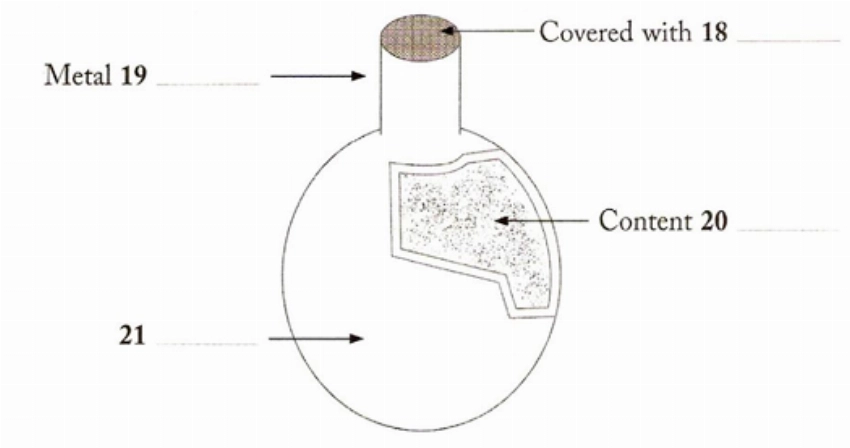
IELTS Diagram Completion Questions (Q18–Q21)
IELTS Matching Information Questions (Q22–Q25)
IELTS Multiple Choice Questions (Q26)
Section 3 {Q27–Q40}
Living Dunes
IELTS Matching Headings Questions (Q27–Q33)
IELTS Sentence Completion Questions (Q34–Q36)
IELTS Summary Completion Questions (Q37–Q40)
READING ACADEMIC: TEST PAPER 13
Passage 1
A. Brief History Of Rubber
1. Rubber is one of the most important products to come out of the rainforest. Though indigenous rainforest dwellers of South America have been using rubber for generations, it was not until 1839 that rubber had its first practical application in the industrial world. In that year, Charles Goodyear accidentally dropped rubber and sulfur on a hot stovetop, causing it to char like leather yet remain plastic and elastic. Vulcanisation, a refined version of this process, transformed the white sap from the bark of the Hevea tree into an essential product for the industrial age.
2. With the invention of the automobile in the late 19th century, the rubber boom began. As demand for rubber soared, small dumpy river towns like Manaus, Brazil, were transformed overnight into bustling centres of commerce. Manaus, situated on the Amazon where it is met by the Rio Negro, became the opulent heart of the rubber trade. Within a few short years, Manaus had Brazil’s first telephone system, 161 miles of streetcar tracks, and an electric grid for a city of a million, though it had a population of only 40,000.
3. The opulence of the rubber barons could only be exceeded by their brutality. Wild Hevea trees, like all primary rainforest trees, are widely dispersed, with an adaptation that protects the species from the South American leaf blight, which easily spreads through and decimates plantations. Thus, to make a profit, barons had to acquire control over huge tracts of land. Most did so by hiring their own private armies to defend their claims, acquire new land, and capture native labourers. As the Indians died, production soared.
4. The Brazilian rubber market was crushed by the rapid development of the more efficient rubber plantations of Southeast Asia. However, the prospects of developing plantations did not begin on a high note. Rubber seeds, rich with oil and latex, could not survive the long Atlantic journey from Brazil. Finally, in 1876, an English planter, Henry Wickham, collected 70,000 seeds and shipped them to England. Only 2,800 of the seeds germinated and were sent to Colombo, Ceylon (present-day Sri Lanka). After several false starts, including one planter in northern Borneo who felled his plantation after finding no rubber balls hanging from the branches, the prospects were grim. One major obstacle was the success of tea and coffee, which gave planters no reason to try an untested crop.
5. Finally, in 1895, Henry Ridley, head of Singapore’s botanical garden, persuaded two coffee growers to plant two acres of Hevea trees. Twelve years later, more than 300,000 hectares of rubber grew in plantations in Ceylon and Malaya. New innovations increased efficiency, and production doubled every two years. Rubber could be produced at only a fraction of the cost of collecting wild rubber in Brazil. By 1910, Brazilian production had fallen to 50%. In 1914, Brazil’s market share was around 30%; by 1918, it was 20%, and by 1940, it had dropped to 1.3%.
6. However, the Second World War threatened to shift the rubber wealth. With Japan occupying prime rubber-producing areas in Southeast Asia, the US feared it would run out of this vital material. Every tyre, hose, seal, valve, and inch of wiring required rubber. The Rubber Development Corporation, the chief overseer of rubber acquisition, sought out other sources, including establishing a rubber program that sent explorers into the Amazon to find rubber specimens that would produce high yields, superior quality, and resistance to leaf blight. The ultimate goal was to establish rubber plantations closer to home. Extensive work on synthetic rubber yielded a product that economists predicted would eventually replace natural rubber. By 1964, synthetic rubber made up 75% of the market.
7. However, the situation changed drastically with the OPEC oil embargo of 1973, which doubled the price of synthetic rubber and made oil consumers more conscious of their gas mileage. This concern led to the widespread adoption of the radial tyre, which replaced the simple bias tyres within a few years. Synthetic rubber did not have the strength required for radial tyres; only natural rubber could provide the necessary durability. By 1993, natural rubber had regained 39% of the market. Today, nearly 50% of all automobile tyres and 100% of aircraft tyres are made from natural rubber. However, 85% of this rubber is imported from Southeast Asia, making the supply highly vulnerable to disruption. Since plantation trees lack resistance to leaf blight, even a small introduction of fungal spores could destroy production for years. Rubber remains one of the most vital and vulnerable raw materials in the world.
Questions 1–7
Reading Passage 1 contains 7 paragraphs A–G.
Which paragraphs state the following information?
Write the appropriate letters A–G in boxes 1–7 on your answer sheet.
1. The extensive acceptance of radial tyres
2. Searching for new specimens to overcome leaf blight
3. The first trading centre for the rubber business
4. Asia dominated the rubber market year by year
5. Rubber seeds are vulnerable to long-distance transport
6. Individual wealth accumulated by rubber trading
7. Natural rubber gave way to its replacement
Questions 8–13
Complete the summary below.
Choose NO MORE THAN TWO WORDS from the passage.
The OPEC oil embargo doubled the price of synthetic rubber and made oil-consuming nations more attentive to 8. __________. This brought threats to the synthetic market by encouraging the use of the 9. __________, which replaced simple bias tires within a few years. Because 10. __________ is the only material that provides the required strength, synthetic rubber lost significant market share.
The US industry is very vulnerable to disruptions caused by an 11. __________. What’s worse, since rubber trees in Southeast Asia cannot withstand 12. __________, fungal spores could shut down production for years. Rubber is therefore one of the most 13. __________ raw materials in the world.
Passage 2
Mrs Carlill And The Carbolic Smoke Ball
On 14 January 1892, Queen Victoria’s grandson, Prince Albert Victor, second in line to the British throne, died from flu. He had succumbed to the third and most lethal wave of the Russian flu pandemic sweeping the world. The nation was shocked. The people mourned. Albert was relegated to a footnote in history. Three days later, London housewife Louisa Carlill went down with the flu. She was shocked. For two months, she had inhaled thrice daily from a carbolic smoke ball, a preventive measure guaranteed to fend off flu—if you believed the advert. Which she did.
And why shouldn’t she, when the Carbolic Smoke Ball Company had promised to pay £100 to any customer who fell ill? Unlike Albert, Louisa recovered, claimed her £100, and set in motion events that would win her lasting fame. It started in the spring of 1889. The first reports of a flu epidemic came from Russia. By the end of the year, the world was in the grip of the first truly global flu pandemic. The disease came in waves, once a year for the next four years, and each was worse than the last. Whole cities came to a standstill.
London was especially hard-hit. As the flu reached each annual peak, normal life stopped. The postal service ground to a halt, trains stopped running, and banks closed. Even courts stopped sitting for lack of judges. At the height of the third wave in 1892, 200 people were buried every day at just one London cemetery. This flu was far more lethal than previous epidemics, and those who recovered were left weak, depressed, and often unfit for work. It was a picture repeated across the continent.
Accurate figures for the number of the sick and dead were scarce, but Paris, Berlin, and Vienna all reported a huge increase in deaths. Newspapers took an intense interest in the disease, not just because of its scale but because of who it attacked. Most epidemics affected the poor and weak, the old and frail. This flu, however, struck the rich and famous, the young and fit. The public followed daily reports of celebrity victims. The flu spread through royal families across Europe, claiming aristocrats, politicians, and public figures. Fear among the population increased rapidly.
The medical profession had no answer. The cause and spread of the disease were unknown. Although the theory that micro-organisms caused disease was gaining acceptance, no one had identified the organism responsible for flu at the time.
In the absence of a clear cause, many believed in the old idea of “bad air” or miasmas. Doctors advised people to eat well, avoid crowds, and even stuff cotton wool up their nostrils. If they became ill, they were told to rest, keep warm, and eat nourishing foods.
Alcohol was commonly prescribed. Some doctors recommended champagne or brandy, while others claimed alcohol could prevent flu altogether. Meanwhile, some treatments included drugs like quinine for fever, salicin for headaches, and even heroin for persistent coughs. However, none of these provided a cure.
As a result, people turned to alternative remedies. Patent medicine sellers competed with increasingly bold advertisements. One of the most successful products was the Carbolic Smoke Ball—a rubber ball filled with powder treated with carbolic acid. Users were instructed to inhale the fumes through the nose.
The company claimed it could cure numerous illnesses, including the flu. Sales increased dramatically. On 13 November 1892, an advertisement caught Mrs Carlill’s attention.
It promised that £100 would be paid to anyone who contracted influenza after using the product correctly. To prove sincerity, the company claimed to have deposited £1,000 in a bank. Mrs Carlill bought the product, followed the instructions carefully, but still fell ill.
Her husband, a solicitor, wrote to the company. They did not respond. He persisted, and eventually, Mrs Carlill sued. The company argued that the advertisement was a mere exaggeration and not legally binding.
Judge Hawkins disagreed. He stated that advertisements are aimed at ordinary people and that promises made should be taken seriously. The case went to appeal.
The judges ruled that the advertisement constituted a unilateral contract. By using the product as instructed, Mrs Carlill had accepted the offer. The company was therefore legally bound to pay.
Lord Justice Bowen stated that if a company makes extravagant promises, it must be prepared to honour them. Mrs Carlill received £100. The case established an important legal principle and is still cited today.
Questions 14–17
Do the following statements agree with the information in the passage?
Write:
TRUE if the statement agrees with the information
FALSE if the statement contradicts the information
NOT GIVEN if there is no information
14. Cities, rather than rural areas, were badly affected by the pandemic flu.
15. At the time of the flu pandemic, people didn’t know the link between microorganisms and illnesses.
16. People used to believe the flu was caused by miasmas.
17. Flu prescriptions often contained harmful ingredients.
Questions 18–21
Complete the diagram below.
Choose NO MORE THAN TWO WORDS from the passage for each answer.
Write your answers in boxes 18–21 on your answer sheet.
Questions 22–25
Look at the following people (Questions 22–25) and the list of statements below.
Match each person with the correct statement, A–F.
Write the correct letter, A–F, in boxes 22–25 on your answer sheet.
List of People
22. Mrs. Carlill
23. Mrs Carlill’s husband
24. Judge Hawkins
25. Lord Justice Bowen
List of Statements
A. Filed a complaint, which was never responded to
B. Broke the contract made with Carbolic Smoke Ball Company
C. Initiated a legal case
D. Described the audience of the advertisement
E. Claimed that most advertisements are fraudulent
F. Treated advertisement as a type of contract
Question 26
Choose the correct letter, A, B, C or D.
26. Why is Mrs Carlill’s case often cited in present-day court trials?
A. It proved the untrustworthiness of advertisements.
B. It established the validity of a one-sided contract.
C. It explained the nature of the contract.
D. It defended the rights of consumers.
Passage 3
Living Dunes
You should spend about 20 minutes on Questions 27–40, which are based on Reading Passage 3 below.
When you think of a sand dune, you probably picture a barren pile of lifeless sand. But sand dunes are actually dynamic natural structures. They grow, shift and travel. They crawl with living things. Some sand dunes even sing.
A. Although no more than a pile of wind-blown sand, dunes can roll over trees and buildings, march relentlessly across highways, devour vehicles on its path, and threaten crops and factories in Africa, the Middle East, and China. In some places, killer dunes even roll in and swallow up towns. Entire villages have disappeared under the sand. In a few instances, the government built new villages for those displaced, only to find that new villages themselves were buried several years later. Preventing sand dunes from overwhelming cities and agricultural areas has become a priority for the United Nations Environment Program.
B. Some of the most significant experimental measurements on sand movement were performed by Ralph Bagnold, a British engineer who worked in Egypt prior to World War II. Bagnold investigated the physics of particles moving through the atmosphere and deposited by wind. He recognised two basic dune types, the crescentic dune, which he called “barchan,” and the linear dune, which he called longitudinal or “sief” (Arabic for “sword”). The crescentic barchan dune is the most common type of sand dune. As its name suggests, this dune is shaped like a crescent moon with points at each end, and it is usually wider than it is long. Some types of barchan dunes move faster over desert surfaces than any other type of dune. The linear dune is straighter than the crescentic dune, with ridges as its prominent feature. Unlike crescentic dunes, linear dunes are longer than they are wide—in fact, some are more than 100 miles long. Dunes can also be comprised of smaller dunes of different types, called complex dunes.
C. Despite the complicated dynamics of dune formation, Bagnold noted that a sand dune generally needs the following three things to form: a large amount of loose sand in an area with little vegetation, usually on the coast or in a dried-up river, lake or sea bed; a wind or breeze to move the grains of sand; and an obstacle, which could be as small as a rock or as big as a tree, that causes the sand to lose momentum and settle. Where these three variables merge, a sand dune forms.
D. As the wind picks up the sand, the sand travels, but generally only about an inch or two above the ground, until an obstacle causes it to stop. The heaviest grains settle against the obstacle, and a small ridge or bump forms. The lighter grains deposit themselves on the other side of the obstacle. Wind continues to move sand up to the top of the pile until the pile is so steep that it collapses under its own weight. The collapsing sand comes to rest when it reaches just the right steepness to keep the dune stable. The repeating cycle of sand inching up the windward side to the dune crest, then slipping down the dune’s slip face, allows the dune to inch forward, migrating in the direction the wind blows.
E. Depending on the speed and direction of the wind and the weight of the local sand, dunes will develop into different shapes and sizes. Stronger winds tend to make taller dunes; gentler winds tend to spread them out. If the direction of the wind generally is the same over the years, dunes gradually shift in that direction. But a dune is “a curiously dynamic creature”. Once formed, a dune can grow, change shape, move with the wind and even breed new dunes. Some of these offspring may be carried on the back of the mother dune. Others are born and race downwind, outpacing their parents.
F. Sand dunes can even be heard ‘singing’ in more than 30 locations worldwide, and in each place the sounds have their own characteristic frequency, or note. When the thirteenth-century explorer Marco Polo encountered the weird noises made by desert sand dunes, he attributed them to evil spirits. The sound is unearthly, and the volume is unnerving. Stéphane Douady of the French national research agency CNRS and his colleagues believe they can now explain the mechanism behind this phenomenon.
G. The group tested sand in laboratories using controlled experiments. The sands still produced sound, proving that the dune itself was not necessary. To make the booming sound, the grains must be similar in size and well-rounded. The frequency of the sound depends on grain size—the larger the grain, the lower the sound. Douady also discovered that the grains had a coating made of minerals such as silicon, iron and manganese. However, the exact role of this coating remains unclear.
Questions 27–33
Reading Passage 3 has seven paragraphs, A–G.
Choose the correct heading for each paragraph from the list of headings below.
Write the correct number, i–x, in boxes 27–33 on your answer sheet.
List of Headings
i) Shaping and reforming
ii) Causes of desertification
iii) Need a combination of specific conditions
iv) Potential threat to industry and communication
v) An old superstition demystified
vi) Differences and similarities
vii) A continuous cycling process
viii) Habitat for rare species
ix) Replicating the process in the laboratory
x) Commonest type of dune
27. Paragraph A
28. Paragraph B
29. Paragraph C
30. Paragraph D
31. Paragraph E
32. Paragraph F
33. Paragraph G
Questions 34–36
Complete the sentences below.
Choose NO MORE THAN TWO WORDS from the passage for each answer.
Write your answers in boxes 34–36 on your answer sheet.
34. ________ dune is said to have long ridges that can extend hundreds of miles.
35. According to Bagnold, an ________ is needed to stop the sand from moving before a dune can form.
36. Stéphane Douady believes the singing of dunes is not a spiritual phenomenon, but purely ________.
Questions 37–40
Complete the summary below.
Choose NO MORE THAN TWO WORDS from the passage for each answer.
Write your answers in boxes 37–40 on your answer sheet.
There are many different types of dunes, two of which are most commonly found in deserts throughout the world, the linear dune and the 37. ________ dune, sometimes also known as the crescentic dune.
It’s long been known that in some places dunes can even sing, and the answer lies in the sand itself. To produce singing sand in the lab, all the sands must have similar 38. ________.
And scientists have discovered that the size of the sand can affect the 39. ________ of the sound.
But the function of the varnish is composed of a mixture of 40. ________ still remains puzzling.
Answers

Unlock Remaining Answer

